

The United Nations Office at Geneva
Multimedia Newsroom
Temperatures off the charts, but more records are to come: WMO
Global sea surface temperatures reached a record high in May, June and July – and the warming El Niño weather pattern is only just getting started - experts at the UN World Meteorological Organization (WMO) said on Monday.
Alarm bells have been at the UN agency in particular because of an “unprecedented peak” in sea surface temperatures in the North Atlantic.
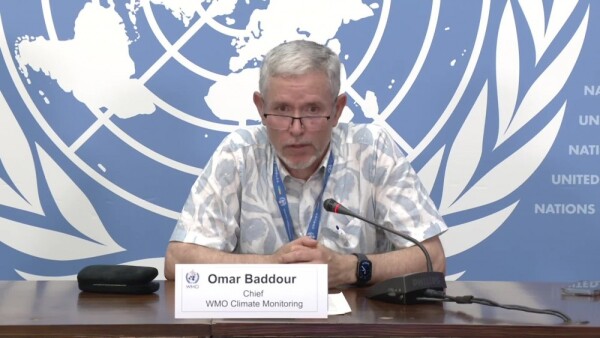
“The first week of July…could be considered as the warmest period or the warmest week ever recorded,” – with a global average temperature close to 17.24 degrees Celsius on 4 and 7 July, said Omar Baddour, Chief of Climate Monitoring at WMO.
The WMO expert added that daily June temperatures in the North Atlantic had been “dramatically high” compared to usual readings, while Antarctic sea ice levels reached their lowest extent for June since satellite observations began.
At a shocking 17 per cent below average, this year’s readings broke the June 2022 record by a substantial margin and represented “a really dramatic drop in the sea ice extent in the Antarctica” – some 2.6 million square kilometers of lost sea ice.
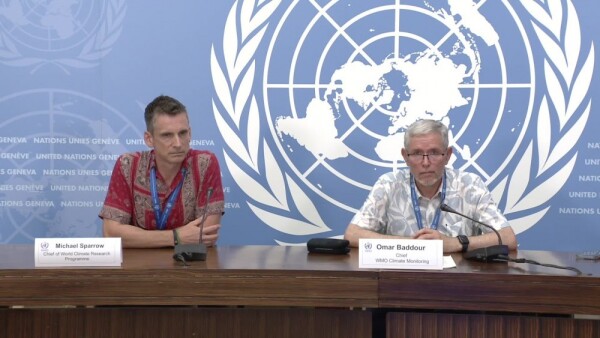
Michael Sparrow, Chief of WMO’s World Climate Research Programme, highlighted that “it really is completely unprecedented where this kind of reduction in sea ice that we have seen around the Antarctic. The Antarctic region is normally thought of being relatively stable, it is much colder than the Arctic. We’re used to seeing, these big reductions in the sea ice in the Arctic but not in the Antarctic.”
Beyond Antartica, the UN agency warned that the “marine heatwave” would also impact fisheries distribution and ocean ecosytems, with knock-on effects on the climate. It is not only the surface temperature of the water, but the whole ocean is becoming warmer and absorbing energy that will remain there for hundreds of years, explained WMO.
“When you have a tropical cyclone, everything is affected in the shores, including fisheries, but also including inland”, said Mr. Baddour. “With heavy precipitation that could lead to casualties, displacement of populations, and so on. So, if we say that it is a dramatic change, that also means dramatic likelihood of extreme weather and climate events.”
Just last week, WMO announced the onset of El Niño, characterized by a warming of the Pacific Ocean. Combined with man-made greenhouse gas effect, the weather pattern is expected to make one of the next five years the warmest on record.
The WMO officials told journalists in Geneva that “we are in uncharted territory and we can expect more records to fall as El Niño develops further”, with impacts extending into 2024.
“During El Niño year you get higher temperatures in the atmosphere as well, because heat is moving from the oceans to the atmosphere,” said Mr. Sparrow. “We are actually at the beginning of that process, so El Niño hasn’t had as much of an effect as it is going to later in the year. So, we’re seeing these high temperatures in the North Atlantic…despite the fact that El Niño hasn’t really got going yet. So, we can expect much higher temperatures from the El Niño in the latter half of the year, so around October and November time.”
According to the WMO’s Mr. Baddour, the warmest year is expected to be after this year, when El Niño 2023-2024 is expected to pick up and the weather reach a record year in 2024 if the strength of El Niño continues to develop in line with forecasts.
-ends-
- Exterior medium shot: UN Palais with flags
- Wide shot: press conference room
- SOUNDBITE (English) – Omar Baddour, Chief of Climate Monitoring at WMO: “The first week of July, starting from the 4th to the 7th, could be considered as the warmest period or the warmest week ever recorded.”
- Medium shot: photographer taking pictures at the press conference
- SOUNDBITE (English) – Omar Baddour, Chief of Climate Monitoring at WMO: “Daily June temperature in the North Atlantic, as you can see, is dramatically high compared to the past behavior of that area. So we record an unprecedented peak of temperature in that part of the world.”
- Wide shot: speakers and monitor behind pannel, screen with presentation, monitor in the foreground
- SOUNDBITE (English) – Omar Baddour, Chief of Climate Monitoring at WMO: “2.6 million square kilometers of loss of sea ice compared to the ?? and almost approaching 1.2 million square kilometers below the previous record which was set in 2022. This is a really dramatic drop in the sea ice extent in the Antarctica.”
- Medium shot: attendees taking notes
- SOUNDBITE (English) – Michael Sparrow, Chief of World Climate Research Programme: “It really is completely unprecedented where this kind of reduction in sea ice that we have seen around the Antarctic. The Antarctic region is normally thought of being relatively stable, it is much colder than the Arctic. We’re used to seeing, you know, these big reductions in the sea ice in the Arctic but not in the Antarctic.”
- Medium shot: attendee and moderator
- SOUNDBITE (English) – Omar Baddour, Chief of Climate Monitoring at WMO: “When you have a tropical cyclone, everything is affected in the shores, including fisheries, but also including inland. With heavy precipitation that could lead to casualties, displacement of populations, and so and so. So, if we say that it is a dramatic change, that also means dramatic likelihood of extreme weather and climate event.”
- Close shot: attendee in the foreground and photographer in the background
- SOUNDBITE (English) – Michael Sparrow, Chief of World Climate Research Programme: “During El Niño year you get higher temperatures in the atmosphere as well, because heat is moving from the oceans to the atmosphere. But as you correctly pointed out, we are actually at the beginning of that process, so El Niño hasn’t had as much of an effect as it is going to later in the year. So we’re seeing these high temperatures in the North Atlantic, etc., despite the fact that El Niño hasn’t really got going yet. You know, we can expect much higher temperatures from the El Niño in the latter half of the year, so around October and November time.”
- Medium shot: speakers and monitor behind podium
- Medium shot: attendees taking notes
- Close shot: cameraman
Similar Stories
1
12
1
1
Press Conferences , Images | UNOG
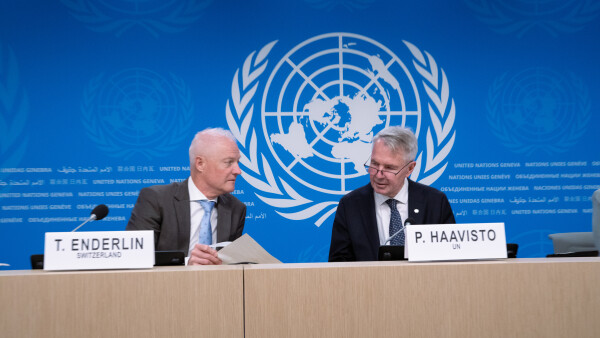
Closing Press Conference following the Sixth Consultative Meeting on Enhancing Coordination of Peace Initiatives and Efforts in Sudan

2
17
1
2
Edited News , Press Conferences | OCHA , WMO
Two UN agencies teamed up on Wednesday to issue an appeal for immediate assistance to help communities already being impacted by the strongest El Niño on record.
3
16
2
2
B-roll , Conferences , Edited News | UNITED NATIONS , UNOG
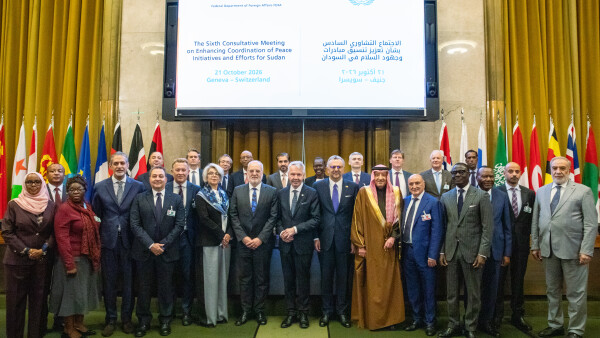
Sixth Consultative Meeting on Enhancing Coordination of Peace Initiatives and Efforts for Sudan
1
1
1
Press Conferences | CITES
Wildlife trade and conservation policy discussions at the 81st meeting of the CITES Standing Committee (SC81)
1
1
1
Edited News | UNICEF , WHO , UNHCR
Yemen war continues to force families from homes amid hunger and disease
More than 250,000 people have now fled renewed fighting in Yemen, the UN said on Tuesday, citing particular concern for those sheltering in the southwestern city of Taiz and the wider governorate, where access is “essentially blocked”.
1
1
1
Press Conferences | UNHCR , UNCTAD , WMO , OCHA , UNICEF , WHO
UNHCR Hungary’s 1956 Refugee Crisis: 70 Years On, UNCTAD World Investment Forum 2026, Doha, WMO Greenhouse Gas Bulletin and Climate Update for COP31, OCHA Afghanistan: Malnutrition, Girls’ Education and Recovery, UNICEF Yemen: Child Malnutrition and Unsafe Water in Taiz, WHO Inequalities in Noncommunicable Diseases and Risk Factors
1
1
1
Press Conferences | UNHCR
End of UNHCR's 77th Annual Executive Committee (ExCom) meeting week

1
1
1
Edited News | UNICEF
A little over one year since a ceasefire agreement was announced between Hamas fighters and Israel, more than 340 children have been reported killed and hundreds more injured, the UN Children’s Fund, UNICEF, said on Friday.
1
1
1
Press Conferences | UNICEF , IOM , UNHCR
UN Special Assistant to the Personal Envoy Office (SUDAN): Peace Initiatives and Efforts in Sudan; UNICEF: Dire situation of children in Gaza; IOM: Damaged Homes and Energy Attacks Risk Displacing Ukrainians for this winter; UNHCR: update on EXCOM week
1
1
1
Press Conferences | IOM , UNDRR
UN stresses importance of household preparedness for disaster risk reduction.

1
1
1
Edited News | UNICEF , IFRC
Six weeks after Nepal’s deadly flooding disaster, communities are still struggling to rebuild their lives, but they will need sustained help as global warming increases the risk of another Himalayan catastrophe, the UN Children’s Fund (UNICEF) said on Friday.
1
1
1
Statements , Press Conferences | OHCHR