

The United Nations Office at Geneva
Multimedia Newsroom
Edited News , Press Conferences | OHCHR
United Nations High Commissioner for Human Rights Volker Türk press conference
“It is clear that we won’t solve the problem of police brutality against people of African descent until we deal with the broader manifestations of systemic racism that permeate every aspect of their lives. The racial abuse faced once again by Real Madrid football player Vinicius Junior in Spain just this past Sunday, is a stark reminder of the prevalence of racism in sport,” the High Commissioner said.
“I call on those who organise sporting events to have strategies in place to prevent and counter racism. Much more indeed needs to be done to eradicate racial discrimination. And it needs to start with listening to people of African descent meaningfully involving them, and taking genuine steps to act upon their concerns,” he said.
“I think I would like to provide a guide to those who are organisers of sporting event, which is so important because of course sport is also I mean, it brings people together. There are so many positive things that are engrained in sport events. And that's why we want to put forward a number of ideas, ideas of human rights standards and sport events,” Türk added.
“Very deeply troubling reports of sexual violence in Darfur have emerged. We are aware of at least 25 cases, but we also know how difficult it is to document these cases. So we are sure that the real number of cases is much higher. General al Burhan, General Dagalo, you must issue clear instructions in no uncertain terms to all those under your command that there is zero tolerance for sexual violence, that perpetrators of all violations must be held accountable. Civilians must be spared, and you must stop this senseless violence now,” the UN Human Rights Chief said.
“Nowhere is the devastating impact of human rights violations more stark than in the midst of conflict and in the aftermath of natural disasters. And I would like to refer in particular to cyclone Mocha, which has cast a swathe of destruction throughout particularly western parts of Myanmar. It is the latest, disturbing, painful manifestation of a manmade disaster resulting from the climate event for decades. As you know so well, the authorities have deprived the Rohingya of their rights and freedoms, they have relentlessly attacked other ethnic groups, eroding their capacity to survive in the face of adversity peacefully. Communities have subsisted, for example, in temporary bamboo structures, some since 2012, with Myanmar’s military repeatedly denying requests of humanitarian agencies to build more sustainable living conditions in areas that are less prone to flooding, that I saw myself. on my several visits to Myanmar, especially to the West and to Rakhine State,” the High Commissioner said.
“In Afghanistan, the Taliban continue aggressively to seek to erase half of the population from everyday life. Such a system of gender apartheid ruins the development potential of the country as a whole. I would never understand how anyone can trample so cruelly upon the spirit of girls and women. Chipping away at their potential and driving one's country deeper and deeper into abject poverty and despair. It is crucial for the sake of the people of Afghanistan, the future of the country and the wider region that these repressive policies against women and girls are immediately overturned,”Türk said.
For more information and media requests, please contact:
Ravina Shamdasani - + 41 22 917 9169 / ravina.shamdasani@un.org or
Liz Throssell + 41 22 917 9296 / elizabeth.throssell@un.org or
Marta Hurtado - + 41 22 917 9466 / marta.hurtadogomez@un.org
Tag and share
Twitter @UNHumanRights
Facebook unitednationshumanrights
Instagram @unitednationshumanrights
Tag and share - Twitter: @UNHumanRights and Facebook: unitednationshumanrights
- Exterior: wide shot Palais des nation
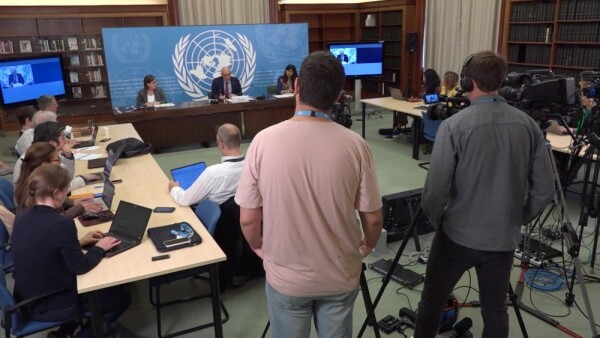
- Interior: wide shot briefing room
- SOUNDBITE (English)—Volker Türk, High Commissioner for Human Rights (OHCHR):
- Cut away: briefing room
- SOUNDBITE (English)—Volker Türk, High Commissioner for Human Rights (OHCHR):
- Cut away: briefing room
- SOUNDBITE (English)—Volker Türk, High Commissioner for Human Rights (OHCHR):
- Cut away shot: Briefing room
- SOUNDBITE (English)—Volker Türk, High Commissioner for Human Rights (OHCHR):
- Cut away shot: Briefing room
- SOUNDBITE (English)—Volker Türk, High Commissioner for Human Rights (OHCHR):
- Cut away shot: Briefing room
- SOUNDBITE (English)—Volker Türk, High Commissioner for Human Rights (OHCHR):
- Cut away: briefing room
“It is clear that we won’t solve the problem of police brutality against people of African descent until we deal with the broader manifestations of systemic racism that permeate every aspect of their lives. The racial abuse faced once again by Real Madrid football player Vinicius Junior in Spain just this past Sunday, is a stark reminder of the prevalence of racism in sport.”
“I call on those who organise sporting events to have strategies in place to prevent and counter racism.Much more indeed needs to be done to eradicate racial discrimination. And it needs to start with listening to people of African descent, meaningfully involving them, and taking genuine steps to act upon their concerns.”
“I think I would like to provide a guide to those who are organisers of sporting events, which is so important because of course sport is also, I mean, it brings people together. There are so many positive things that are engrained in sport events. And that's why we want to put forward a number of ideas, ideas of human rights standards and sport events.”
“Very deeply troubling reports of sexual violence in Darfur have emerged. We are aware of at least 25 cases, but we also know how difficult it is to document these cases. So we are sure that the real number of cases is much higher. General al Burhan, General Dagalo, you must issue clear instructions - in no uncertain terms - to all those under your command that there is zero tolerance for sexual violence, that perpetrators of all violations must be held accountable. Civilians must be spared, and you must stop this senseless violence now.”
“Nowhere is the devastating impact of human rights violations more stark than in the midst of conflict and in the aftermath of natural disasters. And I would like to refer in particular to cyclone Mocha, which has cast a swathe of destruction throughout particularly western parts of Myanmar. It is the latest, disturbing, painful manifestation of a manmade disaster resulting from the climate event for decades. As you know so well, the authorities have deprived the Rohingya of their rights and freedoms, they have relentlessly attacked other ethnic groups, eroding their capacity to survive in the face of adversity peacefully. Communities have subsisted, for example, in temporary bamboo structures, some since 2012, with Myanmar’s military repeatedly denying requests of humanitarian agencies to build more sustainable living conditions in areas that are less prone to flooding that I saw myself on my several visits to Myanmar, especially to the West and to Rakhine State.”
“In Afghanistan, the Taliban continue aggressively to seek to erase half of the population from everyday life. Such a system of gender apartheid ruins the development potential of the country as a whole. I will never understand how anyone can trample so cruelly upon the spirit of girls and women, chipping away at their potential and driving one's country deeper and deeper into abject poverty and despair. It is crucial for the sake of the people of Afghanistan, the future of the country and the wider region that these repressive policies against women and girls are immediately overturned.”
Similar Stories
1
1
1
Press Conferences | IOM , UNDRR
UN stresses importance of household preparedness for disaster risk reduction.

1
1
1
Edited News | UNICEF , IFRC
Six weeks after Nepal’s deadly flooding disaster, communities are still struggling to rebuild their lives, but they will need sustained help as global warming increases the risk of another Himalayan catastrophe, the UN Children’s Fund (UNICEF) said on Friday.
1
1
1
Statements , Press Conferences | OHCHR
1
1
1
Press Conferences | UNHCR , UNICEF , IFRC , OHCHR , UN WOMEN , IOM , OCHA , WHO
UNHCR – ExCom Meeting, UNICEF – Nepal Recovery, IFRC – Flash Floods, WHO – Mental Health, IOM – South Sudan Floods, OCHA – DRC Humanitarian aid, UNHCR – Sahel Displacement, UNICEF – Yemen Update, IOM – Gaza Shelter, UN Women – Gaza Women, OHCHR – Arrests and detentions of Syrians by Israeli force
2
1
2
Press Conferences | UNCTAD
Presentation of the Trade and Developement Report 2026
Embargoed until 9 October 2026 at 11 a.m. (Geneva Time)
UNCTAD: UNCTAD’s flagship report finds that governments increasingly use industrial, trade, financial and technology policies to pursue economic and national security objectives. Market access and the ability to move into higher-value activities now depend more heavily on technology, finance and geopolitics.
1
1
1
Press Conferences | UPU
Release of the State of the Postal Sector Report 2026

1
1
1
Edited News | WHO
In suspected Russia plague death, testing and monitoring underway – WHO
The death of a lab worker in Russia’s Siberia region has sparked concerns about plague being the cause, the UN World Health Organization (WHO) said on Tuesday, adding that it was following the situation closely.
1
1
1
Press Conferences | IOM , ITU , UNECE , UNICEF , WHO , WMO
UNICEF: Ebola, DRC - children orphans or separating them from parents and caregivers; IOM: Humanitarian needs in Djibouti amid arrivals from Yemen and increased migrant movements; WHO: Darfur, scale of health needs far exceeds available resources; WMO co-sponsored Global Heat Forum, Bangkok, monthly Global Seasonal Climate Update; UNECE: UN Forum of Mayors; ITU Plenipotentiary Conference 2026; WHO: child and adolescent obesity guidelines and new global roadmap to tackle pregnancy hypertension, a leading cause of maternal mortality

1
1
Edited News | OHCHR , UNOG
UN Human Rights Chief Volker Türk on Friday provided and oral update to the 63rd session of the Human rights Council on Ukraine.

1
1
1
Edited News | OHCHR , UNOG
UN Human Rights Chief Volker Türk on Friday provided and oral update to the 63rd session of the Human rights Council on the human rights situation in Haiti.

1
1
1
Edited News | WHO
Repeated delays in bringing lifesaving medicines, prosthetics and more from Israel into Gaza risk having devastating consequences on Palestinians who urgently need them in the wartorn enclave, the UN World Health Organization (WHO) said on Friday. “A truck full of non-priority supplies or the right supplies arriving too late, doesn't save lives. That's the question that actually matters," said Dr Reinhilde Van De Weerdt, WHO Representative in the OPT.
1
1
1
Press Conferences | OCHA , UN WOMEN , UNHCR , WFP , WHO , WTO , UNEP
OCHA – $160M CERF allocation to 12 underfunded crises; UNHCR – 5.8M refugee children remain out of school amid funding cuts; UN Women – Middle East escalation and food security among women/girls; WHO – Gaza supplies and overall situation; WFP – Yemen food insecurity and impact on global hunger ; UNEP - First International Conference of the Global Framework on Chemicals in Geneva | 16-20 November 2026