

The United Nations Office at Geneva
Multimedia Newsroom
UNICEF highlights devastating mental health dangers for Ukraine’s children
Ten weeks into the war in Ukraine, UN humanitarians on Friday said that they were urgently ramping up efforts to provide vulnerable children with specialist and psychosocial support, amid “tremendous” mental health needs and ongoing dangers linked to the Russian invasion and sexual and gender-based violence.
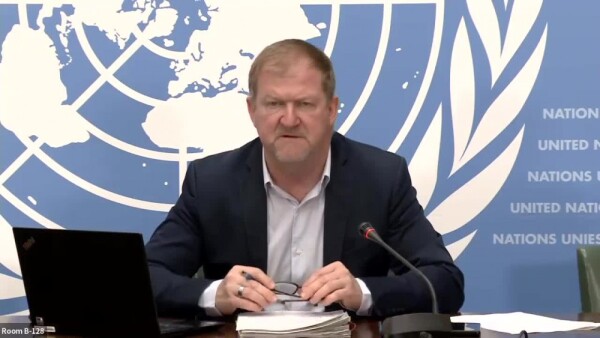
“We’re anticipating numbers in terms of orphans and violence against children to be in the tens of thousands for sure,” said Aaron Greenberg, UNICEF’s regional child protection advisor for Europe & Central Asia.
Before 24 February, Ukraine’s orphanages, boarding schools and other institutions for youngsters housed more than 91,000 children, around half with disabilities. Today, only around one-third of that number have returned home, including those evacuated from the east and south, according to UN Children’s Fund UNICEF.
“The impact of the war on these children has been particularly devastating,” said Mr. Greenberg, speaking to journalists in Geneva via Zoom from Lviv. “Tens of thousands of children living in institutional or foster care have been returned to families, many of them hastily, as they war got started. Many have not received the care and protection they require, especially children with disabilities.”
Condemning the fact that hundreds of youngsters have been killed in shelling attacks already, the UN agency warned that others had suffered serious mental health trauma linked to “direct experience” of violence, both physical and sexual.
While insisting that many children “will bounce back” if they can get back to school and start seeing some form of “normalisation” in their lives, Mr. Greenberg warned that existing capacity to help them was stretched to breaking point.
“Since 24 February UNICEF and our partners have reached over 140,000 children and their caregivers with mental health and psychosocial services,” he continued. “But a vast majority of that, 95 per cent, are direct engagements with children and trained psychologists.”
Priorities for the UN agency include scaling up investments in local NGO mental health providers to help the youngsters still in care, in support of Ukrainian government policy.
But it is proving difficult to find enough professionals to help, “as social workers, child psychologists and other professionals are equally impacted by this conflict”, Mr. Greenberg continued.
“If you start doing the math, there are children who remain in institutions who were not evacuated either internally or externally, and there are children in foster care families whose payments were temporarily interrupted, and there are children in guardianship arrangements, a significant number, so when you layer this, the number of children in need who were vulnerable pre-crisis and whose now vulnerabilities have been accelerated, is incredibly high.”
Throughout Ukraine, UNICEF has 56 deployed mobile units to provide specialised health services to traumatised children. There are also 12 “dedicated violence mobile teams in the east”, where fighting is ongoing, Mr. Greenberg said. “To date, those mobile teams in the east have worked with 7,000 cases of women and children in terms of responding to specific violence-related queries and reports that the mobile team then follows up on.”
ends
STORY: Ukraine Women And Children Alert - UNICEF
TRT: 1 min 53s
SOURCE: UNTV CH
RESTRICTIONS: NONE
LANGUAGE: ENGLISH / NATS
ASPECT RATIO: 16:9
DATELINE: 6 May 2022 GENEVA, SWITZERLAND
SHOTLIST
- Exterior medium shot, Palais des Nations flag alley, a sunny day.
- Wide shot, podium with moderator in Press briefing room, Palais des Nations.
- SOUNDBITE (English) — Aaron Greenberg, UNICEF’s regional child protection advisor for Europe & Central Asia (via Zoom from Lviv): “Since 24 February UNICEF and our partners have reached over 140,000 children and their caregivers with mental health and psychosocial services; but a vast majority of that, 95 per cent, are direct engagements with children and trained psychologists.”
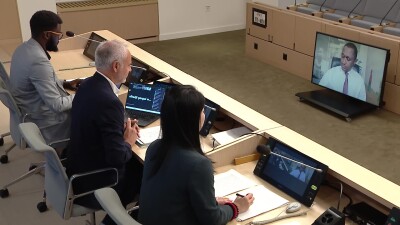
- Medium shot, journalist wearing facemask with large-screen TV to rear showing podium moderator and Mr. Greenberg speaking via Zoom from Ukraine.
- SOUNDBITE (English) — Aaron Greenberg, UNICEF’s regional child protection advisor for Europe & Central Asia (via Zoom from Lviv): “If you start doing the math, there are children who remain in institutions who were not evacuated either internally or externally, and there are children in foster care families whose payments were temporarily interrupted, and there are children in guardianship arrangements, a significant number, so when you layer this, the number of children in need who were vulnerable pre-crisis and whose now vulnerabilities have been accelerated, is incredibly high.”
- Close-up, participant wearing facemask and headphones, looking down, journalist wearing facemask to rear.
- SOUNDBITE (English) — Aaron Greenberg, UNICEF’s regional child protection advisor for Europe & Central Asia (via Zoom from Lviv): “UNICEF and other partners as well, but UNICEF is supporting 12 dedicated violence mobile teams in the east. To date, those mobile teams in the east have worked with 7,000 cases of women and children in terms of responding to specific violence-related queries and reports that the mobile team then follows up on.”
- Wide shot of room showing journalists wearing facemasks, large-screen TV and TV camera on tripod with lighting panel.
- SOUNDBITE (English) — Aaron Greenberg, UNICEF’s regional child protection advisor for Europe & Central Asia (via Zoom from Lviv): “We’re anticipating numbers in terms of orphans and violence against children to be in the tens of thousands for sure.”
- Close-up, TV camera lens, blurred, with large-screen TV monitor to rear in focus showing moderator and Mr. Greenberg.
- Medium shot, participants, journalists wearing facemasks, side shot.
- Medium shot, participant’s face reflected in laptop.
Similar Stories
1
1
1
Press Conferences | UNHCR
End of UNHCR's 77th Annual Executive Committee (ExCom) meeting week
1
1
1
Press Conferences | UNICEF , IOM , UNHCR
UN Special Assistant to the Personal Envoy Office (SUDAN): Peace Initiatives and Efforts in Sudan; UNICEF: Dire situation of children in Gaza; IOM: Damaged Homes and Energy Attacks Risk Displacing Ukrainians for this winter; UNHCR: update on EXCOM week
1
1
1
Press Conferences | IOM , UNDRR
UN stresses importance of household preparedness for disaster risk reduction.
1
1
1
Statements , Press Conferences | OHCHR
1
1
1
Press Conferences | UNHCR , UNICEF , IFRC , OHCHR , UN WOMEN , IOM , OCHA , WHO
UNHCR – ExCom Meeting, UNICEF – Nepal Recovery, IFRC – Flash Floods, WHO – Mental Health, IOM – South Sudan Floods, OCHA – DRC Humanitarian aid, UNHCR – Sahel Displacement, UNICEF – Yemen Update, IOM – Gaza Shelter, UN Women – Gaza Women, OHCHR – Arrests and detentions of Syrians by Israeli force
2
1
2
Press Conferences | UNCTAD
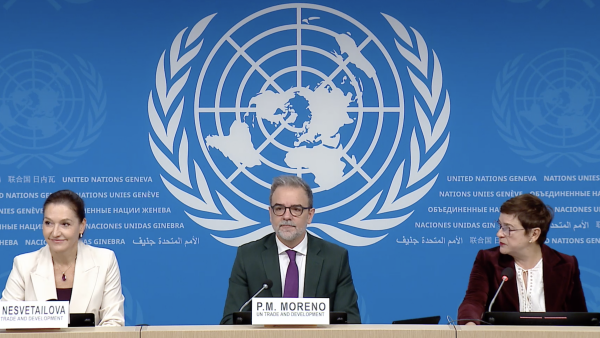
Presentation of the Trade and Developement Report 2026
Embargoed until 9 October 2026 at 11 a.m. (Geneva Time)
UNCTAD: UNCTAD’s flagship report finds that governments increasingly use industrial, trade, financial and technology policies to pursue economic and national security objectives. Market access and the ability to move into higher-value activities now depend more heavily on technology, finance and geopolitics.
1
1
1
Press Conferences | UPU
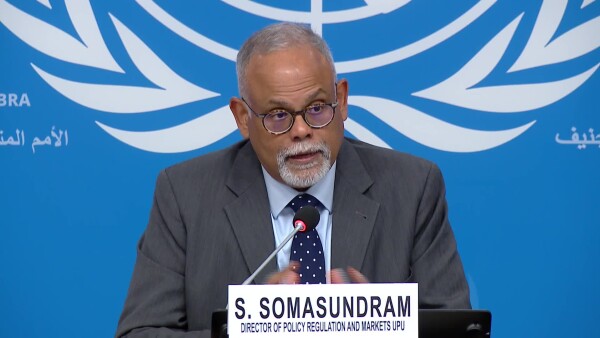
Release of the State of the Postal Sector Report 2026
1
1
1
Press Conferences | IOM , ITU , UNECE , UNICEF , WHO , WMO
UNICEF: Ebola, DRC - children orphans or separating them from parents and caregivers; IOM: Humanitarian needs in Djibouti amid arrivals from Yemen and increased migrant movements; WHO: Darfur, scale of health needs far exceeds available resources; WMO co-sponsored Global Heat Forum, Bangkok, monthly Global Seasonal Climate Update; UNECE: UN Forum of Mayors; ITU Plenipotentiary Conference 2026; WHO: child and adolescent obesity guidelines and new global roadmap to tackle pregnancy hypertension, a leading cause of maternal mortality
1
1
1
Press Conferences | OCHA , UN WOMEN , UNHCR , WFP , WHO , WTO , UNEP
OCHA – $160M CERF allocation to 12 underfunded crises; UNHCR – 5.8M refugee children remain out of school amid funding cuts; UN Women – Middle East escalation and food security among women/girls; WHO – Gaza supplies and overall situation; WFP – Yemen food insecurity and impact on global hunger ; UNEP - First International Conference of the Global Framework on Chemicals in Geneva | 16-20 November 2026
1
1
1
Press Conferences | UNHCR , WHO
Yemen's health system nears collapse amid conflict, causing rising casualties and medicine shortages.
1
1
1
Press Conferences | HRC
Update by the Expert Mechanism to Advance Racial Justice and Equality in Law Enforcement
1
1
1
Press Conferences | WIPO , WHO , UNICEF , UNHCR , IOM , WFP , FAO
WIPO Global Innovation Index 2026 launch and press conference, WHO Composition of influenza vaccines for the 2027 Southern Hemisphere flu season, UNICEF Yemen hunger and malnutrition; UNHCR Sudan displacement into Chad; IOM Ebola and population movements in DRC; WFP emergency food assistance in Nepal; and FAO food loss and waste.