

The United Nations Office at Geneva
Multimedia Newsroom
Papua New Guinea landslide response hampered by complex conditions
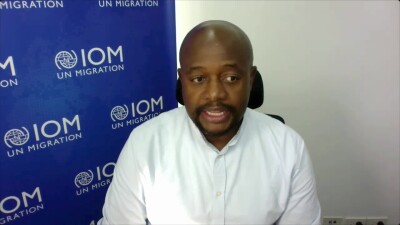
Efforts to rescue those impacted by the deadly landslide in Papua New Guinea that has claimed an estimated 2,000 lives have been complicated by fears that the waterlogged ground could shift again. “We don’t want a disaster on top of the current one,” said Itayi Viriri, UN migration agency (IOM) regional spokesperson for Asia and the Pacific, on Tuesday.
Reports from the National Disaster Center indicate that up to 2,000 people were buried under mud and rubble after a massive landslide last Friday at 3am “when most people were probably sleeping”, said Itayi Viriri, UN migration agency (IOM) regional spokesperson for Asia and the Pacific.
The landslide engulfed the area, burying homes, infrastructure and farmland under up to eight metres of soil and debris. Only six bodies have been recovered so far.
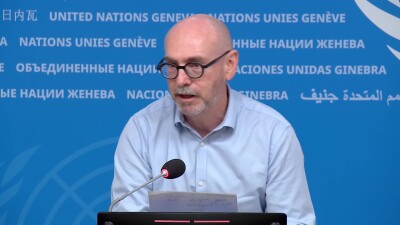
Speaking to journalists in Geneva from Bangkok via Zoom, the IOM spokesperson highlighted the vulnerability of those affected by the disaster: “A lot of the people who have been affected by this landslide actually moved to this area after escaping tribal conflicts in other parts of the province of Enga. So these are people who are already displaced who are now having to move to other locations.”
Dramatic video from the scene of the disaster showed locals and rescue workers struggling to shift a wall of mud and rubble using shovels. But safe access continues to be extremely difficult. “Just today, this morning, one of the main thoroughfares leading to this area, a bridge there collapsed. And now they have to fix it to make sure that all the convoys that are going to provide support have access.”
The UN agency warned that with so many bodies still to be recovered from beneath the rubble, there are concerns that underground water flowing down the mountain will contaminate local drinking water sources.
Most of the area’s sources of clean drinking water are now inaccessible because of the landslide.
“What is needed now, obviously, is access to clean water; quite a lot of the water that normally the community would access is already under rubble,” Mr. Viriri said. “So, providing that along with, food, of course, clothing, shelter items, kitchen utensils, anything that will try and alleviate the hardship that the people are facing right now.”
Heavy rains continue to hamper the relief effort, however. “This landslide that happened on Friday had not happened before in this area so it’s hard to say if it will happen again,” the IOM spokesperson said. “The soil is unsteady…and you’ve seen some of the videos of the water coming out in some of the rubble, so that makes it even more so. Yes, unfortunately we have to consider that it might happen again.”
ends
STORY: Papua New Guinea landslide update - IOM
TRT: 2’23”
SOURCE: UNTV CH
RESTRICTIONS: NONE
LANGUAGE: ENGLISH / NATS
ASPECT RATIO: 16:9
DATELINE: 28 MAY 2024 GENEVA, SWITZERLAND
1. Exterior wide: UN Geneva flag alley
2. Wide: Press conference room, UN Geneva.
3. SOUNDBITE (English) – Itayi Viriri, UN migration agency (IOM) regional spokesperson for Asia and the Pacific (from Bangkok via Zoom): “The National Disaster Center has estimated that up to 2000 people are still buried under the rubble after the massive landslide that took place on Friday at 3am when most people were probably sleeping.”
4. Wide: journalists seated and TV camera operators in press room.
5. SOUNDBITE (English) – Itayi Viriri, UN migration agency (IOM) regional spokesperson for Asia and the Pacific (from Bangkok via Zoom) “A lot of the people who have been affected by this landslide actually moved to this area after escaping tribal conflicts in other parts of the province of Enga. So, these are people who are already displaced who are now having to move to other locations.”
6. Medium: journalists in the Press room.
7. SOUNDBITE (English) – Itayi Viriri, UN migration agency (IOM) regional spokesperson for Asia and the Pacific (from Bangkok via Zoom): “What is needed now, obviously, is access to clean water; quite a lot of the water that normally the community would access is already under rubble. So, providing that along with, food, of course, clothing, shelter items, kitchen utensils, anything that will try and alleviate the hardship that the people are facing right now.”
8. Medium: Journalists seated in the Press room.
9. SOUNDBITE (English) – Itayi Viriri, UN migration agency (IOM) regional spokesperson for Asia and the Pacific (from Bangkok via Zoom): “And the reality also is that access to the area for, you know, Government and other agencies is quite difficult. Just today, this morning, one of the main thoroughfares leading to this area, a bridge there collapsed. And now they have to fix it to make sure that all the convoys that are going to provide support have access.”
10. Medium: journalists seated amid microphones.
11. SOUNDBITE (English): Itayi Viriri, UN migration agency (IOM) regional spokesperson for Asia and the Pacific (from Bangkok via Zoom): “This landslide that happened on Friday had not happened before in this area so it’s hard to say if it will happen again. But with the continued heavy rains in the vicinity obviously everything is – the soil is unsteady – and all the rubble is still (seeing) some movement and you’ve seen some of the videos of the water coming out in some of the rubble, so that makes it even more so. (So) yes, unfortunately we have to consider that it might happen again.”
12. Medium shot: Journalist in the Press room.
Additional images from PNG here:
https://drive.google.com/drive/folders/1qvqnOum0R2Lg0FzyeHnXRvoRbKCLDu4Z
Similar Stories
1
1
1
Edited News | UNRWA , WHO
Gaza: Life-saving medicines blocked as killing continues, disease gains ground
In Gaza, a dire humanitarian situation marked by continuing violence, rodent infestations and the spread of diseases is being made worse by blockages of essential medical supplies, UN agencies warned on Friday.
1
1
1
Edited News | OHCHR , UNOG
UN Human Rights spokesperson Shabia Mantoo, warned against the continuing trend of involuntary returns of Afghan refugees and asylum-seekers from host countries to Afghanistan, in violation of international human rights and refugee law, at the bi-weekly press briefing in Geneva.
1
1
1
Edited News | IFRC , OHCHR
Lebanon's first responders face high risks amid conflict, with 116 killed since March.
1
1
1
Edited News | WHO
DRC Ebola outbreak: hundreds of suspected cases, no vaccine
A fast-spreading Ebola outbreak in the Democratic Republic of the Congo (DRC) has health workers rushing to stop transmission while the roll out of any potential vaccine is months away, the UN World Health Organization (WHO) said on Tuesday.
1
1
1
Edited News | OHCHR
A UN Human Rights Office report released today covers 19 months of large-scale violations of international law including atrocity crimes, from October 2023 to the end of May 2025.
1
1
1
Edited News | OCHA , UNICEF
At least six million people in Somalia are going days without enough food, UN aid teams warned on Friday, highlighting that nearly two million of this number are young children “at high risk of illness or death”.
1
1
1
Edited News | UNICEF , WHO
Children shot, stabbed and pepper-sprayed in occupied West Bank; scores of Gaza amputees denied prosthetics, aid teams warn
Israeli military operations and surging settler attacks in the occupied West Bank are killing and maiming Palestinian children, while in Gaza tens of thousands with life-changing injuries lack access to treatment and rehabilitation, UN agencies warned on Tuesday.
1
1
1
Edited News | WHO
The risk of hantavirus spreading to the general population is “absolutely low”, the UN World Health Organization (WHO) stressed on Friday.
1
1
1
Edited News | UNHCR , IFRC
Death and destruction have continued unabated in Lebanon while communities are still unable to return to their homes despite a ceasefire that began on 17 April, humanitarians said on Tuesday.
1
1
Edited News | WHO
Deadly hantavirus on board cruise ship may be transmitted among humans - WHO
Hantavirus victims on a ship in the Atlantic Ocean may have been infected prior to joining the cruise and human-to-human transmission on board cannot be ruled out – although it is rare - the World Health Organization (WHO) said on Tuesday.
1
1
1
Edited News | OHCHR
UN rights chief concerned by upheld convictions of Cambodian activists.