

The United Nations Office at Geneva
Multimedia Newsroom
Les humanitaires de l'ONU rejettent le plan israélien de prendre en charge la livraison de l'aide
La proposition israélienne rapportée de livrer des fournitures humanitaires par le biais de centres contrôlés par l'armée constituerait une violation des principes fondamentaux de neutralité, d'impartialité et d'indépendance de la livraison de l'aide, a déclaré mardi le bureau de coordination de l'aide de l'ONU, OCHA.
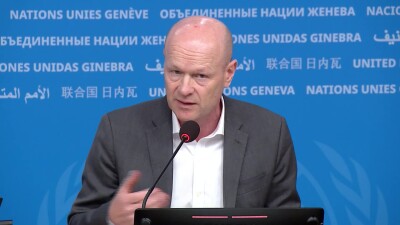
«Les responsables israéliens ont cherché à fermer le système d'aide existant géré par 15 agences de l'ONU et 200 ONG et partenaires,» a déclaré Jens Laerke, porte-parole de l'OCHA.
S'adressant aux journalistes à Genève, M. Laerke a fait référence à un briefing verbal que les autorités israéliennes ont donné aux partenaires de l'ONU le lundi 5 mai, dans lequel elles ont proposé de livrer des fournitures par le biais de centres israéliens sous des conditions fixées par l'armée, une fois que le gouvernement rouvrira les passages vers Gaza. La proposition faisait partie des plans d'Israël pour étendre son offensive militaire contre le Hamas, y compris la « capture » de la bande de Gaza et un commentaire rapporté du ministre israélien des Finances Bezalel Smotrich selon lequel le territoire palestinien sera « entièrement détruit ».
« Nous n'acceptons pas une proposition et un plan qui ne respectent pas les principes humanitaires fondamentaux et essentiels d'impartialité, de neutralité et de livraison indépendante de l'aide,» a expliqué M. Laerke. « Cela semble être une tentative délibérée de militariser l'aide, et nous avons mis en garde contre cela depuis très longtemps. L'aide devrait être fournie en fonction des besoins humanitaires à quiconque en a besoin,» a-t-il insisté.
La promesse du cabinet israélien d'intensifier la guerre obligera les plus de deux millions de Gazaouis à se déplacer à nouveau vers le sud de la bande. Après 19 mois de conflit, l'ensemble de l'enclave a subi l'impact des passages frontaliers fermés qui ont causé de graves pénuries d'eau et de nourriture.
La décision israélienne de couper l'entrée des fournitures humanitaires dans l'enclave serait apparemment destinée à faire pression sur le Hamas pour qu'il libère les otages restants capturés lors des attaques terroristes menées par le Hamas le 7 octobre 2023, qui ont déclenché la guerre. Les humanitaires condamnent le blocus car il viole le droit international et risque de créer une famine artificielle.
Les partenaires de l'ONU travaillant dans les secteurs alimentaires ont distribué tout ce qu'ils avaient et n'ont plus rien à donner. Le porte-parole de l'OCHA a rapporté des témoignages de collègues sur le terrain qui ont observé « des gens fouillant dans les poubelles, essayant de trouver quelque chose de comestible. C'est la dure, brutale et inhumaine réalité de la situation.»
Depuis le début de 2025, près de 10 000 enfants souffrant de malnutrition aiguë globale ont été admis pour un traitement ambulatoire et hospitalier, selon l'Organisation mondiale de la santé (OMS) de l'ONU. Cela inclut 1 397 cas de malnutrition aiguë sévère. « Nous voyons également beaucoup d'enfants souffrant de malnutrition aiguë sévère avec des complications médicales. Et une fois que vous atteignez ce stade, sans traitement, vous mourrez,» a averti le Dr Margaret Harris, porte-parole de l'agence de santé de l'ONU.
L'OMS observe moins de cas d'enfants se rendant dans les hôpitaux partiellement fonctionnels pour un traitement que prévu, probablement parce qu'ils n'ont pas accès aux centres de soins. Selon les données de l'OMS, un enfant sur cinq ne termine pas son traitement, en raison du déplacement et de la situation chaotique qu'ils affrontent. Le manque d'infrastructures d'eau et d'assainissement cause également une augmentation préoccupante de la diarrhée aqueuse aiguë. Les maladies de la peau augmentent car les gens n'ont pas d'eau pour se laver.
Entre-temps, M. Laerke a continué d'appeler tous les acteurs politiques à un cessez-le-feu permanent immédiat et à la libération immédiate et inconditionnelle des otages à Gaza. « C'est un crime de guerre horrible de prendre des otages et de les utiliser comme une sorte de monnaie d'échange,» a-t-il déclaré. « D'un autre côté, vous ne pouvez pas non plus retenir l'aide aux civils comme une monnaie d'échange de l'autre côté du jeu de société,» a-t-il ajouté.
Fin
Histoire : “Blocus humanitaire de Gaza – OCHA, OMS” – Mardi 06 mai 2025
Les orateurs sont des porte-parole :
- Jens Laerke, Bureau de la coordination des affaires humanitaires de l'ONU, OCHA
- Margaret Harris, Organisation mondiale de la santé, OMS
TRT : 03’25”
SOURCE : UNTV CH
LANGUE : ANGLAIS / NATS
FORMAT D'IMAGE : 16:9
DATELINE : 06 mai 2025 - GENÈVE, SUISSE
Conférence de presse à Genève
LISTE DES PLANS
- Plan moyen extérieur : allée des drapeaux de l'ONU.
- Plan large de la salle de conférence de presse.
- EXTRAIT SONORE (Anglais) Jens Laerke, Bureau de la coordination des affaires humanitaires de l'ONU, OCHA : “Les responsables israéliens ont cherché à fermer le système d'aide existant qui est géré par les 15 agences susmentionnées et 200 ONG, ainsi que d'autres partenaires. Et les Israéliens leur ont demandé de livrer les fournitures via des centres israéliens sous les conditions fixées par l'armée israélienne, une fois que le gouvernement israélien accepte de rouvrir les passages.”
- Plan large latéral de la salle de conférence de presse.
- EXTRAIT SONORE (Anglais) Jens Laerke, Bureau de la coordination des affaires humanitaires de l'ONU, OCHA : “Nous n'acceptons pas une proposition et un plan qui ne respectent pas les principes humanitaires fondamentaux d'impartialité, de neutralité et de livraison indépendante de l'aide. Et ce qui leur a été présenté (agences de l'ONU et ONG) semble conçu pour contrôler et restreindre davantage les fournitures, ce qui est le contraire de ce qui est nécessaire.”
- Plan moyen de dos du podium avec les orateurs dans la salle de conférence de presse.
- EXTRAIT SONORE (Anglais) Jens Laerke, Bureau de la coordination des affaires humanitaires de l'ONU, OCHA : “Il semble s'agir d'une tentative délibérée de militariser l'aide. Et nous avons averti depuis très longtemps que l'aide devrait être fournie en fonction des besoins humanitaires à ceux qui en ont besoin.”
- Plan de coupe de la salle de conférence de presse.
- EXTRAIT SONORE (Anglais) Jens Laerke, Bureau de la coordination des affaires humanitaires de l'ONU, OCHA : “Ce que nous avons entendu de nos partenaires travaillant dans les secteurs alimentaires, c'est qu'ils ont distribué tout ce qu'ils avaient. Donc, il n'y a plus rien à donner. Nous avons également entendu de nos collègues sur le terrain qu'ils observent des gens fouillant dans les poubelles, essayant de trouver quelque chose de comestible. C'est donc la dure, brutale et inhumaine réalité de la situation.”
- Plan large du podium avec les orateurs.
- Margaret Harris, Organisation mondiale de la santé, OMS : “Depuis le début de 2025, près de 10 000 enfants souffrant de malnutrition aiguë globale, dont 1 397 avec une malnutrition aiguë sévère, ont été admis pour un traitement ambulatoire et hospitalier. Nous voyons également beaucoup d'enfants souffrant de malnutrition aiguë sévère avec des complications médicales. Et une fois que vous atteignez ce stade, sans traitement, vous mourrez.”
- Plan de coupe des journalistes dans la salle de conférence de presse.
- EXTRAIT SONORE (Anglais) Jens Laerke, Bureau de la coordination des affaires humanitaires de l'ONU, OCHA : “Nous demandons à ceux qui détiennent des otages de ‘libérer ces otages’. Les familles des otages souffrent énormément. C'est, bien sûr, un crime de guerre horrible de prendre des otages de cette manière et de les utiliser comme une sorte de monnaie d'échange. D'un autre côté, vous ne pouvez pas non plus retenir l'aide aux civils comme une monnaie d'échange de l'autre côté du jeu.”
- Plan large de la salle de conférence de presse et de la salle de contrôle.
- Plan rapproché des journalistes prenant des notes.
- Plans variés de la salle de conférence de presse.
Similar Stories

1
1
1
Edited News | OCHA , UNICEF , WFP
Aid agencies warned on Friday of the fast-developing humanitarian emergency inside Taiz City in Yemen, which has been encircled by de facto Houthi forces fighting government troops along the country’s west coast.

2
17
1
2
Edited News , Press Conferences , Images | OCHA , WMO
Two UN agencies teamed up on Wednesday to issue an appeal for immediate assistance to help communities already being impacted by the strongest El Niño on record.

3
16
2
2
Edited News , B-roll , Conferences , Images | UNITED NATIONS , UNOG
Sixth Consultative Meeting on Enhancing Coordination of Peace Initiatives and Efforts for Sudan

1
1
1
Edited News | UNICEF , WHO , UNHCR
Yemen war continues to force families from homes amid hunger and disease
More than 250,000 people have now fled renewed fighting in Yemen, the UN said on Tuesday, citing particular concern for those sheltering in the southwestern city of Taiz and the wider governorate, where access is “essentially blocked”.

1
1
1
Edited News | UNICEF
A little over one year since a ceasefire agreement was announced between Hamas fighters and Israel, more than 340 children have been reported killed and hundreds more injured, the UN Children’s Fund, UNICEF, said on Friday.

1
1
1
Edited News | UNICEF , IFRC
Six weeks after Nepal’s deadly flooding disaster, communities are still struggling to rebuild their lives, but they will need sustained help as global warming increases the risk of another Himalayan catastrophe, the UN Children’s Fund (UNICEF) said on Friday.

1
1
1
Edited News | WHO
In suspected Russia plague death, testing and monitoring underway – WHO
The death of a lab worker in Russia’s Siberia region has sparked concerns about plague being the cause, the UN World Health Organization (WHO) said on Tuesday, adding that it was following the situation closely.

1
1
Edited News | OHCHR , UNOG
UN Human Rights Chief Volker Türk on Friday provided and oral update to the 63rd session of the Human rights Council on Ukraine.

1
1
1
Edited News | OHCHR , UNOG
UN Human Rights Chief Volker Türk on Friday provided and oral update to the 63rd session of the Human rights Council on the human rights situation in Haiti.

1
1
1
Edited News | WHO
Repeated delays in bringing lifesaving medicines, prosthetics and more from Israel into Gaza risk having devastating consequences on Palestinians who urgently need them in the wartorn enclave, the UN World Health Organization (WHO) said on Friday. “A truck full of non-priority supplies or the right supplies arriving too late, doesn't save lives. That's the question that actually matters," said Dr Reinhilde Van De Weerdt, WHO Representative in the OPT.

1
1
1
Edited News | WHO
DRC: Early access to care and oxygen decisive for Ebola patients’ survival – WHO
In the Democratic Republic of the Congo (DRC), health workers fighting the country’s largest-ever Ebola outbreak are struggling to overcome critical challenges to patient care, the UN World Health Organization (WHO) warned on Tuesday.

1
1
1
Edited News | OCHA , UN
Civilians in Iran are continuing to feel the consequences of months of conflict and military escalation, the UN’s top official in the country has said, as loss of life, damage to civilian infrastructure and mounting economic pressures leave many facing continued uncertainty.