

The United Nations Office at Geneva
Multimedia Newsroom
UN Humanitarians reject Israeli plan to take over aid delivery
The reported Israeli proposal to deliver humanitarian supplies through hubs controlled by the military would be a breach of the core principles of neutral, impartial and independent aid delivery, the UN aid coordination office, OCHA, said on Tuesday.
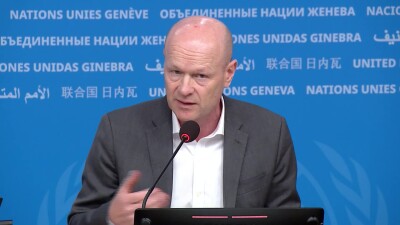
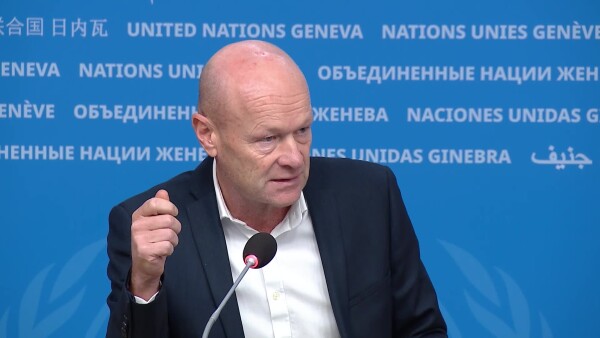
“Israeli officials have sought to shut down the existing aid system run by 15 UN agencies and 200 NGOs and partners,” said Jens Laerke, OCHA spokesperson.
Speaking to journalists in Geneva, Mr. Laerke referred to a verbal brief the Israeli authorities gave to UN partners on Monday 5 May, in which they offered to deliver supplies through Israeli hubs under conditions set by the military, once the Government reopens crossings into Gaza. The proposal came as part of Israel’s plans to expand its military offensive against Hamas, including the “capture” of the Gaza Strip and a reported comment by Israeli Finance Minister Bezalel Smotrich that Palestinian territory will be “entirely destroyed”.
“We do not accept a proposal and a plan that does not live up to the core, fundamental, humanitarian principles of impartiality, neutrality and independent delivery of aid,” explained Mr. Laerke. “It appears to be a deliberate attempt to weaponize the aid, and we have warned against that for a very long time. Aid should be provided based on humanitarian need to whomever needs it,” he insisted.
The Israeli cabinet’s vow to escalate war will force the more than two million Gazans to move to the south of the Strip once again. After 19 months of conflict, the entire enclave has suffered the impact of closed border crossings that have caused severe water and food shortages.
The Israeli decision to cut off the entry of humanitarian supplies to the enclave is reportedly to pressure Hamas to release the remaining hostages taken in Hamas-led terror attacks on 7 October 2023 that sparked the war. Humanitarians condemn the blockade as it violates international law and risks creating a man-made famine.
UN partners working in the food sectors have distributed all they had and have no more to give. The OCHA spokesperson reported testimonies of colleagues on the ground who observed “people rummaging through garbage, trying to find something edible. That is the harsh, brutal, inhuman reality of the situation.”
Since the beginning of 2025, nearly 10,000 children with global acute malnutrition have been admitted for outpatient and inpatient treatment, according to the UN World Health Organization (WHO). That includes 1,397 with severe acute malnutrition. “We are also seeing a lot of children with severe acute malnutrition with medical complications. And once you get to that stage, without treatment, you will die,” warned Dr. Margaret Harris, spokesperson for the UN health agency.
The WHO sees fewer cases of children coming into the partially functioning hospitals for treatment than expected, most probably because they are not getting access to the care centres. According to WHO data, one in five children do not complete their treatment, because of the displacement and chaotic situation they face. The lack of water and sewage infrastructure is also causing a worrying spike in acute watery diarrhoea. Skin diseases are on the rise because people do not have the water to wash themselves with.
Meanwhile, Mr. Laerke continued to call all political actors for an immediate permanent ceasefire and the immediate and unconditional release of hostages in Gaza. “It is a horrible crime of war to take hostages and use them as some kind of bargaining chip,” he said. “On the other hand, you can also not withhold aid to civilians as a bargaining chip on the other side of the board game,” he added.
Ends
Story: “Gaza humanitarian blockade – OCHA, WHO” – Tuesday 06 May 2025
Speakers are spokespersons:
- Jens Laerke, UN aid coordination office, OCHA
- Dr. Margaret Harris, World Health Organization, WHO
TRT: 03’25”
SOURCE: UNTV CH
LANGUAGE: ENGLISH / NATS
ASPECT RATIO: 16:9
DATELINE: 06 May 2025 - GENEVA, SWITZERLAND
Geneva Press briefing
SHOTLIST
- Exterior medium shot: UN flag alley.
- Wide shot of the press conference room.
- SOUNDBITE (English) Jens Laerke, spokesperson for the UN aid coordination office, OCHA: “Israeli officials have sought to shut down the existing aid system which is run by the afore-mentioned 15 agencies and 200 NGOs, plus other partners. And the Israelis have asked them to instead deliver supplies through Israeli hubs under conditions set by the Israeli military, once the Israeli government agrees to reopen the crossings.”
- Wide lateral shot of the press conference room.
- SOUNDBITE (English) Jens Laerke, spokesperson for the UN aid coordination office, OCHA: “We do not accept a proposal and a plan that does not live up to the core fundamental, humanitarian principles of impartiality, neutrality and independent delivery of aid. And what they (UN agencies and NGOs) were presented with, appears designed to further control and restrict supplies, which is the opposite of what is needed.”
- Medium back shot of podium with speakers at the press conference room.
- SOUNDBITE (English) Jens Laerke, spokesperson for the UN aid coordination office, OCHA: “It appears to be a deliberate attempt to weaponize the aid. And we have warned against that for a very long time, that aid should be provided based on humanitarian need to whomever needs it.”
- Wide shot of journalists in the press conference room.
- SOUNDBITE (English) Jens Laerke, spokesperson for the UN aid coordination office, OCHA: “What we have heard from our partners working in the food sectors is that they have distributed all they had. So, there's no more to give. We have also heard from our colleagues on the ground that they observe people rummaging through garbage, trying to find something edible. So that is the harsh, brutal, inhuman reality of the situation.”
- Wide shot of the podium with speakers.
- Dr. Margaret Harris, spokesperson for the World Health Organization, WHO: “Since the beginning of 2025, nearly 10,000 children with global acute malnutrition, and that includes 1,397 with severe acute malnutrition, have been admitted for outpatient and inpatient treatment. We are also seeing a lot of children with severe acute malnutrition with medical complications. And once you get to that stage, without treatment, you will die.”
- Wide shot of journalists in the press conference room.
- SOUNDBITE (English) Jens Laerke, spokesperson for the UN aid coordination office, OCHA: “We are asking those who are holding hostages ‘release those hostages’. The hostages’ families are suffering tremendously. It is, of course, a horrible crime of war to take hostages in this way and use them as some kind of bargaining chip. On the other hand, you can also not withhold aid to civilians as a bargaining chip on the other side of the board game.”
- Various shots of the press conference room.
Similar Stories
1
1
1
Edited News | OCHA , UNICEF , WFP
Aid agencies warned on Friday of the fast-developing humanitarian emergency inside Taiz City in Yemen, which has been encircled by de facto Houthi forces fighting government troops along the country’s west coast.

2
17
1
2
Edited News , Press Conferences , Images | OCHA , WMO
Two UN agencies teamed up on Wednesday to issue an appeal for immediate assistance to help communities already being impacted by the strongest El Niño on record.

3
16
2
2
Edited News , B-roll , Conferences , Images | UNITED NATIONS , UNOG
Sixth Consultative Meeting on Enhancing Coordination of Peace Initiatives and Efforts for Sudan

1
1
1
Edited News | UNICEF , WHO , UNHCR
Yemen war continues to force families from homes amid hunger and disease
More than 250,000 people have now fled renewed fighting in Yemen, the UN said on Tuesday, citing particular concern for those sheltering in the southwestern city of Taiz and the wider governorate, where access is “essentially blocked”.

1
1
1
Edited News | UNICEF
A little over one year since a ceasefire agreement was announced between Hamas fighters and Israel, more than 340 children have been reported killed and hundreds more injured, the UN Children’s Fund, UNICEF, said on Friday.

1
1
1
Edited News | UNICEF , IFRC
Six weeks after Nepal’s deadly flooding disaster, communities are still struggling to rebuild their lives, but they will need sustained help as global warming increases the risk of another Himalayan catastrophe, the UN Children’s Fund (UNICEF) said on Friday.

1
1
1
Edited News | WHO
In suspected Russia plague death, testing and monitoring underway – WHO
The death of a lab worker in Russia’s Siberia region has sparked concerns about plague being the cause, the UN World Health Organization (WHO) said on Tuesday, adding that it was following the situation closely.

1
1
Edited News | OHCHR , UNOG
UN Human Rights Chief Volker Türk on Friday provided and oral update to the 63rd session of the Human rights Council on Ukraine.

1
1
1
Edited News | OHCHR , UNOG
UN Human Rights Chief Volker Türk on Friday provided and oral update to the 63rd session of the Human rights Council on the human rights situation in Haiti.

1
1
1
Edited News | WHO
Repeated delays in bringing lifesaving medicines, prosthetics and more from Israel into Gaza risk having devastating consequences on Palestinians who urgently need them in the wartorn enclave, the UN World Health Organization (WHO) said on Friday. “A truck full of non-priority supplies or the right supplies arriving too late, doesn't save lives. That's the question that actually matters," said Dr Reinhilde Van De Weerdt, WHO Representative in the OPT.

1
1
1
Edited News | WHO
DRC: Early access to care and oxygen decisive for Ebola patients’ survival – WHO
In the Democratic Republic of the Congo (DRC), health workers fighting the country’s largest-ever Ebola outbreak are struggling to overcome critical challenges to patient care, the UN World Health Organization (WHO) warned on Tuesday.

1
1
1
Edited News | OCHA , UN
Civilians in Iran are continuing to feel the consequences of months of conflict and military escalation, the UN’s top official in the country has said, as loss of life, damage to civilian infrastructure and mounting economic pressures leave many facing continued uncertainty.