

The United Nations Office at Geneva
Multimedia Newsroom
Syria: hundreds killed in Sweida, ‘widespread’ violations as civilians flee for their lives
Amid violent clashes in southern Syria’s Sweida governorate, a picture of grave human rights abuses and rising humanitarian needs is emerging by the hour, the UN said on Friday.
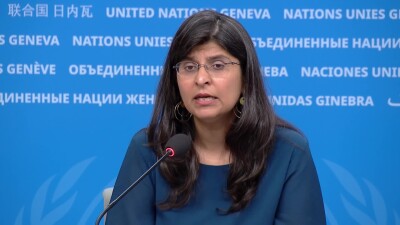
Briefing reporters in Geneva, UN human rights office (OHCHR) spokesperson Ravina Shamdasani highlighted “credible” reports of “widespread violations and abuses, including summary executions and arbitrary killings, kidnappings, destruction of private property and looting of homes” in the city of Sweida.
“Among the reported perpetrators were members of the security forces and individuals affiliated with the interim authorities, as well as other armed elements from the area, including the Druze and Bedouin,” she said.
Hospitals are struggling to cope with the influx of injured, the UN refugee agency (UNHCR) noted at the same briefing.
On Friday morning, OHCHR colleagues reported that clashes were continuing and that “a lot of people are trying to flee or have fled the area”, Ms. Shamdasani continued.
Latest updates from the UN humanitarian affairs coordination office OCHA on Thursday indicated that nearly 2,000 families had been displaced from areas affected by the fighting.
Hundreds have reportedly been killed since sectarian violence involving the Druze and Bedouin communities erupted on 12 July, triggering an intervention by Syrian security forces.
OHCHR’s Ms. Shamdasani highlighted an incident on 15 July in which at least 13 people were killed when “armed individuals affiliated with the interim authorities deliberately opened fire at a family gathering”.
Briefing an emergency meeting of the Security Council in New York on Thursday, UN Assistant Secretary‑General Khaled Khiari also pointed to reports of “civilians, religious figures and detainees being subjected to extrajudicial executions and humiliating and degrading treatment”. He urged all parties to protect civilians and civilian infrastructure.
Ms. Shamdasani stressed that the UN human rights office has been trying to verify the information through “contacts on the ground…families of people who were killed, eyewitnesses”, but that obtaining reliable estimates of the death toll remains a challenge.
“There are lots of videos circulating,” she said. “Some claim to be fighters who are in the area filming the abuses and violations they're carrying out. We are trying to verify some of these videos, but there's a lot of disinformation out there and a lot of it is being used to incite further violence to inflame tensions.”
The OHCHR spokesperson also expressed concern about reports of civilian casualties resulting from Israel's airstrikes on Sweida, Dara’a and central Damascus.
“Attacks such as the one on Damascus on Wednesday pose great risks to civilians and civilian objects,” she warned, calling for the strikes to cease.
Israel had launched the strikes pledging to protect the Druze community.
The violence and displacement have sparked “considerable” humanitarian needs, with the health and aid systems struggling to keep up, said William Spindler of the UN refugee agency (UNCHR).
“Many of the hospitals have been overwhelmed by the number of people who have been injured in the recent fighting,” he said.
According to OCHA, the UN World Health Organization (WHO) has dispatched enough trauma and emergency surgery kits for 1,750 interventions to the area, but many “remain undelivered due to access constraints”.
Since the displaced had to flee at very short notice, they are in desperate need of essentials - blankets, jerry cans, solar lamps - but providing these items has been a challenge.
“We have this in stock and we are ready to deliver them as soon as the security allows it,” Mr. Spindler said. “For now, this has not been possible.”
Mr. Spindler also warned of water shortages due to electricity outages. He said that people are unable to buy bottled water or food because of the insecurity.
UNHCR has an office in rural Sweida and Mr. Spindler expressed concern about the impact of the hostilities on the agency’s operations, infrastructure and personnel.
“We know that humanitarian infrastructure has been affected,” he said, describing an incident on 15 July in which a warehouse of the Syrian Arab Red Crescent was severely damaged by shelling.
The UNHCR spokesperson called on all parties to the conflict to respect and protect humanitarian premises, personnel and assets “in accordance with international humanitarian law”.
-Ends-
STORY Syria Sweida violence OHCHR - UNHCR 18 July 2025
TRT: 2:41”
SOURCE: UNTV CH
RESTRICTIONS: NONE
LANGUAGE: ENGLISH/NATS
ASPECT RATIO: 16:9
DATELINE: 18 JULY 2025 GENEVA, SWITZERLAND
1. Exterior wide shot: Palais des Nations, Flag Alley.
2. Wide shot: Speakers at the podium of the press conference; speaker on screens; journalists in the Press room.
3. SOUNDBITE (English) – Ravina Shamdasani, spokesperson, UN Human Rights Office (OHCHR): “Credible reports that our office has received indicate widespread violations and abuses, including summary executions and arbitrary killings, kidnappings, destruction of private property and looting of homes in the southern city of Sweida. Among the reported perpetrators were members of the security forces and individuals affiliated with the interim authorities, as well as other armed elements from the area, including the Druze and Bedouin.”
4. Wide shot: Speakers at the podium of the press conference.
5. SOUNDBITE (English) – Ravina Shamdasani, spokesperson, UN Human Rights Office (OHCHR): “I spoke to colleagues this morning and they said what they're hearing is that some clashes are continuing and that a lot of people are trying to flee or have fled the area.”
6. Medium shot: Journalist in the Press room.
7. SOUNDBITE (English) – Ravina Shamdasani, spokesperson, UN Human Rights Office (OHCHR): “We've highlighted one incident on 15 July where at least 13 people were killed. The death toll overall is reported to be in the hundreds. We've been trying very hard to verify.”
8. Medium shot: Journalists in the Press room.
9. SOUNDBITE (English) – Ravina Shamdasani, spokesperson, UN Human Rights Office (OHCHR): “There are lots of videos circulating. Some claim to be, you know, fighters who are in the area filming the abuses and violations they're carrying out. We are trying to verify some of these videos, but there's a lot of disinformation out there and a lot of it is being used to incite further violence to inflame tensions.”
10. Wide shot: Speakers at the podium of the press conference; speaker on screens; journalists in the Press room.
11. SOUNDBITE (English) – William Spindler, spokesperson, UN Refugee Agency (UNHCR): “The needs are considerable. They range from access to health - many of the hospitals have been overwhelmed by the number of people who have been injured in the recent fighting. Many of the people who were displaced had to leave at very short notice, so they need things like blankets, like jerry cans, like solar lamps and so on. We have this in stock and we are ready to deliver them as soon as the security allows it. For now, this has not been possible.”
12. Wide shot: Speakers at the podium of the press conference; speaker on screen.
13. SOUNDBITE (English) – William Spindler, spokesperson, UN Refugee Agency (UNHCR): “Water shortages are also a great concern because electricity outages have disrupted the water supply, so people cannot even buy bottled water, food or other items because of the insecurity.”
14. Close shot: Journalist in the Press room.
15. SOUNDBITE (English) – William Spindler, spokesperson, UN Refugee Agency (UNHCR): “We know that humanitarian infrastructure has been affected, including a warehouse of the Syrian Arab Red Crescent, which was severely damaged on 15 July by shelling.”
16. Wide shot: Speakers at the podium of the press conference.
Similar Stories

1
1
1
Edited News | UNICEF
A little over one year since a ceasefire agreement was announced between Hamas fighters and Israel, more than 340 children have been reported killed and hundreds more injured, the UN Children’s Fund, UNICEF, said on Friday.

1
1
1
Edited News | UNICEF , IFRC
Six weeks after Nepal’s deadly flooding disaster, communities are still struggling to rebuild their lives, but they will need sustained help as global warming increases the risk of another Himalayan catastrophe, the UN Children’s Fund (UNICEF) said on Friday.

1
1
1
Edited News | WHO
In suspected Russia plague death, testing and monitoring underway – WHO
The death of a lab worker in Russia’s Siberia region has sparked concerns about plague being the cause, the UN World Health Organization (WHO) said on Tuesday, adding that it was following the situation closely.

1
1
Edited News | OHCHR , UNOG
UN Human Rights Chief Volker Türk on Friday provided and oral update to the 63rd session of the Human rights Council on Ukraine.

1
1
1
Edited News | OHCHR , UNOG
UN Human Rights Chief Volker Türk on Friday provided and oral update to the 63rd session of the Human rights Council on the human rights situation in Haiti.

1
1
1
Edited News | WHO
Repeated delays in bringing lifesaving medicines, prosthetics and more from Israel into Gaza risk having devastating consequences on Palestinians who urgently need them in the wartorn enclave, the UN World Health Organization (WHO) said on Friday. “A truck full of non-priority supplies or the right supplies arriving too late, doesn't save lives. That's the question that actually matters," said Dr Reinhilde Van De Weerdt, WHO Representative in the OPT.

1
1
1
Edited News | WHO
DRC: Early access to care and oxygen decisive for Ebola patients’ survival – WHO
In the Democratic Republic of the Congo (DRC), health workers fighting the country’s largest-ever Ebola outbreak are struggling to overcome critical challenges to patient care, the UN World Health Organization (WHO) warned on Tuesday.

1
1
1
Edited News | OCHA , UN
Civilians in Iran are continuing to feel the consequences of months of conflict and military escalation, the UN’s top official in the country has said, as loss of life, damage to civilian infrastructure and mounting economic pressures leave many facing continued uncertainty.
1
1
1
Edited News | WHO , UNICEF
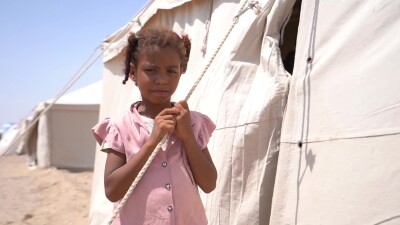
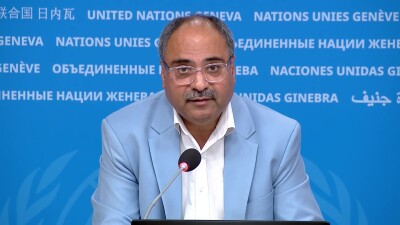
Aid agencies in Yemen highlighted the growing hunger emergency sparked by renewed fighting between Houthi opposition forces and Government troops, after mobile health clinics reported that hundreds of children displaced by the violence are suffering from the most deadly form of malnutrition.
1
1
1
Edited News | UNHCR
Displacement on the rise in Yemen as fighting continues - UNHCR
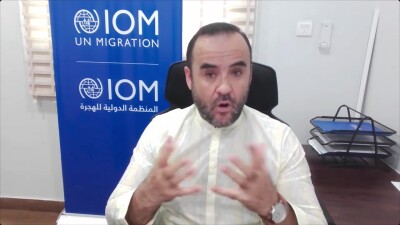
As hostilities worsen in Yemen, more people have been fleeing their homes, further intensifying the humanitarian crisis within the region, the UN Refugee Agency (UNHCR) warned on Tuesday.
1
1
1
Edited News | IOM , OHCHR , UNFPA , UNOG , UNHCR , WHO
Yemen’s humanitarian crisis growing by the hour amid spike in displacement
Yemenis displaced by renewed fighting have described fleeing for their lives amid shelling and gunfire, aid agencies reported on Friday, while highlighting the dramatic increase in humanitarian needs in the country and in Djibouti, where thousands have sought shelter.
1
1
1
Edited News | OHCHR , UNOG
The UN Human Rights Office issued on Friday a report documenting a shocking pattern of sexual violence amid Russia’s full-scale armed attack on Ukraine.