

The United Nations Office at Geneva
Multimedia Newsroom
Edited News | OHCHR , UNOG
UN High Commissioner for Human Rights Volker Türk Oral Update on Ukraine to the Human Rights Council
“The situation in Venezuela has not improved. We continue to see sweeping restrictions on freedom of expression and peaceful assembly; arbitrary detention and enforced disappearances; as well as acute social and economic strain,” he stated.
“In September and November, the Government adopted legislation granting itself expanded emergency powers, citing external threats. The content of these new laws remains unpublished, shielding them from scrutiny and preventing any assessment of their compatibility with international law. The crackdown on civic space has intensified, suffocating people’s freedoms,” he said.
“Public life is becoming further militarized, increasing the risk of violence in a society already grappling with high levels of crime. My Office has received reports of coerced enlistment into the Bolivarian Militia – including of adolescents and older people,” Türk said.
Adding: “Equally shocking are accounts that authorities are encouraging people to report on their relatives, neighbours, and colleagues through a State-sponsored mobile application. Such policies breed fear, mistrust, and self-censorship.”
Last year’s NGO oversight law continues to hinder civil society’s ability to work safely and freely.
Journalists, human rights defenders, opposition figures, and even humanitarian workers continue to face threats, harassment, and the risk of arbitrary detention – simply for doing their jobs.
Many are being driven out of the country by intimidation and persecution. When human rights defenders and journalists leave, truth and accountability leave with them.
Several journalists remain arbitrarily detained, and hundreds of people are imprisoned for political reasons. The recent detention of the Secretary-General of the main trade union sent a chilling signal to workers across the country.
“The use of broad and vague counter-terrorism laws and rhetoric opens the door to serious violations,” the High Commissioner said.
“I remain deeply concerned about detention conditions, with persistent lack of food and medicine and the denial of family visits. These conditions cost detainees their physical and mental health and, in some cases – their lives,” he added.
The UN Human Rights Office has documented at least five deaths of people detained in connection with the 2024 presidential elections. All these must be promptly and independently investigated, including the most recent death of the opposition politician Alfredo Díaz, whose health reportedly deteriorated sharply in custody.
They have also observed a rise in transfers of detainees to unknown locations, with some amounting to enforced disappearance. In three detention centres – Helicoide, Rodeo I, and Fuerte Guaicaipuro – people continue to be held incommunicado, without contact with relatives or lawyers, in flagrant violation of their basic rights.
He noted the release of at least 51 people since my last update – including political opposition members, foreign nationals, and people in poor health – and that at least 23 foreign nationals have been granted consular visits.
“It pains me to report that the Venezuelan authorities have stepped up reprisals against family members of those perceived to be voicing dissent – both at home and abroad. Since July, my Office has documented the detention of at least 17 people – most of them women, children, and older people – in connection with the activities of their relatives. The fate and whereabouts of 12 more family members remain unknown,” he stated.
Adding “I urge the unconditional release of all those arbitrarily detained for their civic engagement – including Rocío San Miguel, Javier Tarazona, Carlos Julio Rojas, Eduardo Torres, and Kennedy Tejeda – their family members, and four adolescents who remain in custody after the 2024 elections.”
“I am very concerned that there are attempts to strip certain opposition figures of their Venezuelan nationality, and I remind the authorities that arbitrary deprivation of nationality is unlawful,” Türk said.
“Indigenous Peoples, their rights, and their territories continue to be targeted. Several Indigenous leaders have been killed over the past years, including Virgilio Trujillo, Joaquín Hernández, and, most recently, Cesáreo Panapera. Many investigations remain unresolved,” he stated.
“I cannot ignore the mounting tensions and challenges facing Venezuelans in a precarious regional situation. I am deeply concerned about the human rights impact of intensifying US military pressure. History has shown, time and again, that when confrontation escalates, it is often ordinary people who are caught in the crossfire. Not criminals. Not those in power. Ordinary people. I reiterate my call to the United States to use well-established law-enforcement methods to counter the serious issue of illicit drug trafficking,” he said.
He encouraged all States hosting or receiving Venezuelan migrants, refugees, and asylum-seekers to ensure their international protection, given the perilous human rights situation in the country.
“I do not believe in points of no return. My Office is always open to constructive engagement, and I hope the authorities will promptly enable my colleagues to resume all our activities in the country. The suffering of the Venezuelan people must end,” he said in conclusion.
END.
For more information and media requests, please contact:
In Geneva
Jeremy Laurence: +41 22 917 9383 / jeremy.laurence@un.org
Thameen Al-Kheetan: +41 22 917 4232 / thameen.alkheetan@un.org
In Nairobi
Seif Magango : +254 78834 3897 / seif.magango@un.org
Facebook unitednationshumanrights
Instagram @unitednationshumanrights
STORY: United Nations High Commissioner for Human Rights Volker Türk Oral update to the Human Rights Council on Venezuela
TRT: 05:20
SOURCE: OHCHR/ UNOG
RESTRICTIONS: NONE
LANGUAGE: English/Spanish/NATS
ASPECT RATIO: 16:9
DATELINE: 16 December 2025 – GENEVA, SWITZERLAND
SHOTLIST
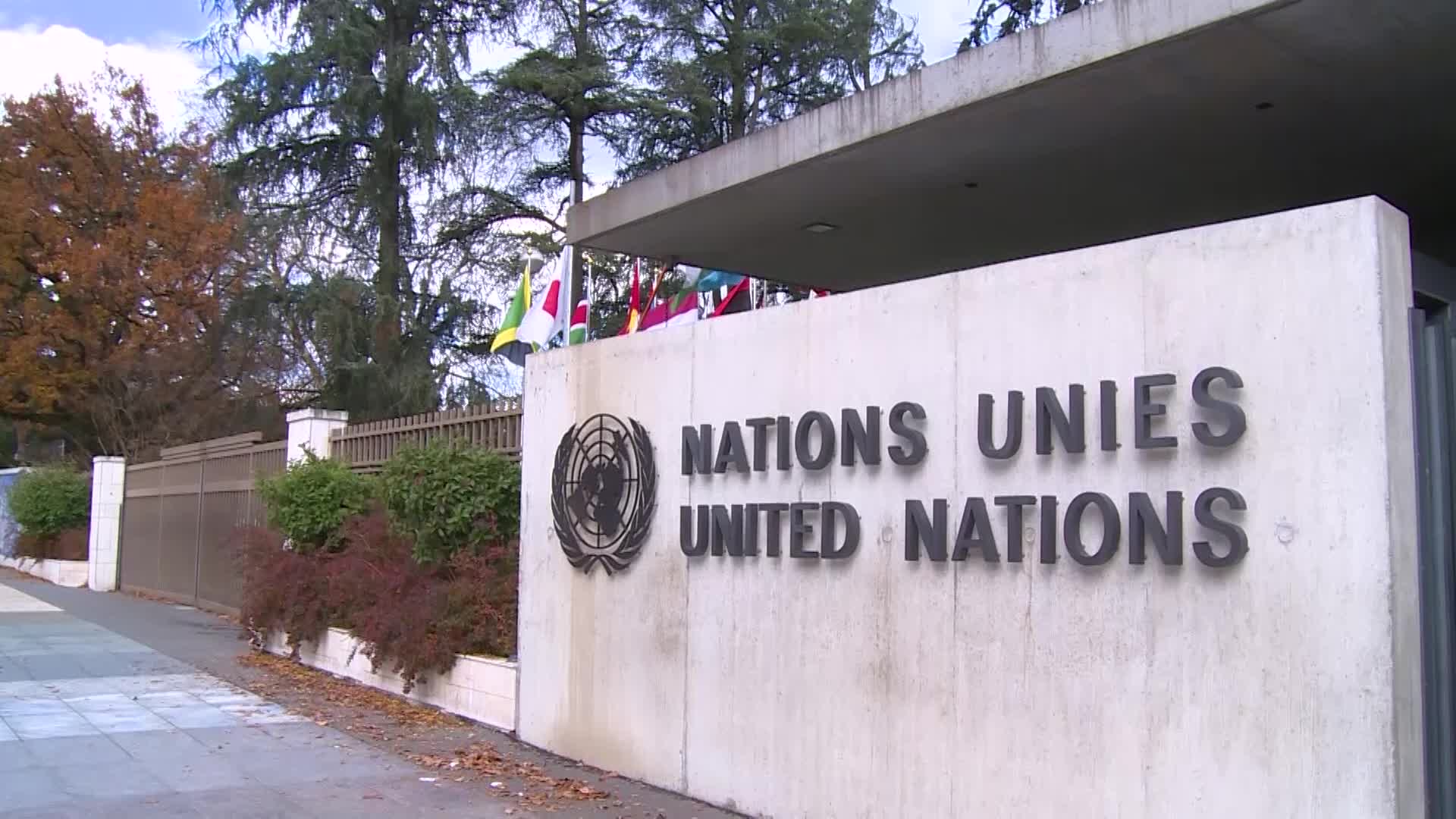
- Exterior shot : Palais des Nations
- Wide shots: Assembly Hall
- SOUNDBITE (English)—Volker Türk, United Nations High Commissioner for Human Rights: “The situation in Venezuela has not improved. We continue to see sweeping restrictions on freedom of expression and peaceful assembly; arbitrary detention and enforced disappearances; as well as acute social and economic strain.”
- Cutaways: Assembly Hall
- SOUNDBITE (English)—Volker Türk, United Nations High Commissioner for Human Rights: “In September and November, the Government adopted legislation granting itself expanded emergency powers, citing external threats. The content of these new laws remains unpublished, shielding them from scrutiny and preventing any assessment of their compatibility with international law. The crackdown on civic space has intensified, suffocating people’s freedoms.”
- Cutaways: Assembly Hall
- SOUNDBITE (English)—Volker Türk, United Nations High Commissioner for Human Rights:“Public life is becoming further militarized, increasing the risk of violence in a society already grappling with high levels of crime. My Office has received reports of coerced enlistment into the Bolivarian Militia – including of adolescents and older people.”
- Cutaways: Assembly Hall
- SOUNDBITE (English)—Volker Türk, United Nations High Commissioner for Human Rights:“Equally shocking are accounts that authorities are encouraging people to report on their relatives, neighbours, and colleagues through a State-sponsored mobile application. Such policies breed fear, mistrust, and self-censorship.”
- Cutaways: Assembly Hall
- SOUNDBITE (English)—Volker Türk, United Nations High Commissioner for Human Rights: “The use of broad and vague counter-terrorism laws and rhetoric opens the door to serious violations.”
- Cutaways: Assembly Hall
- SOUNDBITE (English)—Volker Türk, United Nations High Commissioner for Human Rights: “I remain deeply concerned about detention conditions, with persistent lack of food and medicine and the denial of family visits. These conditions cost detainees their physical and mental health and, in some cases – their lives.”
- Cutaways: Assembly Hall
- SOUNDBITE (Spanish)—Volker Türk, United Nations High Commissioner for Human Rights: “It pains me to report that the Venezuelan authorities have stepped up reprisals against family members of those perceived to be voicing dissent – both at home and abroad. Since July, my Office has documented the detention of at least 17 people – most of them women, children, and older people – in connection with the activities of their relatives. The fate and whereabouts of 12 more family members remain unknown.”
- Cutaways: Assembly Hall
- SOUNDBITE (Spanish)—Volker Türk, United Nations High Commissioner for Human Rights: “I urge the unconditional release of all those arbitrarily detained for their civic engagement – including Rocío San Miguel, Javier Tarazona, Carlos Julio Rojas, Eduardo Torres, and Kennedy Tejeda – their family members, and four adolescents who remain in custody after the 2024 elections.”
- Cutaways: Assembly Hall
- SOUNDBITE (English)—Volker Türk, United Nations High Commissioner for Human Rights: “I am very concerned that there are attempts to strip certain opposition figures of their Venezuelan nationality, and I remind the authorities that arbitrary deprivation of nationality is unlawful.”
- Cutaways: Assembly Hall
- SOUNDBITE (English)—Volker Türk, United Nations High Commissioner for Human Rights:““Indigenous Peoples, their rights, and their territories continue to be targeted. Several Indigenous leaders have been killed over the past years, including Virgilio Trujillo, Joaquín Hernández, and, most recently, Cesáreo Panapera. Many investigations remain unresolved,”
- Cutaways: Assembly Hall
- SOUNDBITE (English)—Volker Türk, United Nations High Commissioner for Human Rights: “I cannot ignore the mounting tensions and challenges facing Venezuelans in a precarious regional situation. I am deeply concerned about the human rights impact of intensifying US military pressure. History has shown, time and again, that when confrontation escalates, it is often ordinary people who are caught in the crossfire. Not criminals. Not those in power. Ordinary people. I reiterate my call to the United States to use well-established law-enforcement methods to counter the serious issue of illicit drug trafficking.”
- Cutaways: Assembly Hall
- SOUNDBITE (English)—Volker Türk, United Nations High Commissioner for Human Rights: “I do not believe in points of no return. My Office is always open to constructive engagement, and I hope the authorities will promptly enable my colleagues to resume all our activities in the country. The suffering of the Venezuelan people must end.”
Similar Stories

2
17
1
2
Edited News , Press Conferences | OCHA , WMO
Two UN agencies teamed up on Wednesday to issue an appeal for immediate assistance to help communities already being impacted by the strongest El Niño on record.

3
16
2
2
B-roll , Conferences , Edited News | UNITED NATIONS , UNOG
Sixth Consultative Meeting on Enhancing Coordination of Peace Initiatives and Efforts for Sudan

1
1
1
Edited News | UNICEF , WHO , UNHCR
Yemen war continues to force families from homes amid hunger and disease
More than 250,000 people have now fled renewed fighting in Yemen, the UN said on Tuesday, citing particular concern for those sheltering in the southwestern city of Taiz and the wider governorate, where access is “essentially blocked”.

1
1
1
Edited News | UNICEF
A little over one year since a ceasefire agreement was announced between Hamas fighters and Israel, more than 340 children have been reported killed and hundreds more injured, the UN Children’s Fund, UNICEF, said on Friday.

1
1
1
Edited News | UNICEF , IFRC
Six weeks after Nepal’s deadly flooding disaster, communities are still struggling to rebuild their lives, but they will need sustained help as global warming increases the risk of another Himalayan catastrophe, the UN Children’s Fund (UNICEF) said on Friday.

1
1
1
Edited News | WHO
In suspected Russia plague death, testing and monitoring underway – WHO
The death of a lab worker in Russia’s Siberia region has sparked concerns about plague being the cause, the UN World Health Organization (WHO) said on Tuesday, adding that it was following the situation closely.

1
1
Edited News | OHCHR , UNOG
UN Human Rights Chief Volker Türk on Friday provided and oral update to the 63rd session of the Human rights Council on Ukraine.

1
1
1
Edited News | OHCHR , UNOG
UN Human Rights Chief Volker Türk on Friday provided and oral update to the 63rd session of the Human rights Council on the human rights situation in Haiti.

1
1
1
Edited News | WHO
Repeated delays in bringing lifesaving medicines, prosthetics and more from Israel into Gaza risk having devastating consequences on Palestinians who urgently need them in the wartorn enclave, the UN World Health Organization (WHO) said on Friday. “A truck full of non-priority supplies or the right supplies arriving too late, doesn't save lives. That's the question that actually matters," said Dr Reinhilde Van De Weerdt, WHO Representative in the OPT.

1
1
1
Edited News | WHO
DRC: Early access to care and oxygen decisive for Ebola patients’ survival – WHO
In the Democratic Republic of the Congo (DRC), health workers fighting the country’s largest-ever Ebola outbreak are struggling to overcome critical challenges to patient care, the UN World Health Organization (WHO) warned on Tuesday.

1
1
1
Edited News | OCHA , UN
Civilians in Iran are continuing to feel the consequences of months of conflict and military escalation, the UN’s top official in the country has said, as loss of life, damage to civilian infrastructure and mounting economic pressures leave many facing continued uncertainty.
1
1
1
Edited News | WHO , UNICEF
Aid agencies in Yemen highlighted the growing hunger emergency sparked by renewed fighting between Houthi opposition forces and Government troops, after mobile health clinics reported that hundreds of children displaced by the violence are suffering from the most deadly form of malnutrition.