

The United Nations Office at Geneva
Multimedia Newsroom
Edited News | OHCHR , UNOG
UN Human Rights High commissioner Volker Türk Human Rights Day press conference
“Human rights: Underfunded. Undermined. Under attack. And yet. Powerful. Undeterred. Mobilising,” he said at a press conference in Geneva on Human Rights Day. “This year has been a difficult one. And one full of dangerous contradictions,” he added.
“Funding for human rights has been slashed, while anti-rights movements are increasingly well-funded. Profits for the arms industry are soaring, while funding for humanitarian aid and grassroots civil society plummets,” Türk said.
“Those defending rights and justice are attacked, sanctioned and hauled before courts, even as those ordering the commission of atrocity crimes continue to enjoy impunity,” the High Commissioner said. “Diversity, equity and inclusion policies that were adopted to address historical and structural injustices are being vilified as unjust.”
“But the pushback on human rights is facing pushback from a groundswell of human rights activism,” he told reporters. “In Nepal, Serbia, Madagascar, Kenya, Bangladesh, Ecuador, Paraguay, the Philippines, Indonesia, Tanzania, Morocco, Peru and beyond, mostly young people have taken to the streets and to social media against inequalities, against corruption or repression, in favour of freedom of expression, and for their everyday essentials and particularly their rights. People across the world have also been protesting against war and injustice, and demanding climate action, in places far from home, expressing solidarity and pressuring their governments to take action.”
“I urge governments around the world to harness the energy of these social movements into opportunities for broader transformational reforms rather than rushing to suppress them or label them as extremist threats to national security,” Türk added. “They are, in fact, the exact opposite of threats to national security.”
He said the resources available for his Office have been slashed, along with funding for human rights organisations around the world.
“We are in survival mode,” the High Commissioner said. “My Office has had about USD 90 million less than we needed this year, which means around 300 jobs have been lost, and essential work has had to be cut.”
Meanwhile, Türk said, anti-rights and anti-gender movements were increasingly coordinated and well-funded and operating across borders. According to the European Parliamentary Forum for Sexual and Reproductive Rights, for example, almost USD 1.2 billion was mobilized by anti-rights groups in Europe between 2019 and 2023.
“There is significant money flowing into the anti-rights agenda from funders based in Europe, Russia and the United States of America. Such massive funding, coupled with media capture and disinformation strategies, have made the anti-rights agenda a powerful cross-regional force,” he told reporters.
More resources have been spent on arms, too. The Stockholm International Peace Research Institute (SIPRI) says that arms and military services revenues for the 100 largest arms companies reached a record USD 679 billion in 2024. SIPRI has said demand was boosted by wars in Ukraine and Gaza, by global and regional geopolitical tensions, and ever-higher military expenditure.
“It is imperative that peace deals and ceasefires are secured and implemented in good faith,” the High Commissioner said. “And with full respect for international law, which can never be set aside for political convenience.”
“It is also critical to counter the demonisation of, and hatemongering rhetoric, against migrants and refugees,” Türk added. “In various countries, worryingly, we are seeing violent pushbacks, large-scale raids, arrest and returns without due process, criminalization of migrants and refugees and those who support them, as well as the outsourcing of responsibilities under international law.”
The UN Human Rights Chief also urged States to embark on an evidence-based policy debate on migration and refugee issues, anchored in international human rights and refugee law.
ENDS
For more information and media requests, please contact:
In Geneva
Ravina Shamdasani: +41 22 917 9169 / ravina.shamdasani@un.org
Jeremy Laurence: +41 22 917 9383 / jeremy.laurence@un.org
Marta Hurtado: +41 22 917 9466 / marta.hurtadogomez@un.org
Thameen Al-Kheetan: + 41 22 917 4232 / thameen.alkheetan@un.org
In Nairobi
Seif Magango : +254 78834 3897 / seif.magango@un.org
Facebook unitednationshumanrights
Instagram @unitednationshumanrights
STORY: UN Human Rights Chief Volker Türk remarks at press conference on Human Rights Day
TRT: 04:24
SOURCE: OHCHR/ UNOG
RESTRICTIONS: NONE
LANGUAGE: English/NATS
ASPECT RATIO: 16:9
DATELINE: 10 December 2025 – GENEVA, SWITZERLAND
SHOTLIST
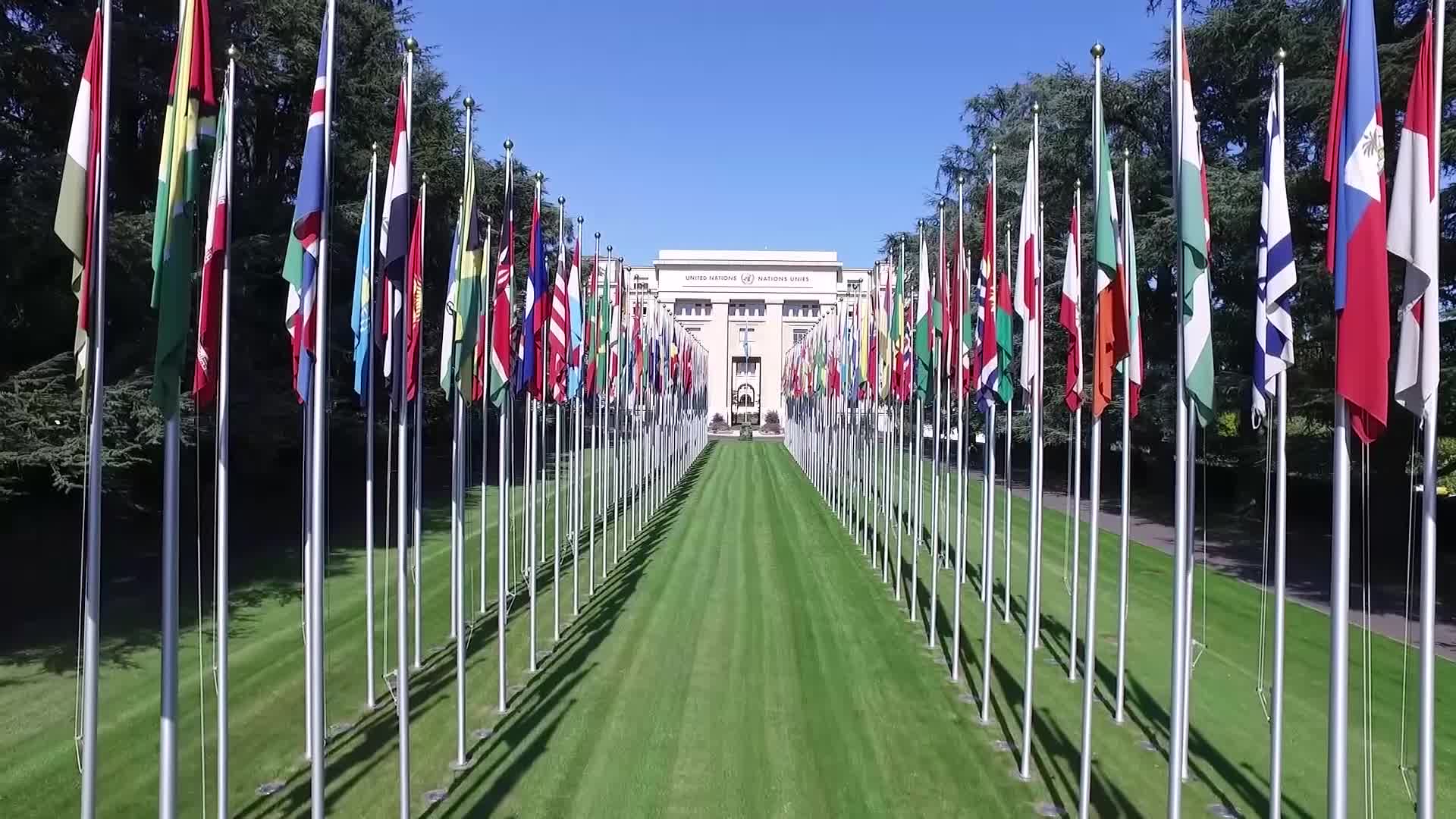
- Exterior shots : Palais des Nations
- Interior shot : Briefing room
- SOUNDBITE (English) — Volker Türk, UN High Commissioner for Human Rights: “Human rights. Underfunded. Undermined. Under attack. And yet. Powerful. Undeterred. Mobilizing. This year has been a difficult one. And one full of dangerous contradictions.”
- Cutaways : Briefing room
- SOUNDBITE (English) — Volker Türk, UN High Commissioner for Human Rights: “Funding for human rights has been slashed, while anti-rights movements are increasingly well-funded. Profits for the arms industry are soaring, while funding for humanitarian aid and grassroots civil society plummets.”
- Cutaways : Briefing room
- SOUNDBITE (English) — Volker Türk, UN High Commissioner for Human Rights: “Those defending rights and justice are attacked, sanctioned and hauled before courts, even as those ordering the commission of atrocity crimes continue to enjoy impunity. Diversity, equity and inclusion policies that were adopted to address historical and structural injustices are being vilified as unjust.”
- Cutaways : Briefing room
- SOUNDBITE (English) — Volker Türk, UN High Commissioner for Human Rights: “But the pushback on human rights is facing pushback from a groundswell of human rights activism. In Nepal, Serbia, Madagascar, Kenya, Bangladesh, Ecuador, Paraguay, the Philippines, Indonesia, Tanzania, Morocco, Peru and beyond, mostly young people have taken to the streets and to social media against inequalities, against corruption or repression, in favour of freedom of expression, and for their everyday essentials, and particularly their rights. People across the world have also been protesting against war and injustice, and demanding climate action, in places far from home, expressing solidarity and pressuring their governments to take action.”
- Cutaways : Briefing room
- SOUNDBITE (English) — Volker Türk, UN High Commissioner for Human Rights: “I urge governments around the world to harness the energy of these social movements into opportunities for broader transformational reforms rather than rushing to suppress them or label them as extremist threats to national security. They are, in fact, the exact opposite of threats to national security.”
- Cutaways : Briefing room
- SOUNDBITE (English) — Volker Türk, UN High Commissioner for Human Rights: “We are in survival mode. I was in Brussels yesterday during a meeting with human rights defenders and all of them, all the human rights defenders from around the world told me how dire the situation is. My Office has had about USD 90 million less than we needed this year, which means around 300 jobs have been lost, and essential work has had to be cut.”
- Cutaways : Briefing room
- SOUNDBITE (English) — Volker Türk, UN High Commissioner for Human Rights: “There is significant money flowing into the anti-rights agenda from funders based in Europe, Russia and the United States of America. Such massive funding, coupled with media capture and disinformation strategies have made the anti-rights agenda a powerful cross-regional force.”
- Cutaways : Briefing room
- SOUNDBITE (English) — Volker Türk, UN High Commissioner for Human Rights: “It is imperative that peace deals and ceasefires are secured and implemented in good faith. And with full respect for international law, which can never be set aside for political convenience.”
- Cut aways : Briefing room
- SOUNDBITE (English) — Volker Türk, UN High Commissioner for Human Rights: “It is also critical to counter the demonisation of, and hatemongering rhetoric, against migrants and refugees. In various countries, worryingly, we are seeing violent pushbacks, large-scale raids, arrest and returns without due process, criminalization of migrants and refugees and those who support them, as well as the outsourcing of responsibilities under international law.”
- Cutaways : Briefing room
Similar Stories
2
17
1
2
Edited News , Press Conferences | OCHA , WMO
Two UN agencies teamed up on Wednesday to issue an appeal for immediate assistance to help communities already being impacted by the strongest El Niño on record.
3
16
2
2
B-roll , Conferences , Edited News | UNITED NATIONS , UNOG
Sixth Consultative Meeting on Enhancing Coordination of Peace Initiatives and Efforts for Sudan

1
1
1
Edited News | UNICEF , WHO , UNHCR
Yemen war continues to force families from homes amid hunger and disease
More than 250,000 people have now fled renewed fighting in Yemen, the UN said on Tuesday, citing particular concern for those sheltering in the southwestern city of Taiz and the wider governorate, where access is “essentially blocked”.

1
1
1
Edited News | UNICEF
A little over one year since a ceasefire agreement was announced between Hamas fighters and Israel, more than 340 children have been reported killed and hundreds more injured, the UN Children’s Fund, UNICEF, said on Friday.

1
1
1
Edited News | UNICEF , IFRC
Six weeks after Nepal’s deadly flooding disaster, communities are still struggling to rebuild their lives, but they will need sustained help as global warming increases the risk of another Himalayan catastrophe, the UN Children’s Fund (UNICEF) said on Friday.

1
1
1
Edited News | WHO
In suspected Russia plague death, testing and monitoring underway – WHO
The death of a lab worker in Russia’s Siberia region has sparked concerns about plague being the cause, the UN World Health Organization (WHO) said on Tuesday, adding that it was following the situation closely.

1
1
Edited News | OHCHR , UNOG
UN Human Rights Chief Volker Türk on Friday provided and oral update to the 63rd session of the Human rights Council on Ukraine.

1
1
1
Edited News | OHCHR , UNOG
UN Human Rights Chief Volker Türk on Friday provided and oral update to the 63rd session of the Human rights Council on the human rights situation in Haiti.

1
1
1
Edited News | WHO
Repeated delays in bringing lifesaving medicines, prosthetics and more from Israel into Gaza risk having devastating consequences on Palestinians who urgently need them in the wartorn enclave, the UN World Health Organization (WHO) said on Friday. “A truck full of non-priority supplies or the right supplies arriving too late, doesn't save lives. That's the question that actually matters," said Dr Reinhilde Van De Weerdt, WHO Representative in the OPT.

1
1
1
Edited News | WHO
DRC: Early access to care and oxygen decisive for Ebola patients’ survival – WHO
In the Democratic Republic of the Congo (DRC), health workers fighting the country’s largest-ever Ebola outbreak are struggling to overcome critical challenges to patient care, the UN World Health Organization (WHO) warned on Tuesday.

1
1
1
Edited News | OCHA , UN
Civilians in Iran are continuing to feel the consequences of months of conflict and military escalation, the UN’s top official in the country has said, as loss of life, damage to civilian infrastructure and mounting economic pressures leave many facing continued uncertainty.
1
1
1
Edited News | WHO , UNICEF
Aid agencies in Yemen highlighted the growing hunger emergency sparked by renewed fighting between Houthi opposition forces and Government troops, after mobile health clinics reported that hundreds of children displaced by the violence are suffering from the most deadly form of malnutrition.