

The United Nations Office at Geneva
Multimedia Newsroom
Edited News | OHCHR
UN Human Rights Office spokesperson Seif Magango on planned protests ahead of on Tanzania’s Independence Day on 9 December
“Ahead of planned protests on Tanzania’s Independence Day on 9 December, we remind the authorities of their obligation to ensure citizens’ rights to freedoms of expression, , association , and peaceful assembly,” he said.
“We urge the Government to instruct security forces to plan and implement their operations in a manner that allows Tanzanians to fully exercise these fundamental rights,” he added.
Hundreds of people were reportedly killed and over 2,000 detained by security forces after protests broke out following general elections on 29 October.
The Government has intensified a crackdown against opponents since the vote. On 3 December, police issued a blanket, nationwide ban on all Independence Day protests. We call for the lifting of such an overbroad, disproportionate step.
“We remind security forces they must refrain from using force to disperse non-violent assemblies and make every effort to de-escalate tensions. We recall again the requirements of international law in this area -- if unavoidable, any use of force, including less lethal weapons, must be restricted to the minimum extent necessary. Firearms should not be used to disperse any assembly and can only be used as a measure of last resort to counter an imminent threat of death or serious injury.. The commanders of the security forces have a responsibility to take measures ahead of any protests to ensure respect for these principles,” Magango said.
Reports indicate that since mid-November, dozens of individuals including academics, civil society actors and local political leaders have been detained, with several arrests allegedly carried out by unidentified armed personnel.
Security deployments have been increased in urban centres, warnings issued to businesses, restrictions imposed on fuel sales, and surveillance of digital communications expanded. Such measures risk inflaming public tension and significantly undermine the rights to freedom of expression, peaceful assembly, and participation in public affairs.
“Five weeks after the election, the authorities have still not disclosed information on the number of people killed and the circumstances of their deaths, and on reports of enforced disappearances. The continued absence of transparent information risks further eroding public trust and heightening tensions at a critical moment,” Magango said.
“We call for the immediate and unconditional release all those arbitrarily detained.”
The UN Human Rights office is aware of the Government’s establishment of an investigation into the post-election violence. UN Human Rights Chief Volker Türk reminds the authorities such a probe must fully adhere to international standards of independence, impartiality, thoroughness, promptness and transparency, and provide robust protection against reprisals, intimidation, or arbitrary detention for all who engage with its work.
For more information and media requests, please contact:
In Geneva
Ravina Shamdasani: +41 22 917 9169 / ravina.shamdasani@un.org
Jeremy Laurence: +41 22 917 9383 / jeremy.laurence@un.org
In Nairobi
Seif Magango : +254 78834 3897 / seif.magango@un.org
Facebook unitednationshumanrights
Instagram @unitednationshumanrights
STORY: UN Human Rights Office spokesperson Seif Magango on planned protests ahead of on Tanzania’s Independence Day on 9 December
TRT: 02:13
SOURCE: OHCHR / UNOG
RESTRICTIONS: NONE
LANGUAGE: English/NATS
ASPECT RATIO: 16:9
DATELINE: 05 December 2025 – Geneva-Switzerland
SHOTLIST
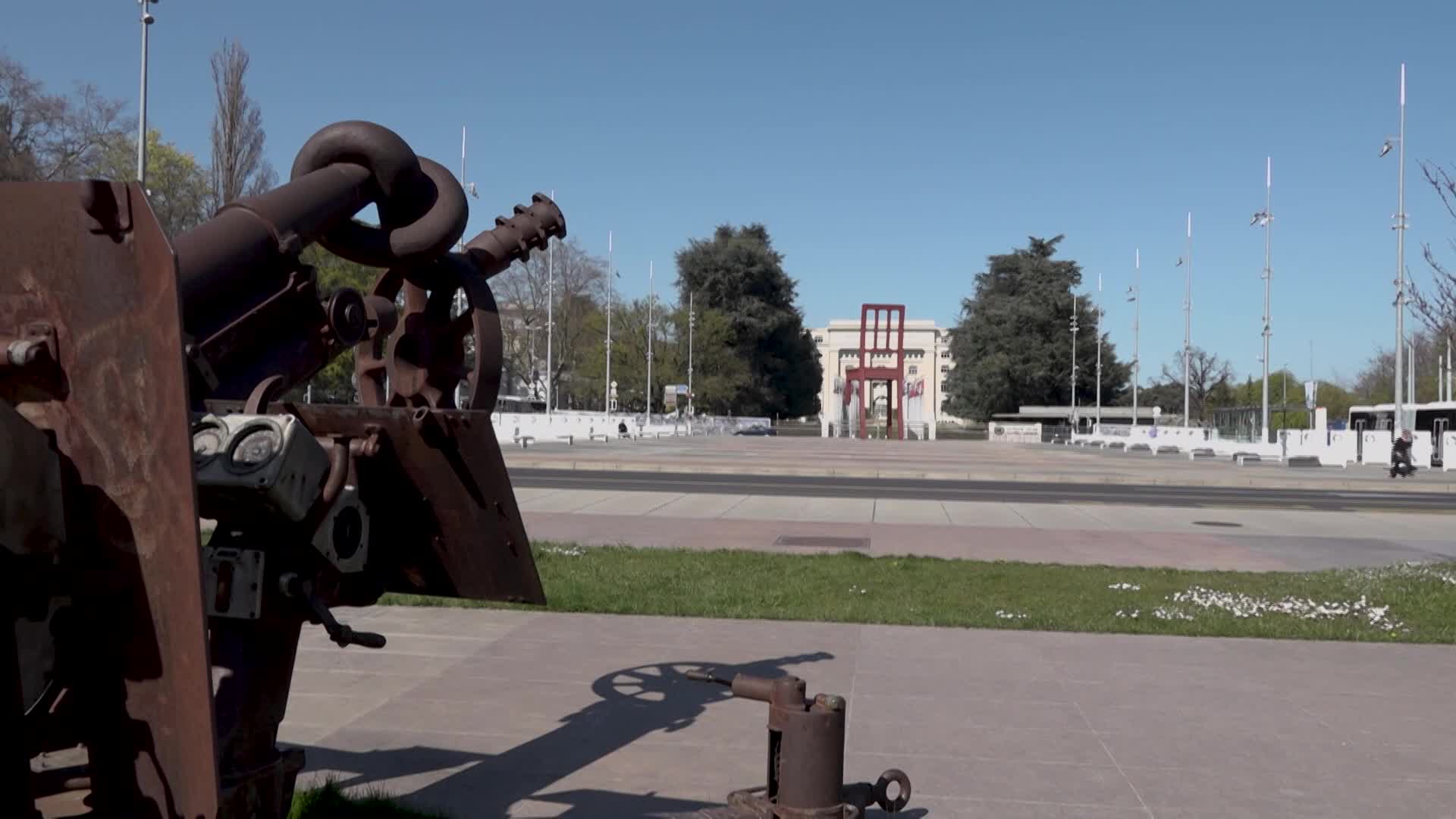
- Various Exterior shots: Palais des Nations
- SOUNDBITE (English)—Seif Magango, spokesperson for the Office of the UN High Commissioner for Human Rights (OHCHR): “Ahead of planned protests on Tanzania’s Independence Day on 9 December, we remind the authorities of their obligation to ensure rights to freedoms of expression, association , and peaceful assembly.”
- Cut away: briefing room
- SOUNDBITE (English)—Seif Magango, spokesperson for the Office of the UN High Commissioner for Human Rights (OHCHR): “We urge the Government to instruct security forces to plan and implement their operations in a manner that allows Tanzanians to fully exercise these fundamental rights.”
- Cut away: briefing room
- SOUNDBITE (English)—Seif Magango, spokesperson for the Office of the UN High Commissioner for Human Rights (OHCHR): “We remind security forces they must refrain from using force to disperse non-violent assemblies and make every effort to de-escalate tensions. We recall again the requirements of international law in this area -- if unavoidable, any use of force, including less lethal weapons, must be restricted to the minimum extent necessary. Firearms should not be used to disperse any assembly and can only be used as a measure of last resort to counter an imminent threat of death or serious injury. The commanders of the security forces have a responsibility to take measures ahead of any protests to ensure respect for these principles.”
- Cut away: briefing room
- SOUNDBITE (English)—Seif Magango, spokesperson for the Office of the UN High Commissioner for Human Rights (OHCHR): “Five weeks after the election, the authorities have still not disclosed information on the number of people killed and the circumstances of their deaths, and on reports of enforced disappearances. The continued absence of transparent information risks further eroding public trust and heightening tensions at a critical moment.”
- Cut away: briefing room
- SOUNDBITE (English)—Seif Magango, spokesperson for the Office of the UN High Commissioner for Human Rights (OHCHR): “ “We call for the immediate and unconditional release all those arbitrarily detained.”
Similar Stories

1
1
1
Edited News | UNICEF , WHO , UNHCR
Yemen war continues to force families from homes amid hunger and disease
More than 250,000 people have now fled renewed fighting in Yemen, the UN said on Tuesday, citing particular concern for those sheltering in the southwestern city of Taiz and the wider governorate, where access is “essentially blocked”.

1
1
1
Edited News | UNICEF
A little over one year since a ceasefire agreement was announced between Hamas fighters and Israel, more than 340 children have been reported killed and hundreds more injured, the UN Children’s Fund, UNICEF, said on Friday.

1
1
1
Edited News | UNICEF , IFRC
Six weeks after Nepal’s deadly flooding disaster, communities are still struggling to rebuild their lives, but they will need sustained help as global warming increases the risk of another Himalayan catastrophe, the UN Children’s Fund (UNICEF) said on Friday.

1
1
1
Edited News | WHO
In suspected Russia plague death, testing and monitoring underway – WHO
The death of a lab worker in Russia’s Siberia region has sparked concerns about plague being the cause, the UN World Health Organization (WHO) said on Tuesday, adding that it was following the situation closely.

1
1
Edited News | OHCHR , UNOG
UN Human Rights Chief Volker Türk on Friday provided and oral update to the 63rd session of the Human rights Council on Ukraine.

1
1
1
Edited News | OHCHR , UNOG
UN Human Rights Chief Volker Türk on Friday provided and oral update to the 63rd session of the Human rights Council on the human rights situation in Haiti.

1
1
1
Edited News | WHO
Repeated delays in bringing lifesaving medicines, prosthetics and more from Israel into Gaza risk having devastating consequences on Palestinians who urgently need them in the wartorn enclave, the UN World Health Organization (WHO) said on Friday. “A truck full of non-priority supplies or the right supplies arriving too late, doesn't save lives. That's the question that actually matters," said Dr Reinhilde Van De Weerdt, WHO Representative in the OPT.

1
1
1
Edited News | WHO
DRC: Early access to care and oxygen decisive for Ebola patients’ survival – WHO
In the Democratic Republic of the Congo (DRC), health workers fighting the country’s largest-ever Ebola outbreak are struggling to overcome critical challenges to patient care, the UN World Health Organization (WHO) warned on Tuesday.

1
1
1
Edited News | OCHA , UN
Civilians in Iran are continuing to feel the consequences of months of conflict and military escalation, the UN’s top official in the country has said, as loss of life, damage to civilian infrastructure and mounting economic pressures leave many facing continued uncertainty.
1
1
1
Edited News | WHO , UNICEF
Aid agencies in Yemen highlighted the growing hunger emergency sparked by renewed fighting between Houthi opposition forces and Government troops, after mobile health clinics reported that hundreds of children displaced by the violence are suffering from the most deadly form of malnutrition.
1
1
1
Edited News | UNHCR
Displacement on the rise in Yemen as fighting continues - UNHCR
As hostilities worsen in Yemen, more people have been fleeing their homes, further intensifying the humanitarian crisis within the region, the UN Refugee Agency (UNHCR) warned on Tuesday.
1
1
1
Edited News | IOM , OHCHR , UNFPA , UNOG , UNHCR , WHO
Yemen’s humanitarian crisis growing by the hour amid spike in displacement
Yemenis displaced by renewed fighting have described fleeing for their lives amid shelling and gunfire, aid agencies reported on Friday, while highlighting the dramatic increase in humanitarian needs in the country and in Djibouti, where thousands have sought shelter.