

The United Nations Office at Geneva
Multimedia Newsroom
Asia: Lives upended in cyclone disasters, ‘extreme’ rainfall on the rise - UN agencies
Across southeast Asia, record-breaking rains and flooding caused by back-to-back tropical storms have claimed hundreds of lives and brought devastation and displacement upon entire communities, UN agencies said on Tuesday.
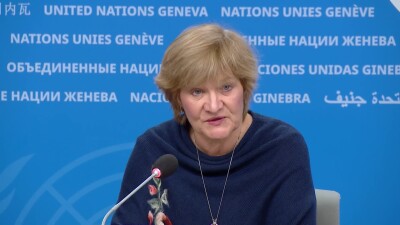
World Meteorological Organization (WMO) spokesperson Clare Nullis told reporters in Geneva that Indonesia, the Philippines, Sri Lanka, Thailand and Vietnam are among the countries most affected by what she described a “a combination of monsoon-related rainfall and tropical cyclone activity”.
“Asia is very, very vulnerable to floods,” Ms. Nullis said, explaining that flooding consistently tops the list of climate hazards in the region according to WMO’s annual “State of the Climate” reports.
However, she said that tropical cyclones such as Senyar, which last week brought “torrential rainfall and widespread flooding and landslides” across northern Sumatra in Indonesia, peninsular Malaysia and southern Thailand, are rare so close to the Equator.
“It's not something that we see very often and it means the impacts are magnified because local communities… have got no experience in this,” she stressed.
The UN weather agency spokesperson quoted Tuesday’s figures from the Indonesian National Disaster Office indicating 604 fatalities, 464 people missing and 2,600 injured. In total, some 1.5 million people have been affected in Indonesia and more than 570,000 have been displaced.
Turning to Viet Nam, Ms. Nullis said that the south Asian nation has been “battered now for weeks” and is “bracing for yet more heavy rainfall”.
“Exceptional rains in the past few weeks have flooded historic sites, popular tourist resorts and caused massive damages,” she said.
In late October, one meteorological station in central Viet Nam recorded a national 24-hour rainfall record of 1,739 millimetres, which Ms. Nullis described as “really enormous”.
“It's the second-highest known total anywhere in the world for 24-hour rainfall,” she said.
This exceptionally high value is currently subject to a formal WMO extremes evaluation committee. According to the agency, a value above 1,700 mm would constitute a record for the Northern Hemisphere and Asia.
Ricardo Pires, spokesperson for the UN Children’s Fund (UNICEF), described what he called a “fast-moving humanitarian emergency” in Sri Lanka, after Cyclone Ditwah made landfall on the country’s east coast last week, affecting some 1.4 million people including 275,000 children.
“With communications down and roads blocked, the true number of children impacted is likely even higher,” Mr. Pires warned. “Homes have been swept away, entire communities isolated, and the essential services children rely on, such as water, healthcare and schooling have been severely disrupted.”
The UNICEF spokesperson stressed that displacement has forced families into unsafe and overcrowded shelters, while the flooding and damaged water systems are increasing disease outbreak risks.
“The needs far outweigh the available resources right now,” he insisted, in an appeal for additional humanitarian funding and support for the most vulnerable.
Commenting on the intensity of the devastating weather events WMO’s Ms. Nullis explained that rising temperatures “increase the potential risk of more extreme rainfall because a warmer atmosphere holds more moisture”.
“That's the law of physics… we are seeing more extreme rainfall and we will continue to do so in the future,” she concluded.
-ENDS -
STORY Asia floods WMO - UNICEF
TRT: 2:17”
SOURCE: UNTV CH
RESTRICTIONS: NONE
LANGUAGE: ENGLISH/NATS
ASPECT RATIO: 16:9
DATELINE: 2 DECEMBER 2025 GENEVA, SWITZERLAND
1. Exterior wide shot: Palais des Nations, Flag Alley.
2. Medium shot: Speakers at the podium of the press conference.
3. SOUNDBITE (English) – Clare Nullis, spokesperson, World Meteorological Organization (WMO): “Indonesia, the Philippines, Sri Lanka, Thailand and Vietnam are among the countries currently most affected.”
4. Wide shot: Speakers at the podium of the press conference; speaker on screens; journalists in the Press room.
5. SOUNDBITE (English) – Clare Nullis, spokesperson, World Meteorological Organization (WMO): “It's a combination of monsoon-related rainfall and tropical cyclone activity. Asia is very, very vulnerable to floods.”
6. Wide shot: Speaker on screens; journalists in the Press room.
7. SOUNDBITE (English) – Clare Nullis, spokesperson, World Meteorological Organization (WMO): “Tropical cyclone Senyar brought torrential rainfall and widespread flooding and landslides across northern Sumatra in Indonesia, peninsular Malaysia and southern Thailand. Tropical cyclones are rare so close to the Equator, so it's not something that we, that we see very often and it means the impacts are magnified because local communities, you know, have got no experience in this.”
8. Medium shot: Speakers at the podium of the press conference; speaker on screens.
9. SOUNDBITE (English) – Clare Nullis, spokesperson, World Meteorological Organization (WMO): “One meteorological station in central Vietnam recorded a national 24-hour rainfall record of 1739 millimetres - that's really, really enormous. It's the second-highest known total anywhere in the world for 24-hour rainfall.”
10. Medium shot: Journalists in the Press room.
11. SOUNDBITE (English) – Ricardo Pires, spokesperson, UN Children’s Fund (UNICEF): “Cyclone Ditwah made landfall on the east coast in Sri Lanka, impacting over 275,000 children who are amongst the over 1.4 million people affected across Sri Lanka. And with communications down and roads blocked, the true number of children impacted is likely even higher. Homes have been swept away, entire communities isolated, and the essential services children rely on, such as water, healthcare and schooling have been severely disrupted.”
12. Wide shot: Speakers at the podium of the press conference; speaker on screens; journalists in the Press room.
13. SOUNDBITE (English) – Clare Nullis, spokesperson, World Meteorological Organization (WMO): “Rising temperatures increase the potential risk of more extreme rainfall events because the warmer atmosphere holds more moisture. That's the law of physics. So we will, we are seeing more extreme rainfall and we will continue to do so in the future.”
14. Medium shot: Journalists in the Press room.
Similar Stories

1
1
1
Edited News | OCHA , UNICEF , WFP
Aid agencies warned on Friday of the fast-developing humanitarian emergency inside Taiz City in Yemen, which has been encircled by de facto Houthi forces fighting government troops along the country’s west coast.

2
17
1
2
Edited News , Press Conferences , Images | OCHA , WMO
Two UN agencies teamed up on Wednesday to issue an appeal for immediate assistance to help communities already being impacted by the strongest El Niño on record.

3
16
2
2
Edited News , B-roll , Conferences , Images | UNITED NATIONS , UNOG
Sixth Consultative Meeting on Enhancing Coordination of Peace Initiatives and Efforts for Sudan

1
1
1
Edited News | UNICEF , WHO , UNHCR
Yemen war continues to force families from homes amid hunger and disease
More than 250,000 people have now fled renewed fighting in Yemen, the UN said on Tuesday, citing particular concern for those sheltering in the southwestern city of Taiz and the wider governorate, where access is “essentially blocked”.

1
1
1
Edited News | UNICEF
A little over one year since a ceasefire agreement was announced between Hamas fighters and Israel, more than 340 children have been reported killed and hundreds more injured, the UN Children’s Fund, UNICEF, said on Friday.

1
1
1
Edited News | UNICEF , IFRC
Six weeks after Nepal’s deadly flooding disaster, communities are still struggling to rebuild their lives, but they will need sustained help as global warming increases the risk of another Himalayan catastrophe, the UN Children’s Fund (UNICEF) said on Friday.

1
1
1
Edited News | WHO
In suspected Russia plague death, testing and monitoring underway – WHO
The death of a lab worker in Russia’s Siberia region has sparked concerns about plague being the cause, the UN World Health Organization (WHO) said on Tuesday, adding that it was following the situation closely.

1
1
Edited News | OHCHR , UNOG
UN Human Rights Chief Volker Türk on Friday provided and oral update to the 63rd session of the Human rights Council on Ukraine.

1
1
1
Edited News | OHCHR , UNOG
UN Human Rights Chief Volker Türk on Friday provided and oral update to the 63rd session of the Human rights Council on the human rights situation in Haiti.

1
1
1
Edited News | WHO
Repeated delays in bringing lifesaving medicines, prosthetics and more from Israel into Gaza risk having devastating consequences on Palestinians who urgently need them in the wartorn enclave, the UN World Health Organization (WHO) said on Friday. “A truck full of non-priority supplies or the right supplies arriving too late, doesn't save lives. That's the question that actually matters," said Dr Reinhilde Van De Weerdt, WHO Representative in the OPT.

1
1
1
Edited News | WHO
DRC: Early access to care and oxygen decisive for Ebola patients’ survival – WHO
In the Democratic Republic of the Congo (DRC), health workers fighting the country’s largest-ever Ebola outbreak are struggling to overcome critical challenges to patient care, the UN World Health Organization (WHO) warned on Tuesday.

1
1
1
Edited News | OCHA , UN
Civilians in Iran are continuing to feel the consequences of months of conflict and military escalation, the UN’s top official in the country has said, as loss of life, damage to civilian infrastructure and mounting economic pressures leave many facing continued uncertainty.