

The United Nations Office at Geneva
Multimedia Newsroom
Les mesures tarifaires américaines pourraient entraîner une baisse de trois pour cent du commerce mondial, selon un économiste de l'ONU
Le commerce mondial pourrait se contracter de trois pour cent en raison des nouvelles mesures tarifaires des États-Unis qui, à plus long terme, pourraient remodeler et renforcer des liens commerciaux régionaux encore inexploités, a confirmé vendredi un économiste de l'ONU.
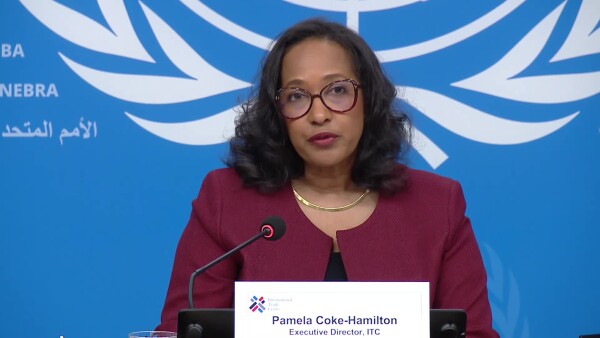
« Il y aura des changements, je pense, dans les chaînes d'approvisionnement, il y aura une réévaluation des alliances mondiales. Il y aura des changements géopolitiques et économiques également », a déclaré Pamela Coke-Hamilton, directrice du Centre du Commerce International (CCI).
S'exprimant à Genève après l'annonce mercredi par la Maison Blanche d'une pause de 90 jours sur les "tarifs réciproques" pour la plupart des pays à l'exception de la Chine, Mme Coke-Hamilton a noté que les exportations du Mexique avaient déjà été "fortement impactées" par les changements sismiques antérieurs de la politique commerciale américaine.
« Des pays comme le Mexique, la Chine et la Thaïlande, mais aussi des pays d'Afrique australe sont parmi les plus touchés, aux côtés des États-Unis eux-mêmes », a-t-elle déclaré.
Bien que la pause de 90 jours sur les soi-disant tarifs réciproques s'applique aux importations de la plupart des pays et ramène les taux à un encore lourd 10 pour cent, les tarifs sur les importations de Chine s'élèvent actuellement à 145 pour cent.
La Chine, quant à elle, a augmenté les tarifs contre les exportations américaines - en fait des taxes à l'importation sur les biens - à 125 pour cent.
Déjà, les produits d'exportation du Mexique se sont éloignés de marchés tels que les États-Unis, la Chine, l'Europe et d'autres pays d'Amérique latine pour réaliser des "gains modestes" au Canada, au Brésil "et dans une moindre mesure, en Inde", a insisté la directrice du CCI.
D'autres pays ont suivi le mouvement, y compris le Vietnam, dont les exportations "se détournent des États-Unis, du Mexique et de la Chine", tout en "augmentant considérablement" vers l'UE, la Corée du Sud et d'autres, a déclaré Mme Coke-Hamilton, dont l'agence spécialisée de l'ONU offre une assistance aux pays en développement.
Le problème pour les économies émergentes est qu'elles sont moins bien équipées pour "pivoter" face aux "instabilités", a expliqué la directrice du CCI, car elles manquent souvent de la diversité manufacturière et de la capacité à ajouter de la valeur aux matières premières des nations plus industrialisées.
Les partenaires commerciaux particulièrement vulnérables des États-Unis incluent le Lesotho, le Cambodge, le Laos, Madagascar et le Myanmar qui sont "les plus exposés", a-t-elle poursuivi.
Confirmant que l'Organisation mondiale du commerce (OMC) avait estimé que le commerce entre la Chine et les États-Unis pourrait chuter jusqu'à 80 pour cent si la situation hautement inhabituelle persiste, la Secrétaire exécutive du CCI a souligné qu'ils ne constituaient que "trois pour cent à quatre pour cent du commerce mondial... (donc) il y a 96 pour cent là-bas qui commercent encore et qui continueront à commercer».
Néanmoins, l'impact de "l'extension indéterminée de 90 jours et plus" n'a pas été bon pour le commerce mondial et "ne se prête pas nécessairement à la stabilité", a poursuivi Mme Coke-Hamilton.
« Indépendamment du fait qu'il y ait une extension, encore et encore, le fait qu'il n'y ait pas de stabilité, qu'il n'y ait pas de prévisibilité affectera le commerce et les entreprises et les décisions qui sont prises en temps réel.»
Elle a ajouté : « Ce ne serait pas la première fois qu'il y a eu des secousses dans le système économique mondial. Nous l'avons vu au cours des 50 dernières années dans différentes dispensations. Celle-ci est probablement un peu plus sévère, un peu plus tremblante.»
HISTOIRE : Incertitude tarifaire et potentiel - CCI
DURÉE : 03’11”
SOURCE : UNTV CH
RESTRICTIONS : AUCUNE
LANGUE : ANGLAIS / NATS
FORMAT D'IMAGE : 16:9
DATE : 11 AVRIL 2025 GENÈVE, SUISSE
Orateurs :
- Pamela Coke-Hamilton, Directrice exécutive, Centre du commerce international, CCI
LISTE DE PLANS
- Plan extérieur moyen : Palais des Nations, Allée des Drapeaux
- Plan large, orateurs au podium de la salle de presse, photographe.
- EXTRAIT SONORE (Anglais) – Pamela Coke-Hamilton, Directrice exécutive, CCI : « Vous auriez vu que les États-Unis ont annoncé mercredi une pause de 90 jours sur les soi-disant tarifs réciproques sur les importations de la plupart des pays, abaissant les taux à 10 pour cent tout en augmentant les tarifs sur les importations en provenance de Chine à 145 pour cent. La Chine, entre-temps, a augmenté les tarifs sur les produits importés des États-Unis à 84 pour cent.»
- Plan moyen, orateurs au podium.
- EXTRAIT SONORE (Anglais) – Pamela Coke-Hamilton, Directrice exécutive, CCI : « Ce ne serait pas la première fois qu'il y a des secousses dans le système économique mondial. Nous l'avons vu au cours des 50 dernières années dans différentes dispensations. Celui-ci est probablement un peu plus sévère, un peu plus tremblant.»
- Plan large, orateurs au podium, salle de presse, caméra TV, cabines de contrôle, écrans TV.
- EXTRAIT SONORE (Anglais) – Pamela Coke-Hamilton, Directrice exécutive, CCI : « Il y aura donc des changements, je pense, dans les chaînes d'approvisionnement, il y aura une réévaluation des alliances mondiales. Il y aura des changements géopolitiques et économiques également.»
- Plan large, orateurs au podium, salle de presse.
- EXTRAIT SONORE (Anglais) – Pamela Coke-Hamilton, Directrice exécutive, CCI : « Des pays comme le Mexique, la Chine et la Thaïlande, mais aussi des pays d'Afrique australe sont parmi les plus touchés, aux côtés des États-Unis eux-mêmes.»
- Plan large, salle de presse, journalistes, participants.
- EXTRAIT SONORE (Anglais) – Pamela Coke-Hamilton, Directrice exécutive, CCI : « Le commerce mondial pourrait se contracter de trois pour cent, avec des changements significatifs à long terme dans les modèles commerciaux et l'intégration économique. Par exemple, les exportations du Mexique, qui ont été fortement impactées, se déplacent des marchés tels que les États-Unis, la Chine, l'Europe et même d'autres pays d'Amérique latine, avec des gains modestes au Canada et au Brésil et dans une moindre mesure, en Inde.»
- Plan large, salle de presse, journalistes, écrans TV.
- EXTRAIT SONORE (Anglais) – Pamela Coke-Hamilton, Directrice exécutive, CCI : « De même, les exportations vietnamiennes se détournent des États-Unis, du Mexique et de la Chine, tout en augmentant considérablement vers des marchés mineurs comme l'UE, la Corée et d'autres.»
- Plan large, journalistes, photographe, écrans TV.
- EXTRAIT SONORE (Anglais) – Pamela Coke-Hamilton, Directrice exécutive, CCI : « Les pays les moins avancés, y compris le Lesotho, le Cambodge, le Laos, Madagascar et le Myanmar, sont les plus exposés aux instabilités du système commercial mondial et les moins équipés pour s'adapter si nécessaire.»
- Plan moyen-large, salle de presse.
- EXTRAIT SONORE (Anglais) – Pamela Coke-Hamilton, Directrice exécutive, CCI : « La Chine et les États-Unis représentent environ trois pour cent à quatre pour cent du commerce mondial. Donc, si vous regardez cela en grands chiffres, il y a 96 pour cent qui continue à commercer et qui commerceront.»
- Plan moyen, photographe.
- EXTRAIT SONORE (Anglais) – Pamela Coke-Hamilton, Directrice exécutive, CCI : « L'extension indéterminée de 90 jours encore et encore ne se prête pas nécessairement à la stabilité. Donc, indépendamment du fait qu'il y ait une extension encore et encore, le fait qu'il n'y ait pas de stabilité, qu'il n'y ait pas de prévisibilité affectera le commerce et les entreprises et les décisions qui sont prises en temps réel.»
- Plan moyen-large, salle de presse.
- Plan large, orateurs au podium, photographe, journalistes.
- Plan large, orateurs au podium, photographe.
- Plan large, caméras TV, cabines de contrôle.
Similar Stories

1
1
1
Edited News | OCHA , UNICEF , WFP
Aid agencies warned on Friday of the fast-developing humanitarian emergency inside Taiz City in Yemen, which has been encircled by de facto Houthi forces fighting government troops along the country’s west coast.

2
17
1
2
Edited News , Press Conferences , Images | OCHA , WMO
Two UN agencies teamed up on Wednesday to issue an appeal for immediate assistance to help communities already being impacted by the strongest El Niño on record.

3
16
2
2
Edited News , B-roll , Conferences , Images | UNITED NATIONS , UNOG
Sixth Consultative Meeting on Enhancing Coordination of Peace Initiatives and Efforts for Sudan

1
1
1
Edited News | UNICEF , WHO , UNHCR
Yemen war continues to force families from homes amid hunger and disease
More than 250,000 people have now fled renewed fighting in Yemen, the UN said on Tuesday, citing particular concern for those sheltering in the southwestern city of Taiz and the wider governorate, where access is “essentially blocked”.

1
1
1
Edited News | UNICEF
A little over one year since a ceasefire agreement was announced between Hamas fighters and Israel, more than 340 children have been reported killed and hundreds more injured, the UN Children’s Fund, UNICEF, said on Friday.

1
1
1
Edited News | UNICEF , IFRC
Six weeks after Nepal’s deadly flooding disaster, communities are still struggling to rebuild their lives, but they will need sustained help as global warming increases the risk of another Himalayan catastrophe, the UN Children’s Fund (UNICEF) said on Friday.

1
1
1
Edited News | WHO
In suspected Russia plague death, testing and monitoring underway – WHO
The death of a lab worker in Russia’s Siberia region has sparked concerns about plague being the cause, the UN World Health Organization (WHO) said on Tuesday, adding that it was following the situation closely.

1
1
Edited News | OHCHR , UNOG
UN Human Rights Chief Volker Türk on Friday provided and oral update to the 63rd session of the Human rights Council on Ukraine.

1
1
1
Edited News | OHCHR , UNOG
UN Human Rights Chief Volker Türk on Friday provided and oral update to the 63rd session of the Human rights Council on the human rights situation in Haiti.

1
1
1
Edited News | WHO
Repeated delays in bringing lifesaving medicines, prosthetics and more from Israel into Gaza risk having devastating consequences on Palestinians who urgently need them in the wartorn enclave, the UN World Health Organization (WHO) said on Friday. “A truck full of non-priority supplies or the right supplies arriving too late, doesn't save lives. That's the question that actually matters," said Dr Reinhilde Van De Weerdt, WHO Representative in the OPT.

1
1
1
Edited News | WHO
DRC: Early access to care and oxygen decisive for Ebola patients’ survival – WHO
In the Democratic Republic of the Congo (DRC), health workers fighting the country’s largest-ever Ebola outbreak are struggling to overcome critical challenges to patient care, the UN World Health Organization (WHO) warned on Tuesday.

1
1
1
Edited News | OCHA , UN
Civilians in Iran are continuing to feel the consequences of months of conflict and military escalation, the UN’s top official in the country has said, as loss of life, damage to civilian infrastructure and mounting economic pressures leave many facing continued uncertainty.