

The United Nations Office at Geneva
Multimedia Newsroom
Edited News | OCHA , UN WOMEN , WHO
Mise à jour sur Gaza - OCHA, OMS ONU Femmes 28 mars 2025
Gaza : Les actes de guerre portent les marques de crimes d'atrocité, avertissent les humanitaires de l'ONU
Les fournitures vitales à Gaza continuent de s'épuiser dangereusement, près de quatre semaines après le blocus total de l'aide et le bombardement meurtrier de l'enclave par Israël, ont déclaré vendredi les humanitaires de l'ONU.
Selon les autorités sanitaires locales à Gaza, du 18 au 25 mars, 830 personnes ont été tuées, dont 174 femmes et 322 enfants. De plus, 1 787 personnes ont été blessées.
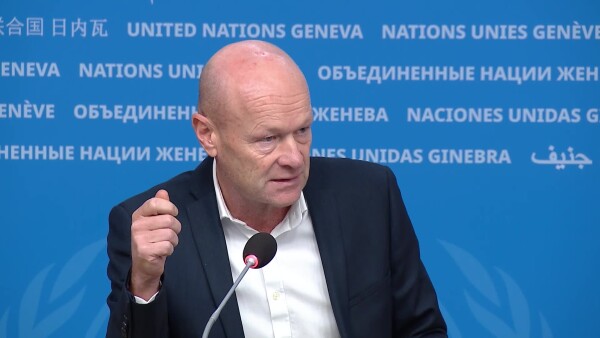
« Les actes de guerre que nous observons portent les marques de crimes d'atrocité, » a déclaré Jens Laerke, orateur pour le bureau de coordination de l'aide de l'ONU, OCHA. « Des centaines d'enfants et d'autres civils ont été tués dans des frappes aériennes israéliennes. Les zones densément peuplées et les hôpitaux sont à nouveau des champs de bataille ; des patients tués dans leurs lits, des ambulances prises pour cible et des premiers intervenants tués.»
Il y a 10 jours que les Gazaouis se sont réveillés sous les bombardements renouvelés d'Israël. « Cela fait 10 jours que nous assistons - car l'ONU reste sur le terrain à Gaza - à un mépris flagrant pour la vie et la dignité humaines, » a soutenu M. Laerke.
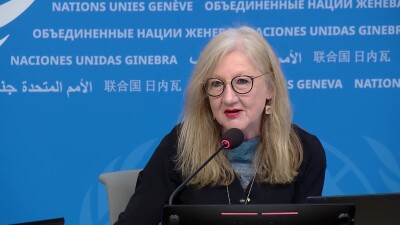
Maryse Guimond de l'ONU Femmes a relayé les témoignages de Palestiniens à Gaza qui refusent de tenir compte des nouveaux ordres d'évacuation émis par l'armée israélienne en disant « qu'il n'y a de toute façon pas de lieux sûrs ».
Parlant depuis Amman, elle a ajouté : « C'est une situation de pure survie et de survie de leurs familles car, comme ils le disent, il n'y a tout simplement nulle part où aller. Ils nous disent qu'ils ne bougeront plus car il n'y a de toute façon pas de lieux sûrs. Comme une femme nous l'a récemment dit depuis Deir al Balah, ‘Ma mère dit que la mort est la même que ce soit à Gaza City ou à Deir al Balah ; nous voulons juste retourner à Gaza.’»
HISTOIRE : Mise à jour sur Gaza – OCHA, OMS, ONU Femmes
TRT : 03’27”
SOURCE : UNTV CH
RESTRICTIONS : AUCUNE
LANGUE : ANGLAIS / NATS
FORMAT : 16:9
DATE : 28 mars 2025 GENÈVE, SUISSE
Orateurs :
- Jens Laerke, orateur, OCHA
- Dr Margaret Harris, oratrice, OMS
- Dr Rik Peeperkorn, représentant de l'OMS dans les TPO (depuis Jérusalem)
- Maryse Guimond, représentante de l'ONU Femmes pour les TPO (depuis Amman)
LISTE DE PLANS
- Plan extérieur moyen : Palais des Nations, Allée des Drapeaux
- Plan large du podium avec les orateurs.
- EXTRAIT SONORE (Anglais) – Jens Laerke, orateur, OCHA : “C'est maintenant le 10ème jour du retour à la guerre à grande échelle à Gaza après qu'Israël a décidé de recommencer à bombarder l'enclave. Cela fait 10 jours que nous assistons - car l'ONU reste sur le terrain à Gaza - à un mépris cruel pour la vie humaine et la dignité.”
- Plan large, orateurs au podium, salle de presse.
- EXTRAIT SONORE (Anglais) – Jens Laerke, orateur, OCHA : “Les actes de guerre que nous voyons portent les marques de crimes d'atrocité. Des centaines d'enfants et d'autres civils ont été tués lors de frappes aériennes israéliennes dans des zones fortement peuplées. Les hôpitaux sont à nouveau des champs de bataille ; des patients tués dans leurs lits, des ambulances prises pour cible et des secouristes tués.”
- Moyen, journalistes.
- EXTRAIT SONORE (Anglais) – Dr Margaret Harris, oratrice, OMS : “Nous faisons face à une situation actuellement aussi mauvaise qu'elle ne l'a jamais été. Nous savions que c'était mauvais avant le cessez-le-feu, lorsque nous implorions constamment d'être autorisés à faire notre travail et simplement aider les gens ordinaires de Gaza à vivre leur vie. C'est maintenant pire car les gens ont subi un blocus alimentaire mais ils subissent aussi les combats en cours et les fournitures s'épuisent. Et ils sont épuisés. Et cela s'ajoute à une situation où ils étaient déjà très malades. Donc non, ils ne peuvent pas continuer, et c'est pourquoi nous disons que cela doit être levé immédiatement. Nous avons besoin d'un cessez-le-feu maintenant.”
- Moyen-large, écrans de télévision montrant l'orateur, journalistes.
- EXTRAIT SONORE (Anglais) – Jens Laerke, orateur, OCHA : “Nous répétons : rien ne peut justifier la punition collective du peuple palestinien ; le droit international est clair, il interdit les attaques indiscriminées, l'obstruction de l'aide vitale, la destruction d'infrastructures indispensables à la survie civile et la prise d'otages. Les mesures provisoires de la Cour internationale de justice sur l'application de la Convention sur le génocide restent en vigueur ; pourtant, les alertes que nous émettons dans rapport après rapport révèlent un manque total de respect pour les principes les plus fondamentaux de l'humanité.”
- Moyen, salle de presse, journalistes.
- Dr Rik Peeperkorn, représentant de l'OMS dans les TPO (depuis Jérusalem) : “Les fournitures clés pour un accouchement sûr et les livraisons de soi-disant fournitures pour la santé maternelle et infantile seront bientôt épuisées. Je veux dire, nous étions déjà à court. La disponibilité limitée de benzène a mis hors service une douzaine d'ambulances.”
- Large, salle de presse, journaliste TV avec caméra.
- EXTRAIT SONORE (Anglais) – Maryse Guimond, représentante de l'ONU Femmes pour les TPO (depuis Amman) : “Du 18 au 25 mars, en seulement huit jours, 830 personnes ont été tuées, 174 femmes, 322 enfants avec 1 787 blessés.”
- Moyen, journaliste.
- EXTRAIT SONORE (Anglais) – Maryse Guimond, ONU Femmes : “C'est une situation de pure survie et de survie de leurs familles parce que, comme ils le disent, il n'y a tout simplement nulle part où aller. Ils nous disent qu'ils ne bougeront plus car il n'y a de toute façon pas de lieux sûrs. Comme une femme nous l'a récemment dit depuis Deir al Balah, ‘Ma mère dit que la mort est la même que ce soit à Gaza City ou à Deir al Balah ; nous voulons juste retourner à Gaza.”
- Moyen, journaliste.
- Moyen, journaliste TV avec caméra.
Similar Stories
1
1
1
Edited News | OCHA , UNICEF , WFP
Aid agencies warned on Friday of the fast-developing humanitarian emergency inside Taiz City in Yemen, which has been encircled by de facto Houthi forces fighting government troops along the country’s west coast.

2
17
1
2
Edited News , Press Conferences , Images | OCHA , WMO
Two UN agencies teamed up on Wednesday to issue an appeal for immediate assistance to help communities already being impacted by the strongest El Niño on record.

3
16
2
2
Edited News , B-roll , Conferences , Images | UNITED NATIONS , UNOG
Sixth Consultative Meeting on Enhancing Coordination of Peace Initiatives and Efforts for Sudan

1
1
1
Edited News | UNICEF , WHO , UNHCR
Yemen war continues to force families from homes amid hunger and disease
More than 250,000 people have now fled renewed fighting in Yemen, the UN said on Tuesday, citing particular concern for those sheltering in the southwestern city of Taiz and the wider governorate, where access is “essentially blocked”.

1
1
1
Edited News | UNICEF
A little over one year since a ceasefire agreement was announced between Hamas fighters and Israel, more than 340 children have been reported killed and hundreds more injured, the UN Children’s Fund, UNICEF, said on Friday.

1
1
1
Edited News | UNICEF , IFRC
Six weeks after Nepal’s deadly flooding disaster, communities are still struggling to rebuild their lives, but they will need sustained help as global warming increases the risk of another Himalayan catastrophe, the UN Children’s Fund (UNICEF) said on Friday.

1
1
1
Edited News | WHO
In suspected Russia plague death, testing and monitoring underway – WHO
The death of a lab worker in Russia’s Siberia region has sparked concerns about plague being the cause, the UN World Health Organization (WHO) said on Tuesday, adding that it was following the situation closely.

1
1
Edited News | OHCHR , UNOG
UN Human Rights Chief Volker Türk on Friday provided and oral update to the 63rd session of the Human rights Council on Ukraine.

1
1
1
Edited News | OHCHR , UNOG
UN Human Rights Chief Volker Türk on Friday provided and oral update to the 63rd session of the Human rights Council on the human rights situation in Haiti.

1
1
1
Edited News | WHO
Repeated delays in bringing lifesaving medicines, prosthetics and more from Israel into Gaza risk having devastating consequences on Palestinians who urgently need them in the wartorn enclave, the UN World Health Organization (WHO) said on Friday. “A truck full of non-priority supplies or the right supplies arriving too late, doesn't save lives. That's the question that actually matters," said Dr Reinhilde Van De Weerdt, WHO Representative in the OPT.

1
1
1
Edited News | WHO
DRC: Early access to care and oxygen decisive for Ebola patients’ survival – WHO
In the Democratic Republic of the Congo (DRC), health workers fighting the country’s largest-ever Ebola outbreak are struggling to overcome critical challenges to patient care, the UN World Health Organization (WHO) warned on Tuesday.

1
1
1
Edited News | OCHA , UN
Civilians in Iran are continuing to feel the consequences of months of conflict and military escalation, the UN’s top official in the country has said, as loss of life, damage to civilian infrastructure and mounting economic pressures leave many facing continued uncertainty.