

The United Nations Office at Geneva
Multimedia Newsroom
Edited News | OHCHR , UNOG
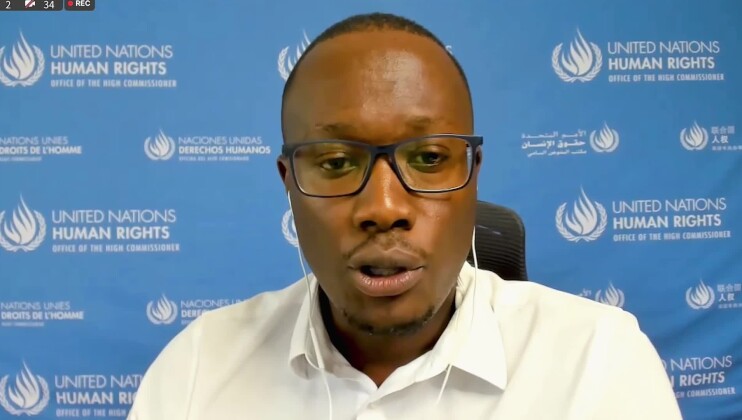
Le porte-parole des Nations unies pour les droits de l'homme, Seif Magango, parle de l'escalade de la violence à El Fasher, au Soudan
“Les rapports indiquent que les deux parties ont lancé des attaques indiscriminées en utilisant des armes explosives à effet de zone, telles que des obus de mortier et des roquettes tirées par des avions de chasse, dans des quartiers résidentiels. Au moins 43 personnes, dont des femmes et des enfants, ont été tuées lors des combats entre les forces armées soudanaises (SAF) et les Forces de soutien rapide (RSF) - soutenues par leurs milices alliées respectives - depuis le 14 avril, date à laquelle les RSF ont commencé leur avancée vers El-Fasher,” a déclaré Magango, parlant depuis Nairobi.
“Les civils sont piégés dans la ville, la seule encore aux mains des SAF, craignant d'être tués s'ils tentent de fuir. Cette situation désespérée est aggravée par une pénurie sévère de fournitures essentielles, les livraisons de biens commerciaux et d'aide humanitaire étant fortement entravées par les combats, et les camions de livraison ne pouvant pas circuler librement dans les territoires contrôlés par les RSF, a-t-il déclaré.
Depuis le début du mois d'avril, les RSF ont mené plusieurs attaques à grande échelle contre les villages de l'ouest d'El-Fasher, principalement habités par la communauté ethnique africaine Zaghawa. Les RSF ont incendié certains des villages, dont Durma, Umoshosh, Sarafaya et Ozbani. De telles attaques font craindre de nouvelles violences motivées par des considérations ethniques au Darfour, y compris des massacres. L'année dernière, les combats et les attaques entre les Rizeigat et les Masalit africains dans l'ouest du Darfour ont fait des centaines de morts ou de blessés parmi les civils, et des milliers ont été déplacés de leurs foyers.
“Le Haut-Commissaire appelle à une désescalade immédiate de cette situation catastrophique, à la fin du conflit qui ravage le pays depuis plus d'un an maintenant, et à une enquête sur toutes les violations et les abus présumés du droit international des droits de l'homme et les violations du droit international humanitaire en vue d'assurer la responsabilité et les droits des victimes à la vérité, à la justice et à des réparations. Il exhorte également les deux parties au conflit et leurs alliés à accorder aux civils un passage sûr vers d'autres zones, à assurer la protection des civils et des biens civils, et à faciliter un accès humanitaire sûr et sans entrave,” a déclaré Magango.
FIN
À Genève :
Jeremy Laurence - + 41 22 917 9383 / jeremy.laurence@un.org
À Nairobi :
Seif Magango - + 254 788 343 897/ seif.magango@un.org
Tag and share - Twitter: @UNHumanRights and Facebook: unitednationshumanrights
HISTOIRE : Le porte-parole des droits de l'homme de l'ONU, Seif Magango, sur l'escalade de la violence à El-Fasher, au Soudan
DURÉE : 01:57
SOURCE : UNTV/OHCHR
RESTRICTIONS : AUCUNE
LANGUE : Anglais/NATS
FORMAT : 16:9
DATE LIMITE : 26 avril 2024 GENÈVE, SUISSE
LISTE DES PLANS
1. Plan extérieur : Palais des Nations
2. Plan large : Salle de briefing
3. DÉCLARATION (Anglais)—Seif Magango, porte-parole du Haut-Commissariat des Nations Unies aux droits de l'homme (HCDH) : «Les rapports indiquent que les deux parties ont lancé des attaques indiscriminées à l'aide d'armes explosives à effet de zone, telles que des obus de mortier et des roquettes tirées par des avions de chasse, dans des quartiers résidentiels. Au moins 43 personnes, dont des femmes et des enfants, ont été tuées lors des combats entre les SAF et les RSF – soutenus par leurs milices alliées respectives – depuis le 14 avril, date à laquelle les RSF ont commencé leur avancée vers El-Fasher.»
4. Plan de coupe : Salle de briefing.
5. DÉCLARATION (Anglais)—Seif Magango, porte-parole du Haut-Commissariat des Nations Unies aux droits de l'homme (HCDH) : «Les civils sont piégés dans la ville, la seule encore aux mains des SAF, craignant d'être tués s'ils tentent de fuir. Cette situation désespérée est aggravée par une pénurie sévère de fournitures essentielles, les livraisons de biens commerciaux et d'aide humanitaire étant fortement entravées par les combats, et les camions de livraison ne pouvant pas circuler librement dans le territoire contrôlé par les RSF.»
6. Plan de coupe : Salle de briefing.
7. DÉCLARATION (Anglais)—Seif Magango, porte-parole du Haut-Commissariat des Nations Unies aux droits de l'homme (HCDH) : «Le Haut-Commissaire appelle à une désescalade immédiate de cette situation catastrophique, à la fin du conflit qui ravage le pays depuis plus d'un an maintenant et à l'enquête sur toutes les violations et abus allégués du droit international des droits de l'homme et des violations du droit international humanitaire en vue d'assurer la responsabilité et les droits des victimes à la vérité, à la justice et à des réparations. Il exhorte également les deux parties au conflit et leurs alliés à accorder un passage sûr aux civils vers d'autres zones, à assurer la protection des civils et des biens civils, et à faciliter un accès humanitaire sûr et sans entrave.»
8. Plan de coupe : Salle de briefing.
Similar Stories

1
1
1
Edited News | UNICEF
A little over one year since a ceasefire agreement was announced between Hamas fighters and Israel, more than 340 children have been reported killed and hundreds more injured, the UN Children’s Fund, UNICEF, said on Friday.

1
1
1
Edited News | UNICEF , IFRC
Six weeks after Nepal’s deadly flooding disaster, communities are still struggling to rebuild their lives, but they will need sustained help as global warming increases the risk of another Himalayan catastrophe, the UN Children’s Fund (UNICEF) said on Friday.

1
1
1
Edited News | WHO
In suspected Russia plague death, testing and monitoring underway – WHO
The death of a lab worker in Russia’s Siberia region has sparked concerns about plague being the cause, the UN World Health Organization (WHO) said on Tuesday, adding that it was following the situation closely.

1
1
Edited News | OHCHR , UNOG
UN Human Rights Chief Volker Türk on Friday provided and oral update to the 63rd session of the Human rights Council on Ukraine.

1
1
1
Edited News | OHCHR , UNOG
UN Human Rights Chief Volker Türk on Friday provided and oral update to the 63rd session of the Human rights Council on the human rights situation in Haiti.

1
1
1
Edited News | WHO
Repeated delays in bringing lifesaving medicines, prosthetics and more from Israel into Gaza risk having devastating consequences on Palestinians who urgently need them in the wartorn enclave, the UN World Health Organization (WHO) said on Friday. “A truck full of non-priority supplies or the right supplies arriving too late, doesn't save lives. That's the question that actually matters," said Dr Reinhilde Van De Weerdt, WHO Representative in the OPT.

1
1
1
Edited News | WHO
DRC: Early access to care and oxygen decisive for Ebola patients’ survival – WHO
In the Democratic Republic of the Congo (DRC), health workers fighting the country’s largest-ever Ebola outbreak are struggling to overcome critical challenges to patient care, the UN World Health Organization (WHO) warned on Tuesday.

1
1
1
Edited News | OCHA , UN
Civilians in Iran are continuing to feel the consequences of months of conflict and military escalation, the UN’s top official in the country has said, as loss of life, damage to civilian infrastructure and mounting economic pressures leave many facing continued uncertainty.
1
1
1
Edited News | WHO , UNICEF
Aid agencies in Yemen highlighted the growing hunger emergency sparked by renewed fighting between Houthi opposition forces and Government troops, after mobile health clinics reported that hundreds of children displaced by the violence are suffering from the most deadly form of malnutrition.
1
1
1
Edited News | UNHCR
Displacement on the rise in Yemen as fighting continues - UNHCR
As hostilities worsen in Yemen, more people have been fleeing their homes, further intensifying the humanitarian crisis within the region, the UN Refugee Agency (UNHCR) warned on Tuesday.
1
1
1
Edited News | IOM , OHCHR , UNFPA , UNOG , UNHCR , WHO
Yemen’s humanitarian crisis growing by the hour amid spike in displacement
Yemenis displaced by renewed fighting have described fleeing for their lives amid shelling and gunfire, aid agencies reported on Friday, while highlighting the dramatic increase in humanitarian needs in the country and in Djibouti, where thousands have sought shelter.
1
1
1
Edited News | OHCHR , UNOG
The UN Human Rights Office issued on Friday a report documenting a shocking pattern of sexual violence amid Russia’s full-scale armed attack on Ukraine.