

The United Nations Office at Geneva
Multimedia Newsroom
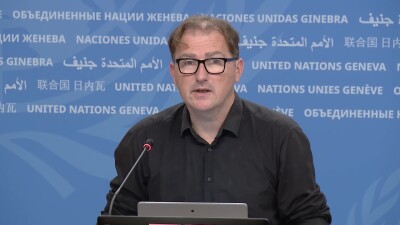
Un total de 645 personnes sont décédées depuis le 7 octobre et 818 autres ont été blessées à la suite de ces incidents, a déclaré le porte-parole de l'OMS, Tarik Jasarevic, ses commentaires intervenant au milieu d'allégations selon lesquelles une infirmière a été abattue et grièvement blessée alors qu'elle se trouvait dans une salle d'opération dans un hôpital de Khan Younis.
« Ces attaques ont affecté 98 établissements de santé, dont 27 hôpitaux endommagés sur 36, et 90 ambulances, dont 50 ont été endommagées », a déclaré M. Jazarevic aux journalistes à Genève.
Chassés
Dans sa dernière mise à jour sur la crise, le bureau de coordination de l'aide de l'ONU, OCHA, a signalé des « combats intenses » à Khan Younis, dans le sud de Gaza, jeudi, impliquant des tirs d'obus et de lourdes fusillades.
Citant le partenaire de l'ONU, la Société du Croissant-Rouge palestinien (PCRS), le bureau de coordination de l'aide de l'ONU a déclaré que l'hôpital Nasser et l'hôpital Al Amal - apparemment assiégés depuis 17 jours - avaient continué à être particulièrement touchés par la violence, ce qui « pousse des milliers de personnes » de la ville plus au sud, vers Rafah.
Focus sur les hôpitaux
La mise à jour de l'OCHA a également relayé des rapports de l'autorité sanitaire de Gaza faisant état de « allégations de tirs de sniper à proximité de l'hôpital Nasser » et des allégations selon lesquelles l'armée israélienne aurait empêché le mouvement des ambulances et l'accès à l'hôpital Nasser.
« Le 8 février, une infirmière aurait été abattue et grièvement blessée alors qu'elle se trouvait dans la salle d'opération de l'hôpital Nasser et deux Palestiniens auraient été abattus à proximité de l'hôpital », a déclaré la mise à jour de l'OCHA. « Le 7 février, une Palestinienne aurait été abattue alors qu'elle cherchait de l'eau à l'hôpital Nasser. »
Escalade en Cisjordanie
Les dernières données de l'OMS ont également mis en évidence le nombre croissant d'attaques contre les soins de santé en Cisjordanie occupée depuis le début de la guerre entre Gaza et Israël le 7 octobre, après que des attaques terroristes dirigées par le Hamas aient été largement condamnées, faisant 1 200 morts parmi les Israéliens et les étrangers et plus de 250 pris en otage.
Quelque 364 attaques (contre les soins de santé) ont eu lieu en Cisjordanie, entraînant 10 décès et 62 blessures, a déclaré M. Jasarevic. Il a noté que 44 établissements de santé avaient été touchés, dont 15 cliniques mobiles et 24 ambulances.
Le dernier bilan des combats à Gaza fait état d'au moins 27 840 morts et de plus de 67 300 blessés, selon l'autorité sanitaire locale. Au 8 février, 225 soldats israéliens ont été tués et 1 314 blessés à Gaza depuis le début de l'opération terrestre, selon l'armée israélienne.
Renouvellement des craintes de famine
Les humanitaires de l'ONU ont continué à souligner que le risque de famine à Gaza augmente « de jour en jour », en particulier dans le nord de Gaza.
Des centaines de milliers de personnes y sont « principalement privées d'assistance », a déclaré l'OCHA, malgré le fait que c'est là que se trouvent les besoins les plus importants, beaucoup broyant apparemment de la nourriture pour animaux pour en faire de la farine.
Depuis le début de la crise, le Programme alimentaire mondial (PAM) de l'ONU a livré 1 940 camions - 19 % de tous les camions d'aide, a-t-il déclaré - transportant plus de 32 413 tonnes de fournitures alimentaires vitales.
La dernière fois que l'UNRWA a pu effectuer une distribution alimentaire dans le nord de Wadi Gaza était le 23 janvier, a noté la mise à jour de l'OCHA.
HISTOIRE: Gaza mise à jour: OMS, HCDH
DURÉE: 02 min 13s
SOURCE: UNTV CH
RESTRICTIONS: AUCUNE
LANGUE: ANGLAIS / NATS
FORMAT D'IMAGE: 16:9
DATE: 9 FÉVRIER 2024 GENÈVE, SUISSE
LISTE DES PLANS
- Plan moyen extérieur: allée des drapeaux de l'ONU
- Plan large: orateurs au podium lors d'une conférence de presse
- EXTRAIT SONORE (Anglais) – Tarik Jasarevic, porte-parole de l'Organisation mondiale de la santé (OMS) des Nations Unies: “L'OMS a documenté 721 attaques contre les soins de santé dans le Territoire palestinien occupé depuis le 7 octobre. Sur ces 721 attaques, 357 ont eu lieu à Gaza, entraînant 645 décès et 818 blessés.”
- Plan moyen: salle de presse avec des journalistes
- EXTRAIT SONORE (Anglais) – Tarik Jasarevic, porte-parole de l'Organisation mondiale de la santé (OMS) des Nations Unies: “Les établissements de santé sont protégés par le droit humanitaire international. Et nous continuons vraiment à répéter notre appel à toutes les parties au conflit pour qu'elles respectent le fait que les travailleurs de la santé, les ambulances, les hôpitaux, les patients ne devraient jamais être une cible et devraient être protégés.”
- Plan moyen: salle de presse avec des journalistes
- EXTRAIT SONORE (Anglais) – Tarik Jasarevic, porte-parole de l'Organisation mondiale de la santé (OMS) des Nations Unies: “Ces attaques ont affecté 98 établissements de santé, dont 27 hôpitaux endommagés sur 36, et ont touché 90 ambulances, dont 50 ont subi des dommages.”
- Plan large: salle de presse avec des journalistes
- EXTRAIT SONORE (Anglais) - Marta Hurtado, porte-parole, Bureau du Haut-Commissaire aux droits de l'homme (HCDH): “Les (Forces de sécurité israéliennes) ont également affirmé que l'un d'eux avait une arme, une affirmation démentie par le personnel de l'hôpital. Aucun échange de tirs n'a été signalé. En vertu du droit international des droits de l'homme applicable, les armes à feu ne peuvent être utilisées que lorsqu'il est strictement nécessaire de prévenir une menace imminente pour la vie ou des blessures graves, et sont autrement illégales.”
- Plan large: salle de presse avec des journalistes
- EXTRAIT SONORE (Anglais) - Marta Hurtado, porte-parole, Bureau du Haut-Commissaire aux droits de l'homme (HCDH): “L'article 53 de la Quatrième Convention de Genève interdit la destruction par la puissance occupante de biens appartenant à des personnes privées, sauf lorsque cette destruction est rendue absolument nécessaire par des opérations militaires. Les destructions effectuées pour créer une zone tampon à des fins de sécurité générale ne semblent pas compatibles avec les opérations militaires restreintes.”
- Plan moyen: salle de presse avec des journalistes, interprètes en train de travailler.
Similar Stories

1
1
1
Edited News | OCHA , UNICEF , WFP
Aid agencies warned on Friday of the fast-developing humanitarian emergency inside Taiz City in Yemen, which has been encircled by de facto Houthi forces fighting government troops along the country’s west coast.

2
17
1
2
Edited News , Press Conferences , Images | OCHA , WMO
Two UN agencies teamed up on Wednesday to issue an appeal for immediate assistance to help communities already being impacted by the strongest El Niño on record.

3
16
2
2
Edited News , B-roll , Conferences , Images | UNITED NATIONS , UNOG
Sixth Consultative Meeting on Enhancing Coordination of Peace Initiatives and Efforts for Sudan

1
1
1
Edited News | UNICEF , WHO , UNHCR
Yemen war continues to force families from homes amid hunger and disease
More than 250,000 people have now fled renewed fighting in Yemen, the UN said on Tuesday, citing particular concern for those sheltering in the southwestern city of Taiz and the wider governorate, where access is “essentially blocked”.

1
1
1
Edited News | UNICEF
A little over one year since a ceasefire agreement was announced between Hamas fighters and Israel, more than 340 children have been reported killed and hundreds more injured, the UN Children’s Fund, UNICEF, said on Friday.

1
1
1
Edited News | UNICEF , IFRC
Six weeks after Nepal’s deadly flooding disaster, communities are still struggling to rebuild their lives, but they will need sustained help as global warming increases the risk of another Himalayan catastrophe, the UN Children’s Fund (UNICEF) said on Friday.

1
1
1
Edited News | WHO
In suspected Russia plague death, testing and monitoring underway – WHO
The death of a lab worker in Russia’s Siberia region has sparked concerns about plague being the cause, the UN World Health Organization (WHO) said on Tuesday, adding that it was following the situation closely.

1
1
Edited News | OHCHR , UNOG
UN Human Rights Chief Volker Türk on Friday provided and oral update to the 63rd session of the Human rights Council on Ukraine.

1
1
1
Edited News | OHCHR , UNOG
UN Human Rights Chief Volker Türk on Friday provided and oral update to the 63rd session of the Human rights Council on the human rights situation in Haiti.

1
1
1
Edited News | WHO
Repeated delays in bringing lifesaving medicines, prosthetics and more from Israel into Gaza risk having devastating consequences on Palestinians who urgently need them in the wartorn enclave, the UN World Health Organization (WHO) said on Friday. “A truck full of non-priority supplies or the right supplies arriving too late, doesn't save lives. That's the question that actually matters," said Dr Reinhilde Van De Weerdt, WHO Representative in the OPT.

1
1
1
Edited News | WHO
DRC: Early access to care and oxygen decisive for Ebola patients’ survival – WHO
In the Democratic Republic of the Congo (DRC), health workers fighting the country’s largest-ever Ebola outbreak are struggling to overcome critical challenges to patient care, the UN World Health Organization (WHO) warned on Tuesday.

1
1
1
Edited News | OCHA , UN
Civilians in Iran are continuing to feel the consequences of months of conflict and military escalation, the UN’s top official in the country has said, as loss of life, damage to civilian infrastructure and mounting economic pressures leave many facing continued uncertainty.