

The United Nations Office at Geneva
Multimedia Newsroom
Edited News , Press Conferences | OCHA , UNITED NATIONS
OCHA Presser: Humanitarian Situation In Nigeria
“Looming catastrophic food insecurity in Nigeria could eventually result in a famine”, warns UN Country Office
The UN Country Representative in Nigeria, Edward Kallon, warned today that the country is currently at a crossroad to a critical food insecurity which could result in famine should appropriate action not be taken now while asking urgently the international community for USD 250 million to avert the worse.
Speaking to reporters at a briefing at the United Nations in Geneva, Edward Kallon, United Nations Resident and Humanitarian Coordinator for Nigeria, said that “we are here on a very somber mission, a somber mission in the sense that we are seeing Nigeria at a cross-road to critical food insecure situation and a looming catastrophic food insecurity that could eventually result in a famine, if appropriate actions are not taken now”.
Mr. Kallon added that “we need critically USD 250 million dollars to respond to the acute food insecurity needs of 4,4 million people of which some 705, 000 are at a critical threshold of death if nothing is done now”.
Based on a latest study by the World Food Programme (WFP), the UN Food and Agriculture Organisation (FAO) and partners, an estimated 4,4 million people are urgently in need of humanitarian assistance in north-east Nigeria, Borno, Adamawa and Yobe states. One of the biggest challenges is getting access to the people in need.
“There are still well over 800, 000 people in inaccessible areas that we cannot access as international humanitarian partners although some of those areas are reachable by the government itself”, reports Mr. Kallon. “So, indeed, we can see the need for a division of responsibility in those areas. What’s critical to the response is going to be the need for freedom of movement of people to come from those enclaves to areas where we can have access to”.
According to Edward Kallon, the malnutrition rates are very worrisome as they have further increased since October 2020 till today.
The socio-economic impact of Covid-19 led to a destruction of livelihoods. The country is extremely worried about the new virus variants of the pandemic and the work of the humanitarian workers has been restricted due to Covid-19.
“This situation has even deteriorated further as a result of 1) limited access, constraints imposed by Covid-19 and also the lack of resources. My call on the international community is to come to our aid now to make sure that we avert a famine”.
The ongoing security concerns resulted in a further displacement of the population, according to Mr. Kallon. “As we are witnessing now as a result of banditry, criminality, and elements of terrorism, we are also seeing high levels of displacement in north-west Nigeria where an estimated 1,4 million people also need immediate humanitarian assistance. And, also in north-central Nigeria where over 1 million people also need assistance”.
The top UN official for Nigeria emphasizes that the response mechanisms are in place and colleagues are working closely with government to gain access in hard to reach areas.
“Security remains a major concern in our operation and at best the security situation in the operation areas remain fluid, volatile and unpredictable”, said Mr. Kallon. “Access remains a concern to us, but we are also very hopeful and working collectively to ensure that the response is localized, and we are using local support to make sure that affected population are reached”.
Edward Kallon reminded that in a similar situation in 2017 a famine was averted through the help of the international community.
-ends-
SHOTLIST
- Exterior wide shot, Palais des Nations flag alley, nations’ flags flying, a sunny day.
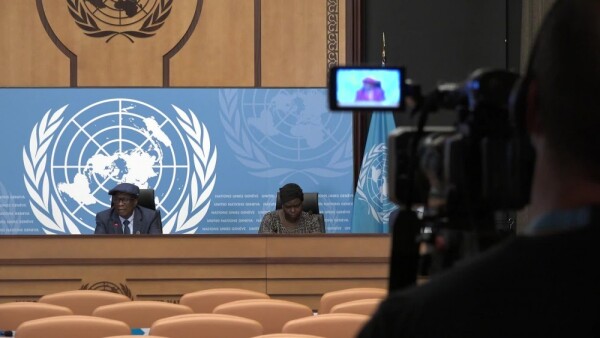
- Wide shot, press briefing at the UN in Geneva
- SOUNDBITE (English) – Edward Kallon, United Nations Resident and Humanitarian Coordinator for Nigeria: “We are here on a very somber mission, a somber mission in the sense that we are seeing Nigeria at a cross-road to critical food insecure situation and a looming catastrophic food insecurity that could eventually result in a famine, if appropriate actions are not taken now”.
- Medium shot, journalist in press briefing room watching screen
- SOUNDBITE (English) - Edward Kallon, United Nations Resident and Humanitarian Coordinator for Nigeria: “We need critically 250 million dollars to respond to the acute food insecurity needs of 4,4 million people of which some 705, 000 are at a critical threshold of death if nothing is done now”.
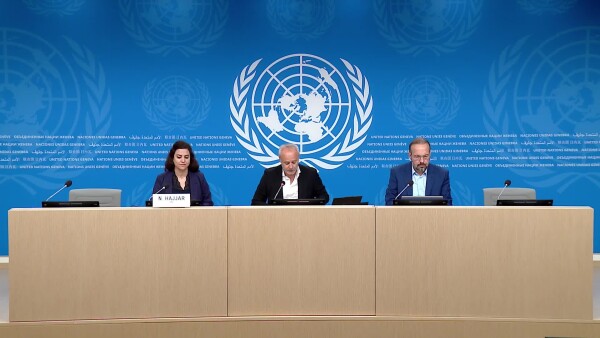
- Medium shot, podium with speakers
- SOUNDBITE (English) - Edward Kallon, United Nations Resident and Humanitarian Coordinator for Nigeria: “There are still well over 800, 000 people in inaccessible areas that we cannot access as international humanitarian partners although some of those areas are reachable by the government itself. So, indeed, we can see the need for a division of responsibility in those areas. What’s critical to the response is going to be the need for freedom of movement of people to come from those enclaves to areas where we can have access to”.
- Close up, screen with zoom platform
- SOUNDBITE (English) - Edward Kallon, United Nations Resident and Humanitarian Coordinator for Nigeria: “This situation has even deteriorated further as a result of 1) limited access, constraints imposed by Covid-19 and also the lack of resources. My call on the international community is to come to our aid now to make sure that we avert a famine”.
- Medium shot, podium with speakers
- SOUNDBITE (English) - Edward Kallon, United Nations Resident and Humanitarian Coordinator for Nigeria: “As we are witnessing now as a result of banditry, criminality, and elements of terrorism, we are also seeing high levels of displacement in north-west Nigeria where an estimated 1,4 million people also need immediate humanitarian assistance. And, also in north-central Nigeria where over 1 million people also need assistance”.
- Close up, camera view finder
- SOUNDBITE (English) - Edward Kallon, United Nations Resident and Humanitarian Coordinator for Nigeria: “Security remains a major concern in our operation and at best the security situation in the operation areas remain fluid, volatile and unpredictable. Access remains a concern to us, but we are also very hopeful and working collectively to ensure that the response is localized, and we are using local support to make sure that affected population are reached”.
- Medium shot, journalist
- Wide shot, podium with speakers
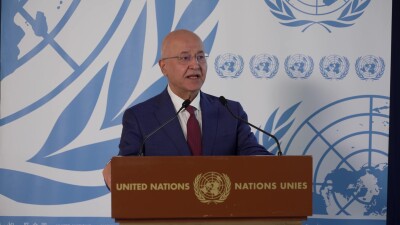
- Medium shot, Edward Kallon speaking from podium
Similar Stories
1
1
1
Press Conferences | WMO , UNHCR , WHO , ILO
WMO: Greenhouse Gas Bulletin; UNHCR: As attacks intensify UNHCR urges support for war ravaged Ukrainians; WHO: Clinical trials in DRC: vaccines and beyond; ILO: New global and regional estimates on domestic work, informality and working conditions
1
1
1
Edited News | OCHA , UNICEF , WFP
Aid agencies warned on Friday of the fast-developing humanitarian emergency inside Taiz City in Yemen, which has been encircled by de facto Houthi forces fighting government troops along the country’s west coast.
1
1
1
Press Conferences | UN WOMEN , WFP , WHO
UN WOMEN: Sudan Women and girls one year after the fall of El Fasher; increasing drone attacks across the country; WFP: DRC - Ebola spreads to eighth DRC province as WFP delivers food, builds treatment centres and keeps supplies moving; WHO - Update on Ebola (Bundibugyo Virus Disease)
1
12
1
1
Press Conferences , Images | UNOG
Closing Press Conference following the Sixth Consultative Meeting on Enhancing Coordination of Peace Initiatives and Efforts in Sudan

2
17
1
2
Edited News , Press Conferences , Images | OCHA , WMO
Two UN agencies teamed up on Wednesday to issue an appeal for immediate assistance to help communities already being impacted by the strongest El Niño on record.

3
16
2
2
Edited News , B-roll , Conferences , Images | UNITED NATIONS , UNOG
Sixth Consultative Meeting on Enhancing Coordination of Peace Initiatives and Efforts for Sudan
1
1
1
Press Conferences | CITES
Wildlife trade and conservation policy discussions at the 81st meeting of the CITES Standing Committee (SC81)

1
1
1
Edited News | UNICEF , WHO , UNHCR
Yemen war continues to force families from homes amid hunger and disease
More than 250,000 people have now fled renewed fighting in Yemen, the UN said on Tuesday, citing particular concern for those sheltering in the southwestern city of Taiz and the wider governorate, where access is “essentially blocked”.
1
1
1
Press Conferences | UNHCR , UNCTAD , WMO , OCHA , UNICEF , WHO
UNHCR Hungary’s 1956 Refugee Crisis: 70 Years On, UNCTAD World Investment Forum 2026, Doha, WMO Greenhouse Gas Bulletin and Climate Update for COP31, OCHA Afghanistan: Malnutrition, Girls’ Education and Recovery, UNICEF Yemen: Child Malnutrition and Unsafe Water in Taiz, WHO Inequalities in Noncommunicable Diseases and Risk Factors
1
1
1
Press Conferences | UNHCR
End of UNHCR's 77th Annual Executive Committee (ExCom) meeting week

1
1
1
Edited News | UNICEF
A little over one year since a ceasefire agreement was announced between Hamas fighters and Israel, more than 340 children have been reported killed and hundreds more injured, the UN Children’s Fund, UNICEF, said on Friday.
1
1
1
Press Conferences | UNICEF , IOM , UNHCR
UN Special Assistant to the Personal Envoy Office (SUDAN): Peace Initiatives and Efforts in Sudan; UNICEF: Dire situation of children in Gaza; IOM: Damaged Homes and Energy Attacks Risk Displacing Ukrainians for this winter; UNHCR: update on EXCOM week