

The United Nations Office at Geneva
Multimedia Newsroom
Devastating drought in Lesotho has left more than half a million people facing severe food shortages and tens of thousands “one step away from famine”, UN humanitarians said on Friday, in an appeal for funds.
“The UN team and humanitarian partners (are) today launching a $34 million flash appeal … to urgently support over 260,000 people with lifesaving interventions up ‘til April next year,” spokesperson Jens Laerke from the Office for the Coordination of Humanitarian Affairs (OCHA), told journalists in Geneva.
Ten districts in the small landlocked southern African nation are already “severely food insecure”, Mr. Laerke said, with rural smallholders worst-hit and forced to leave their homes to survive.
“Most of the food insecure people are in rural areas and we estimate that at the peak of the lean season, which runs from January to March, some 71,000 people will face emergency conditions in rural districts. That is IPC phase 4 – one step away from famine,” the spokesperson added.
As the drought worsens, migration into cities is expected to increase, OCHA warned in a statement.
“Women and girls have reportedly left their rural homes to urban areas or South Africa in search of work, mostly as domestic workers trading sex for money or food,” it noted.
Citing the latest Integrated Food Security Phase Classification food security assessments, often referred to by the acronym IPC, the OCHA official explained that the 2018/2019 planting season had been badly affected by late rains and scorching temperatures.
And with forecasts indicating that Lesotho will receive below-average rainfall during the current 2019/2020 season – October to March - communities now face three back-to-back failed harvests.
The most vulnerable are in Leribe and Maseru districts.
Today, “a total of half a million people – that’s more than a quarter of the population of Lesotho…are facing severe food insecurity because of severe drought which has gripped the country at the same time as people are approaching the peak of the lean season,” Mr. Laerke explained.
Drought has a massive impact on Lesotho because most of the rural population relies on farming for their income. Women are particularly vulnerable because they own fewer assets than male farmers, OCHA insisted, as many more families will be forced to leave their homes and head for towns, where they face additional risks.
One worry linked to this migrations is that Lesotho has the second highest HIV prevalence rate in the world, at more than one in four people.
“It makes particularly women and children, girls in particular, very vulnerable to sexual exploitation and abuse,” Mr. Laerke insisted.
According to OCHA, food insecurity levels are 64 per cent higher than last year, when the number of food insecure people was around 309,000 (257,283 in rural areas, 51,683 in urban zones).
Highlighting the catastrophic impact of the extreme weather on harvests, Mr. Laerke said that overall cereal production had decreased by more than 60 per cent compared to 2018.
Individual crops have suffered even greater losses, such as maize and sorghum, which respectively saw reductions of 78 and 93 per cent.
“The Government of Lesotho on 30 October declared a national disaster and issued a drought response and resilience plan,” he said. “Our flash appeal will support that plan.”
The Flash Appeals aims to conduct awareness-raising sessions and distribute life-saving information materials about risks of irregular migration, gender-based violence, violence against children, child marriage, trafficking in persons and how to report abuse.
Lesotho’s $83 million Drought Response and Resilience Plan aims to help more than 508,000 people, including 68,250 children.
- Exterior shot: Palais des Nations flag alley, flags fluttering, overcast.
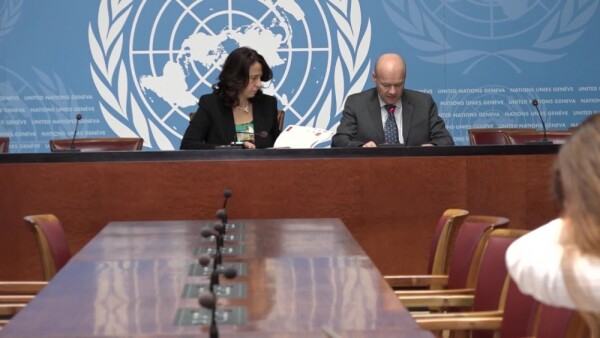
- Medium shot: Press Room III, journalists and podium speakers.
- Medium shot: journalists.
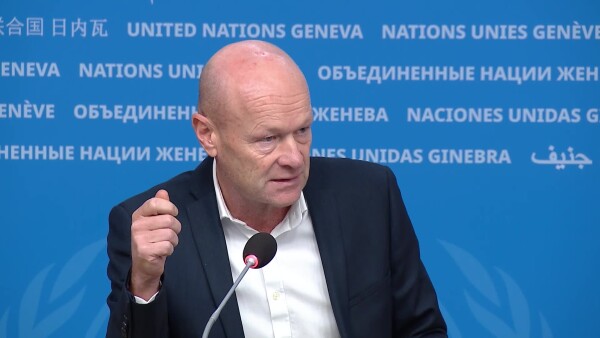
- SOUNDBITE (English) – Jens Laerke, spokesperson for the Office for the Coordination of Humanitarian Affairs (OCHA): “The UN team and humanitarian partners is today launching a $34 million flash appeal – this one – to urgently support over 260,000 people with lifesaving interventions up ‘til April next year.”
- Medium shot: journalists typing on laptops.
- SOUNDBITE (English) – Jens Laerke, spokesperson for the Office for the Coordination of Humanitarian Affairs (OCHA): “A total of half a million people – that’s more than a quarter of the population of Lesotho – which as you know is a small, landlocked country in southern Africa - are facing severe food insecurity because of severe drought which has gripped the country at the same time as people are approaching the peak of the lean season.”
- Close-up: journalists in profile, seated.
- SOUNDBITE (English) – Jens Laerke, spokesperson for the Office for the Coordination of Humanitarian Affairs (OCHA): “Overall cereal production decreased by more than 60 per cent compared to 2018. The Government of Lesotho on 30 October declared a national disaster and issued a drought response and resilience plan. Our flash appeal will support that plan.”
- Medium shot: TV camera operators, tripods, TV cameras.
- SOUNDBITE (English) – “Most of the food insecure people are in rural areas and we estimate that at the peak of the lean season, which runs from January to March, some 71,000 people will face emergency conditions in rural districts. That is IPC phase 4 – one step away from famine.”
- Medium shot: backs of journalists, obese ver.
- SOUNDBITE (English) – Jens Laerke, spokesperson for the Office for the Coordination of Humanitarian Affairs (OCHA): “One particular concern with those movements is that it makes particularly women and children, girls in particular, very vulnerable to sexual exploitation and abuse.”
- Close-up: series of hands typing on laptops, profile.
- Medium shot: podium speakers, journalist’s head in front of shot, blurred.
- Medium shot: journalists.
- Medium shot: journalist holding pen and resting hand on cheek, looks down.
Similar Stories
1
1
1
Edited News | OCHA , UNICEF , WFP
Aid agencies warned on Friday of the fast-developing humanitarian emergency inside Taiz City in Yemen, which has been encircled by de facto Houthi forces fighting government troops along the country’s west coast.

2
17
1
2
Edited News , Press Conferences , Images | OCHA , WMO
Two UN agencies teamed up on Wednesday to issue an appeal for immediate assistance to help communities already being impacted by the strongest El Niño on record.
3
16
2
2
Edited News , B-roll , Conferences , Images | UNITED NATIONS , UNOG
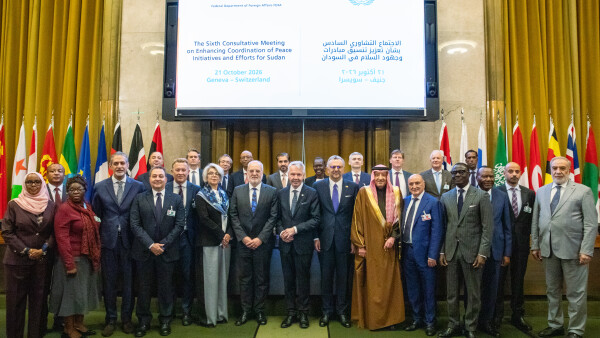
Sixth Consultative Meeting on Enhancing Coordination of Peace Initiatives and Efforts for Sudan
1
1
1
Edited News | UNICEF , WHO , UNHCR
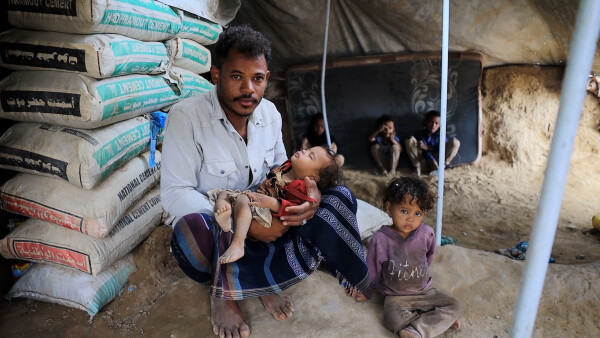
Yemen war continues to force families from homes amid hunger and disease
More than 250,000 people have now fled renewed fighting in Yemen, the UN said on Tuesday, citing particular concern for those sheltering in the southwestern city of Taiz and the wider governorate, where access is “essentially blocked”.

1
1
1
Edited News | UNICEF
A little over one year since a ceasefire agreement was announced between Hamas fighters and Israel, more than 340 children have been reported killed and hundreds more injured, the UN Children’s Fund, UNICEF, said on Friday.

1
1
1
Edited News | UNICEF , IFRC
Six weeks after Nepal’s deadly flooding disaster, communities are still struggling to rebuild their lives, but they will need sustained help as global warming increases the risk of another Himalayan catastrophe, the UN Children’s Fund (UNICEF) said on Friday.

1
1
1
Edited News | WHO
In suspected Russia plague death, testing and monitoring underway – WHO
The death of a lab worker in Russia’s Siberia region has sparked concerns about plague being the cause, the UN World Health Organization (WHO) said on Tuesday, adding that it was following the situation closely.

1
1
Edited News | OHCHR , UNOG
UN Human Rights Chief Volker Türk on Friday provided and oral update to the 63rd session of the Human rights Council on Ukraine.

1
1
1
Edited News | OHCHR , UNOG
UN Human Rights Chief Volker Türk on Friday provided and oral update to the 63rd session of the Human rights Council on the human rights situation in Haiti.

1
1
1
Edited News | WHO
Repeated delays in bringing lifesaving medicines, prosthetics and more from Israel into Gaza risk having devastating consequences on Palestinians who urgently need them in the wartorn enclave, the UN World Health Organization (WHO) said on Friday. “A truck full of non-priority supplies or the right supplies arriving too late, doesn't save lives. That's the question that actually matters," said Dr Reinhilde Van De Weerdt, WHO Representative in the OPT.

1
1
1
Edited News | WHO
DRC: Early access to care and oxygen decisive for Ebola patients’ survival – WHO
In the Democratic Republic of the Congo (DRC), health workers fighting the country’s largest-ever Ebola outbreak are struggling to overcome critical challenges to patient care, the UN World Health Organization (WHO) warned on Tuesday.

1
1
1
Edited News | OCHA , UN
Civilians in Iran are continuing to feel the consequences of months of conflict and military escalation, the UN’s top official in the country has said, as loss of life, damage to civilian infrastructure and mounting economic pressures leave many facing continued uncertainty.