

The United Nations Office at Geneva
Multimedia Newsroom
Middle East war’s ‘spiral of armed conflict’ in spotlight at Human Rights Council
The UN’s top human rights forum gathered in Geneva on Monday, where Member States highlighted the growing civilian toll of war in the Middle East, sparked by Israeli and U.S. bombing of Iran, counter-strikes by Tehran against Gulf states and Israeli shelling of Hezbollah targets in Lebanon in response to attacks by the armed group.
“On 28 February, the U.S. and Israel launched a devastating aerial campaign against Iran, ostensibly targeting military sites and nuclear facilities. In almost three weeks, these strikes have resulted in mounting reports of civilian casualties, including children,” Sara Hossein, chair of the Independent International Fact-Finding Mission on Iran, told the Human Rights Council.
Presenting the mission’s latest report to the Council, Ms. Hossein pointed to the ongoing plight of ordinary Iranian people, “caught between a large-scale military campaign by two countries, the US and Israel, and ongoing repression by their own government in Iran”.
Residential areas, multiple oil depots and a desalination plant have been “struck, damaged and destroyed”, causing “severe harm” to civilians, insisted the independent rights expert, who like all those appointed by the Council is not a UN staff member nor paid for her work.
The rights expert also noted how airstrikes had destroyed a school in Minab in southern Iran on the first day of the war, killing more than 168 people, “the vast majority of them being girl students, many as young as seven years old”, she said, while expressing concern at “public statements from U.S. officials suggesting that long-established ‘rules of engagement’ do not apply in this conflict”.
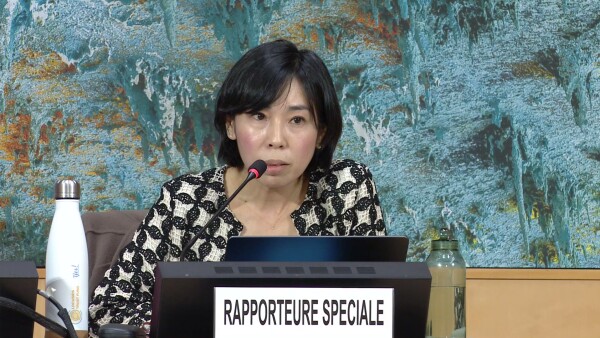
In addition to the Minab school strike, 1,000 civilians had been reportedly killed “with hospitals and World Heritage sites destroyed”, maintained the Council’s Special Rapporteur on Iran, Mai Sato.
“Strikes on oil infrastructure have caused toxic environmental consequences…in a country that was already experiencing acute water shortages,” she continued. Echoing widespread concerns about the deteriorating humanitarian crisis inside Iran since the outbreak of war, the Special Rapporteur noted that three million people are now displaced inside Iran, while “the reported absence of functional air raid sirens and bomb shelters in many urban areas” added to concerns about basic civilian protection during hostilities.
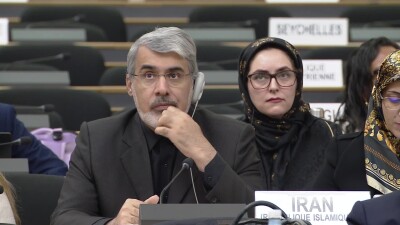
Responding to the independent experts’ reports to the Council, the Iranian Ambassador to the UN in Geneva, Ali Bahreini, said that more than 1,300 people had been killed and more than 7,000 people injured, including a six-month-old baby. “The international community must not remain silent,” he insisted.
The war is now well into its third week, having spread to nearly a dozen nations across the already fragile Middle East region.
Speaking on behalf of the Gulf Cooperation Council and Jordan, Ambassador Abdullah Abdulatif Abdullah of Bahrain condemned strikes by Iran “against our countries, which have targeted civilians and critical infrastructure and civilian objects, endangering the lives of residents and the safety and security of the region.
The ambassador also reiterated that the Gulf council had welcomed the adoption of Security Council Resolution 2817 Condemning Iran’s attacks against its neighbours on 11 March, supported by 136 UN Member States.
“Our countries reject the content of the reports of Special Rapporteur and the Fact Finding Mission, characterizing these attacks as retaliatory or reprisal attacks,” he said, insisting that “there’s no legal justification for such assaults and there is no way to legitimize those illegal acts” under international law.
Also addressing the Council, the Philippines echoed serious concerns by regional grouping ASEAN about the Middle East escalation.
“This spiral of armed conflict has already claimed many innocent lives, including those of children. This cannot and should not be normalized,” Member States heard.
ends
Iran dialogue – Human Rights Council
TRT: 2’36”
SOURCE: UNTV CH
RESTRICTIONS: NONE
LANGUAGE: ARABIC / ENGLISH / NATS
ASPECT RATIO: 16:9
DATELINE: 16 MARCH 2026 GENEVA, SWITZERLAND
Speakers:
- Sara Hossain, chair of the Independent International Fact-Finding Mission on the Islamic Republic of Iran
- Mai Sato, Special Rapporteur on the situation of human rights in the Islamic Republic of Iran
- Iranian Ambassador to the UN in Geneva, Ali Bahreini
- Bahraini Ambassador to the UN in Geneva, Abdullah Abdulatif Abdullah
SHOTLIST
- Exterior wide, UN Geneva flag alley.
- Wide, UN Human Rights Council.
- SOUNDBITE (English) – Sara Hossein, Fact Finding Mission on Iran: “On 28 February, the U.S. and Israel launched a devastating aerial campaign against Iran, ostensibly targeting military sites and nuclear facilities. In almost three weeks, these strikes have resulted in mounting reports of civilian casualties, including of children.”
- Wide, podium.
- SOUNDBITE (English) – Mai Sato, Special Rapporteur on the situation of human rights in Iran: “The human cost of the current strikes is already severe. Over 1,000 civilians have reportedly been killed, a primary school struck and hospitals and World Heritage sites destroyed. Strikes on oil infrastructure have caused toxic environmental consequences, with the possibility of serious long-term public health effects; this in a country that was already experiencing acute water shortages.”
- Wide, podium, screen showing speaker.
- SOUNDBITE (English) – Sara Hossein, Fact Finding Mission on Iran: “Against this backdrop, we are particularly concerned by public statements from U.S. officials suggesting that long-established ‘rules of engagement’ do not apply in this conflict. We will continue to monitor compliance with international humanitarian law of all parties to the conflict and to gather evidence in this regard.”
- Medium, TV journalist with cameras.
- SOUNDBITE (English) – Mai Sato, Special Rapporteur on the situation of human rights in Iran: “Today, three million people are temporarily displaced inside the Islamic Republic of Iran. The reported absence of functional air raid sirens and bomb shelters in many urban areas add to the concerns about basic civilian protection during hostilities.”
- Wide, podium, large screen, UN insignia, TV camera operator.
- SOUNDBITE (English) – Iranian Ambassador to the UN in Geneva, Ali Bahreini: “Today, in the face of the more than 1,300 innocent lives lost and over 7,000 people injured, including a six-month-old baby struggling for his life; the international community must not remain silent.”
- Wide, Iran ambassador speaking.
- SOUNDBITE (Arabic) – Ambassador Abdullah Abdulatif Abdullah of Bahrain: “The GGC States and Jordan condemn the attacks by the Islamic Republic of Iran against our countries, which have targeted civilians and critical infrastructure and civilian objects, endangering the lives of residents and the safety and security of the region. We reaffirm that such assaults and attacks that target third parties that are not a party to the conflict are a flagrant violation of state sovereignty and territorial integrity and are a violation of international law and cannot be justified under any pretext.”
- Medium, Iranian ambassador and delegation.
- Wide, delegates, photographers.
Similar Stories

1
1
1
Edited News | UNICEF , IFRC
Six weeks after Nepal’s deadly flooding disaster, communities are still struggling to rebuild their lives, but they will need sustained help as global warming increases the risk of another Himalayan catastrophe, the UN Children’s Fund (UNICEF) said on Friday.
1
1
1
Statements , Press Conferences | OHCHR

1
1
1
Edited News | WHO
In suspected Russia plague death, testing and monitoring underway – WHO
The death of a lab worker in Russia’s Siberia region has sparked concerns about plague being the cause, the UN World Health Organization (WHO) said on Tuesday, adding that it was following the situation closely.

1
1
Edited News | OHCHR , UNOG
UN Human Rights Chief Volker Türk on Friday provided and oral update to the 63rd session of the Human rights Council on Ukraine.
2
1
2
Statements , Conferences | HRC , OHCHR
Interactive dialogue with the High Commissioner for Human Rights, Volker Türk on the oral update on Ukraine.

1
1
1
Edited News | OHCHR , UNOG
UN Human Rights Chief Volker Türk on Friday provided and oral update to the 63rd session of the Human rights Council on the human rights situation in Haiti.

1
1
1
Edited News | WHO
Repeated delays in bringing lifesaving medicines, prosthetics and more from Israel into Gaza risk having devastating consequences on Palestinians who urgently need them in the wartorn enclave, the UN World Health Organization (WHO) said on Friday. “A truck full of non-priority supplies or the right supplies arriving too late, doesn't save lives. That's the question that actually matters," said Dr Reinhilde Van De Weerdt, WHO Representative in the OPT.

1
1
1
Edited News | WHO
DRC: Early access to care and oxygen decisive for Ebola patients’ survival – WHO
In the Democratic Republic of the Congo (DRC), health workers fighting the country’s largest-ever Ebola outbreak are struggling to overcome critical challenges to patient care, the UN World Health Organization (WHO) warned on Tuesday.

1
1
1
Edited News | OCHA , UN
Civilians in Iran are continuing to feel the consequences of months of conflict and military escalation, the UN’s top official in the country has said, as loss of life, damage to civilian infrastructure and mounting economic pressures leave many facing continued uncertainty.
1
1
1
Edited News | WHO , UNICEF
Aid agencies in Yemen highlighted the growing hunger emergency sparked by renewed fighting between Houthi opposition forces and Government troops, after mobile health clinics reported that hundreds of children displaced by the violence are suffering from the most deadly form of malnutrition.
1
1
1
Edited News | UNHCR
Displacement on the rise in Yemen as fighting continues - UNHCR
As hostilities worsen in Yemen, more people have been fleeing their homes, further intensifying the humanitarian crisis within the region, the UN Refugee Agency (UNHCR) warned on Tuesday.
1
1
1
Statements , Conferences | HRC , OHCHR
Interactive dialogue on the oral update of the Independent International Commission of Inquiry on Ukraine at the 63rd regular session of the Human Rights Council