

The United Nations Office at Geneva
Multimedia Newsroom
DR Congo: Children executed in Bukavu, UN Human Rights office says
The UN Human Rights office, OHCHR, confirmed cases of summary execution of children by the Rwanda-backed M23 militia after they captured the provincial capital of Bukavu at the week-end.
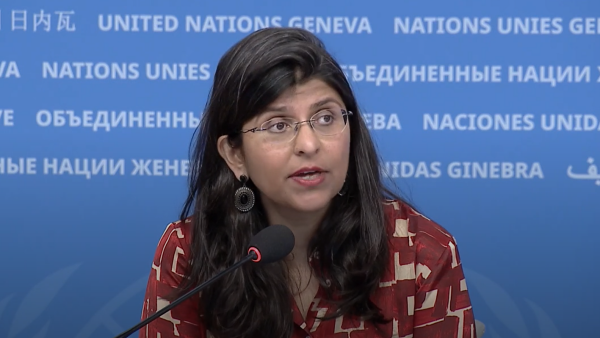
At a scheduled press briefing in Geneva on Tuesday, Ravina Shamdasani, OHCHR spokesperson said that the sharp deterioration of the situation in eastern Democratic Republic of the Congo was “resulting in serious human rights violations and abuses, such as summary executions, including of children, and conflict-related sexual and gender-based violence, attacks on hospitals and humanitarian warehouses, as well as threats against the judiciary”.
Confirming the reported execution of three children since the rebels took control of Bukavu, second major city in eastern Congo, Ms. Shamdasani said that the boys were between 11 and 15 years old and were allegedly using abandoned military uniforms and weapons. They were killed after apparently refusing to surrender their weapons to the M23 group, she said.
The UN human rights office has also documented cases of child and forced recruitment, inhumane treatment, conflict-related sexual and gender-based violence, intimidation and death threats. Ms. Shamdasani voiced concerns for journalists, human rights activists and members of civil society organizations who are seeking protection from reprisals by M23.
“We call on Rwanda and M23 to ensure that human rights and international humanitarian law are respected”, insisted Ms. Shamdasani.
During a special session on DRC on 7 February, the United Nations Human Rights Council launched a commission that will investigate atrocities, including rapes and killings that could amount to “summary executions” committed by both sides of the conflict since the beginning of the year.
Meanwhile, thousands of people fleeing the violence have arrived in Burundi.
According to the UN Refugee Agency (UNHCR), between 10,000 and 15,000 people have crossed into Burundi over the last few days. “The majority of those arriving are Congolese, mainly from the Bukavu area in South Kivu where the situation continues to deteriorate”, explained Matthew Saltmarsh, UNHCR spokesperson. A smaller number of Burundian nationals have also returned to their country fleeing the clashes.
There are also reports of thousands arriving through unofficial border points, including along the Rusizi River near Rugombo, where several individuals drowned. Conditions in the communities near the border are extremely dire, with a lack of shelter, water and sanitation facilities.
The fall of Bukavu in the hands of the M23 rebels, a major city of 1.3 million people, follows the seizure of Goma, 101 kilometres to the north last month, where at least 3,000 were reported killed and thousands displaced. The M23 is the most prominent of over 100 armed groups fighting for the control of eastern Congo’s mineral wealth that is needed for global technology.
“The situation in the eastern DRC remains extremely challenging, with recent clashes in South Kivu forcing more than 150,000 people to flee”, said Mr. Saltmarsh. “At least 85,000 of these individuals are living in newly created spontaneous sites for internally displaced people, where basic services such as water, shelter and access to health services are in short supply”, he added.
Once registered, refugees are relocated to transit centres, where UNHCR and its partners are providing life-saving supplies including food, clean drinking water and essential health services. “However, overcrowding in transit centres, with some currently hosting up to four times their initial capacity, is becoming a major concern as resources are stretched, heightening tensions among the arrivals”, explained Mr. Saltmarsh.
The new influx joins the 91,000 refugees and asylum-seekers Burundi already hosts, mainly from the DRC, many of whom have been in the country for decades.
The UN Refugee Agency launched an appeal of $226 million for 2025 to respond to the protracted emergency in the DRC. It is currently 10 per cent funded.
Ends
Story: “Eastern DRC humanitarian update – UNHRC, OHCHR” – Tuesday 18 February 2025
Speakers are spokespersons:
- Ravina Shamdasani, OHCHR
- Matthew Saltmarsh, UNHCR
TRT: 02’47”
SOURCE: UNTV CH
LANGUAGE: ENGLISH / NATS
ASPECT RATIO: 16:9
DATELINE: 18 February 2025 - GENEVA, SWITZERLAND
Geneva Press briefing
SHOTLIST
- Exterior medium shot: UN flag alley.
- Wide shot of the podium with speakers at the press conference room.
- SOUNDBITE (English) Ravina Shamdasani, OHCHR spokesperson: “The situation in eastern Democratic Republic of the Congo is deteriorating sharply, resulting in serious human rights violations and abuses, such as summary executions, including of children, and conflict-related sexual and gender-based violence. There have also been attacks on hospitals and humanitarian warehouses, as well as threats against the judiciary."
- Wide shot of the press conference room.
- SOUNDBITE (English) Ravina Shamdasani, OHCHR spokesperson: “Our office has confirmed cases of summary execution of children by M23 after they entered the city of Bukavu last week. We are also aware that children were in possession of weapons. We call on Rwanda and M23 to ensure that human rights and international humanitarian law are respected."
- Medium shot of speakers at the podium.
- SOUNDBITE (English) Matthew Saltmarsh, UNHCR spokesperson: “Between 10,000 and 15,000 people have crossed into Burundi over the last few days, fleeing escalating tension and violence in the Democratic Republic of the Congo (DRC). The majority of those arriving are Congolese, mainly from the Bukavu area in South Kivu where the situation continues to deteriorate. A smaller number of Burundian nationals have also returned to their country fleeing the clashes.”
- Wide shot of the press conference room.
- SOUNDBITE (English) Matthew Saltmarsh, UNHCR spokesperson: “The situation in the eastern DRC remains extremely challenging, with recent clashes in South Kivu forcing more than 150,000 people to flee. At least 85,000 of these individuals are living in newly-created spontaneous sites for internally displaced people, where basic services such as water, shelter and access to health services are in short supply.”
- Medium shot of cameramen filming.
- SOUNDBITE (English) Matthew Saltmarsh, UNHCR spokesperson: “Once registered, refugees are relocated to transit centres, where UNHCR and its partners are providing life-saving supplies including food, clean drinking water and essential health services. However, overcrowding in transit centres, with some currently hosting up to four times their initial capacity, is becoming a major concern as resources are stretched, heightening tensions among the arrivals.”
- Medium shot of journalists in the press conference room.
- SOUNDBITE (English) Matthew Saltmarsh, UNHCR spokesperson: “The new influx joins the 91,000 refugees and asylum-seekers Burundi currently hosts, mainly from the DRC, many of whom have been in the country for decades.”
- Close up shot of journalist nodding.
- Medium shot of the audience and screens in the press conference room.
Similar Stories

1
1
1
Edited News | OCHA , UNICEF , WFP
Aid agencies warned on Friday of the fast-developing humanitarian emergency inside Taiz City in Yemen, which has been encircled by de facto Houthi forces fighting government troops along the country’s west coast.

2
17
1
2
Edited News , Press Conferences , Images | OCHA , WMO
Two UN agencies teamed up on Wednesday to issue an appeal for immediate assistance to help communities already being impacted by the strongest El Niño on record.

3
16
2
2
Edited News , B-roll , Conferences , Images | UNITED NATIONS , UNOG
Sixth Consultative Meeting on Enhancing Coordination of Peace Initiatives and Efforts for Sudan

1
1
1
Edited News | UNICEF , WHO , UNHCR
Yemen war continues to force families from homes amid hunger and disease
More than 250,000 people have now fled renewed fighting in Yemen, the UN said on Tuesday, citing particular concern for those sheltering in the southwestern city of Taiz and the wider governorate, where access is “essentially blocked”.

1
1
1
Edited News | UNICEF
A little over one year since a ceasefire agreement was announced between Hamas fighters and Israel, more than 340 children have been reported killed and hundreds more injured, the UN Children’s Fund, UNICEF, said on Friday.

1
1
1
Edited News | UNICEF , IFRC
Six weeks after Nepal’s deadly flooding disaster, communities are still struggling to rebuild their lives, but they will need sustained help as global warming increases the risk of another Himalayan catastrophe, the UN Children’s Fund (UNICEF) said on Friday.

1
1
1
Edited News | WHO
In suspected Russia plague death, testing and monitoring underway – WHO
The death of a lab worker in Russia’s Siberia region has sparked concerns about plague being the cause, the UN World Health Organization (WHO) said on Tuesday, adding that it was following the situation closely.

1
1
Edited News | OHCHR , UNOG
UN Human Rights Chief Volker Türk on Friday provided and oral update to the 63rd session of the Human rights Council on Ukraine.

1
1
1
Edited News | OHCHR , UNOG
UN Human Rights Chief Volker Türk on Friday provided and oral update to the 63rd session of the Human rights Council on the human rights situation in Haiti.

1
1
1
Edited News | WHO
Repeated delays in bringing lifesaving medicines, prosthetics and more from Israel into Gaza risk having devastating consequences on Palestinians who urgently need them in the wartorn enclave, the UN World Health Organization (WHO) said on Friday. “A truck full of non-priority supplies or the right supplies arriving too late, doesn't save lives. That's the question that actually matters," said Dr Reinhilde Van De Weerdt, WHO Representative in the OPT.

1
1
1
Edited News | WHO
DRC: Early access to care and oxygen decisive for Ebola patients’ survival – WHO
In the Democratic Republic of the Congo (DRC), health workers fighting the country’s largest-ever Ebola outbreak are struggling to overcome critical challenges to patient care, the UN World Health Organization (WHO) warned on Tuesday.

1
1
1
Edited News | OCHA , UN
Civilians in Iran are continuing to feel the consequences of months of conflict and military escalation, the UN’s top official in the country has said, as loss of life, damage to civilian infrastructure and mounting economic pressures leave many facing continued uncertainty.