

The United Nations Office at Geneva
Multimedia Newsroom
Edited News | OSE , ICRC , UNHCR
Syria prisoners and missing – OSE, ICRC, UNHCR 13 December 2024
Syria: UN and partners urge action to preserve evidence of prison atrocities, stabilize country
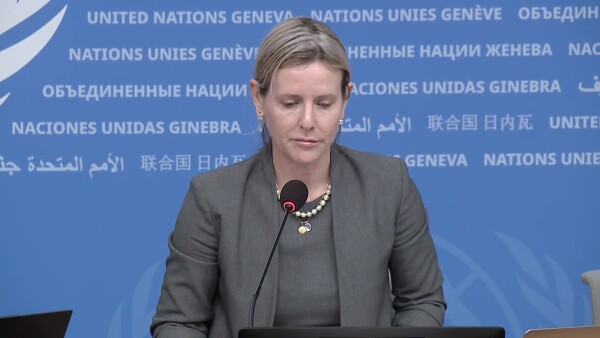
Since the fall of Bashar al-Assad's regime in Syria five days ago, hundreds of people have rushed to Saydnaya prison, desperate to find loved ones. Disturbing images from the prison and other detention centers have since surfaced, exposing the “unimaginable barbarity Syrians have endured for years,” said Jenifer Fenton, spokesperson for the UN special envoy for Syria, on Friday. Quoting from a statement by Special Envoy Geir O. Pedersen, she described these scenes as a “testament to unspeakable suffering and pain beyond comprehension endured by those detained, their families, and their loved ones.”
These images, however, reveal just a glimpse of the horrors inflicted within Syria’s detention system. Speaking to journalists in Geneva, Ms. Fenton called for “decisive, compassionate action” to aid families of the detained, missing, and recently freed. She highlighted the urgent need for medical care, psychological support, legal assistance, and safe shelter.
The UN Envoy has stressed that preserving detention sites, mass graves, and documentation is critical for accountability and justice. “Evidence of the atrocities must be preserved and thoroughly documented to ensure accountability under international humanitarian law. Justice for the victims and their families is not only a right but essential for healing and preventing further violations,” Ms. Fenton quoted the statement as saying. She also urged authorities to release children, women, and men still arbitrarily detained.
The International Committee of the Red Cross (ICRC) has documented 35,000 missing individuals in Syria, but the true number is likely much higher due to cases unreported to the ICRC. Many families remain in agonizing uncertainty about the fate of their loved ones. The ICRC called for immediate discussions with interim authorities to safeguard evidence, including documents and mass graves.
“There will be a need for a repository to collect this information. Such a repository does not yet exist, and we are offering to work with the authorities to determine the best way to proceed,” said Stephan Sakalian, ICRC’s head of delegation for Syria.
The situation in Syria remains volatile. While some refugees are returning, others are leaving or taking a “wait-and-see” approach, according to the UN refugee agency (UNHCR).
UNHCR’s representative in Syria, Gonzalo Vargas Llosa identified three critical needs for Syria’s sustainable recovery, in line with the expectations of its returning citizens: “First, a peaceful political transition at the top. Second, tolerance, reconciliation, and acceptance in communities where Syrians are returning. And third, Syrians need not just immediate relief, but an injection of international support to resume a dignified life.”
An interagency appeal launched in October sought US $324 million for relief efforts through March 2025. So far, only US $88 million has been funded through contributions and projections.
Ends
Story: “Syria: prisoners and missing – OSE, ICRC, UNHCR” – 13 December 2024
Speakers:
- Jenifer Fenton, spokesperson for the UN Special Envoy for Syria
- Stephan Sakalian, ICRC head of delegation for Syria (speaking from Damascus)
- Gonzalo Vargas Llosa, UNHCR Representative of Syria (speaking from Damascus)
TRT: 02’30”
SOURCE: UNTV CH
LANGUAGE: ENGLISH / NATS
ASPECT RATIO: 16:9
DATELINE: 13 December 2024 - GENEVA, SWITZERLAND
Geneva Press briefing
SHOTLIST
- Exterior medium shot: UN flag alley.
- Wide lateral shot of the podium with speakers at the press conference room.
- SOUNDBITE (English) Jenifer Fenton, spokesperson for the UN Special Envoy for Syria: “The images from Saydnaya and other detention facilities starkly underscore the unimaginable barbarity Syrians have endured and reported for years. Despite extensive documentation and testimonies, they only scratched the surface of the carceral systems horrors. These images are a profound testament to unspeakable suffering and pain beyond comprehension endured by those detained, their families and their loved ones. Now is the time for decisive, compassionate action. Families of the detained, missing and recently freed need our urgent support, this includes medical care, psychological support, legal assistance and safe shelter.”
- Close shot of journalist listening at the press conference room.
- SOUNDBITE (English) Jenifer Fenton, spokesperson for the UN Special Envoy for Syria:: “Detention sites, mass graves and related documentation must be secured to aid families in their search for justice and accountability. We must prioritize accounting for the missing, ensuring the families receive the clarity and recognition they desperately need. Evidence of the atrocities must be preserved and thoroughly documented to ensure accountability under international humanitarian law. Justice for the victims and their families is not only a right but is also essential for healing and for preventing further violations.”
- Medium shot of speakers at the podium in the press conference room.
- SOUNDBITE (English) Stephan Sakalian, ICRC head of delegation for Syria: “There will be a need to have a repository for collecting this information. Such a repository does not exist yet, and it is precisely the services we are offering to the authorities to discuss with them on the best way to proceed on this important matter.”
- Wide lateral shot of the press conference room.
- SOUNDBITE (English) Gonzalo Vargas Llosa, UNHCR Representative of Syria: “We expect three things. One, we expect a peaceful political transition at the top. Second, in the communities to which they are going back, we expect tolerance, reconciliation and acceptance. And third, very, very importantly, they are expecting, not just immediate relief, not just a bottle of water and a little bit of food, they are expecting an injection of international support so that they can resume a dignified life.”
- Various shots of the press conference room.
Similar Stories

2
17
1
2
Edited News , Press Conferences | OCHA , WMO
Two UN agencies teamed up on Wednesday to issue an appeal for immediate assistance to help communities already being impacted by the strongest El Niño on record.
3
16
2
2
B-roll , Conferences , Edited News | UNITED NATIONS , UNOG
Sixth Consultative Meeting on Enhancing Coordination of Peace Initiatives and Efforts for Sudan
1
1
1
Edited News | UNICEF , WHO , UNHCR
Yemen war continues to force families from homes amid hunger and disease
More than 250,000 people have now fled renewed fighting in Yemen, the UN said on Tuesday, citing particular concern for those sheltering in the southwestern city of Taiz and the wider governorate, where access is “essentially blocked”.

1
1
1
Edited News | UNICEF
A little over one year since a ceasefire agreement was announced between Hamas fighters and Israel, more than 340 children have been reported killed and hundreds more injured, the UN Children’s Fund, UNICEF, said on Friday.

1
1
1
Edited News | UNICEF , IFRC
Six weeks after Nepal’s deadly flooding disaster, communities are still struggling to rebuild their lives, but they will need sustained help as global warming increases the risk of another Himalayan catastrophe, the UN Children’s Fund (UNICEF) said on Friday.

1
1
1
Edited News | WHO
In suspected Russia plague death, testing and monitoring underway – WHO
The death of a lab worker in Russia’s Siberia region has sparked concerns about plague being the cause, the UN World Health Organization (WHO) said on Tuesday, adding that it was following the situation closely.

1
1
Edited News | OHCHR , UNOG
UN Human Rights Chief Volker Türk on Friday provided and oral update to the 63rd session of the Human rights Council on Ukraine.

1
1
1
Edited News | OHCHR , UNOG
UN Human Rights Chief Volker Türk on Friday provided and oral update to the 63rd session of the Human rights Council on the human rights situation in Haiti.

1
1
1
Edited News | WHO
Repeated delays in bringing lifesaving medicines, prosthetics and more from Israel into Gaza risk having devastating consequences on Palestinians who urgently need them in the wartorn enclave, the UN World Health Organization (WHO) said on Friday. “A truck full of non-priority supplies or the right supplies arriving too late, doesn't save lives. That's the question that actually matters," said Dr Reinhilde Van De Weerdt, WHO Representative in the OPT.

1
1
1
Edited News | WHO
DRC: Early access to care and oxygen decisive for Ebola patients’ survival – WHO
In the Democratic Republic of the Congo (DRC), health workers fighting the country’s largest-ever Ebola outbreak are struggling to overcome critical challenges to patient care, the UN World Health Organization (WHO) warned on Tuesday.

1
1
1
Edited News | OCHA , UN
Civilians in Iran are continuing to feel the consequences of months of conflict and military escalation, the UN’s top official in the country has said, as loss of life, damage to civilian infrastructure and mounting economic pressures leave many facing continued uncertainty.
1
1
1
Edited News | WHO , UNICEF
Aid agencies in Yemen highlighted the growing hunger emergency sparked by renewed fighting between Houthi opposition forces and Government troops, after mobile health clinics reported that hundreds of children displaced by the violence are suffering from the most deadly form of malnutrition.