

The United Nations Office at Geneva
Multimedia Newsroom
Press Conferences , Edited News | OCHA
OCHA - Press Conference: launch of the Global Humanitarian Overview 2025
305 million people need lifesaving help next year, says UN’s top aid official
Multiple unending conflicts, climate change and a glaring disregard for long-established international humanitarian law are set to leave a staggering 305 million people in need of lifesaving assistance next year, the UN’s top aid official warned on Wednesday.
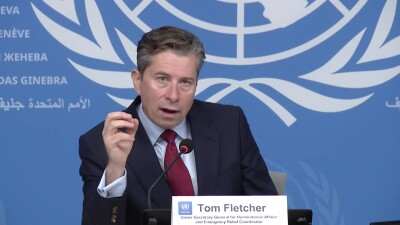
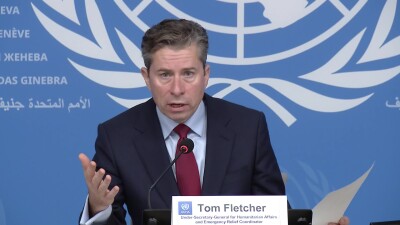
“The world is on fire…We are dealing with a polycrisis right now globally and it is the most vulnerable people in the world who are paying the price. We are dealing with the impact of conflicts - multiple conflicts - and crises of longer duration and of more intense ferocity” said Tom Fletcher, UN Emergency Relief Coordinator and head of the UN aid coordination office, OCHA, in an appeal for $47.4 billion to provide life-saving aid in more than 30 countries and nine refugee-hosting regions.
Impossible choices
Dire as OCHA’s new humanitarian assessment is on behalf of more than 1,500 humanitarian partners, it is expected that of the 305 million in need, only 190 million will be reached.
A lack of funding is just one of the reasons why, in countries where populations have endured decades of violence and instability, such as the Democratic Republic of the Congo (DRC).
“In DRC, as with all these conflicts, we are ready to do more, it's our mission to do more,” insisted Mr. Fletcher. “My people are desperate to get out there and deliver because they really are on the frontline. They can see what is needed but we need these resources. That's our call to action and we also need the world to do more; those with power to do more, to challenge this era of impunity and to challenge this era of indifference.”
Doorstepping role
As the UN’s newly appointed top aid official, Mr. Fletcher pledged to visit the capitals of the world “to bash down doors” of government in search of new partnerships and solidarity for the world’s most vulnerable people.
“I've got to find ways to reframe this argument in a way that will resonate with the public at large,” he added.
Citing his past roles as a UK ambassador with experience in conflict and peace building, from Kenya to Lebanon and Northern Ireland, the new OCHA chief stressed the need to ensure that aid continues to flow to where it’s needed most.
“I have a very clear mission around humanitarian delivery,” he said, before paying tribute to the “extraordinary entrepreneurial humanitarian diplomacy” of his predecessor Martin Griffiths, who stepped down in June for health reasons.
Election changes
Asked about the changing geopolitical landscape in a bumper year of hugely significant national and presidential elections, Mr. Fletcher insisted that “it's not just about America…we're facing the election of a number of governments who will be more questioning of what the United Nations does…But I don't believe that we can't make that case to them; I don't believe that that there isn't compassion in these governments which are getting elected.”
In comments to journalists at the unveiling of the Global Humanitarian Overview 2025, Mr. Fletcher confirmed that communities continue to be confronted with multiple crises.
“It's not just the fact of so many conflicts at the same time, it's the duration of those conflicts; the average length is 10 years,” he said. “We're not closing off conflicts before the next ones are starting. And the fact that those conflicts are so ferocious and the impact on civilians is so dramatic. I mentioned Gaza, Sudan, Ukraine as examples of that, with this disregard of international law and in every case, obstruction of our work.”
Climate crisis accelerator
While stressing how many lives have been shattered by conflict around the world – not least in Sudan, where the new UN relief chief spent last week visiting and talking to people uprooted by the war – Mr. Fletcher underscored how severe the climate crisis is on already vulnerable people.
“The dread I have is that those two huge drivers of need are now combining,” he said. And that's what makes our job so difficult. And they're often combining in areas that have already suffered huge levels of poverty and inequality.”
Latest estimates indicate that some 123 million people have been displaced forcibly by conflict worldwide, Mr. Fletcher continued. “And among that group, violations against children are also at record levels and I saw this of course in Sudan; one in every five children is living in a conflict zone right now.”
Challenging aid obstacles
Among his priorities, the top UN aid official insisted that guaranteed aid access remains a key issue that he would seek to address. “I talked to our teams in the field every day and they are facing multiple obstructions to getting the basics of humanitarian aid through,” he noted.
“Our job is to get the humanitarian support through, checkpoint by checkpoint, border by border, it's what I was doing in Sudan…Arguing truck by truck for that humanitarian delivery. That's our mission.”
Wednesday’s Global Humanitarian Overview 2025 launch in Geneva, Kuwait and Nairobi will also be an opportunity to push for greater respect and understanding of the laws of war and international humanitarian law by combatants, to protect civilians and aid teams who have died in record numbers this year.
“It's not just the ferocity of these conflicts - Gaza, Ukraine, Sudan, Syria - it's about that wilful neglect of international humanitarian law,” Mr. Fletcher said. And about the fact and as a result, we seem to have lost our anchor somehow.”
Global Humanitarian Overview – Tom Fletcher - OCHA
TRT: 03 min 54s
SOURCE: UNTV CH
RESTRICTIONS: NONE
LANGUAGE: ENGLISH / NATS
ASPECT RATIO: 16:9
DATELINE: 04 DECEMBER 2024 GENEVA, SWITZERLAND
Speakers:
- Tom Fletcher, UN Emergency Relief Coordinator & Head of OCHA
SHOTLIST
-
- Exterior médium-wide: UN Geneva flag alley.
- Medium wide, UN Geneva Press room podium and speakers.
- SOUNDBITE (English) – Tom Fletcher, UN Emergency Relief Coordinator & Head of OCHA: “We are dealing with a polycrisis right now globally and it is the most vulnerable people in the world who are paying the price. We are dealing with the impact of conflicts - multiple conflicts - and crises of longer duration and of more intense ferocity.”
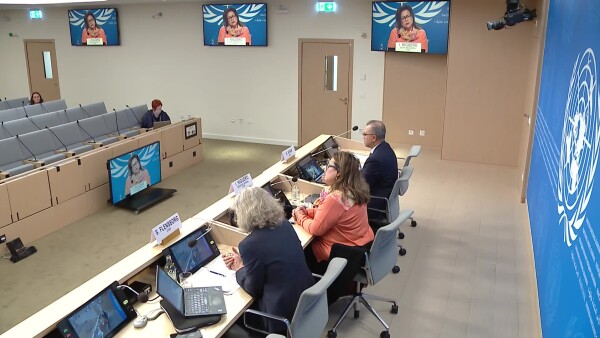
- Medium-wide, speakers at podium, Press room with journalists.
- SOUNDBITE (English) – Tom Fletcher, UN Emergency Relief Coordinator & Head of OCHA: “If you look at the gap between the number who we want to reach this year - I think it's 190 million - and the number we think are in need - 305 million - my maths is shakier than it was, but I think there's 115 million that we won't be able to reach with the support that we would like to.”
- Medium-wide, speakers at podium, Press room with journalists, TV screens showing principal speaker.
- SOUNDBITE (English) – Tom Fletcher, UN Emergency Relief Coordinator & Head of OCHA: “In DRC, as with all these conflicts, we are ready to do more, it's our mission to do more. My people are desperate to get out there and deliver because they really are on the frontline. They can see what is needed but we need these resources. That's our call to action and we also need the world to do more; those with power to do more, to challenge this era of impunity and to challenge this era of indifference.”
- Wide, Press room, journalists.
- SOUNDBITE (English) – Tom Fletcher, UN Emergency Relief Coordinator & Head of OCHA: “It's not just the fact of so many conflicts at the same time, it's the duration of those conflicts; the average length is 10 years. So, we're not closing off conflicts before the next ones are starting. And the fact that those conflicts are so ferocious and the impact on civilians is so dramatic. I mentioned Gaza, Sudan, Ukraine as examples of that, with this disregard of international law and in every case, obstruction of our work.”
- Medium-wide, Press room, journalists, one video journalist is filming with mobile phone.
- SOUNDBITE (English) – Tom Fletcher, UN Emergency Relief Coordinator & Head of OCHA: “We can debate conflict versus climate change, but I think the toxicity of this and the dread I have is that those two huge drivers of need are now combining. And that's what makes our job so difficult. And they're often combining in areas that have already suffered huge levels of poverty and inequality.”
- Medium, automatic camera and TV screen showing speaker in frame.
- SOUNDBITE (English) – Tom Fletcher, UN Emergency Relief Coordinator & Head of OCHA: “So we reckon 123 million people have been displaced forcibly by conflict. And among that group, you know, violations against children are also at record levels and I saw this of course in in Sudan; one in every five children is living in a conflict zone right now.”
- Medium-wide, TV journalist with camera, photographer.
- SOUNDBITE (English) – Tom Fletcher, UN Emergency Relief Coordinator & Head of OCHA: “I talked to our teams in the field every day and they are facing multiple obstructions to getting the basics of humanitarian aid through.”
- Medium-wide, journalists, photographer.
- SOUNDBITE (English) – Tom Fletcher, UN Emergency Relief Coordinator & Head of OCHA: “Our job is to get the humanitarian support through, checkpoint by checkpoint, border by border, it's what I was doing in Sudan, meeting by meeting last week. Arguing truck by truck for that humanitarian delivery. That's our mission.”
- Medium-wide, journalists, photographer.
- SOUNDBITE (English) – Tom Fletcher, UN Emergency Relief Coordinator & Head of OCHA: “It's not just the ferocity of these conflicts - Gaza, Ukraine, Sudan, Syria - it's about that willful neglect of international humanitarian law. And about the fact and as a result, we seem to have lost our anchor somehow.”
- Close, speaker’s face in foreground, blurred, laptop screen behind.
- Medium, speaker holding up Global Humanitarian Overview document.
Similar Stories
1
1
1
Press Conferences | CITES
Wildlife trade and conservation policy discussions at the 81st meeting of the CITES Standing Committee (SC81)

1
1
1
Edited News | UNICEF , WHO , UNHCR
Yemen war continues to force families from homes amid hunger and disease
More than 250,000 people have now fled renewed fighting in Yemen, the UN said on Tuesday, citing particular concern for those sheltering in the southwestern city of Taiz and the wider governorate, where access is “essentially blocked”.
1
1
1
Press Conferences | UNHCR , UNCTAD , WMO , OCHA , UNICEF , WHO
UNHCR Hungary’s 1956 Refugee Crisis: 70 Years On, UNCTAD World Investment Forum 2026, Doha, WMO Greenhouse Gas Bulletin and Climate Update for COP31, OCHA Afghanistan: Malnutrition, Girls’ Education and Recovery, UNICEF Yemen: Child Malnutrition and Unsafe Water in Taiz, WHO Inequalities in Noncommunicable Diseases and Risk Factors

1
1
1
Press Conferences | UNHCR
End of UNHCR's 77th Annual Executive Committee (ExCom) meeting week

1
1
1
Edited News | UNICEF
A little over one year since a ceasefire agreement was announced between Hamas fighters and Israel, more than 340 children have been reported killed and hundreds more injured, the UN Children’s Fund, UNICEF, said on Friday.

1
1
1
Press Conferences | UNICEF , IOM , UNHCR
UN Special Assistant to the Personal Envoy Office (SUDAN): Peace Initiatives and Efforts in Sudan; UNICEF: Dire situation of children in Gaza; IOM: Damaged Homes and Energy Attacks Risk Displacing Ukrainians for this winter; UNHCR: update on EXCOM week

1
1
1
Press Conferences | IOM , UNDRR
UN stresses importance of household preparedness for disaster risk reduction.

1
1
1
Edited News | UNICEF , IFRC
Six weeks after Nepal’s deadly flooding disaster, communities are still struggling to rebuild their lives, but they will need sustained help as global warming increases the risk of another Himalayan catastrophe, the UN Children’s Fund (UNICEF) said on Friday.

1
1
1
Statements , Press Conferences | OHCHR
1
1
1
Press Conferences | UNHCR , UNICEF , IFRC , OHCHR , UN WOMEN , IOM , OCHA , WHO
UNHCR – ExCom Meeting, UNICEF – Nepal Recovery, IFRC – Flash Floods, WHO – Mental Health, IOM – South Sudan Floods, OCHA – DRC Humanitarian aid, UNHCR – Sahel Displacement, UNICEF – Yemen Update, IOM – Gaza Shelter, UN Women – Gaza Women, OHCHR – Arrests and detentions of Syrians by Israeli force
2
1
2
Press Conferences | UNCTAD
Presentation of the Trade and Developement Report 2026
Embargoed until 9 October 2026 at 11 a.m. (Geneva Time)
UNCTAD: UNCTAD’s flagship report finds that governments increasingly use industrial, trade, financial and technology policies to pursue economic and national security objectives. Market access and the ability to move into higher-value activities now depend more heavily on technology, finance and geopolitics.
1
1
1
Press Conferences | UPU
Release of the State of the Postal Sector Report 2026