

The United Nations Office at Geneva
Multimedia Newsroom
Press Conferences , Edited News | ITU
ITU - Press Conference: Launch of Facts & Figures 2024
Storyline
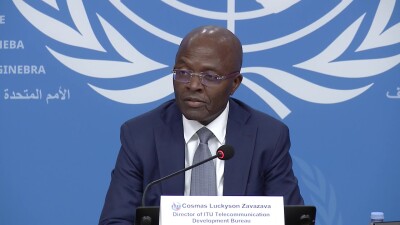
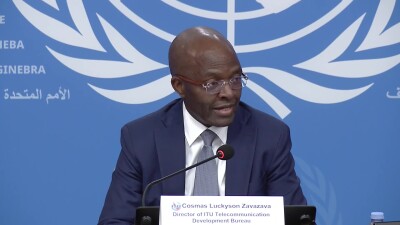
Briefing reporters on the International Telecommunication Union’s (ITU) Facts and Figures 2024 report in Geneva on Wednesday, Cosmas Luckyson Zavazava, Director of ITU’s Telecommunication Development Bureau, said: “We must intensify our efforts to connect the world in order not to leave anyone behind.”
ITU’s annual report on global connectivity found that an estimated 5.5 billion people are online in 2024, an increase of 227 million people based on revised estimates for 2023.
While an estimated 68 per cent of the global population is now online and all indicators tracked in the report show improvement, stubborn digital divides persist and about one-third of the world’s people remain offline.
The estimates featured in the report from ITU, the UN Agency for Digital Technologies, show that connectivity continues to increase worldwide but reveal the complexities of reaching communities in low-income countries.
Recognizing the urgent work that remains to connect the 2.6 billion people that are offline, Mr. Zavazava said: “We renew our commitment to achieving universal and meaningful connectivity so that everyone can access the Internet in optimal conditions, at an affordable cost, anytime, anywhere.”
Speaker:
- Cosmas Luckyson Zavazava, Director of ITU’s Telecommunication Development Bureau
Source: UNTV CH and ITU
Restrictions: NONE
Language: English/NATS
Dateline: 27 November 2024 Geneva, Switzerland
TRT: 01:45
Speakers:
- Cosmas Luckyson Zavazava, Director of ITU’s Telecommunication Development Bureau
- Thierry Geiger, ITU Senior Economist and Head of the Data and Analytics Division
1. Wide shot. Exterior. United Nations Office at Geneva.
2. SOUNDBITE (English): Cosmas Luckyson Zavazava, Director of ITU’s Telecommunication Development Bureau: “Globally, our 2024 estimates show that one-third of humanity still does not use the internet, and that accounts for 5.5 billion people who are online, an increase of 227 million people based on our revised estimates for the year 2023. An estimated 2.6 billion are estimated to be offline, down from revised estimate of 2.8 billion for the year 2023.”
3. Wide shot, press briefing room
4. SOUNDBITE (English): Cosmas Luckyson Zavazava, Director of ITU’s Telecommunication Development Bureau: “We embrace new technologies as they come. But it is not only about technology, it is what technology can do for the people.”
5. Wide shot, briefing table
6. SOUNDBITE (English): Cosmas Luckyson Zavazava, Director of ITU’s Telecommunication Development Bureau:“We should look at technology with a human face. What is it that we are doing with the technology that we are producing? It is not only about investing in technology, but making sure some of the technology could be personal technology, like my smartphone. And some technology could be communal to make sure that communities have access.”
7. Wide shot, press briefing room
8. SOUNDBITE (English): Cosmas Luckyson Zavazava, Director of ITU’s Telecommunication Development Bureau: “We must intensify our efforts to connect the world, not to leave anyone behind. To address the barriers that I outlined, affordability being one of them, digital skills being another, and many other factors that I mentioned. We renew our commitment to achieving universal and meaningful connectivity so that everyone can access the Internet in optimal conditions, at an affordable cost, anytime, anywhere.”
9. Aerial. Exterior. International Telecommunication Union headquarter building. Geneva, Switzerland.
10. Animation. ITU Flag.
Similar Stories

1
1
1
Edited News | OCHA , UNICEF , WFP
Aid agencies warned on Friday of the fast-developing humanitarian emergency inside Taiz City in Yemen, which has been encircled by de facto Houthi forces fighting government troops along the country’s west coast.
1
1
1
Press Conferences | UN WOMEN , WFP , WHO
UN WOMEN: Sudan Women and girls one year after the fall of El Fasher; increasing drone attacks across the country; WFP: DRC - Ebola spreads to eighth DRC province as WFP delivers food, builds treatment centres and keeps supplies moving; WHO - Update on Ebola (Bundibugyo Virus Disease)
1
12
1
1
Press Conferences , Images | UNOG
Closing Press Conference following the Sixth Consultative Meeting on Enhancing Coordination of Peace Initiatives and Efforts in Sudan

2
17
1
2
Edited News , Press Conferences , Images | OCHA , WMO
Two UN agencies teamed up on Wednesday to issue an appeal for immediate assistance to help communities already being impacted by the strongest El Niño on record.

3
16
2
2
Edited News , B-roll , Conferences , Images | UNITED NATIONS , UNOG
Sixth Consultative Meeting on Enhancing Coordination of Peace Initiatives and Efforts for Sudan
1
1
1
Press Conferences | CITES
Wildlife trade and conservation policy discussions at the 81st meeting of the CITES Standing Committee (SC81)

1
1
1
Edited News | UNICEF , WHO , UNHCR
Yemen war continues to force families from homes amid hunger and disease
More than 250,000 people have now fled renewed fighting in Yemen, the UN said on Tuesday, citing particular concern for those sheltering in the southwestern city of Taiz and the wider governorate, where access is “essentially blocked”.
1
1
1
Press Conferences | UNHCR , UNCTAD , WMO , OCHA , UNICEF , WHO
UNHCR Hungary’s 1956 Refugee Crisis: 70 Years On, UNCTAD World Investment Forum 2026, Doha, WMO Greenhouse Gas Bulletin and Climate Update for COP31, OCHA Afghanistan: Malnutrition, Girls’ Education and Recovery, UNICEF Yemen: Child Malnutrition and Unsafe Water in Taiz, WHO Inequalities in Noncommunicable Diseases and Risk Factors
1
1
1
Press Conferences | UNHCR
End of UNHCR's 77th Annual Executive Committee (ExCom) meeting week

1
1
1
Edited News | UNICEF
A little over one year since a ceasefire agreement was announced between Hamas fighters and Israel, more than 340 children have been reported killed and hundreds more injured, the UN Children’s Fund, UNICEF, said on Friday.
1
1
1
Press Conferences | UNICEF , IOM , UNHCR
UN Special Assistant to the Personal Envoy Office (SUDAN): Peace Initiatives and Efforts in Sudan; UNICEF: Dire situation of children in Gaza; IOM: Damaged Homes and Energy Attacks Risk Displacing Ukrainians for this winter; UNHCR: update on EXCOM week

1
1
1
Press Conferences | IOM , UNDRR
UN stresses importance of household preparedness for disaster risk reduction.