

The United Nations Office at Geneva
Multimedia Newsroom
Press Conferences , Edited News | OCHA
OCHA Press Conference: Syria humanitarian situation - 22 March 2024
As aid funding dries up, Syria conflict remains among deadliest to civilians
A UN official on Friday appealed for about $4 billion in humanitarian assistance for Syria, warning that funding was almost non-existent and that the Gaza war has had spillover effects adding to the suffering of the Syrian people.
“The Syria crisis remains one of the most deadly to civilians in the world. Hostilities continue to plague various parts of Syria and have recently seen a sharp spike, especially in the north,” said Adam Abdelmoula, UN Resident Coordinator and Humanitarian Coordinator in Syria, speaking from Damascus to a press briefing at the United Nations in Geneva.
From 1 January to 31 December 2023, 454 civilians, including 88 women and 115 children, were killed as a result of the conflict. The Syria war began 13 years ago, and since then the needs of the people have grown exponentially.
Today, a staggering 16.7 million people require some form of humanitarian assistance in Syria – an increase from 15.3 million in 2023 and 14.6 million in 2022. Over 7 million people are internally displaced and nearly as many are refugees in other countries (a majority are in the neighboring countries, Jordan, Lebanon, Türkiye, etc.). At least 12.9 million people are food insecure across the country.
As of the beginning of March, only 0.02 percent of the 2024 humanitarian response plan requirements had secured funding.
Syria's vulnerability to climate shocks, exacerbated by conflict, includes water scarcity and the devastating earthquakes in February last year wreaked havoc on a situation that was already catastrophic. The earthquakes killed some 6,000 people and injured more than 12,800 in Syria, increasing the strain on services, causing displacement and inflicting widespread damage.
In addition, the ongoing escalation in Gaza, the West Bank, Israel and south Lebanon had already had spillover effects, including on affected populations and critical civilian infrastructure across Syria.
“Since the escalation in Gaza begun, we have already seen multiple calls by ISIS (Islamic State of Iraq and Syria) inciting revenge attacks worldwide, including against Arab governments whom they accuse of ‘protecting Israel’ “, said Mr. Abdelmoula.
He added that “there has been a significant increase in the air attacks by the IDF (Israel Defence Forces) targeting various elements that are here in the Syrian territory. And … that has led to displacement of populations in the targeted areas.”
The targeting of airports in Syria has also impacted humanitarian air services which led to the cancellation of almost 50 humanitarian flights in 2023.
“Syrians are increasingly driven to desperate measures as they undertake treacherous journeys to other countries in search of opportunities,” said the UN official. “In many cases, they paid the ultimate price for these dangerous endeavors. No human being should have to risk his or her life in search of a decent life.”
Urging countries to act even "out of sheer national self-interest”, he warned that “we could see a situation where migration to Europe will increase. I hasten to say that in 2023 we have seen 181,000 new applications for asylum in Europe and that represents 38 per cent compared to 2022.”
Despite the complex operating environment in Syria, UN and humanitarian partners were able to reach 6.8 million people in need every month in 2023.
-ends-
STORY: Humanitarian Situation in Syria – OCHA
TRT: 2:21”
SOURCE: UNTV CH
RESTRICTIONS: NONE
LANGUAGE: ENGLISH / NATS
ASPECT RATIO: 16:9
DATELINE: 22 March 2024 GENEVA, SWITZERLAND
1. Med shot: UN flag alley
2. Wide shot: speaker at the podium with journalists in press room
3. SOUNDBITE (English) – Adam Abdelmoula, UN Resident Coordinator and Humanitarian Coordinator in Syria (from Damascus): “There has been a significant increase in the air attacks by the IDF targeting various elements that are here in the Syrian territory. And second, and that has led to displacement of populations in the targeted areas.”
4. Med shot: speaker at the podium filmed from behind during the press conference
5. SOUNDBITE (English) – Adam Abdelmoula, UN Resident Coordinator and Humanitarian Coordinator in Syria (from Damascus): “The Syria crisis remains one of the most deadly to civilians in the world. Hostilities continue to plague various parts of Syria and have recently seen a sharp spike, especially in the north.”
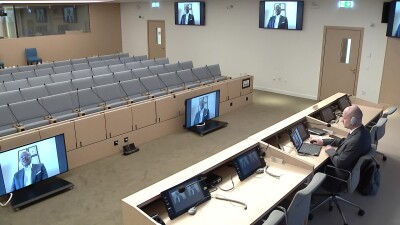
6. Wide shot: press room with speaker on screens
7. SOUNDBITE (English) – Adam Abdelmoula, UN Resident Coordinator and Humanitarian Coordinator in Syria (from Damascus): “Since the escalation in Gaza begun, we have already seen multiple calls by ISIS inciting revenge attacks worldwide, including against Arab governments whom they accuse of ‘protecting Israel’.”
8. Med shot, journalist in press room and screen with speaker
9. SOUNDBITE (English) - Adam Abdelmoula, UN Resident Coordinator and Humanitarian Coordinator in Syria (from Damascus): “Syrians are increasingly driven to desperate measures as they undertake treacherous journeys to other countries in search of opportunities. In many cases, they paid the ultimate price for these dangerous endeavors. No human being should have to risk his or her life in search of a decent life.”
10. Wide shot: Press room with staff managing zoom
11. SOUNDBITE (English) - Adam Abdelmoula, UN Resident Coordinator and Humanitarian Coordinator in Syria (from Damascus): “We could see a situation where migration to Europe will increase. I hasten to say that in 2023 we have seen 181,000 new applications for asylum in Europe and that represents 38 per cent compared to 2022.”
12. Med shot, zoom operators behind window
13. Wide shot: press room with screens STORYLINE

Similar Stories

1
1
1
Press Conferences | UNHCR
End of UNHCR's 77th Annual Executive Committee (ExCom) meeting week

1
1
1
Edited News | UNICEF
A little over one year since a ceasefire agreement was announced between Hamas fighters and Israel, more than 340 children have been reported killed and hundreds more injured, the UN Children’s Fund, UNICEF, said on Friday.

1
1
1
Press Conferences | UNICEF , IOM , UNHCR
UN Special Assistant to the Personal Envoy Office (SUDAN): Peace Initiatives and Efforts in Sudan; UNICEF: Dire situation of children in Gaza; IOM: Damaged Homes and Energy Attacks Risk Displacing Ukrainians for this winter; UNHCR: update on EXCOM week

1
1
1
Press Conferences | IOM , UNDRR
UN stresses importance of household preparedness for disaster risk reduction.

1
1
1
Edited News | UNICEF , IFRC
Six weeks after Nepal’s deadly flooding disaster, communities are still struggling to rebuild their lives, but they will need sustained help as global warming increases the risk of another Himalayan catastrophe, the UN Children’s Fund (UNICEF) said on Friday.

1
1
1
Statements , Press Conferences | OHCHR

1
1
1
Press Conferences | UNHCR , UNICEF , IFRC , OHCHR , UN WOMEN , IOM , OCHA , WHO
UNHCR – ExCom Meeting, UNICEF – Nepal Recovery, IFRC – Flash Floods, WHO – Mental Health, IOM – South Sudan Floods, OCHA – DRC Humanitarian aid, UNHCR – Sahel Displacement, UNICEF – Yemen Update, IOM – Gaza Shelter, UN Women – Gaza Women, OHCHR – Arrests and detentions of Syrians by Israeli force

2
1
2
Press Conferences | UNCTAD
Presentation of the Trade and Developement Report 2026
Embargoed until 9 October 2026 at 11 a.m. (Geneva Time)
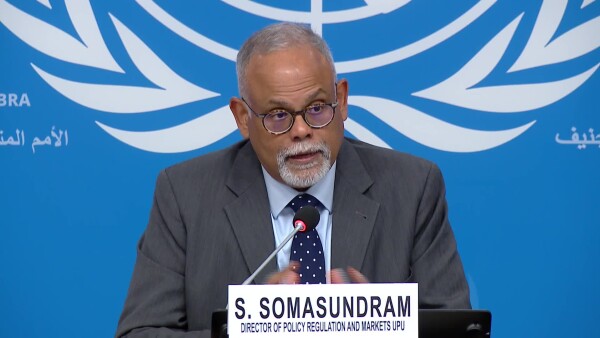
UNCTAD: UNCTAD’s flagship report finds that governments increasingly use industrial, trade, financial and technology policies to pursue economic and national security objectives. Market access and the ability to move into higher-value activities now depend more heavily on technology, finance and geopolitics.
1
1
1
Press Conferences | UPU
Release of the State of the Postal Sector Report 2026

1
1
1
Edited News | WHO
In suspected Russia plague death, testing and monitoring underway – WHO
The death of a lab worker in Russia’s Siberia region has sparked concerns about plague being the cause, the UN World Health Organization (WHO) said on Tuesday, adding that it was following the situation closely.
1
1
1
Press Conferences | IOM , ITU , UNECE , UNICEF , WHO , WMO
UNICEF: Ebola, DRC - children orphans or separating them from parents and caregivers; IOM: Humanitarian needs in Djibouti amid arrivals from Yemen and increased migrant movements; WHO: Darfur, scale of health needs far exceeds available resources; WMO co-sponsored Global Heat Forum, Bangkok, monthly Global Seasonal Climate Update; UNECE: UN Forum of Mayors; ITU Plenipotentiary Conference 2026; WHO: child and adolescent obesity guidelines and new global roadmap to tackle pregnancy hypertension, a leading cause of maternal mortality

1
1
Edited News | OHCHR , UNOG
UN Human Rights Chief Volker Türk on Friday provided and oral update to the 63rd session of the Human rights Council on Ukraine.