

The United Nations Office at Geneva
Multimedia Newsroom
Record high concentration of greenhouse gas will lead to further temperature increase: WMO
Greenhouse gases in the atmosphere reached a new record high last year and carbon dioxide (CO2) levels were a full 50 per cent above the pre-industrial era for the first time last year, the UN World Meteorological Organization (WMO) said on Wednesday.
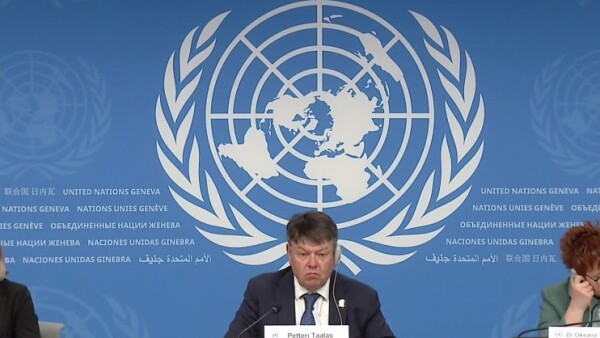
There is “no end in sight” to the rising trend, WMO chief Petteri Taalas said at the launch of the agency’s annual greenhouse gas bulletin report.
“We have again broken less comfortable records in main greenhouse gases, carbon dioxide, methane and nitrous oxide,” said Professor Petteri Taalas, WMO Secretary-General at the report launch in Geneva. “Now we have 150 per cent more carbon dioxide in the atmosphere than we had during the pre-industrial times.”
This will mean further temperature increases and more heatwaves, extreme rainfall, glacier melt and sea-level rise, with disastrous consequences for people and planet, WMO said.
“The warming impact of those gases, and you can see that the carbon dioxide is responsible for two-thirds of the warming methane with less than 20 per cent, nitrous oxide, six per cent. They are all together responsible for 11 per cent of the warming potential,” said Professor Taalas.
The UN agency said earlier this month that 2023 will almost certainly be the hottest year on record.
“It looks like we will we reach the all-time high because we have just switched from La Niña to the El Niño year, and besides the normal high temperatures in Pacific, we have also seen very high temperatures in the Atlantic Ocean, which is unusual,” informed WMO’s Secretary-General.
Given the long lifetime of CO2, WMO warned that the temperature level already observed “will persist for several decades even if emissions are rapidly reduced to net zero”.
“The lifetime of these gases is so long that they are distributed equally worldwide. So, what is emitted in China doesn't stay in China, but it's seen in some months it's equally distributed worldwide,” said Professor Taalas.
Climate change impacts include more extreme weather and sea level rise, the WMO top official continued.
“Climate change is not only a temperature issue, but it's a wider change in our behavior of atmosphere and we have already seen practically the whole planet has seen an increase of heatwaves”, he said. “About half of the planet has been facing an increase of flooding events and one third of the planet has been facing an increase of drought events and these negative trends will continue until 2060.”
WMO reiterated calls to reduce the consumption of fossil fuels and Professor Taalas said that he was encouraged by the rise in the use of renewable energy worldwide.
-ends-
STORY: Greenhouse Gas Bulletin report - WMO
TRT: 2:58”
SOURCE: UNTV CH
LANGUAGE: ENGLISH
ASPECT RATIO: 16:9
DATELINE: 15 November 2023 - GENEVA, SWITZERLAND
SHOTLIST
- Exterior medium shot: UN building with UN flag, UN Geneva.
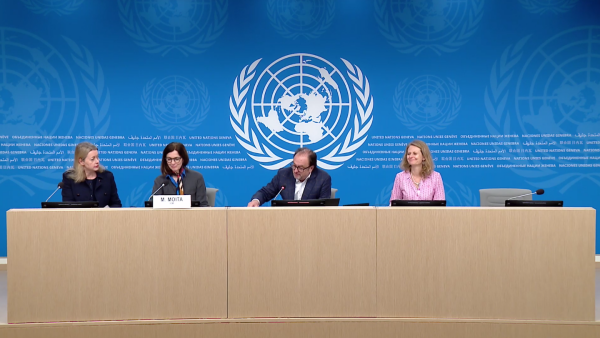
- Wide shot, press briefing room with journalists, speakers and screens, UN Geneva
- SOUNDBITE (ENGLISH) – Prof Petteri Taalas, WMO Secretary-General: “We have again broken less comfortable records in main greenhouse gases, carbon dioxide, methane and nitrous oxide. And for example, now we have 150 per cent more carbon dioxide in the atmosphere than we had during the pre-industrial times.”
- Cutaway: Medium shot, podium and speakers, UN Geneva
- SOUNDBITE (ENGLISH) – Prof Petteri Taalas, WMO Secretary-General: “The warming impact of those gases and you can see that the carbon dioxide is responsible for two thirds of the warming methane with less than 20 per cent, nitrous oxide 6 per cent, and the ozone depleting gases that we have seen luckily drop in the emissions. They are all together responsible for 11 per cent of the warming potential.”
- Cutaway: Close up, journalist listening, UN Geneva
- SOUNDBITE (ENGLISH) – Prof Petteri Taalas, WMO Secretary-General: “The lifetime of these gases is so long that they are distributed equally worldwide. So what is emitted in China doesn't stay in China, but it's seen in some months it's equally distributed worldwide:”
- Cutaway: Wide shot, press briefing room with journalists, speakers and screens, UN Geneva
- SOUNDBITE (ENGLISH) Prof Petteri Taalas, WMO Secretary-General: “The impacts of climate change, they are different in different parts of the world. Here in Europe, we have seen an increase of heatwaves, we have seen a dramatic increase in the melting of glaciers and depending on year, we have seen increase of both droughts and flooding.”
- Cutaway: Close up, technician listening, UN Geneva
- SOUNDBITE (ENGLISH) – Prof Petteri Taalas, WMO Secretary-General: “Climate change is not only temperature issue, but it's wider change in our behavior of atmosphere and we have already seen practically the whole planet has seen an increase of heatwaves. About half of the planet has been facing an increase of flooding events and one third of the planet has been facing an increase of drought events and these negative trends will continue until 2060.”
- Cutaway: Close up, journalist listening, UN Geneva
- SOUNDBITE (ENGLISH) – Prof Petteri Taalas, WMO Secretary-General: “This year will be the warmest year on record. We will publish the report at the COP 28 in a couple of weeks. But, so far, it looks like we will we reach the all-time high because we have just switched from La Nina to the El Nino year, and besides the normal high temperatures in Pacific, we have also seen very high temperatures in the Atlantic Ocean, which is unusual.”
- Cutaway: Medium shot, podium and speakers, UN Geneva
- Cutaway: Close up, journalist listening, UN Geneva
- Cutaway: Close up, technician listening, UN Geneva
Similar Stories
1
12
1
1
Press Conferences , Images | UNOG
Closing Press Conference following the Sixth Consultative Meeting on Enhancing Coordination of Peace Initiatives and Efforts in Sudan

2
17
1
2
Edited News , Press Conferences | OCHA , WMO
Two UN agencies teamed up on Wednesday to issue an appeal for immediate assistance to help communities already being impacted by the strongest El Niño on record.
3
16
2
2
B-roll , Conferences , Edited News | UNITED NATIONS , UNOG
Sixth Consultative Meeting on Enhancing Coordination of Peace Initiatives and Efforts for Sudan
1
1
1
Press Conferences | CITES
Wildlife trade and conservation policy discussions at the 81st meeting of the CITES Standing Committee (SC81)

1
1
1
Edited News | UNICEF , WHO , UNHCR
Yemen war continues to force families from homes amid hunger and disease
More than 250,000 people have now fled renewed fighting in Yemen, the UN said on Tuesday, citing particular concern for those sheltering in the southwestern city of Taiz and the wider governorate, where access is “essentially blocked”.
1
1
1
Press Conferences | UNHCR , UNCTAD , WMO , OCHA , UNICEF , WHO
UNHCR Hungary’s 1956 Refugee Crisis: 70 Years On, UNCTAD World Investment Forum 2026, Doha, WMO Greenhouse Gas Bulletin and Climate Update for COP31, OCHA Afghanistan: Malnutrition, Girls’ Education and Recovery, UNICEF Yemen: Child Malnutrition and Unsafe Water in Taiz, WHO Inequalities in Noncommunicable Diseases and Risk Factors
1
1
1
Press Conferences | UNHCR
End of UNHCR's 77th Annual Executive Committee (ExCom) meeting week

1
1
1
Edited News | UNICEF
A little over one year since a ceasefire agreement was announced between Hamas fighters and Israel, more than 340 children have been reported killed and hundreds more injured, the UN Children’s Fund, UNICEF, said on Friday.
1
1
1
Press Conferences | UNICEF , IOM , UNHCR
UN Special Assistant to the Personal Envoy Office (SUDAN): Peace Initiatives and Efforts in Sudan; UNICEF: Dire situation of children in Gaza; IOM: Damaged Homes and Energy Attacks Risk Displacing Ukrainians for this winter; UNHCR: update on EXCOM week
1
1
1
Press Conferences | IOM , UNDRR
UN stresses importance of household preparedness for disaster risk reduction.

1
1
1
Edited News | UNICEF , IFRC
Six weeks after Nepal’s deadly flooding disaster, communities are still struggling to rebuild their lives, but they will need sustained help as global warming increases the risk of another Himalayan catastrophe, the UN Children’s Fund (UNICEF) said on Friday.
1
1
1
Statements , Press Conferences | OHCHR