

The United Nations Office at Geneva
Multimedia Newsroom
Sudan conflict creates world’s fastest-growing displacement crisis: OCHA
As heavy fighting continues in Sudan, the UN’s top aid official in the country warned on Thursday that the conflict has created “the world’s fastest-growing displacement crisis” which threatens to outstrip the Organization’s best efforts to help those most in need.
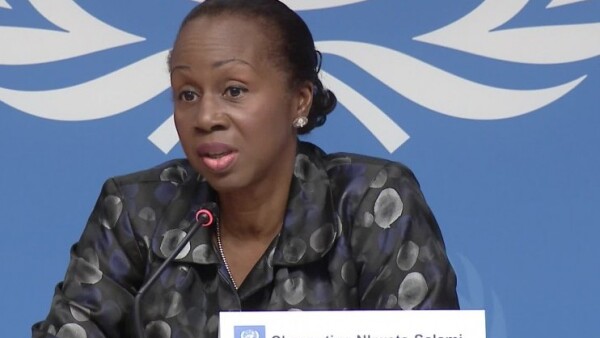
“The past six months have caused untold suffering in Sudan” and forced more than 5.4 million people from their homes, said Clementine Nkweta-Salami, Deputy Special Representative of the Secretary-General and Resident and Humanitarian Coordinator in Sudan.
Speaking to journalists in Geneva, the UN official noted that approximately 30,000 a day have fled fighting, “some fleeing with nothing but the clothes on their backs”.
Ms. Nkweta-Salami continued: “I’ve met mothers in Sudan who’ve told me they don’t know where to find the next meal for their children. I’ve met families sleeping in makeshift shelters, struggling to find food and water and unable to access healthcare; their children out of school and the family breadwinners out of work.”
Conflict ‘could consume entire country’
Half of Sudan’s population – 24.7 million people - now require humanitarian assistance and protection, the UN official continued, before warning that conflict, displacement and disease outbreaks now “threaten to consume the entire country”.
Last month, the UN and partners delivered 3,000 tonnes of lifesaving aid supplies using 66 trucks across six states. “But we need to be able to deliver much more, safely, repeatedly and fast,” Ms. Nkweta-Salami insisted. “We need to reach 18 million people and we will not give up on that target.”
Harvests under threat
Clashes involving heavy weaponry and airstrikes broke out on 15 April between the Sudanese Armed Forces (SAF) and the Rapid Support Forces (RSF). Fighting initially focused in and around the capital, Khartoum, along with the Darfur region, but Ms. Nkweta-Salami expressed concerns that the conflict could spread to Gezira state, Sudan's breadbasket.
“This would have great consequences for food security,” she said, noting that the violence “has already crippled Sudan's health sector, with 70 per cent of all hospitals no longer functional”.
Humanitarians are equally concerned about reports of increasing cases of sexual and gender-based violence, enforced disappearances, arbitrary detention and grave violations of human and children's rights.
Cholera ‘near impossible to control’
In addition to the destruction of war which is believed likely to have claimed thousands of lives including 19 aid workers to date, Sudan’s people have also faced further shocks in recent weeks as heavy rains and floods have affected more than 70,000 people across seven states, prompting concerns of a spike in waterborne diseases.
A cholera outbreak has been declared in the eastern state of Gedaref and humanitarians are already investigating whether it has spread to Khartoum and South Kordofan.
“With fighting escalating, it may be near impossible to control,” Ms. Nkweta-Salami said, as she called on the warring parties to recommit to previous pledges to “de-escalate fighting, minimize civilian harm and refrain from any disproportionate attacks”.
Humanitarians ‘pushing the limits’
Delivering aid in a warzone is extremely complicated, dangerous and time-consuming, often involving negotiations with various armed groups for access to remote communities, the UN official explained.
Despite these challenges, she insisted that relief teams were stepping up efforts to reach Sudan’s most vulnerable communities. “We have a very committed humanitarian team on the ground, we are trying to push the limits of our ability to reach some of these hard-to-reach areas. And I think if we get a strong not only commitment, but a commitment that is translated today into positive action by all the parties to this conflict, then hopefully we will have no longer deaths amongst humanitarian workers.”
ends
STORY: Sudan Conflict Humanitarian Update: OCHA
TRT: 2 min 14s
SOURCE: UNTV CH
RESTRICTIONS: NONE
LANGUAGE: ENGLISH / NATS
ASPECT RATIO: 16:9
DATELINE: 5 October 2023 GENEVA, SWITZERLAND
- Exterior medium: UN flag alley, UN Geneva
- Wide: speaker and attendees at the press conference, screens with speaker
- SOUNDBITE (English) – Clementine Nkweta-Salami, Deputy Special Representative of the Secretary-General, Resident and Humanitarian Coordinator in Sudan: “The past six months has caused untold suffering in Sudan. Some 5.4 million have fled their homes and are totally displaced within Sudan or in neighbouring countries; that’s an average of about 30,000 a day, many fleeing with nothing but the clothes on their backs. Sudan has become the world’s fastest growing displacement crisis.”
- Medium: speaker and attendees at the press conference, screens with speaker
- SOUNDBITE (English) – Clementine Nkweta-Salami, Deputy Special Representative of the Secretary-General, Resident and Humanitarian Coordinator in Sudan: “Half of Sudan’s population – 24.7 million people - now require humanitarian (assistance) and protection as conflict, displacement and disease outbreaks threaten to consume the entire country.
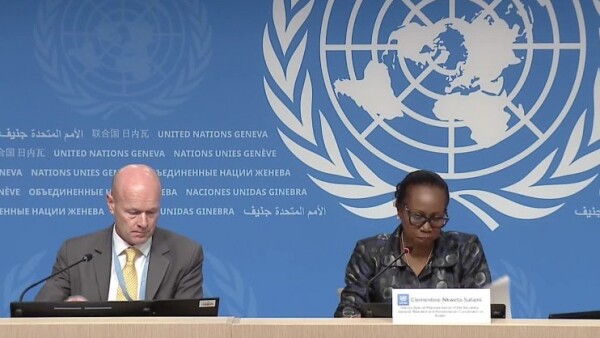
- Medium wide: moderator and Ms. Nkweta-Salami.
- SOUNDBITE (English) – Clementine Nkweta-Salami, Deputy Special Representative of the Secretary-General, Resident and Humanitarian Coordinator in Sudan: “I’ve met mothers in Sudan who’ve told me they don’t know where to find the next meal for their children. I’ve met families sleeping in makeshift shelters, struggling to find food and water and unable to access healthcare; their children out of school and the family breadwinners out of work.”
- Medium: journalist following proceedings.
- SOUNDBITE (English) – Clementine Nkweta-Salami, Deputy Special Representative of the Secretary-General, Resident and Humanitarian Coordinator in Sudan: “In recent weeks another shock has hit Sudan as the heavy rains and floods have affected more than 70,000 people across seven states.
- Medium-wide: journalists attending the press conference.
- SOUNDBITE (English) – Clementine Nkweta-Salami, Deputy Special Representative of the Secretary-General, Resident and Humanitarian Coordinator in Sudan: “And as the fighting spreads, we are receiving reports of increasing cases sexual and gender-based violence, enforced disappearances, arbitrary detention and grave violations of human and children’s rights.”
- Medium: journalist looking down at laptop (out of shot) during press conference.
- SOUNDBITE (English) – Clementine Nkweta-Salami, Deputy Special Representative of the Secretary-General, Resident and Humanitarian Coordinator in Sudan: “Three thousand metric tonnes of aid supplies were delivered by 66 trucks across six states, but we need to be able to deliver much more, safely, repeatedly and fast. We need to reach 18 million people and we will not give up on that target.”
- Wide: speaker addressing journalists from podium, reverse shot.
- Medium: journalist turning to look at podium.
- Medium-wide: journalists following press conference.
Similar Stories
1
1
1
Edited News | OCHA , UNICEF , WFP
Aid agencies warned on Friday of the fast-developing humanitarian emergency inside Taiz City in Yemen, which has been encircled by de facto Houthi forces fighting government troops along the country’s west coast.
1
1
1
Press Conferences | UN WOMEN , WFP , WHO
UN WOMEN: Sudan Women and girls one year after the fall of El Fasher; increasing drone attacks across the country; WFP: DRC - Ebola spreads to eighth DRC province as WFP delivers food, builds treatment centres and keeps supplies moving; WHO - Update on Ebola (Bundibugyo Virus Disease)
1
12
1
1
Press Conferences , Images | UNOG
Closing Press Conference following the Sixth Consultative Meeting on Enhancing Coordination of Peace Initiatives and Efforts in Sudan

2
17
1
2
Edited News , Press Conferences , Images | OCHA , WMO
Two UN agencies teamed up on Wednesday to issue an appeal for immediate assistance to help communities already being impacted by the strongest El Niño on record.

3
16
2
2
Edited News , B-roll , Conferences , Images | UNITED NATIONS , UNOG
Sixth Consultative Meeting on Enhancing Coordination of Peace Initiatives and Efforts for Sudan
1
1
1
Press Conferences | CITES
Wildlife trade and conservation policy discussions at the 81st meeting of the CITES Standing Committee (SC81)

1
1
1
Edited News | UNICEF , WHO , UNHCR
Yemen war continues to force families from homes amid hunger and disease
More than 250,000 people have now fled renewed fighting in Yemen, the UN said on Tuesday, citing particular concern for those sheltering in the southwestern city of Taiz and the wider governorate, where access is “essentially blocked”.
1
1
1
Press Conferences | UNHCR , UNCTAD , WMO , OCHA , UNICEF , WHO
UNHCR Hungary’s 1956 Refugee Crisis: 70 Years On, UNCTAD World Investment Forum 2026, Doha, WMO Greenhouse Gas Bulletin and Climate Update for COP31, OCHA Afghanistan: Malnutrition, Girls’ Education and Recovery, UNICEF Yemen: Child Malnutrition and Unsafe Water in Taiz, WHO Inequalities in Noncommunicable Diseases and Risk Factors
1
1
1
Press Conferences | UNHCR
End of UNHCR's 77th Annual Executive Committee (ExCom) meeting week

1
1
1
Edited News | UNICEF
A little over one year since a ceasefire agreement was announced between Hamas fighters and Israel, more than 340 children have been reported killed and hundreds more injured, the UN Children’s Fund, UNICEF, said on Friday.
1
1
1
Press Conferences | UNICEF , IOM , UNHCR
UN Special Assistant to the Personal Envoy Office (SUDAN): Peace Initiatives and Efforts in Sudan; UNICEF: Dire situation of children in Gaza; IOM: Damaged Homes and Energy Attacks Risk Displacing Ukrainians for this winter; UNHCR: update on EXCOM week
1
1
1
Press Conferences | IOM , UNDRR
UN stresses importance of household preparedness for disaster risk reduction.