

The United Nations Office at Geneva
Multimedia Newsroom
Jenin: Significant damage and loss of life after Israel’s military operation, says UNRWA
The latest escalation of violence at the Jenin refugee camp in the Occupied West Bank has resulted in the loss of life and significant damage to infrastructure, said Tamara Alrifai, Director of the Department of External Relations and Communications of the United Nations Relief and Works Agency for Palestine Refugees in the Near East (UNRWA) on Friday.
“The Israeli military operation on the 4th and 5th of July in Jenin was the most intense in over two decades with 12 Palestinians killed, including four children and 140 injured, some in critical conditions,” said Ms. Alrifai when briefing journalists at the United Nations in Geneva.
Jenin is one of 19 camps for Palestine refugees across the West Bank, housing refugees who fled or were forced to leave their home in 1948. In the absence of a political solution, they have since then become “refugees”. Nearly 23,000 people live in Jenin’s densely populated camp.
“The Jenin camp for Palestine refugees sustained significant damage this week”, said UNRWA’s communication director. “The streets are full of rubble, electricity and water are cut in most parts of the camp. There are some 900 houses that have been damaged, some of them unlivable. My colleagues at UNRWA in Jenin are still assessing the scope of the damage today.”
Quoting her UNRWA colleagues working in the Jenin camp, Ms. Alrifai said that the cemetery "is full in such a densely populated camp, people don’t know what to do”.
UN Secretary-General Antonio Guterres stated at a press briefing last night that “Israel’s airstrikes and ground operations in a crowded refugee camp were the worst violence in the West Bank in many years.”
He called on “Israel to abide by its obligations under international law, including the duty to exercise restraint and use only proportional force, and the duty to minimize damage and injury and respect and preserve human life. The use of airstrikes is inconsistent with the conduct of law enforcement operations.”
During the Israeli military operation, nearly 500 families left the camp to stay with family and friends.
UNRWA’s health centre, the only one in the camp, was severely damaged. The UN Agency for Palestine refugees has set up a temporary health point.
The priority for UNRWA is to restore basic services in the camp and support those families whose homes were damaged with emergency cash assistance and to re-open the four UNRWA schools which provide education for 1,700 children.
“The children in Jenin have undergone severe trauma as a result of the recent military operation and the violence”, said Ms. Alrifai. “Since the beginning of the year, they have witnessed horror, noting that the situation in the northern part of the West Bank in and around Jenin and Nablus has been extremely violent in 2023. So reopening schools is a top priority for UNRWA both for educational and psychological reasons.”
UNRWA is calling on donors to step in, especially as the Agency faces huge financial challenges made far worse by the recent crisis in Jenin.
-ends-
- Exterior medium shot: UN Palais with flags
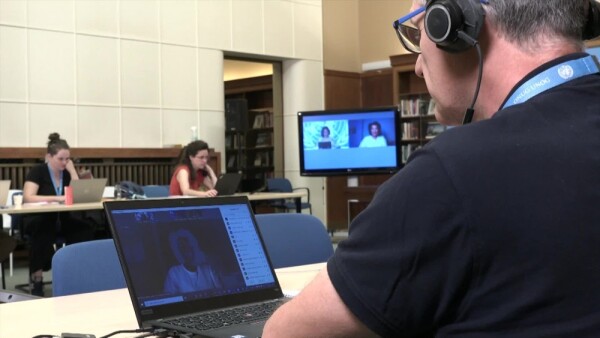
- Wide shot: attendees and moderator at the press conference, screen with speakers
- SOUNDBITE (English) – Tamara Alrifai, Director of Department of External Relations and Communications, UNRWA: “The Israeli military operation on the 4th and 5th of July in Jenin was the most intense in over two decades with 12 Palestinians killed, including four children and 140 injured, some in critical conditions.”
- Medium shot: attendees at the press conference
- SOUNDBITE (English) – Tamara Alrifai, Director of Department of External Relations and Communications, UNRWA: “It’s a statement from my colleague reporting back to us, saying: ‘The cemetery is full. In such a densely populated camp, the cemetery is already full. People don’t know what to do’.”
- Medium shot: attendees at the press conference, screen with speaker in the background
- SOUNDBITE (English) – Tamara Alrifai, Director of Department of External Relations and Communications, UNRWA: “The Jenin camp for Palestine refugees sustained significant damage this week. The streets are full of rubble; electricity and water are cut in most parts of the camp. There are some 900 houses that have been damaged, some of them unlivable. My colleagues at UNRWA in Jenin are still assessing the scope of the damage today.”
- Medium shot: attendees at the press conference
- SOUNDBITE (English) – Tamara Alrifai, Director of Department of External Relations and Communications, UNRWA: “The children in Jenin have undergone severe trauma as a result of the recent military operation and the violence. Since the beginning of the year, they have witnessed horror, noting that the situation in the northern part of the West Bank in and around Jenin and Nablus has been extremely violent in 2023. So reopening schools is a top priority for UNRWA both for educational and psychological reasons.”
- Medium shot: attendees at the press conference, screen with speakers in the background
- Medium shot: attendees at the press conference
Similar Stories

1
1
1
Edited News | OCHA , UNICEF , WFP
Aid agencies warned on Friday of the fast-developing humanitarian emergency inside Taiz City in Yemen, which has been encircled by de facto Houthi forces fighting government troops along the country’s west coast.

2
17
1
2
Edited News , Press Conferences , Images | OCHA , WMO
Two UN agencies teamed up on Wednesday to issue an appeal for immediate assistance to help communities already being impacted by the strongest El Niño on record.

3
16
2
2
Edited News , B-roll , Conferences , Images | UNITED NATIONS , UNOG
Sixth Consultative Meeting on Enhancing Coordination of Peace Initiatives and Efforts for Sudan

1
1
1
Edited News | UNICEF , WHO , UNHCR
Yemen war continues to force families from homes amid hunger and disease
More than 250,000 people have now fled renewed fighting in Yemen, the UN said on Tuesday, citing particular concern for those sheltering in the southwestern city of Taiz and the wider governorate, where access is “essentially blocked”.

1
1
1
Edited News | UNICEF
A little over one year since a ceasefire agreement was announced between Hamas fighters and Israel, more than 340 children have been reported killed and hundreds more injured, the UN Children’s Fund, UNICEF, said on Friday.

1
1
1
Edited News | UNICEF , IFRC
Six weeks after Nepal’s deadly flooding disaster, communities are still struggling to rebuild their lives, but they will need sustained help as global warming increases the risk of another Himalayan catastrophe, the UN Children’s Fund (UNICEF) said on Friday.

1
1
1
Edited News | WHO
In suspected Russia plague death, testing and monitoring underway – WHO
The death of a lab worker in Russia’s Siberia region has sparked concerns about plague being the cause, the UN World Health Organization (WHO) said on Tuesday, adding that it was following the situation closely.

1
1
Edited News | OHCHR , UNOG
UN Human Rights Chief Volker Türk on Friday provided and oral update to the 63rd session of the Human rights Council on Ukraine.

1
1
1
Edited News | OHCHR , UNOG
UN Human Rights Chief Volker Türk on Friday provided and oral update to the 63rd session of the Human rights Council on the human rights situation in Haiti.

1
1
1
Edited News | WHO
Repeated delays in bringing lifesaving medicines, prosthetics and more from Israel into Gaza risk having devastating consequences on Palestinians who urgently need them in the wartorn enclave, the UN World Health Organization (WHO) said on Friday. “A truck full of non-priority supplies or the right supplies arriving too late, doesn't save lives. That's the question that actually matters," said Dr Reinhilde Van De Weerdt, WHO Representative in the OPT.

1
1
1
Edited News | WHO
DRC: Early access to care and oxygen decisive for Ebola patients’ survival – WHO
In the Democratic Republic of the Congo (DRC), health workers fighting the country’s largest-ever Ebola outbreak are struggling to overcome critical challenges to patient care, the UN World Health Organization (WHO) warned on Tuesday.

1
1
1
Edited News | OCHA , UN
Civilians in Iran are continuing to feel the consequences of months of conflict and military escalation, the UN’s top official in the country has said, as loss of life, damage to civilian infrastructure and mounting economic pressures leave many facing continued uncertainty.