

The United Nations Office at Geneva
Multimedia Newsroom
At its 2-months mark, around 5 ½ million tons of grain and other foodstuffs were moved under the Black Sea Grain Initiative on about 255 ships from three key Ukrainian ports (Chornomorsk, Odesa, and Yuzhny/Pivdennyi) to their final destinations worldwide. With the current pace, some 4-5 million tons of Ukrainian grain could be transported monthly through a safe maritime humanitarian corridor to the global markets.
“(The) Black Sea Grain Initiative for Ukraine, for me personally, for the city of Odesa, for the whole world it’s a very very important agreement”, said Dmytro Barinov, Deputy Head of the Ukrainian Seaport Authority. “It gives the possibility to get Ukrainian farmers money for their products, for their workers, port workers to work and get their salary. The people around the world get their food, feed their families. For the international community to give some normalization to the food crisis. People open their stock as they realize that Ukraine returns on the agricultural market”.
The Black Sea Deal is not just significant to get food to the markets and bring prices down, but also providing an avenue for farmers who produce grain and other crops in Ukraine to see it exported so that it empties their warehouses and their next crop can come in.
“Having that corridor open, knowing that these huge stocks that are available can get to the market is impacting the market in many ways”, said Amir Abdulla, UN Coordinator for the Black Sea Grain Initiative. He added saying that “if we do not have these food stocks get out of the markets, if farmers don’t see their food exported, or they see the risk that their next harvest will be lost in the fields, that will lose the incentive for them and it’s just not the next harvest , it’s the one after that that is at risk and so we sometimes see the price not just as providing food to markets, but we see it as an initiative that will save the next crop”.
Although there are other ways of transportation to get Ukrainian commodities out of the country, the sheer volumes than can come on a maritime corridor shows that it’s the cheapest and most efficient way to move commodities in large quantities.
“We have alternatives, we have land borders, we cross it by railway, by trucks, at the Danube ports”, said the Deputy Head of the Ukrainian Seaport Authority. “But, for sure, we can’t change the Black Sea biggest port for the smallest port on the Danube River. That’s why for the world, for the World Food Programme, for the poor countries, it’s very very important that this corridor is still working”.
One part of the initiative, to move fertilizer as one of the key commodities along the corridor, hasn’t been managed yet.
“Getting fertilizer and ammonia - to produce fertilizer - through this corridor is going to be hugely important, not just because we need to get these commodities out, but they are going to be crucial to how much food is available, next year, next season”, said Amir Abdulla. “The seasons and the crops that have been planted now, when they come to their harvest season, if they have not had adequate and sufficient fertilizer at reasonable prices, we are going to see scarcer availability and higher prices of food”.
In 2 months, by mid-November, the current Initiative may extend beyond its initial 120 days after the signing date of 22 July, if parties so choose.
“If we can keep this corridor open, it will make a huge difference to the worlds market and prices availability and for everybody”, emphasized the UN Coordinator for the Black Sea Deal. “And to the people to whom it matters most, those who are really at the lower end of the economic scale that’s where it matters most, because when food prices go up, marginally or even significantly, the people who get impacted most are the people who have the least purchasing power”.
-ends-
STORY: Black Sea Grain Initiative – Part 2
TRT: 3:32”
SOURCE: UNTV CH
RESTRICTIONS: NONE
LANGUAGE: ENGLISH/NATIVE
ASPECT RATIO: 16:9
DATELINE: 30 September 2022 GENEVA, SWITZERLAND
SHOTLIST
- Wide shot, Odesa port, Ukraine (22 September 2022)
- SOUNDBITE (English) – Dmytro Barinov, Deputy Head of the Ukrainian Seaport Authority: “(The) Black Sea Grain Initiative for Ukraine, for me personally, for the city of Odesa, for the whole world, it’s a very very important agreement. It gives the possibility to get Ukrainian farmers money for their products, for their workers, port workers to work and get their salary. The people around the world get their food, feed their families. For the international community to give some normalization to the food crisis. People open their stock as they realize that Ukraine returns on the agricultural market”.
- Wide shot, port of Istanbul (28 September 2022)
- SOUNDBITE (English) – Amir Mahmoud Abdulla, UN Coordinator for the Black Sea Grain Initiative: “Having that corridor open, knowing that these huge stocks that are available can get to the market is impacting the market in many ways”.
- Wide shot, BC Vanessa vessel leaving Odesa port (22 September 2022)
- SOUNDBITE (English) – Amir Mahmoud Abdulla, UN Coordinator for the Black Sea Grain Initiative: “If we do not have these food stocks get out of the markets, if farmers don’t see their food exported, or they see the risk that their next harvest will be lost in the fields, that will lose the incentive for them and it’s just not the next harvest , it’s the one after that that is at risk and so we sometimes see the price not just as providing food to markets, but we see it as an initiative that will save the next crop”.
- Close up, storage of linseeds
- Close up, grain transported in a container
- SOUNDBITE (English) – Dmytro Barinov, Deputy Head of the Ukrainian Seaport Authority: “We have alternatives, we have land border, we cross it by the railway, by trucks, as I said, the Danube ports. But, for sure, we can’t change the Black Sea biggest port for the smallest port on the Danube River. That’s why for the world, for the World Food Programme, for the poor countries, it’s very very important that this corridor is still working”.
- Wide shot, pan from boats in Marmara Sea (Turkey) to BC Vanessa vessel (28 September 2022)
- SOUNDBITE (English) – Amir Mahmoud Abdulla, UN Coordinator for the Black Sea Grain Initiative: “Getting fertilizer and ammonia - to produce fertilizer - through this corridor is going to be hugely important, not just because we need to get these commodities out, but they are going to be crucial to how much food is available, next year, next season. The seasons and the crops that have been planted now, when they come to their harvest season, if they have not had adequate and sufficient fertilizer at reasonable prices, we are going to see scarcer availability and higher prices of food”.
- Wide shot, BC Vanessa vessel at Marmara Sea (28 September 2022)
- SOUNDBITE (English) – Amir Mahmoud Abdulla, UN Coordinator for the Black Sea Grain Initiative: “If we can keep this corridor open, it will make a huge difference to the worlds market and prices availability and for everybody. And to the people to whom it matters most, those who are really at the lower end of the economic scale that’s where it matters most, because when food prices go up, marginally or even significantly, the people who get impacted most are the people who have the least purchasing power”.
- Wide shot, port of Istanbul
- Wide shot, ships waiting to be inspected at Marmara Sea/Türkiye

Similar Stories
1
1
1
Edited News | UNICEF , WHO , UNHCR
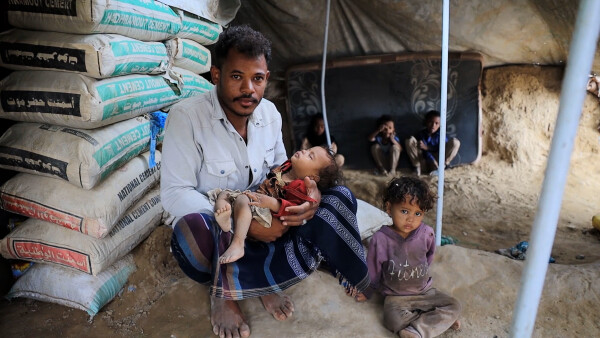
Yemen war continues to force families from homes amid hunger and disease
More than 250,000 people have now fled renewed fighting in Yemen, the UN said on Tuesday, citing particular concern for those sheltering in the southwestern city of Taiz and the wider governorate, where access is “essentially blocked”.
1
1
1
Edited News | UNICEF
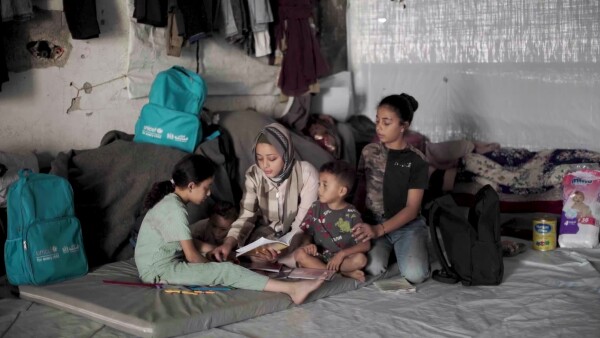
A little over one year since a ceasefire agreement was announced between Hamas fighters and Israel, more than 340 children have been reported killed and hundreds more injured, the UN Children’s Fund, UNICEF, said on Friday.
1
1
1
Edited News | UNICEF , IFRC
Six weeks after Nepal’s deadly flooding disaster, communities are still struggling to rebuild their lives, but they will need sustained help as global warming increases the risk of another Himalayan catastrophe, the UN Children’s Fund (UNICEF) said on Friday.

1
1
1
Edited News | WHO
In suspected Russia plague death, testing and monitoring underway – WHO
The death of a lab worker in Russia’s Siberia region has sparked concerns about plague being the cause, the UN World Health Organization (WHO) said on Tuesday, adding that it was following the situation closely.
1
1
Edited News | OHCHR , UNOG
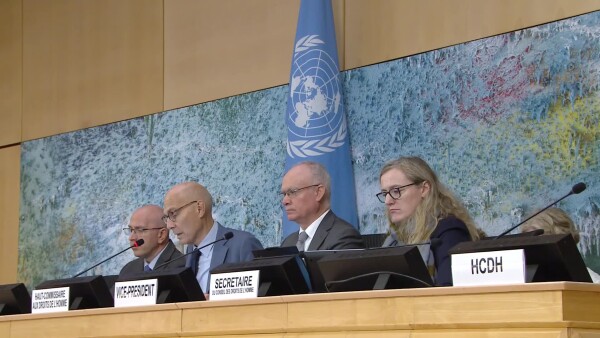
UN Human Rights Chief Volker Türk on Friday provided and oral update to the 63rd session of the Human rights Council on Ukraine.
1
1
1
Edited News | OHCHR , UNOG
UN Human Rights Chief Volker Türk on Friday provided and oral update to the 63rd session of the Human rights Council on the human rights situation in Haiti.
1
1
1
Edited News | WHO
Repeated delays in bringing lifesaving medicines, prosthetics and more from Israel into Gaza risk having devastating consequences on Palestinians who urgently need them in the wartorn enclave, the UN World Health Organization (WHO) said on Friday. “A truck full of non-priority supplies or the right supplies arriving too late, doesn't save lives. That's the question that actually matters," said Dr Reinhilde Van De Weerdt, WHO Representative in the OPT.

1
1
1
Edited News | WHO
DRC: Early access to care and oxygen decisive for Ebola patients’ survival – WHO
In the Democratic Republic of the Congo (DRC), health workers fighting the country’s largest-ever Ebola outbreak are struggling to overcome critical challenges to patient care, the UN World Health Organization (WHO) warned on Tuesday.
1
1
1
Edited News | OCHA , UN
Civilians in Iran are continuing to feel the consequences of months of conflict and military escalation, the UN’s top official in the country has said, as loss of life, damage to civilian infrastructure and mounting economic pressures leave many facing continued uncertainty.
1
1
1
Edited News | WHO , UNICEF
Aid agencies in Yemen highlighted the growing hunger emergency sparked by renewed fighting between Houthi opposition forces and Government troops, after mobile health clinics reported that hundreds of children displaced by the violence are suffering from the most deadly form of malnutrition.
1
1
1
Edited News | UNHCR
Displacement on the rise in Yemen as fighting continues - UNHCR
As hostilities worsen in Yemen, more people have been fleeing their homes, further intensifying the humanitarian crisis within the region, the UN Refugee Agency (UNHCR) warned on Tuesday.
1
1
1
Edited News | IOM , OHCHR , UNFPA , UNOG , UNHCR , WHO
Yemen’s humanitarian crisis growing by the hour amid spike in displacement
Yemenis displaced by renewed fighting have described fleeing for their lives amid shelling and gunfire, aid agencies reported on Friday, while highlighting the dramatic increase in humanitarian needs in the country and in Djibouti, where thousands have sought shelter.