

The United Nations Office at Geneva
Multimedia Newsroom
Edited News , Press Conferences | UNHCR , UNICEF , WFP
Sudan Alert WFP - UNHCR - UNICEF 23 September 2022
STORYLINE
Half of Sudan’s most vulnerable children could die without humanitarian aid, warns UN
The situation for Sudan’s most vulnerable children is so desperate that half of the most severely malnourished youngsters are expected to die without urgent humanitarian intervention, UN agencies said on Friday.
“As we speak today, 650,000 kids are suffering from severe acute malnutrition. If not treated, half of them will die,” said UN Children’s Fund (UNICEF) Representative in Sudan, Mandeep O Brien, underscoring what veteran aid workers have called an unprecedented crisis.
Spiralling recent problems in Sudan have their roots in a military coup in October 2021 that prompted a freeze in international funding for aid operations and which has forced UN relief teams to cut rations in half, in some cases.
Ongoing political “tumult” has also weakened State support structures for struggling families, who have had to contend with dramatic food price hikes and intertribal violence, said the UN World Food Programme’s (WFP) Country Director in Sudan, Eddie Rowe.
“At the moment, WFP (has) projected that about 15 million people would go hungry every day since the hunger season started, and we are now doing an assessment because our indicators projected that this could rise up to 18 million by the end of this month,” he said.
“We are still grappling with an increased incidence of intertribal conflicts and violence, and this in fact has spread now not just to Darfur, but to other parts of the country…The Ukraine War also has had some significant impact. All of this in the context of a political unstable country, has resulted in an unprecedented humanitarian crisis this year.”
In an appeal to the international community to “stand in solidarity with the children of Sudan”, UNICEF’s Mandeep O Brien noted that the crisis reflected much more than a lack of food, with basic health services, clean water, sanitation and education severely lacking.
“Routine immunization, unfortunately, is declining in Sudan. Between 2019 and 2021, the number of children who have not received a single dose of lifesaving vaccines has doubled,” she told journalists in Geneva.
Echoing those concerns, UN refugee agency (UNHCR) Representative in Sudan, Axel Bisschop, warned that refugees and internally displaced people (IDPs) in Sudan had seen living costs “skyrocket”.
This was linked to the “ripple effects of the war in Ukraine, lingering impacts from the COVID-19 pandemic, and extreme weather resulting from the climate crisis,” he said.
“Sudan is hosting today about 1.1 million refugees,” the UNHCR official explained, noting that fresh intercommunal clashes this year and the burning and looting of villages, markets, houses, and livestock across the Darfur states, Kordofan and Blue Nile States had displaced over 177,000 people. “We also have around 3.7 million internally displaced. And as outlined by my colleagues here, the humanitarian crisis, which is actually resulting itself in a food crisis, is impacting the marginalized communities and amongst those, refugees and the IDPs.”
Humanitarian funding levels for all three agencies remain far below where they need to be to provide effective prevention support. The fear is that unless pledges are forthcoming soon, the cost of having to respond to a far greater emergency will be far higher.
Illustrating the extent of the funding gap, by 13 September, UNHCR had received just one third of the $348.9 million needed this year to deliver an effective response and provide life-saving assistance and protection amidst the growing needs.
ends
STORY: Sudan Alert – WFP, UNICEF, UNHCR
TRT: 2 mins 41s
SOURCE: UNTV CH
RESTRICTIONS: NONE
LANGUAGE: ENGLISH/NATS
ASPECT RATIO: 16:9
DATELINE: 23 September 2022 GENEVA, SWITZERLAND
SHOTLIST
- Medium shot, UN Geneva flag alley.
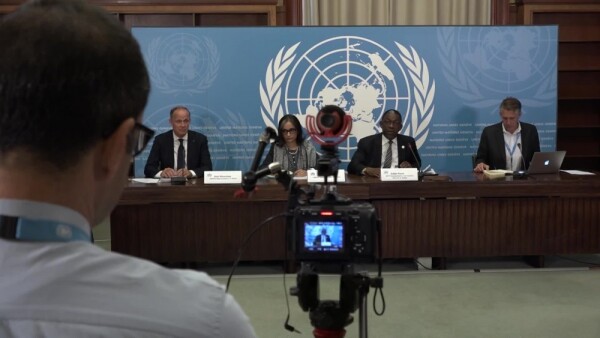
- Wide shot, press room with panel of speakers.
- SOUNDBITE (ENGLISH) UNICEF Representative in Sudan, Mandeep O‘Brien: “As we speak today, 650,000 kids are suffering from severe acute malnutrition. If not treated, half of them will die.”
- Close, staff monitoring.
- SOUNDBITE (ENGLISH) WFP Representative and Country Director in Sudan, Eddie Rowe: “At the moment, WFP projected that about 15 million people would go hungry every day since the hunger season started, and we are now doing an assessment because our indicators projected that this could rise up to 18 million by the end of this month.”
- Medium shot, staff, cameras, and cameraman.
- SOUNDBITE (ENGLISH) UNICEF Representative in Sudan, Mandeep O‘Brien: “Routine immunization, unfortunately, is declining in Sudan. Between 2019 and 2021, the number of children who have not received a single dose of lifesaving vaccines has doubled.”
- Medium shot, pressroom.
- SOUNDBITE (ENGLISH) WFP Representative and Country Director in Sudan, Eddie Rowe: “We are still grappling with an increased incidence of intertribal conflicts and violence, and this in fact has spread now not just to Darfur, but to other parts of the country.”
- Medium shot, speakers panel.
- SOUNDBITE (ENGLISH) WFP Representative and Country Director in Sudan, Eddie Rowe: “The Ukraine War also has had some significant impact. All of this in the context of a political unstable country, has resulted in an unprecedented humanitarian crisis this year.”
- Close, journalist taking notes.
- SOUNDBITE (ENGLISH) UNICEF Representative in Sudan, Mandeep O‘Brien: “We call upon the international community to stand in solidarity with the children of Sudan.”
- Medium shot, camera screen showing speaker.
- SOUNDBITE (ENGLISH) UNHCR Representative in Sudan, Axel Bisschop: “Sudan is hosting today about 1.1 million refugees. We also have around 3.7 million internally displaced. And as outlined by my colleagues here, the humanitarian crisis, which is actually resulting itself in a food crisis, is impacting the marginalized communities and amongst those, refugees and the IDPs.”
- Medium shot, panel of speakers.
- Close, camera filming.
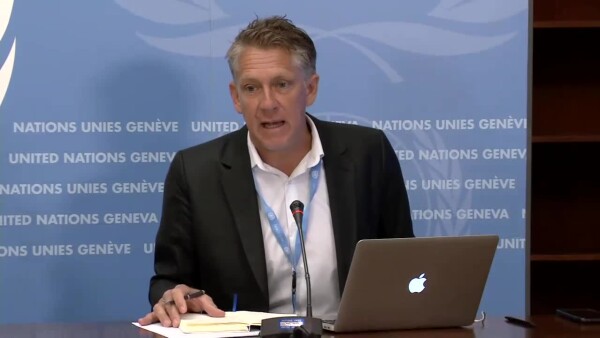
Medium shot, speaker
Similar Stories

1
1
1
Edited News | OCHA , UNICEF , WFP
Aid agencies warned on Friday of the fast-developing humanitarian emergency inside Taiz City in Yemen, which has been encircled by de facto Houthi forces fighting government troops along the country’s west coast.
1
1
1
Press Conferences | UN WOMEN , WFP , WHO
UN WOMEN: Sudan Women and girls one year after the fall of El Fasher; increasing drone attacks across the country; WFP: DRC - Ebola spreads to eighth DRC province as WFP delivers food, builds treatment centres and keeps supplies moving; WHO - Update on Ebola (Bundibugyo Virus Disease)
1
12
1
1
Press Conferences , Images | UNOG
Closing Press Conference following the Sixth Consultative Meeting on Enhancing Coordination of Peace Initiatives and Efforts in Sudan

2
17
1
2
Edited News , Press Conferences , Images | OCHA , WMO
Two UN agencies teamed up on Wednesday to issue an appeal for immediate assistance to help communities already being impacted by the strongest El Niño on record.

3
16
2
2
Edited News , B-roll , Conferences , Images | UNITED NATIONS , UNOG
Sixth Consultative Meeting on Enhancing Coordination of Peace Initiatives and Efforts for Sudan
1
1
1
Press Conferences | CITES
Wildlife trade and conservation policy discussions at the 81st meeting of the CITES Standing Committee (SC81)

1
1
1
Edited News | UNICEF , WHO , UNHCR
Yemen war continues to force families from homes amid hunger and disease
More than 250,000 people have now fled renewed fighting in Yemen, the UN said on Tuesday, citing particular concern for those sheltering in the southwestern city of Taiz and the wider governorate, where access is “essentially blocked”.
1
1
1
Press Conferences | UNHCR , UNCTAD , WMO , OCHA , UNICEF , WHO
UNHCR Hungary’s 1956 Refugee Crisis: 70 Years On, UNCTAD World Investment Forum 2026, Doha, WMO Greenhouse Gas Bulletin and Climate Update for COP31, OCHA Afghanistan: Malnutrition, Girls’ Education and Recovery, UNICEF Yemen: Child Malnutrition and Unsafe Water in Taiz, WHO Inequalities in Noncommunicable Diseases and Risk Factors
1
1
1
Press Conferences | UNHCR
End of UNHCR's 77th Annual Executive Committee (ExCom) meeting week

1
1
1
Edited News | UNICEF
A little over one year since a ceasefire agreement was announced between Hamas fighters and Israel, more than 340 children have been reported killed and hundreds more injured, the UN Children’s Fund, UNICEF, said on Friday.
1
1
1
Press Conferences | UNICEF , IOM , UNHCR
UN Special Assistant to the Personal Envoy Office (SUDAN): Peace Initiatives and Efforts in Sudan; UNICEF: Dire situation of children in Gaza; IOM: Damaged Homes and Energy Attacks Risk Displacing Ukrainians for this winter; UNHCR: update on EXCOM week

1
1
1
Press Conferences | IOM , UNDRR
UN stresses importance of household preparedness for disaster risk reduction.