

The United Nations Office at Geneva
Multimedia Newsroom
Myanmar: if Security Council won’t act, other nations should step in, urges top rights expert
Horrific testimonies from civilians targeted by Myanmar’s military are yet another reason for the international community to take practical measures to halt the bloodshed, a top human rights expert said on Thursday.
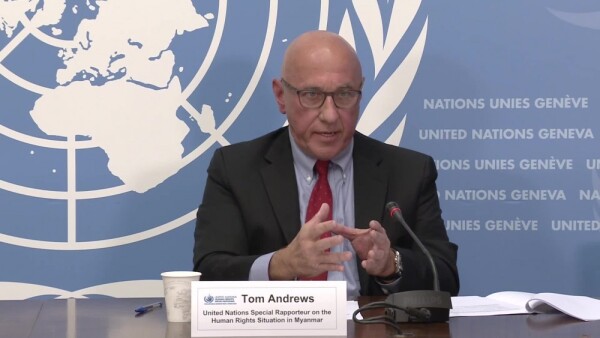
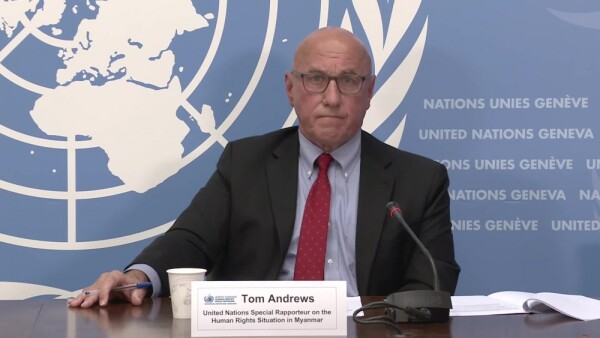
“It is incredibly important for the world to give a damn,” said Tom Andrews, UN Special Rapporteur on the situation of human rights in Myanmar. “It is very important for the nations of the world to stop failing the people of Myanmar and act.”
Mr. Andrews, who reports to the Human Rights Council, insisted that the military continued to bomb civilians, in an attempt to subdue opposition to their de facto rule.
He described how the junta’s military forces had attacked a school in Sagaing region last Friday, killing at least 13, including 11 children; the coordinated attack from the air and ground had ended with soldiers picking up children’s bodyparts and taking them away, the Special Rapporteur said.
“A school in a monastery, two helicopter gunships, foreign-made, foreign-provided swooping in on this school while soldiers entered the grounds with automatic weapons firing away; children terrified, running, looking for cover. Eleven of them at least killed, literally blown up, and the story of a young boy whose arm had been blown off screaming to mother to kill him because the pain was so great.”
The Special Rapporteur, who works in an independent capacity, told journalists in Geneva that since a coup by the country’s military last February, the generals in charge had been “holding a nation of 54 million people hostage. I think the best way to think of them is not as any kind of governmental entity but as a criminal gang that has literally taken over a country and are holding its leaders and its people hostage.”
In the absence of unified condemnation of the coup in the UN Security Council and the establishment of targeted economic sanctions, an arms embargo and a request for an international criminal inquiry, Mr. Andrews called for a “coalition of likeminded countries” to take action. “If it can’t be done by the Security Council, then it must be done by those nations who were speaking yesterday and will speak today in support of the people of Myanmar”, he said, in reference to the great gathering of world leaders attending the UN General Assembly in New York this week.
Without action, the situation risked spiralling out of control, the Special Rapporteur warned, noting that South-East Asian nations including China would be hardest-hit, in the first instance.
“I can see a major, major flow of refugees out of that country if the trajectory that we’re on right now continues,” he said.
Ahead of elections planned next year in Myanmar, Mr. Andrews urged countries not to give a “veneer of legitimacy” to them.
Among the war crimes and crimes against humanity that the Myanmar military was committing on a daily basis, the top rights expert listed sexual violence, torture and murder – including the execution of four opposition advocates in July. “They included a former parliamentarian and a prominent, pro-democracy activist,” the Special Rapporteur told the Human Rights Council on Wednesday.
“This is not an election, and to call it an election is to participate in a great wrongdoing of the people of Myanmar,” he said. “If the fundamentals of a free and fair election – the opportunity for people to have a choice, a voice in their future, it’s impossible if you’ve locked up and are killing the opposition”
ends
STORY: Myanmar Presser – Tom Andrews
TRT: 2 mins 59s
SOURCE: UNTV CH
RESTRICTIONS: NONE
LANGUAGE: ENGLISH/NATS
ASPECT RATIO: 16:9
DATELINE: 22 September 2022 GENEVA, SWITZERLAND
SHOTLIST
- Medium shot, UN Geneva flag alley, a sunny day.
- Wide shot, Press room, podium speakers.
- SOUNDBITE(ENGLISH) UN Special Rapporteur on the situation of human rights in Myanmar, Tom Andrews: “It is incredibly important for the world to give a damn. It is very important for the nations of the world to stop failing the people of Myanmar and act.”
- Close, TV viewfinder showing Mr. Andrews.
- SOUNDBITE(ENGLISH) UN Special Rapporteur on the situation of human rights in Myanmar, Tom Andrews: “The key here is to stop the flow of weapons but also to stop the flow of revenue that is flowing into the coffers of the junta.”
- Close, journalist’s hand holding pen, writing notes.
SOUNDBITE(ENGLISH) UN Special Rapporteur on the situation of human rights in Myanmar, Tom Andrews: “A school in a monastery, two helicopter gunships, foreign-made, foreign-provided swooping in on this school while soldiers entered the grounds with automatic weapons firing away; children terrified, running, looking for cover. Eleven of them at least killed, literally blown up, and the story of a young boy whose arm had been blown off screaming to mother to kill him because the pain was so great.”
- Wide, TV cameras and video journalists.
SOUNDBITE(ENGLISH) UN Special Rapporteur on the situation of human rights in Myanmar, Tom Andrews: “If the UN Security Council will not convene and pass a resolution under Chapter Seven which would establish targeted economic sanctions, establish an arms embargo, make reference to the International Criminal Court, I mean, that’s what should be done, but that’s not going to be done, obviously, so if it can’t be done by the Security Council, then it must be done by those nations who were speaking yesterday and will speak today in support of the people of Myanmar.”
- Medium, video journalist.
- SOUNDBITE(ENGLISH) UN Special Rapporteur on the situation of human rights in Myanmar, Tom Andrews: “I can see a major, major flow of refugees out of that country if the trajectory that we’re on right now continues.”
- Medium, journalists, seated.
- SOUNDBITE(ENGLISH) UN Special Rapporteur on the situation of human rights in Myanmar, Tom Andrews: “This is not an election, and to call it an election is to participate in a great wrongdoing of the people of Myanmar.”
- Close, laptop screen showing Mr. Andrews.
- SOUNDBITE(ENGLISH) UN Special Rapporteur on the situation of human rights in Myanmar, Tom Andrews: “If the fundamentals of a free and fair election – the opportunity for people to have a choice, a voice in their future, it’s impossible if you’ve locked up and are killing the opposition”
- Close, hands typing on laptop.
- Close, Mr. Andrews on TV camera viewfinder and to rear.
- Medium, journalist watching proceedings.
- Medium, participant wearing headphones.
Similar Stories

1
1
1
Edited News | WHO
In suspected Russia plague death, testing and monitoring underway – WHO
The death of a lab worker in Russia’s Siberia region has sparked concerns about plague being the cause, the UN World Health Organization (WHO) said on Tuesday, adding that it was following the situation closely.
1
1
1
Press Conferences | IOM , ITU , UNECE , UNICEF , WHO , WMO
UNICEF: Ebola, DRC - children orphans or separating them from parents and caregivers; IOM: Humanitarian needs in Djibouti amid arrivals from Yemen and increased migrant movements; WHO: Darfur, scale of health needs far exceeds available resources; WMO co-sponsored Global Heat Forum, Bangkok, monthly Global Seasonal Climate Update; UNECE: UN Forum of Mayors; ITU Plenipotentiary Conference 2026; WHO: child and adolescent obesity guidelines and new global roadmap to tackle pregnancy hypertension, a leading cause of maternal mortality

1
1
Edited News | OHCHR , UNOG
UN Human Rights Chief Volker Türk on Friday provided and oral update to the 63rd session of the Human rights Council on Ukraine.

1
1
1
Edited News | OHCHR , UNOG
UN Human Rights Chief Volker Türk on Friday provided and oral update to the 63rd session of the Human rights Council on the human rights situation in Haiti.

1
1
1
Edited News | WHO
Repeated delays in bringing lifesaving medicines, prosthetics and more from Israel into Gaza risk having devastating consequences on Palestinians who urgently need them in the wartorn enclave, the UN World Health Organization (WHO) said on Friday. “A truck full of non-priority supplies or the right supplies arriving too late, doesn't save lives. That's the question that actually matters," said Dr Reinhilde Van De Weerdt, WHO Representative in the OPT.
1
1
1
Press Conferences | OCHA , UN WOMEN , UNHCR , WFP , WHO , WTO , UNEP
OCHA – $160M CERF allocation to 12 underfunded crises; UNHCR – 5.8M refugee children remain out of school amid funding cuts; UN Women – Middle East escalation and food security among women/girls; WHO – Gaza supplies and overall situation; WFP – Yemen food insecurity and impact on global hunger ; UNEP - First International Conference of the Global Framework on Chemicals in Geneva | 16-20 November 2026

1
1
1
Edited News | WHO
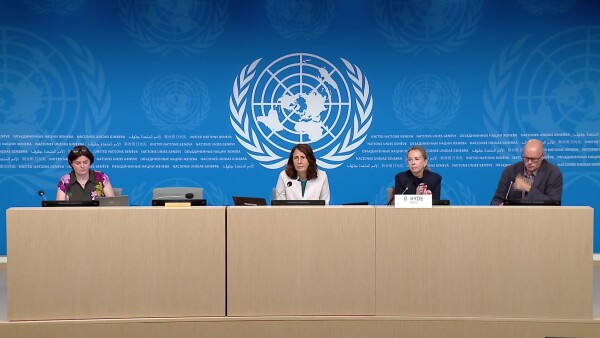
DRC: Early access to care and oxygen decisive for Ebola patients’ survival – WHO
In the Democratic Republic of the Congo (DRC), health workers fighting the country’s largest-ever Ebola outbreak are struggling to overcome critical challenges to patient care, the UN World Health Organization (WHO) warned on Tuesday.
1
1
1
Press Conferences | UNHCR , WHO
Yemen's health system nears collapse amid conflict, causing rising casualties and medicine shortages.

1
1
1
Edited News | OCHA , UN
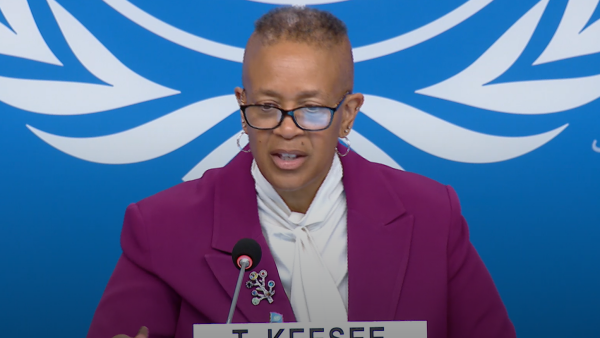
Civilians in Iran are continuing to feel the consequences of months of conflict and military escalation, the UN’s top official in the country has said, as loss of life, damage to civilian infrastructure and mounting economic pressures leave many facing continued uncertainty.
1
1
1
Press Conferences | HRC
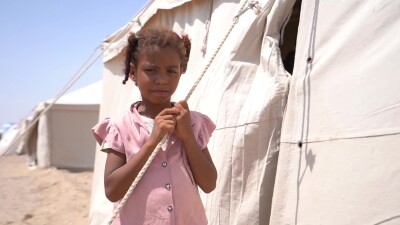
Update by the Expert Mechanism to Advance Racial Justice and Equality in Law Enforcement
1
1
1
Edited News | WHO , UNICEF
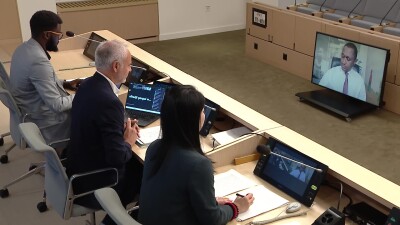
Aid agencies in Yemen highlighted the growing hunger emergency sparked by renewed fighting between Houthi opposition forces and Government troops, after mobile health clinics reported that hundreds of children displaced by the violence are suffering from the most deadly form of malnutrition.
1
1
1
Press Conferences | WIPO , WHO , UNICEF , UNHCR , IOM , WFP , FAO
WIPO Global Innovation Index 2026 launch and press conference, WHO Composition of influenza vaccines for the 2027 Southern Hemisphere flu season, UNICEF Yemen hunger and malnutrition; UNHCR Sudan displacement into Chad; IOM Ebola and population movements in DRC; WFP emergency food assistance in Nepal; and FAO food loss and waste.