

The United Nations Office at Geneva
Multimedia Newsroom
STORYLINE
People with disabilities trapped in the Russian control zones in Ukraine are reportedly being used as “human shields” by the Russian Federation armed forces,”, the United Nations Committee on the Rights of Persons with Disabilities (CRPD) warned on Friday.
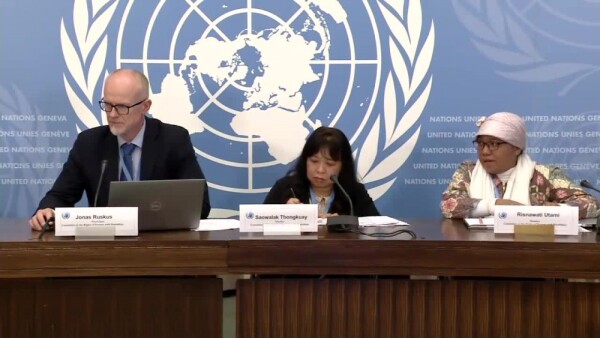
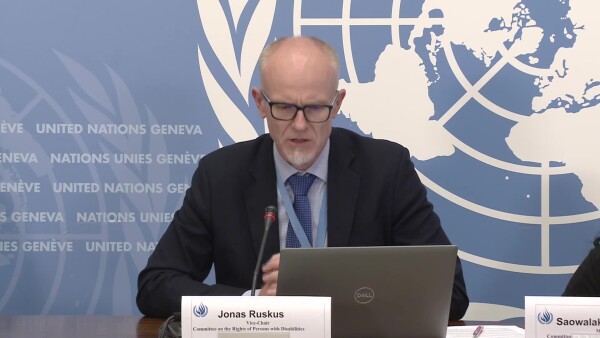
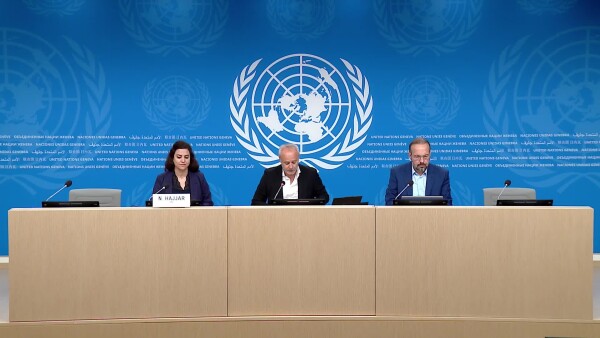
Issuing its special report on the situation of people with disabilities in Ukraine, Jonas Ruskus, Vice-Chair of the Committee said he was “gravely concerned” about the situation of people with disabilities in the country, which was invaded by Russia on 24 February.
Mr. Ruskus told a news conference in Geneva that they are being kept in “inhuman conditions” and their evacuation from residential institutions in conflict areas is not being prioritised.
The CRPD Vice Chair said the committee had information from several disability organizations in the country that at least 12 people with disabilities had died in a residential institution in territory under Russian control.
He urged both Ukraine and Russia to evacuate them immediately and to ensure that the evacuation process is monitored by independent parties.
“Some people with disabilities in Ukraine remain trapped in life-threatening situations and must be evacuated to ensure they can access basic needs like food and heating as winter approaches,” Mr. Raskus told a news conference in Geneva.
Mr. Ruskus reminded all concerned parties of their obligation to ensure that people with disabilities, including in the current situation in Ukraine, have access to services and relief in the community on an equal basis with others.
He urged for rapid de-institutionalisation and investment in community services and called for disabled people's inclusion in decision-making processes when international cooperation funds are used.
Around 2.7 million people lived with a disability in Ukraine before the conflict started. In August, four UN-appointed independent human rights experts warned that Russia’s invasion of Ukraine is having “a disproportionate impact” on persons with disabilities, especially children in institutions there.
The UN experts expressed hope that investments will be made to build community support that will enable children with disabilities to flourish with their families and in family-like situations as opposed to institutions.
“It is our earnest hope that Ukraine will commit itself to a better future for persons with disabilities, especially children,” the experts said.
The CRPD findings were issued on Friday alongside its country reviews on Bangladesh, China*, Indonesia, Japan, the Republic of Korea, Lao People’s Democratic Republic**, New Zealand and Singapore. The report contains the Committee's main concerns and recommendations on implementing the Convention on the Rights of Persons with Disabilities.
ENDS
STORY: Rights of Disabled Persons in Ukraine, CRPD
TRT: 03:38”
SOURCE: UNTV CH
RESTRICTIONS: NONE
LANGUAGE: ENGLISH /NATS
ASPECT RATIO: 16:9
DATELINE: 09 September 2022, GENEVA, SWITZERLAND
SHOTLIST - SOUNDBITES TO COME
1. Exterior wide shot, United Nations flag flying.
2. Wide shot, press briefing.
3. SOUNDBITE: (ENGLISH) Jonas Ruskus, Vice-Chair of the UN Committee on the Rights of Persons with Disabilities:
“ Committee was gravely concerned that people with disabilities were reportedly trapped in the conflict zones and that the evacuation of the residential key institutions in conflict areas was not prioritised.”
4. Mid-shot, attendee typing.
5. SOUNDBITE: (ENGLISH) Jonas Ruskus, Vice-Chair of the UN Committee on the Rights of Persons with Disabilities:
“ Some progress has been made in the country but now, within the context of Russian aggression against Ukraine, that issue of institutionalization became more serious and especially for people with intellectual, psycho-social disabilities including children. ”
6. Mid-shot of attendees at briefing.
7. SOUNDBITE: (ENGLISH) Jonas Ruskus, Vice-Chair of the UN Committee on the Rights of Persons with Disabilities:
“We know well that in emergency situations, as is in Ukraine, institution, become really, the place is dangerous for people with disabilities, particularly for children so we addressed all involved parties and involved organizations in humanitarian aid too, to redirect all allocation, its whole effort to the development of community-based services.”
8. Mid shot of panel.
9. SOUNDBITE: (ENGLISH) Jonas Ruskus, Vice-Chair of the UN Committee on the Rights of Persons with Disabilities:
“We did hear that persons with disabilities have been denied evacuation and access to basic services and we have been informed about one case in one institution that people with disabilities have been denied evacuation and that resulted in the death of at least 12 persons with disabilities placed in institutions.”
10. Wide cameras and computer screens.
11. SOUNDBITE: (ENGLISH) Jonas Ruskus, Vice-Chair of the UN Committee on the Rights of Persons with Disabilities:
“ We received information that people with disabilities, in institutions in territories under the control of the Russian Federation they are being kept in inhuman conditions subjected to ill-treatment and used as human shields by Russian Federation ”
12. Mid-shot of attendees.
13. SOUNDBITE: (ENGLISH) Jonas Ruskus, Vice-Chair of the UN Committee on the Rights of Persons with Disabilities:
“The committee urges Ukraine and Russian Federation to immediately evacuate people with disabilities who remain in residential institutions under Ukraine territory, under respective control and to ensure the evacuation process is monitored by independent parties.”
13. Mid-shot of attendees.
14. SOUNDBITE: (ENGLISH) Jonas Ruskus, Vice-Chair of the UN Committee on the Rights of Persons with Disabilities:
"The committee was concerned about reports that people with disabilities who remain in residential institutions are at severe risk and the access to basic rights such as food and acceptable standards of living, including access to heating in the upcoming winter months are jeopardized. The committee reminded all concerned parties of the obligations to ensure people with disabilities, including in the current situation, have access to services and relief in the communities on an equal basis with others. They are not institutionalized and are meaningfully included in decision-making processes when International cooperation funds are used."
15. Close shot of reporter typing.
16. Mid-shot of attendees at briefing.
Similar Stories
1
1
1
Press Conferences | WMO , UNHCR , WHO , ILO
WMO: Greenhouse Gas Bulletin; UNHCR: As attacks intensify UNHCR urges support for war ravaged Ukrainians; WHO: Clinical trials in DRC: vaccines and beyond; ILO: New global and regional estimates on domestic work, informality and working conditions

1
1
1
Edited News | OCHA , UNICEF , WFP
Aid agencies warned on Friday of the fast-developing humanitarian emergency inside Taiz City in Yemen, which has been encircled by de facto Houthi forces fighting government troops along the country’s west coast.
1
1
1
Press Conferences | UN WOMEN , WFP , WHO
UN WOMEN: Sudan Women and girls one year after the fall of El Fasher; increasing drone attacks across the country; WFP: DRC - Ebola spreads to eighth DRC province as WFP delivers food, builds treatment centres and keeps supplies moving; WHO - Update on Ebola (Bundibugyo Virus Disease)
1
12
1
1
Press Conferences , Images | UNOG
Closing Press Conference following the Sixth Consultative Meeting on Enhancing Coordination of Peace Initiatives and Efforts in Sudan

2
17
1
2
Edited News , Press Conferences , Images | OCHA , WMO
Two UN agencies teamed up on Wednesday to issue an appeal for immediate assistance to help communities already being impacted by the strongest El Niño on record.

3
16
2
2
Edited News , B-roll , Conferences , Images | UNITED NATIONS , UNOG
Sixth Consultative Meeting on Enhancing Coordination of Peace Initiatives and Efforts for Sudan
1
1
1
Press Conferences | CITES
Wildlife trade and conservation policy discussions at the 81st meeting of the CITES Standing Committee (SC81)

1
1
1
Edited News | UNICEF , WHO , UNHCR
Yemen war continues to force families from homes amid hunger and disease
More than 250,000 people have now fled renewed fighting in Yemen, the UN said on Tuesday, citing particular concern for those sheltering in the southwestern city of Taiz and the wider governorate, where access is “essentially blocked”.
1
1
1
Press Conferences | UNHCR , UNCTAD , WMO , OCHA , UNICEF , WHO
UNHCR Hungary’s 1956 Refugee Crisis: 70 Years On, UNCTAD World Investment Forum 2026, Doha, WMO Greenhouse Gas Bulletin and Climate Update for COP31, OCHA Afghanistan: Malnutrition, Girls’ Education and Recovery, UNICEF Yemen: Child Malnutrition and Unsafe Water in Taiz, WHO Inequalities in Noncommunicable Diseases and Risk Factors
1
1
1
Press Conferences | UNHCR
End of UNHCR's 77th Annual Executive Committee (ExCom) meeting week

1
1
1
Edited News | UNICEF
A little over one year since a ceasefire agreement was announced between Hamas fighters and Israel, more than 340 children have been reported killed and hundreds more injured, the UN Children’s Fund, UNICEF, said on Friday.
1
1
1
Press Conferences | UNICEF , IOM , UNHCR
UN Special Assistant to the Personal Envoy Office (SUDAN): Peace Initiatives and Efforts in Sudan; UNICEF: Dire situation of children in Gaza; IOM: Damaged Homes and Energy Attacks Risk Displacing Ukrainians for this winter; UNHCR: update on EXCOM week