

The United Nations Office at Geneva
Multimedia Newsroom
Edited News | WHO
Bi-Weekly Press Briefing: Ukraine: Oxygen Device For Premature Babies UNITAID/WHO
Premature babies can now be supported in Ukraine with new oxygen machines that work without electricity. The development of the devices was financed by Unitaid, a Geneva based global health aid agency which is committed to supplying poorer countries with medicines and other health products. The devices are currently being manufactured in Kenya.
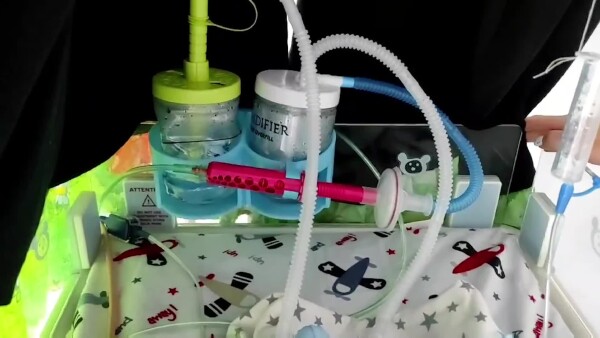
“Global health agency Unitaid through its partner Vayu Global Health, has provided 220 bubble nasal continuous positive airway pressure (bCPAP) devices and 125 oxygen blender systems to supply infants with the breathing support and oxygen therapy that they need », said Hervé Verhoosel, Unitaid’s spokesperson today at a press briefing at the United Nations in Geneva..
Bubble CPAP is a non-invasive way of ventilating newborns who are struggling to breathe. Oxygen blenders prevent eye, lung, and brain damage while giving babies pure oxygen.
The conflict in Ukraine has seen many hospitals damaged or destroyed, and supply chains have been disrupted. This puts thousands of newborns at high-risk of disability or death from a lack of access to oxygen, necessary equipment, and essential treatment.
“The war increases levels of stress in pregnant women which leads to an increase in the number of premature births reported, up to three times more than before the war, depending on the hospital that we are talking with », said Hervé Verhoosel, Unitaid’s spokesperson. “Babies born prematurely are more likely to develop respiratory, neurological and digestive complications, conditions that often require oxygen for treatment.”
The devices are now available in 25 facilities across Ukraine, of which 17 are perinatal centers. Unitaid has provided funding to support Vayu’s bCPAP system through engineering, manufacture and approval by the United States Food and Drug Administration (FDA). The products are manufactured at the cost of 500,- USD each.
“The novel ultra low-cost, portable, electricity-free device, which was granted FDA Emergency Use Authorization to help in the fight against COVID-19 allows for precious delivery of oxygen concentration, flow and pressure that can dramatically improve the outcomes of newborns and infants », said Herve Verhoosel. « These devices can be used worldwide but are particularly well-suited to use in humanitarian crises or low-resource settings.”
The World Health Organization (WHO) has verified more than 400 attacks on hospitals in Ukraine since the beginning of the war in February.
“Every time there is an attack one of the things that happens, is the electricity doesn’t work », said Margaret Harris, Spokesperson for the World Health Organisation (WHO). “I went to a pediatric hospital in Zaporizhia which is, as you know, is very much close to the active fighting line, and they actually sleep every night in the basement, and the kids that they have got on ventilation etc., they have to move, or they try to move. So having very portable devices that can function offline is absolutely critical.”
The bCPAP system is in use in several African countries as well as Belgium and the United States.
Unitaid recalls today that additional funding will be critical to scale up the manufacture and supply of these lifesaving machines more widely.
-ends-
- Medium shot, UN Geneva flag alley.
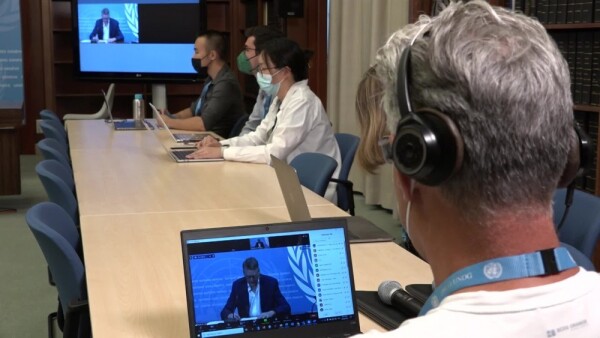
- Wide shot, press room with panel of speakers.
- SOUNDBITE (ENGLISH) Hervé Verhoosel, Spokesperson for UNITAID: “Global health agency UNITAID through its partner Vayu Global Health, has provided 220 bubble nasal continuous positive airway pressure (bCPAP) devices and 125 oxygen blender systems to supply infants with the breathing support and oxygen therapy that they need.”
- Medium shot, Monitor showing the speaker, journalists taking notes.
- SOUNDBITE (ENGLISH) Hervé Verhoosel, Spokesperson for UNITAID: “The war increases levels of stress in pregnant women which leads to an increase in the number of premature births reported, up to three times more than before the war, depending on the hospital that we are talking with. Babies born prematurely are more likely to develop respiratory, neurological and digestive complications, conditions that often require oxygen for treatment.”
- Close-up, journalists taking notes.
- SOUNDBITE (ENGLISH) Hervé Verhoosel, Spokesperson for UNITAID: “The novel ultra low-cost, portable, electricity-free device, which was granted FDA Emergency Use Authorization to help in the fight against COVID-19 allows for precious delivery of oxygen concentration, flow and pressure that can dramatically improve the outcomes of newborns and infants. These devices can be used worldwide, but are particularly well-suited to use in humanitarian crises or low-resource settings.”
- Medium shot, Monitor showing the speaker, journalists taking notes.
- SOUNDBITE (ENGLISH) Margaret Harris, Spokesperson for the World Health Organisation (WHO): “Every time there is an attack, one of the things that happens, is the electricity doesn’t work. I went to a pediatric hospital in Zaporizhia which is, as you know, is very much close to the active fighting line, and they actually sleep every night in the basement, and the kids that they have got on ventilation etc., they have to move or they try to move. So having very portable devices that can function offline is absolutely critical.”
- Close-up, monitor showing the speaker.
- Medium shot, journalists and TV cameras on tripod.
- Medium shot, journalists taking notes.
Similar Stories

1
1
1
Edited News | OCHA , UNICEF , WFP
Aid agencies warned on Friday of the fast-developing humanitarian emergency inside Taiz City in Yemen, which has been encircled by de facto Houthi forces fighting government troops along the country’s west coast.

2
17
1
2
Edited News , Press Conferences , Images | OCHA , WMO
Two UN agencies teamed up on Wednesday to issue an appeal for immediate assistance to help communities already being impacted by the strongest El Niño on record.

3
16
2
2
Edited News , B-roll , Conferences , Images | UNITED NATIONS , UNOG
Sixth Consultative Meeting on Enhancing Coordination of Peace Initiatives and Efforts for Sudan

1
1
1
Edited News | UNICEF , WHO , UNHCR
Yemen war continues to force families from homes amid hunger and disease
More than 250,000 people have now fled renewed fighting in Yemen, the UN said on Tuesday, citing particular concern for those sheltering in the southwestern city of Taiz and the wider governorate, where access is “essentially blocked”.

1
1
1
Edited News | UNICEF
A little over one year since a ceasefire agreement was announced between Hamas fighters and Israel, more than 340 children have been reported killed and hundreds more injured, the UN Children’s Fund, UNICEF, said on Friday.

1
1
1
Edited News | UNICEF , IFRC
Six weeks after Nepal’s deadly flooding disaster, communities are still struggling to rebuild their lives, but they will need sustained help as global warming increases the risk of another Himalayan catastrophe, the UN Children’s Fund (UNICEF) said on Friday.

1
1
1
Edited News | WHO
In suspected Russia plague death, testing and monitoring underway – WHO
The death of a lab worker in Russia’s Siberia region has sparked concerns about plague being the cause, the UN World Health Organization (WHO) said on Tuesday, adding that it was following the situation closely.

1
1
Edited News | OHCHR , UNOG
UN Human Rights Chief Volker Türk on Friday provided and oral update to the 63rd session of the Human rights Council on Ukraine.

1
1
1
Edited News | OHCHR , UNOG
UN Human Rights Chief Volker Türk on Friday provided and oral update to the 63rd session of the Human rights Council on the human rights situation in Haiti.

1
1
1
Edited News | WHO
Repeated delays in bringing lifesaving medicines, prosthetics and more from Israel into Gaza risk having devastating consequences on Palestinians who urgently need them in the wartorn enclave, the UN World Health Organization (WHO) said on Friday. “A truck full of non-priority supplies or the right supplies arriving too late, doesn't save lives. That's the question that actually matters," said Dr Reinhilde Van De Weerdt, WHO Representative in the OPT.

1
1
1
Edited News | WHO
DRC: Early access to care and oxygen decisive for Ebola patients’ survival – WHO
In the Democratic Republic of the Congo (DRC), health workers fighting the country’s largest-ever Ebola outbreak are struggling to overcome critical challenges to patient care, the UN World Health Organization (WHO) warned on Tuesday.

1
1
1
Edited News | OCHA , UN
Civilians in Iran are continuing to feel the consequences of months of conflict and military escalation, the UN’s top official in the country has said, as loss of life, damage to civilian infrastructure and mounting economic pressures leave many facing continued uncertainty.