

The United Nations Office at Geneva
Multimedia Newsroom
Edited News | OHCHR , UNICEF , UNHCR , WHO , IOM
Bi-Weekly Press Briefing: Ukraine Crisis Update UNICEF - WHO - IOM - UNHCR - OHCHR 01 March 2022
STORYLINE
UN humanitarians appeal to military actors to spare people in Ukraine
Well over 600,000 people have fled Ukraine in under a week, since Russia’s “special military action” began, UN humanitarians said on Tuesday, as they issued an appeal to protect civilians from further bloodshed.
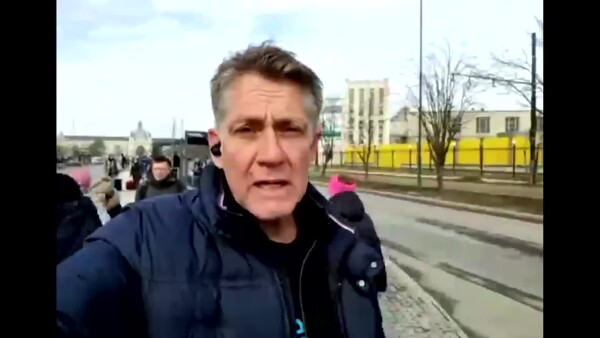
“We know that children have been killed, we know that thousands and thousands are at risk and we know that more children, gut-wrenchingly, are going to die or be injured in this unless fighting ends,” said UN Children’s Fund (UNICEF) spokesperson James Elder.
Speaking over his mobile phone from western Ukraine, where an exodus of families, students and migrants have been making their way westwards towards Poland, among other neighbouring countries, Mr. Elder said that the military escalation that has been reported across several Ukrainian cities would result in more children being separated from their families. “We’re going to see more fathers handing children across to border guards in Poland,” he added.
Needs remain high within Ukraine, in areas most affected by the violence, Mr. Elder insisted, as widely relayed images showed what appeared to be a Russian military convoy approaching Kiev, stretching back some 60 kilometres.
“The essential aim is to expand that support across Ukraine, we need that support now because the conflict is got out of the east, we need that to be across the other major cities,” said Mr. Elder. “Right now, our support focuses on those people going to the border, getting support to Poland and Romania, we have trucks as we speak getting to the border in Poland and Romania with emergency healthcare sanitation, education support and as I say, psychological support.”
The development came as the UN agency’s Executive Director, Catherine Russell, said that children had been killed and injured, citing reports that “hospitals, schools, water and sanitation facilities and orphanages had come under fire”, with explosive weapons being used in residential areas.
According to the UN migration agency (IOM) and UN refugee agency (UNHCR), well over 600,000 have already fled the deadly and deteriorating situation inside Ukraine.
“As you know the numbers are exponentially increasing, we have now over 660,000 refugees who have fled Ukraine in last six days alone,” said UNHCR spokesperson Shabia Mantoo. “At this rate, the situation looks set to become Europe’s largest refugee crisis this century and UNHCR is mobilising resources to respond as quickly and as effectively as possible.”
Echoing that message, IOM spokesperson Safa Msehli noted that there were also an estimated “470,000 third-country nationals in Ukraine, including a large overseas students and labour migrants”.
Many remain stranded inside Ukraine, although at least 6,000 third-country nationals have arrived in Moldova and Slovakia alone, Ms. Msehli said.
She noted that several States had requested the UN agency’s assistance to help return their citizens to Africa, the Middle East and Asia. “More than 50 Tunisian nationals who crossed into Moldova are being assisted by IOM to relocate to Romania before they return home through a charter flight, in coordination with relevant authorities,” Ms. Msehli added.
Highlighting concerns that hospitals, health workers and sick people have been targeted in the Russian “offensive”, the World Health Organization (WHO) insisted on the sanctity of civilians and civilian infrastructure.
“We are concerned about reports on attacks on health. We have received several unconfirmed reports of attacks on hospitals and health infrastructure, but only the attack on 24 February has been verified,” said Christian Lindmeier, WHO spokesperson.
Since the start of the hostilities on 24 February and midnight on 1 March, the UN rights office, OHCHR, has confirmed 536 civilian casualties across Ukraine, including 136 civilians killed, of whom 13 were children.
“Most of these casualties were caused by the use of explosive weapons with a wide impact area,” said OHCHR spokesperson Liz Throssell. “This includes shelling from heavy artillery and multiple launch rocket systems and airstrikes.”
Ms. Throssell repeated the High Commissioner’s warning that the use of such explosive weapons should be avoided in populated areas, owing to the “very high risks of indiscriminate and disproportionate impact on civilians. We stress the urgent need for an immediate cessation of hostilities.”
Away from the violence and bloodshed, solidarity for “everyday Ukrainians” with most of the newly displaced has been “extraordinary”, UNICEF’s Mr. Elder reported.
“I’ve seen grandmothers cooking food in the road, I see people offering a bed to those at the train station, I’ve seen teenage girls making cookies and knocking on car doors offering them to people who’ve come and spent three days covering the 500 kilometres from Kiev.”
Nonetheless, UN officials have condemned reports that many foreign students from Africa and migrants living and working in Ukraine have been mistreated and abused by officials while trying to join the exodus.
“Discrimination and racism are absolute wrongs and the High Commissioner (of Human Rights) and our Office have been very vocal in calling this out,” said Liz Throssell, spokesperson for the High Commissioner for Human Rights (OHCHR).
“With regard to the situation that may be happening on the borders, that is clearly something to be monitored,” she said. “But I think the call would be that everyone should be allowed to enter (a foreign country) without discrimination based on race or ethnicity.”
ends
STORY: Ukraine Update – UNICEF, WHO, IOM, UNHCR, OHCHR
TRT: 3 mins 13s
SOURCE: UNTV CH
RESTRICTIONS: NONE
LANGUAGE: ENGLISH / NATS
ASPECT RATIO: 16:9
DATELINE: 01 March 2022 GENEVA, SWITZERLAND
SHOTLIST
- Exterior wide shot, UN flag alley UN Geneva.
- Wide shot, press room UN Geneva, podium speakers, seated, with TV screen on the left and right side.
- James Elder, spokesperson, UN Children's Fund (UNICEF) (mobile phone footage, western Ukraine): “We know that children have been killed, we know that thousands and thousands are at risk, and we know that more children, gut-wrenchingly, are going to die or be injured in this unless fighting ends. And right now, we’ve seen an escalation across those cities…and that’s part of that, we’re going to see more children separated from families, more fathers handing children across to border guards in Poland.”
- Medium shot, TV screen showing speaker in the foreground with participant to rear.
- James Elder, spokesperson, UN Children's Fund (UNICEF) (mobile phone footage, western Ukraine): “The support of everyday Ukrainians has been extraordinary. I’ve seen grandmothers cooking food in the road, I see people offering a bed to those at the train station, there are teenage girls making cookies and knocking on car doors offering them to people who’ve come and spent three days covering the 500 kilometres from Kiev.”
- Medium shot, participants listening in the foreground with studio light to rear.
- James Elder, spokesperson, UN Children's Fund (UNICEF) (mobile phone footage, western Ukraine): “Right now, our support focuses on those people going to the border, getting support going to Poland and Romania. We have trucks as we speak getting to the border in Poland and Romania with emergency healthcare, sanitation, education support. And as I say, psychological support.”
- Medium shot, TV screen showing remote speaker in foreground, podium speakers to rear.
- James Elder, spokesperson, UN Children's Fund (UNICEF) (mobile phone footage, western Ukraine): “The essential aim is to expand that support across Ukraine. We need that support now because the conflict is got out of the east. We need that to be across the other major cities.”
- Medium shot, TV screen showing speakers, podium speakers to right of shot.
- Christian Lindmeier, spokesperson, World Health Organization (WHO): “We are concerned about reports on attacks on health. We have received several unconfirmed reports of attacks on hospitals and health infrastructure, but only the attack on 24 February has been verified.”
- Medium shot, showing part of TV screen, with podium speakers and participants to rear.
- Safa Msehli, spokesperson, International Organization for Migration (IOM): “At least 600,000 people fled Ukraine in the past five days following the start of the military operations and the escalation of hostilities. There are also an estimated 470,000 third-country nationals in Ukraine, including a large number of overseas students and labour migrants.”
- Plunging wide shot, press room UN Geneva, podium speakers and participants seated.
- Shabia Mantoo, spokesperson,UN High Commissioner for Refugees (UNHCR): “At this rate, the situation looks set to become Europe’s largest refugee crisis this century and UNHCR is mobilising resources to respond as quickly and as effectively as possible.”
- Medium shot, participants listening in foreground with TV screen showing podium speakers to rear.
- Liz Throssell, spokesperson, Office of the United Nations High Commissioner for Human Rights (OHCHR): “With regard to the situation that may be happening on the borders, that is clearly something to be monitored, but I think the call would be that everyone should be allowed to enter without discrimination based on race or ethnicity.”
- Medium shot, TV screen showing speakers in foreground with studio lighting and seated participant in rear.
- Liz Throssell, spokesperson, Office of the United Nations High Commissioner for Human Rights (OHCHR): “Most of these casualties were caused by the use of explosive weapons with a wide impact area as I said earlier. And this includes shelling from heavy artillery and multiple launch rocket systems and airstrikes.”
- Plunging wide shot, press room UN Geneva, podium speakers and participants.
- Wide shot, podium speakers from floor level.
- Medium shot, podium speakers seated and taking notes.
- Medium shot, participant taking notes on laptop.
Similar Stories

1
1
1
Edited News | OCHA , UNICEF , WFP
Aid agencies warned on Friday of the fast-developing humanitarian emergency inside Taiz City in Yemen, which has been encircled by de facto Houthi forces fighting government troops along the country’s west coast.

2
17
1
2
Edited News , Press Conferences , Images | OCHA , WMO
Two UN agencies teamed up on Wednesday to issue an appeal for immediate assistance to help communities already being impacted by the strongest El Niño on record.

3
16
2
2
Edited News , B-roll , Conferences , Images | UNITED NATIONS , UNOG
Sixth Consultative Meeting on Enhancing Coordination of Peace Initiatives and Efforts for Sudan

1
1
1
Edited News | UNICEF , WHO , UNHCR
Yemen war continues to force families from homes amid hunger and disease
More than 250,000 people have now fled renewed fighting in Yemen, the UN said on Tuesday, citing particular concern for those sheltering in the southwestern city of Taiz and the wider governorate, where access is “essentially blocked”.

1
1
1
Edited News | UNICEF
A little over one year since a ceasefire agreement was announced between Hamas fighters and Israel, more than 340 children have been reported killed and hundreds more injured, the UN Children’s Fund, UNICEF, said on Friday.

1
1
1
Edited News | UNICEF , IFRC
Six weeks after Nepal’s deadly flooding disaster, communities are still struggling to rebuild their lives, but they will need sustained help as global warming increases the risk of another Himalayan catastrophe, the UN Children’s Fund (UNICEF) said on Friday.

1
1
1
Edited News | WHO
In suspected Russia plague death, testing and monitoring underway – WHO
The death of a lab worker in Russia’s Siberia region has sparked concerns about plague being the cause, the UN World Health Organization (WHO) said on Tuesday, adding that it was following the situation closely.

1
1
Edited News | OHCHR , UNOG
UN Human Rights Chief Volker Türk on Friday provided and oral update to the 63rd session of the Human rights Council on Ukraine.

1
1
1
Edited News | OHCHR , UNOG
UN Human Rights Chief Volker Türk on Friday provided and oral update to the 63rd session of the Human rights Council on the human rights situation in Haiti.

1
1
1
Edited News | WHO
Repeated delays in bringing lifesaving medicines, prosthetics and more from Israel into Gaza risk having devastating consequences on Palestinians who urgently need them in the wartorn enclave, the UN World Health Organization (WHO) said on Friday. “A truck full of non-priority supplies or the right supplies arriving too late, doesn't save lives. That's the question that actually matters," said Dr Reinhilde Van De Weerdt, WHO Representative in the OPT.

1
1
1
Edited News | WHO
DRC: Early access to care and oxygen decisive for Ebola patients’ survival – WHO
In the Democratic Republic of the Congo (DRC), health workers fighting the country’s largest-ever Ebola outbreak are struggling to overcome critical challenges to patient care, the UN World Health Organization (WHO) warned on Tuesday.

1
1
1
Edited News | OCHA , UN
Civilians in Iran are continuing to feel the consequences of months of conflict and military escalation, the UN’s top official in the country has said, as loss of life, damage to civilian infrastructure and mounting economic pressures leave many facing continued uncertainty.