

The United Nations Office at Geneva
Multimedia Newsroom
Gaza: A ceasefire that ‘still buries children’ is not enough, says UNICEF
Airstrikes, drone strikes and hypothermia are among the lethal conditions prevailing in Gaza despite the ceasefire, with more than 100 children killed since early October, the UN Children’s Fund (UNICEF) said on Tuesday.
“That's roughly a girl or a boy killed here every day during a ceasefire,” UNICEF spokesperson James Elder told reporters in Geneva.
“These children are killed from airstrikes, drone strikes, including suicide drones,” he said, speaking from Gaza City. “They’re killed from tank shelling. They’re killed from live ammunition. They’re killed from [remote-controlled] quadcopters.”
Mr. Elder pointed out that more children have died of hypothermia in the last few days. “We’ve now gone to six children who died of hypothermia just this winter,” he said. “I wish I could take a camera and show you 30, 40-kilometre [per hour] winds ripping through tents on the beach. It's bitterly cold. It's bitterly wet.”
The UNICEF spokesperson stressed that the ceasefire has allowed “genuine progress” in primary healthcare, with UNICEF and partners setting up the first health clinics in the north of the Strip and expanding immunization services. But desperately needed medical evacuations of children remain at a standstill.
Mr. Elder noted “no noticeable improvement” both on approvals to get children with life-threatening injuries out of Gaza and to have host countries take in those children.
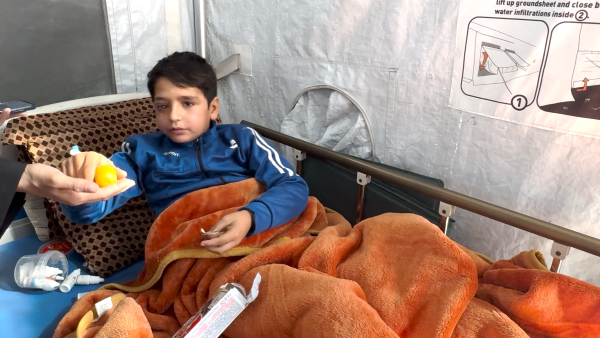
He said that in his latest mission to the enclave, he spoke to many children and families denied evacuation despite completing an arduous, formal process, including a nine-year-old with shrapnel lodged in his eye who “will lose sight in an eye, maybe both”, and a girl in Al Shifa hospital in Gaza City who “may well die”.
The UNICEF spokesperson also highlighted the dangers of a recent Israeli ban on international NGOs, which will come into effect in the coming month and mean “blocking life-saving assistance”, he alleged. Mr. Elder also stressed the importance of allowing international media into the enclave, which has not been granted despite the ceasefire.
“There needs to be a lot more pressure on allowing international journalists to come in,” he said. “This is my seventh mission [to Gaza] and every time I see the 360-degree devastation, flattening of homes, my jaw drops.”
“It is absolutely as staggering yesterday as it was the first time I saw it more than two years ago,” he insisted.
Mr. Elder warned that two years of war have “left life for Gaza's children unimaginably hard,” explaining that “the psychological damage remains untreated, and it's becoming deeper and harder to heal, the longer this goes on”.
“A ceasefire that slows the bombs is progress, but one that still buries children is not enough,” he concluded.
-ENDS-
STORY Gaza ceasefire deaths – UNICEF
TRT: 2:59”
SOURCE: UNTV CH AND UNICEF
RESTRICTIONS: NONE
LANGUAGE: ENGLISH/NATS
ASPECT RATIO: 16:9
DATELINE: 13 JANUARY 2026 GENEVA, SWITZERLAND; 10 JANUARY 2026 KHAN YOUNIS, GAZA – credit UNICEF
1. Exterior wide shot: Palais des Nations, Flag Alley.
2. Wide shot: Speakers at the podium of the press conference, speaker on screens; journalists in the Press room.
3. SOUNDBITE (English) – James Elder, spokesperson, UN Children’s Fund (UNICEF): More than 100 children have been killed in Gaza since the cease-fire of early October. That's roughly a girl or a boy killed here every day during a cease-fire.”
4. Wide shot: Speaker on screens; journalists in the Press room.
5. SOUNDBITE (English) – James Elder, spokesperson, UN Children’s Fund (UNICEF): “These children are killed from airstrikes, drone strikes, including suicide drones. They're killed from tank shelling. They're killed from live ammunition. They're killed from quadcopters.”
6. Medium shot: Journalists in the Press room.
7. SOUNDBITE (English) – James Elder, spokesperson, UN Children’s Fund (UNICEF): “We've had children die of hypothermia again in the last few days, so we've now gone to six children who died of hypothermia just in this winter. I mean, it's bleak outside now. I wish I could take a camera and show you 30, 40-kilometre winds ripping through tents on the beach, it's bitterly cold. It's bitterly wet.”
8. Medium shot: Speakers at the podium of the press conference, speaker on screens; journalists in the Press room.
9. SOUNDBITE (English) – James Elder, spokesperson, UN Children’s Fund (UNICEF): “I have spoken even in this last trip to many, many children and families, who either, if I think of yesterday, the child will have his leg amputated. The boy we mentioned today, Abid Al Rahman, he will lose sight in an eye, maybe both. The girl in Shifa hospital may well die. All three of those are absolute candidates for medical evacuation. All three of those have so far been denied.”
10. Medium shot: Speakers at the podium of the press conference; speaker on screens.
11. SOUNDBITE (English) – James Elder, spokesperson, UN Children’s Fund (UNICEF): “There needs to be a lot more pressure on allowing international journalists to come in. And I say that because this is my seventh mission and every time I see the 360-degree devastation, flattening, flattening of homes, of homes, my jaw drops. It is absolutely as staggering yesterday as it was the first time I saw it more than two years ago.”
12. Medium-wide shot: Journalists in the Press room.
13. SOUNDBITE (English) – James Elder, spokesperson, UN Children’s Fund (UNICEF): “Two years of war has left life for Gaza's children unimaginably hard. They still live in fear. The psychological damage remains untreated, and it's becoming deeper and harder to heal the longer this goes on. A cease-fire that slows the bombs is progress, but one that still buries children is not enough.”
14. Various shots of journalists in the Press room.
15. UNICEF B-Roll: 10 January 2026, Medium shots: Nasser Hospital, Khan Younis: Abid Al Rahman, nine years old, with a shrapnel injury in his eye – credit UNICEF.
Similar Stories

1
1
1
Edited News | OCHA , UNICEF , WFP
Aid agencies warned on Friday of the fast-developing humanitarian emergency inside Taiz City in Yemen, which has been encircled by de facto Houthi forces fighting government troops along the country’s west coast.

2
17
1
2
Edited News , Press Conferences , Images | OCHA , WMO
Two UN agencies teamed up on Wednesday to issue an appeal for immediate assistance to help communities already being impacted by the strongest El Niño on record.

3
16
2
2
Edited News , B-roll , Conferences , Images | UNITED NATIONS , UNOG
Sixth Consultative Meeting on Enhancing Coordination of Peace Initiatives and Efforts for Sudan

1
1
1
Edited News | UNICEF , WHO , UNHCR
Yemen war continues to force families from homes amid hunger and disease
More than 250,000 people have now fled renewed fighting in Yemen, the UN said on Tuesday, citing particular concern for those sheltering in the southwestern city of Taiz and the wider governorate, where access is “essentially blocked”.

1
1
1
Edited News | UNICEF
A little over one year since a ceasefire agreement was announced between Hamas fighters and Israel, more than 340 children have been reported killed and hundreds more injured, the UN Children’s Fund, UNICEF, said on Friday.

1
1
1
Edited News | UNICEF , IFRC
Six weeks after Nepal’s deadly flooding disaster, communities are still struggling to rebuild their lives, but they will need sustained help as global warming increases the risk of another Himalayan catastrophe, the UN Children’s Fund (UNICEF) said on Friday.

1
1
1
Edited News | WHO
In suspected Russia plague death, testing and monitoring underway – WHO
The death of a lab worker in Russia’s Siberia region has sparked concerns about plague being the cause, the UN World Health Organization (WHO) said on Tuesday, adding that it was following the situation closely.

1
1
Edited News | OHCHR , UNOG
UN Human Rights Chief Volker Türk on Friday provided and oral update to the 63rd session of the Human rights Council on Ukraine.

1
1
1
Edited News | OHCHR , UNOG
UN Human Rights Chief Volker Türk on Friday provided and oral update to the 63rd session of the Human rights Council on the human rights situation in Haiti.

1
1
1
Edited News | WHO
Repeated delays in bringing lifesaving medicines, prosthetics and more from Israel into Gaza risk having devastating consequences on Palestinians who urgently need them in the wartorn enclave, the UN World Health Organization (WHO) said on Friday. “A truck full of non-priority supplies or the right supplies arriving too late, doesn't save lives. That's the question that actually matters," said Dr Reinhilde Van De Weerdt, WHO Representative in the OPT.

1
1
1
Edited News | WHO
DRC: Early access to care and oxygen decisive for Ebola patients’ survival – WHO
In the Democratic Republic of the Congo (DRC), health workers fighting the country’s largest-ever Ebola outbreak are struggling to overcome critical challenges to patient care, the UN World Health Organization (WHO) warned on Tuesday.

1
1
1
Edited News | OCHA , UN
Civilians in Iran are continuing to feel the consequences of months of conflict and military escalation, the UN’s top official in the country has said, as loss of life, damage to civilian infrastructure and mounting economic pressures leave many facing continued uncertainty.