

The United Nations Office at Geneva
Multimedia Newsroom
Sudan war leaves 700,000 children facing life-threatening malnutrition
A staggering 700,000 children in Sudan face the worst and most life-threatening form of hunger after 300 days of war, UN humanitarians warned on Friday.
Earlier this week the UN aid coordination office, OCHA, appealed for $2.7 billion to meet most urgent needs inside Sudan, but the appeal is just four per cent funded.
This is despite repeated dire warnings about the scale and severity of the hunger and displacement crisis in Sudan, after rival Sudanese militaries embarked on a brutal conflict last April.
Both forces have since refused to heed regional and international calls for peace.
“The world’s largest displacement of children has been seen in Sudan,” said UN Children’s Fund spokesperson James Elder. “Four million children have been displaced, that’s 13,000 children every single day, for 300 days. Safety, gone, worldly possessions, gone. Friends and family members separated or lost. Hope, fading.”
Describing his visit last week to Sudan’s Darfurs, Mr. Elder told journalists in Geneva that of the more than 700,000 children who are likely to suffer severe acute malnutrition - the most dangerous form of hunger - UNICEF “won't be able to treat more than 300,000 of those without improved access and without additional support. In that case, tens of thousands would likely die.”
International efforts to help the people of Sudan and Sudanese refugees include Wednesday’s joint appeal by OCHA and the UN refugee agency, UNHCR. Assistance can’t come too soon for dangerously malnourished under-fives, warned the UN health agency’s Tarik Jasarevic, who stressed the immediate positive impact on removing all aid obstacles.
“These babies can recover very quickly. If there is a possibility to provide them with therapeutic feeding, babies in matter of few days can go from the brink of death to be playing, you know, in those centres.”
In addition to millions of people uprooted by the conflict and life-threatening hunger, the people of Sudan have also endured a 500 per cent increase in verified cases of killings, sexual violence and recruitment into armed groups compared with a year ago. “That equates to a terrifying number of children killed, raped or recruited. And these numbers are, of course, the tip of the iceberg,” Mr. Elder said.
“This, is a war destroying health and nutrition systems, and that is killing people,” he insisted. “This is a war destroying the concept of respect for the laws of war, and that is killing people. This is a war destroying families’ ability to feed and protect themselves, and that is killing people. But this is also a war destroying opportunity, and that destroys a country and the future of an entire generation.”
STORY: Sudan child nutrition alert: UNICEF, WHO
TRT: 1 min 46s
SOURCE: UNTV CH
RESTRICTIONS: NONE
LANGUAGE: ENGLISH / NATS
ASPECT RATIO: 16:9
DATELINE: 9 FEBRUARY 2024 GENEVA, SWITZERLAND
SHOTLIST
1. Exterior medium shot: UN flag alley
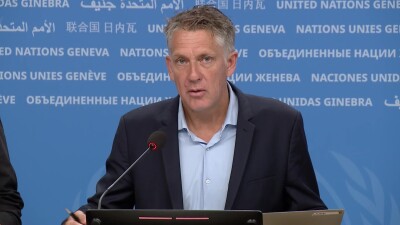
2. Wide shot: speakers at the podium during a press conference
3. SOUNDBITE (English) – James Elder, UN Children’s Fund (UNICEF) spokesperson: “More than 700,000 children are likely to suffer the most dangerous form of malnutrition this year. UNICEF won't be able to treat more than 300,000 of those without improved access and without additional support. In that case, tens of thousands would likely die.”
4. Medium shot: press room with journalists
5. SOUNDBITE (English) – James Elder, UN Children’s Fund (UNICEF) spokesperson: “There's been a fivefold increase in verified cases of killings, sexual violence and recruitment from a year ago. That equates to a terrifying number of children killed, raped or recruited. And these numbers are, of course, the tip of the iceberg.”
6. Medium shot: press room with journalists
7. SOUNDBITE (English) – Tarik Jasarevic, UN World Health Organization (WHO) spokesperson: “These babies can recover very quickly. If there is a possibility to provide them with therapeutic feeding, babies in matter of few days can go from the brink of death to be playing, you know, in those centres.”
8. Medium shot: journalist at work
9. SOUNDBITE (English) – James Elder, UN Children’s Fund (UNICEF) spokesperson: “All parties have have restricted the movement of aid. So, the operating context could not be more difficult. The fighting continues, there are catastrophic levels of need. The funding nowhere near matches these. And then when we get aid with brave partners on the ground to move it, it can frustratingly and life-threateningly not move for two months.”
10. Medium shot: journalist at work
11. Wide shot: producers at work
12. Medium shot: press room with journalists
Similar Stories

1
1
1
Edited News | OCHA , UNICEF , WFP
Aid agencies warned on Friday of the fast-developing humanitarian emergency inside Taiz City in Yemen, which has been encircled by de facto Houthi forces fighting government troops along the country’s west coast.

2
17
1
2
Edited News , Press Conferences , Images | OCHA , WMO
Two UN agencies teamed up on Wednesday to issue an appeal for immediate assistance to help communities already being impacted by the strongest El Niño on record.

3
16
2
2
Edited News , B-roll , Conferences , Images | UNITED NATIONS , UNOG
Sixth Consultative Meeting on Enhancing Coordination of Peace Initiatives and Efforts for Sudan

1
1
1
Edited News | UNICEF , WHO , UNHCR
Yemen war continues to force families from homes amid hunger and disease
More than 250,000 people have now fled renewed fighting in Yemen, the UN said on Tuesday, citing particular concern for those sheltering in the southwestern city of Taiz and the wider governorate, where access is “essentially blocked”.

1
1
1
Edited News | UNICEF
A little over one year since a ceasefire agreement was announced between Hamas fighters and Israel, more than 340 children have been reported killed and hundreds more injured, the UN Children’s Fund, UNICEF, said on Friday.

1
1
1
Edited News | UNICEF , IFRC
Six weeks after Nepal’s deadly flooding disaster, communities are still struggling to rebuild their lives, but they will need sustained help as global warming increases the risk of another Himalayan catastrophe, the UN Children’s Fund (UNICEF) said on Friday.

1
1
1
Edited News | WHO
In suspected Russia plague death, testing and monitoring underway – WHO
The death of a lab worker in Russia’s Siberia region has sparked concerns about plague being the cause, the UN World Health Organization (WHO) said on Tuesday, adding that it was following the situation closely.

1
1
Edited News | OHCHR , UNOG
UN Human Rights Chief Volker Türk on Friday provided and oral update to the 63rd session of the Human rights Council on Ukraine.

1
1
1
Edited News | OHCHR , UNOG
UN Human Rights Chief Volker Türk on Friday provided and oral update to the 63rd session of the Human rights Council on the human rights situation in Haiti.

1
1
1
Edited News | WHO
Repeated delays in bringing lifesaving medicines, prosthetics and more from Israel into Gaza risk having devastating consequences on Palestinians who urgently need them in the wartorn enclave, the UN World Health Organization (WHO) said on Friday. “A truck full of non-priority supplies or the right supplies arriving too late, doesn't save lives. That's the question that actually matters," said Dr Reinhilde Van De Weerdt, WHO Representative in the OPT.

1
1
1
Edited News | WHO
DRC: Early access to care and oxygen decisive for Ebola patients’ survival – WHO
In the Democratic Republic of the Congo (DRC), health workers fighting the country’s largest-ever Ebola outbreak are struggling to overcome critical challenges to patient care, the UN World Health Organization (WHO) warned on Tuesday.

1
1
1
Edited News | OCHA , UN
Civilians in Iran are continuing to feel the consequences of months of conflict and military escalation, the UN’s top official in the country has said, as loss of life, damage to civilian infrastructure and mounting economic pressures leave many facing continued uncertainty.