

The United Nations Office at Geneva
Multimedia Newsroom
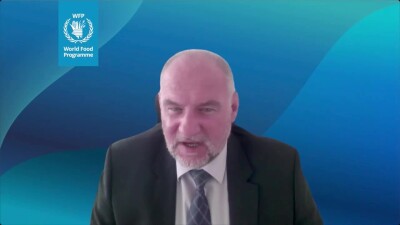
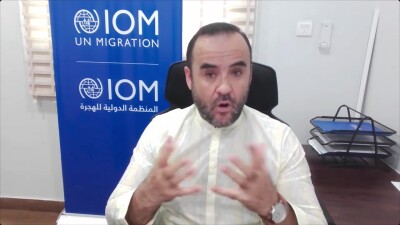
Les pénuries de financement et d'approvisionnement pour le travail du Programme alimentaire mondial (PAM) de l'ONU en Éthiopie mettront fin au traitement vital pour 650 000 femmes et enfants malnutris à la fin du mois. « Nous sommes à un point de rupture,» a-t-il déclaré mardi.
Au total, 3,6 millions de personnes « les plus vulnérables » en Éthiopie risquent de perdre l'assistance alimentaire et nutritionnelle du PAM à moins que le financement n'arrive de toute urgence, a averti Zlatan Milisic, le directeur national de l'agence de l'ONU.
« Plus de 10 millions de personnes en Éthiopie sont en situation d'insécurité alimentaire aiguë. Cela inclut trois millions de personnes déplacées par le conflit et les conditions météorologiques extrêmes. Les taux de malnutrition sont alarmants,» a-t-il déclaré aux journalistes à Genève via vidéoconférence.
Plus de quatre millions de femmes enceintes, de femmes allaitantes et de jeunes enfants ont besoin de traitement pour la malnutrition en Éthiopie. Dans les régions de Somali, Oromia, Afar et Tigray, le taux de dépérissement des enfants a dépassé le seuil d'urgence de 15 pour cent.
Le PAM avait prévu d'atteindre deux millions de mères et d'enfants avec une assistance nutritionnelle vitale en 2025, mais il a été contraint de réduire les coûts après n'avoir reçu que la moitié du financement de l'année dernière.
« Ce qui est particulièrement important maintenant, c'est que nos aliments nutritifs sont en train de s'épuiser,» a expliqué M. Milisic. « Donc, nous arrêtons ce programme à moins que quelque chose n'arrive vraiment vite et nous cherchons et nous espérons, mais rien n'est encore arrivé.»
Au cours des trois premiers mois de l'année, le PAM a fourni un soutien alimentaire et nutritionnel à plus de trois millions de personnes. Cela inclut 740 000 enfants et femmes enceintes et allaitantes souffrant de malnutrition.
Comme pour d'autres crises humanitaires touchées par des réductions de financement, l'agence de l'ONU a réduit les rations alimentaires pour atteindre les communautés les plus vulnérables. Au cours des 18 derniers mois, cela a signifié donner 60 pour cent des rations à la plupart des 800 000 réfugiés que le PAM sert et 80 pour cent des rations aux « déplacés et en insécurité alimentaire - certains en insécurité alimentaire sévère - Éthiopiens depuis les neuf derniers mois,» a poursuivi M. Milisic.
Citant les défis d'accès pour les humanitaires dans la région d'Amhara où le conflit se poursuit, le responsable du PAM a noté que les opérations d'aide avaient été perturbées, menaçant les approvisionnements en secours pour plus de 500 000 personnes. « Le détournement de voitures, les menaces et les vols sont en augmentation et posent de sérieux risques pour la sécurité du personnel et affectent la livraison de l'aide vitale,» a-t-il poursuivi.
Les combats se poursuivent également dans la région d'Oromia et les tensions montent au Tigray, où la guerre civile a tué environ 500 000 personnes de 2020 à 2022 alors que le Front de libération du peuple du Tigray (TPFL) combattait l'armée fédérale.
Malgré la situation difficile en matière de financement et de sécurité, le PAM continue de fournir des repas scolaires quotidiens à 470 000 enfants chaque mois. Cela inclut 70 000 enfants issus de communautés de réfugiés – avec les zones touchées par le conflit et en insécurité alimentaire étant le centre des efforts de secours dans le nord de l'Éthiopie.
Le PAM aide également les communautés à se préparer et à protéger leurs moyens de subsistance dans les régions sujettes à la sécheresse d'Oromia, Somali et du Sud, ciblant plus de 200 000 personnes avec des messages d'alerte précoce et des transferts d'argent.
L'agence a besoin de 222 millions de dollars entre maintenant et septembre pour maintenir ses opérations et atteindre son objectif de 7,2 millions de personnes cette année.
« Nous avons les équipes, la logistique, les capacités en place, les partenaires, notre personnel ; ce qui nous manque, ce sont les ressources pour agir et l'ampleur que cette situation exige,» a déclaré M. Milisic.
fin
HISTOIRE : Éthiopie – PAM
TRT : 02’08”
SOURCE : UNTV CH
RESTRICTIONS : AUCUNE
LANGUE : ANGLAIS / NATS
RATIO D'ASPECT : 16:9
DATELINE : 22 AVRIL 2025 GENÈVE, SUISSE
Orateur :
- Zlatan Milisic, Directeur de pays en Éthiopie (depuis Addis-Abeba)
LISTE DE PLANS
- Plan moyen extérieur : Palais des Nations, Allée des Drapeaux
- Large, Salle de presse, journalistes, cabines de contrôle.
- EXTRAIT SONORE (Anglais) – Zlatan Milisic, Directeur de pays en Éthiopie : « Plus de 10 millions de personnes en Éthiopie sont en situation d'insécurité alimentaire aiguë. Cela inclut trois millions de personnes déplacées par les conflits et les conditions météorologiques extrêmes. Les taux de malnutrition sont alarmants.»
- Moyen, journalistes.
- EXTRAIT SONORE (Anglais) – Zlatan Milisic, Directeur de pays en Éthiopie : « Au total, plus de quatre millions de femmes enceintes, de femmes allaitantes et de jeunes enfants ont besoin d'un traitement contre la malnutrition. Dans certaines régions. Les régions Somali, Oromia, Afar et Tigray, le dépérissement des enfants a dépassé le seuil d'urgence de 15 pour cent.»
- Large, podium, journalistes.
- EXTRAIT SONORE (Anglais) – Zlatan Milisic, Directeur de pays en Éthiopie : « Nous sommes maintenant à un point de rupture. Nous n'avons eu d'autre choix que de suspendre complètement le traitement pour 650 000 femmes et enfants malnutris, simplement parce que nous avons épuisé les marchandises et les financements.»
- Moyen-large, journalistes, écran de télévision montrant l'orateur à distance.
- EXTRAIT SONORE (Anglais) – Zlatan Milisic, Directeur de pays en Éthiopie : « Nous fonctionnons maintenant avec environ 50 pour cent du financement de l'année dernière. Cela signifie que 3,6 millions de personnes vulnérables pourraient perdre l'accès à l'aide du PAM dans les semaines à venir, à moins que des financements n'arrivent de toute urgence.»
- Large, podium, journalistes, écrans de télévision montrant l'orateur à distance.
- EXTRAIT SONORE (Anglais) – Zlatan Milisic, Directeur de pays en Éthiopie : « Ce qui est particulièrement important maintenant, c'est que nos aliments nutritifs s'épuisent. Donc, nous arrêtons ce programme à moins que quelque chose n'arrive vraiment vite et nous cherchons et nous avons de l'espoir, mais rien n'est encore arrivé.»
- Moyen, orateur au podium, journalistes, écran de télévision montrant l'orateur à distance.
- EXTRAIT SONORE (Anglais) – Zlatan Milisic, Directeur de pays en Éthiopie : « Le PAM a besoin de 222 millions de dollars entre maintenant et septembre pour maintenir nos opérations et en fait augmenter pour atteindre notre objectif de 7,2 millions de personnes dans l'année.»
- Moyen, journaliste.
- Moyen, journaliste.
- Moyen, journaliste.
Similar Stories
1
1
1
Edited News | UNICEF , WHO , UNHCR
Yemen war continues to force families from homes amid hunger and disease
More than 250,000 people have now fled renewed fighting in Yemen, the UN said on Tuesday, citing particular concern for those sheltering in the southwestern city of Taiz and the wider governorate, where access is “essentially blocked”.

1
1
1
Edited News | UNICEF
A little over one year since a ceasefire agreement was announced between Hamas fighters and Israel, more than 340 children have been reported killed and hundreds more injured, the UN Children’s Fund, UNICEF, said on Friday.

1
1
1
Edited News | UNICEF , IFRC
Six weeks after Nepal’s deadly flooding disaster, communities are still struggling to rebuild their lives, but they will need sustained help as global warming increases the risk of another Himalayan catastrophe, the UN Children’s Fund (UNICEF) said on Friday.

1
1
1
Edited News | WHO
In suspected Russia plague death, testing and monitoring underway – WHO
The death of a lab worker in Russia’s Siberia region has sparked concerns about plague being the cause, the UN World Health Organization (WHO) said on Tuesday, adding that it was following the situation closely.

1
1
Edited News | OHCHR , UNOG
UN Human Rights Chief Volker Türk on Friday provided and oral update to the 63rd session of the Human rights Council on Ukraine.

1
1
1
Edited News | OHCHR , UNOG
UN Human Rights Chief Volker Türk on Friday provided and oral update to the 63rd session of the Human rights Council on the human rights situation in Haiti.

1
1
1
Edited News | WHO
Repeated delays in bringing lifesaving medicines, prosthetics and more from Israel into Gaza risk having devastating consequences on Palestinians who urgently need them in the wartorn enclave, the UN World Health Organization (WHO) said on Friday. “A truck full of non-priority supplies or the right supplies arriving too late, doesn't save lives. That's the question that actually matters," said Dr Reinhilde Van De Weerdt, WHO Representative in the OPT.

1
1
1
Edited News | WHO
DRC: Early access to care and oxygen decisive for Ebola patients’ survival – WHO
In the Democratic Republic of the Congo (DRC), health workers fighting the country’s largest-ever Ebola outbreak are struggling to overcome critical challenges to patient care, the UN World Health Organization (WHO) warned on Tuesday.

1
1
1
Edited News | OCHA , UN
Civilians in Iran are continuing to feel the consequences of months of conflict and military escalation, the UN’s top official in the country has said, as loss of life, damage to civilian infrastructure and mounting economic pressures leave many facing continued uncertainty.
1
1
1
Edited News | WHO , UNICEF
Aid agencies in Yemen highlighted the growing hunger emergency sparked by renewed fighting between Houthi opposition forces and Government troops, after mobile health clinics reported that hundreds of children displaced by the violence are suffering from the most deadly form of malnutrition.
1
1
1
Edited News | UNHCR
Displacement on the rise in Yemen as fighting continues - UNHCR
As hostilities worsen in Yemen, more people have been fleeing their homes, further intensifying the humanitarian crisis within the region, the UN Refugee Agency (UNHCR) warned on Tuesday.
1
1
1
Edited News | IOM , OHCHR , UNFPA , UNOG , UNHCR , WHO
Yemen’s humanitarian crisis growing by the hour amid spike in displacement
Yemenis displaced by renewed fighting have described fleeing for their lives amid shelling and gunfire, aid agencies reported on Friday, while highlighting the dramatic increase in humanitarian needs in the country and in Djibouti, where thousands have sought shelter.