

The United Nations Office at Geneva
Multimedia Newsroom
Edited News | UNFPA , OCHA , UNOG
Baisse du financement de l'aide américaine, UNFPA - OCHA - ONUG
La pause du financement américain met des millions de personnes « en danger », insistent les humanitaires de l'ONU
Les agences de l'ONU ont offert mardi une évaluation alarmante de l'impact mondial des coupes profondes dans le financement humanitaire de base par la nouvelle administration américaine et ont réitéré leurs appels à Washington pour qu'il conserve sa position de leader mondial de l'aide.
Le développement suit la pause annoncée de milliards de dollars de financement le 24 janvier par l'administration américaine pour « presque tous les programmes d'aide étrangère des États-Unis, en attendant un examen de 90 jours », a déclaré Pio Smith de l'agence de santé reproductive de l'ONU, l'UNFPA.
S'adressant aux journalistes à Genève, il a déclaré qu'« en réponse, l'UNFPA a suspendu les services financés par des subventions américaines qui fournissent un soutien vital aux femmes et aux filles en crise, notamment en Asie du Sud ». M. Smith, qui est le directeur régional de l'UNFPA pour l'Asie et le Pacifique, a averti qu'entre 2025 et 2028 en Afghanistan, l'absence de soutien américain entraînera probablement 1 200 décès maternels supplémentaires et 109 000 grossesses non désirées supplémentaires.
M. Smith a ajouté que les lettres de notification américaines « sont similaires à celles reçues par d'autres agences de l'ONU » et que l'agence cherchait « plus de clarté » de la part du gouvernement américain « quant à la raison pour laquelle nos programmes sont impactés, en particulier ceux que nous espérons être exemptés » pour des raisons humanitaires.
L'agence de coordination de l'aide de l'ONU, OCHA, a déclaré qu'il n'y avait pas eu de « licenciements ou de fermetures d'accès » en réponse à l'annonce américaine. Le porte-parole Jens Laerke a ajouté que les bureaux nationaux de l'agence étaient « en contact étroit avec les ambassades américaines présentes dans leurs pays, pour mieux comprendre comment la situation va évoluer.
Il a expliqué que le gouvernement américain avait financé environ 47 % de l'appel humanitaire mondial dans le monde l'année dernière ; « cela vous donne une indication de l'importance de la situation dans laquelle nous nous trouvons actuellement, avec les messages que nous recevons du gouvernement ».
Le développement intervient alors que des rapports indiquent que la nouvelle administration américaine a placé l'agence principale d'assistance étrangère du pays, USAID, sous l'autorité du Secrétaire d'État. Le personnel de l'agence humanitaire a été exclu de leurs bureaux, tandis que des hauts responsables de la Maison Blanche ont accusé USAID d'activités criminelles et d'un manque de responsabilité.
« Les accusations publiques ne sauveront aucune vie », a déclaré M. Laerke de l'OCHA, tandis qu'Alessandra Vellucci, chef du Service de l'information de l'ONU à Genève, a souligné l'appel du Secrétaire général de l'ONU pour une relation de confiance avec l'administration Trump. « Nous envisageons de continuer ce travail ensemble [et d'écouter]… s'il y a des critiques, des critiques constructives et des points que nous devons revoir », a-t-elle déclaré aux journalistes.
Dans un contexte d'incertitude quant au financement futur des États-Unis, M. Smith de l'UNFPA a souligné l'impact immédiat sur les individus à risque dans les milieux les plus pauvres du monde : « Les femmes accouchent seules dans des conditions insalubres ; le risque de fistule obstétricale est accru, les nouveau-nés meurent de causes évitables ; les survivants de violences basées sur le genre n'ont nulle part où se tourner pour un soutien médical ou psychologique. Nous espérons que le gouvernement des États-Unis conservera sa position de leader mondial du développement et continuera de travailler avec l'UNFPA pour alléger les souffrances des femmes et de leurs familles à la suite de catastrophes qu'elles n'ont pas causées. »
Urgence en Afghanistan
L'UNFPA travaille dans le monde entier, y compris en Afghanistan, où plus de neuf millions de personnes devraient perdre l'accès aux services de santé et de protection en raison de la crise de financement américaine, a-t-il déclaré. Cela aura un impact sur près de 600 équipes de santé mobiles, maisons de santé familiales et centres de conseil, dont le travail sera suspendu, a expliqué M. Smith.
« Toutes les deux heures, une mère meurt de complications de grossesse évitables, faisant de l'Afghanistan l'un des pays les plus dangereux au monde pour les femmes qui accouchent. Sans le soutien de l'UNFPA, encore plus de vies seront perdues à un moment où les droits des femmes et des filles afghanes sont déjà en train d'être déchirés. »
Conséquences au Pakistan et au Bangladesh
Au Pakistan, l'agence de l'ONU avertit que l'annonce américaine affectera 1,7 million de personnes, dont 1,2 million de réfugiés afghans, qui seront privés de services de santé sexuelle et reproductive vitaux, avec la fermeture de plus de 60 établissements de santé.
Au Bangladesh, près de 600 000 personnes, dont des réfugiés rohingyas, risquent de perdre l'accès à des services de santé maternelle et reproductive essentiels.
« Il ne s'agit pas de statistiques. Il s'agit de vies réelles. Ce sont littéralement les personnes les plus vulnérables du monde », a insisté M. Smith.
Dans le complexe de camps de réfugiés de Cox's Bazar au Bangladesh – où plus d'un million de réfugiés rohingyas restent piégés dans des conditions désastreuses - près de la moitié de tous les accouchements ont désormais lieu dans des établissements de santé, avec le soutien de l'UNFPA. « Ce progrès est maintenant en danger », a poursuivi M. Smith, notant que l'agence nécessite plus de 308 millions de dollars cette année pour maintenir des services essentiels en Afghanistan, au Bangladesh et au Pakistan.
fin
HISTOIRE : Financement humanitaire des États-Unis - OCHA, UNFPA
DURÉE : 03 min 18s
SOURCE : UNTV CH
RESTRICTIONS : AUCUNE
LANGUE : ANGLAIS / NATS
FORMAT D'IMAGE : 16:9
DATE : 04 FÉVRIER 2025 GENÈVE, SUISSE
Orateurs :
- Pio Smith, Directeur régional pour l'Asie et le Pacifique, UNFPA
- Jens Laerke, porte-parole, OCHA
- Alessandra Vellucci, Directrice, Service de l'information de l'ONU à Genève
LISTE DES PLANS
- Extérieur moyen : allée des drapeaux de l'ONU à Genève.
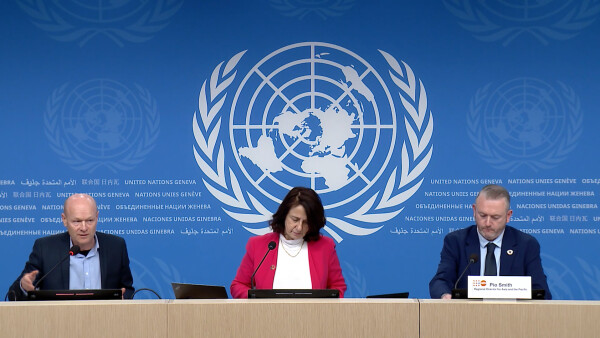
- Large : modérateur et orateur de l'UNFPA au podium dans la salle de presse de l'ONU à Genève.
- EXTRAIT SONORE (Anglais) – Pio Smith, Directeur régional pour l'Asie et le Pacifique, UNFPA : « Le 24 janvier, l'administration américaine a suspendu presque tous les programmes d'aide étrangère américaine en attendant un examen de 90 jours. En réponse, l'UNFPA a suspendu les services financés par des subventions américaines qui fournissent une bouée de sauvetage pour les femmes et les filles en crise, notamment en Asie du Sud.»
- Moyen-large : orateurs au podium.
- EXTRAIT SONORE (Anglais) – Jens Laerke, porte-parole, OCHA : « Nous avons bien sûr été en contact étroit avec tous nos bureaux dans le monde qui sont également en contact étroit avec les ambassades américaines dans leurs pays, cherchant à obtenir plus de clarté sur ce que cela signifie.».
- Moyen-large : écran de télévision, journalistes.
- EXTRAIT SONORE (Anglais) – Pio Smith, Directeur régional pour l'Asie et le Pacifique, UNFPA : « Les lettres que nous avons reçues sont similaires à celles reçues par d'autres agences de l'ONU et nous sommes, comme je l'ai mentionné plus tôt, engagés à essayer de trouver plus de clarté de la part du gouvernement américain et j'espère obtenir plus de détails en particulier sur les raisons pour lesquelles nos programmes sont impactés, en particulier ceux que nous espérions être exemptés sous la rubrique humanitaire.»
- Moyen : orateurs au podium, écrans de télévision.
- EXTRAIT SONORE (Anglais) – Pio Smith, Directeur régional pour l'Asie et le Pacifique, UNFPA : « Si je prends juste l'exemple de l'Afghanistan entre 2025 et 2028, nous estimons que l'absence de soutien américain entraînera 1 200 décès maternels supplémentaires et 109 000 grossesses non désirées supplémentaires.»
- Moyen-large : orateurs au podium, écrans de télévision, journalistes.
- EXTRAIT SONORE (Anglais) – Alessandra Vellucci, Directrice, Service de l'information de l'ONU à Genève : « Le point est que nous cherchons à continuer ce travail ensemble et à écouter aussi - s'il y a des critiques, des critiques constructives et des points que nous devons revoir - le Secrétaire général l'a dit dans sa déclaration, bien sûr, nous voulons travailler sur cela et continuer cette relation de confiance.»
- Large, salle de presse, journalistes, journalistes TV, cabines de contrôle.
- EXTRAIT SONORE (Anglais) – Jens Laerke, porte-parole, OCHA : « Environ 47 % de l'appel humanitaire mondial à travers le monde l'année dernière, 47 % de cela a été financé par le gouvernement américain ; cela vous donne une indication de l'importance que cela revêt lorsque nous sommes dans la situation dans laquelle nous nous trouvons actuellement, avec les messages que nous recevons du gouvernement.»
- Moyen-large, salle de presse, journalistes et écrans de télévision montrant l'orateur de l'UNFPA.
- EXTRAIT SONORE (Anglais) – Pio Smith, Directeur régional pour l'Asie et le Pacifique, UNFPA : « Que se passe-t-il lorsque notre travail n'est pas financé ? Les femmes accouchent seules dans des conditions insalubres. Le risque de fistule obstétricale est accru, les nouveau-nés meurent de causes évitables ; les survivants de violences basées sur le genre n'ont nulle part où se tourner pour un soutien médical ou psychologique. Nous espérons que le gouvernement des États-Unis conservera sa position de leader mondial en matière de développement et continuera de travailler avec l'UNFPA pour atténuer les souffrances des femmes et de leurs familles à la suite de catastrophes qu'elles n'ont pas causées.»
- Moyen-large, orateurs au podium, journalistes.
- EXTRAIT SONORE (Anglais) – Jens Laerke, porte-parole, OCHA : « Les invectives publiques ne sauveront aucune vie.»
- Moyen, journaliste écoutant la conférence de presse avec une aide auditive.
- Moyen-large, journalistes TV.
- Moyen, journaliste hochant la tête.
Similar Stories

1
1
1
Edited News | OCHA , UNICEF , WFP
Aid agencies warned on Friday of the fast-developing humanitarian emergency inside Taiz City in Yemen, which has been encircled by de facto Houthi forces fighting government troops along the country’s west coast.

2
17
1
2
Edited News , Press Conferences , Images | OCHA , WMO
Two UN agencies teamed up on Wednesday to issue an appeal for immediate assistance to help communities already being impacted by the strongest El Niño on record.

3
16
2
2
Edited News , B-roll , Conferences , Images | UNITED NATIONS , UNOG
Sixth Consultative Meeting on Enhancing Coordination of Peace Initiatives and Efforts for Sudan

1
1
1
Edited News | UNICEF , WHO , UNHCR
Yemen war continues to force families from homes amid hunger and disease
More than 250,000 people have now fled renewed fighting in Yemen, the UN said on Tuesday, citing particular concern for those sheltering in the southwestern city of Taiz and the wider governorate, where access is “essentially blocked”.

1
1
1
Edited News | UNICEF
A little over one year since a ceasefire agreement was announced between Hamas fighters and Israel, more than 340 children have been reported killed and hundreds more injured, the UN Children’s Fund, UNICEF, said on Friday.

1
1
1
Edited News | UNICEF , IFRC
Six weeks after Nepal’s deadly flooding disaster, communities are still struggling to rebuild their lives, but they will need sustained help as global warming increases the risk of another Himalayan catastrophe, the UN Children’s Fund (UNICEF) said on Friday.

1
1
1
Edited News | WHO
In suspected Russia plague death, testing and monitoring underway – WHO
The death of a lab worker in Russia’s Siberia region has sparked concerns about plague being the cause, the UN World Health Organization (WHO) said on Tuesday, adding that it was following the situation closely.

1
1
Edited News | OHCHR , UNOG
UN Human Rights Chief Volker Türk on Friday provided and oral update to the 63rd session of the Human rights Council on Ukraine.

1
1
1
Edited News | OHCHR , UNOG
UN Human Rights Chief Volker Türk on Friday provided and oral update to the 63rd session of the Human rights Council on the human rights situation in Haiti.

1
1
1
Edited News | WHO
Repeated delays in bringing lifesaving medicines, prosthetics and more from Israel into Gaza risk having devastating consequences on Palestinians who urgently need them in the wartorn enclave, the UN World Health Organization (WHO) said on Friday. “A truck full of non-priority supplies or the right supplies arriving too late, doesn't save lives. That's the question that actually matters," said Dr Reinhilde Van De Weerdt, WHO Representative in the OPT.

1
1
1
Edited News | WHO
DRC: Early access to care and oxygen decisive for Ebola patients’ survival – WHO
In the Democratic Republic of the Congo (DRC), health workers fighting the country’s largest-ever Ebola outbreak are struggling to overcome critical challenges to patient care, the UN World Health Organization (WHO) warned on Tuesday.

1
1
1
Edited News | OCHA , UN
Civilians in Iran are continuing to feel the consequences of months of conflict and military escalation, the UN’s top official in the country has said, as loss of life, damage to civilian infrastructure and mounting economic pressures leave many facing continued uncertainty.