

The United Nations Office at Geneva
Multimedia Newsroom
Edited News | OHCHR , UNOG
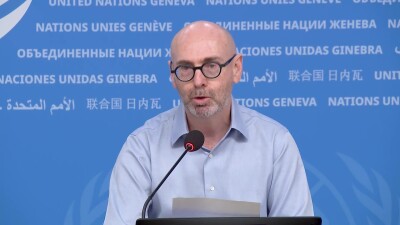
Jeremy Laurence, porte-parole des Nations unies pour les droits de l'homme, parle du sort des civils en Ukraine suite aux attaques contre les infrastructures énergétiques
Le Bureau des droits de l'homme de l'ONU a mis en garde vendredi contre la situation des civils en Ukraine après de nouvelles attaques sur les infrastructures énergétiques du pays.
« Les attaques massives de missiles et de drones de cette semaine par la Fédération de Russie sur le réseau électrique de l'Ukraine ont intensifié les graves préoccupations concernant la situation des civils, qui font face à un hiver de difficultés et de misère », a déclaré l'orateur Jeremy Laurence lors du briefing bihebdomadaire à Genève.
Les frappes de missiles et de drones à longue portée de jeudi auraient causé des dommages dans au moins 13 régions, en plus de la ville de Kyiv, et ont entraîné des coupures de courant affectant plus d'un million de consommateurs à travers le pays. Dans certaines régions, les services essentiels, y compris l'eau et les transports, ont été perturbés.
« Depuis mars, la capacité de production énergétique de l'Ukraine a été ciblée par des vagues d'attaques, causant des dommages prévisibles et de grande envergure aux civils. Comme toujours, les plus vulnérables - les personnes âgées, les ménages à faible revenu, les personnes handicapées et celles qui sont déplacées à l'intérieur du pays - ont été particulièrement mises en danger », a déclaré Laurence.
« Alors que les températures descendent en dessous de zéro, et sont susceptibles de baisser encore, l'électricité et les services dépendant de l'électricité sont encore plus cruciaux pour la survie de la population civile », a-t-il ajouté.
Bien que l'impact complet des dernières frappes ne devienne clair qu'en temps voulu, la Mission de surveillance des droits de l'homme de l'ONU en Ukraine a constamment suivi les conséquences de telles attaques, documentant les effets sur la production d'électricité, la distribution d'eau, le chauffage et l'eau chaude, la santé publique et l'éducation. En essence, les éléments essentiels de la vie quotidienne pour des millions de civils, à travers tout le pays.
« Le Haut-Commissaire réitère que de multiples aspects de la campagne militaire visant à endommager ou détruire les infrastructures énergétiques civiles de l'Ukraine, y compris les objets essentiels à la survie des civils - tels que les installations de chauffage pendant les mois d'hiver - soulèvent de sérieuses préoccupations quant au respect par les forces russes des principes cardinaux du droit humanitaire international de distinction, de précaution et de proportionnalité dans la conduite des hostilités. Ces attaques récurrentes et systématiques doivent être enquêtées et toute personne reconnue coupable de violations graves doit être tenue responsable », a déclaré l'orateur.
« Nous appelons à nouveau la Fédération de Russie à cesser immédiatement toutes les attaques sur les infrastructures énergétiques de l'Ukraine, essentielles à la population civile, à rendre des comptes pour toutes les attaques illégales, et à la communauté internationale de prioriser le soutien à l'Ukraine pour réparer et restaurer ses systèmes énergétiques. »
Pour plus d'informations et demandes de médias, veuillez contacter
À Genève :
Ravina Shamdasani : +41 22 917 9169 / ravina.shamdasani@un.org
Liz Throssell : +41 22 917 9296 / elizabeth.throssell@un.org
Jeremy Laurence : +41 22 917 9383 / jeremy.laurence@un.org
Taguez et partagez - Twitter : @UNHumanRights et Facebook : unitednationshumanrights
HISTOIRE : Orateur des droits de l'homme de l'ONU Jeremy Laurence sur l'Ukraine
TRT : 02:17
SOURCE : OHCHR / UNOG
RESTRICTIONS : AUCUNE
LANGUE : Anglais/NATS
FORMAT D'IMAGE : 16:9
DATE : 29 novembre 2024 GENÈVE, SUISSE
LISTE DE PLANS
- Plan extérieur : Palais des Nations
- Plan large : salle de briefing
- EXTRAIT SONORE (Anglais)— Jeremy Laurence, Orateur pour le Bureau du Haut-Commissaire des Nations Unies aux droits de l'homme (OHCHR) : «Les attaques massives de missiles et de drones de cette semaine par la Fédération de Russie sur le réseau électrique de l'Ukraine ont accru les préoccupations sérieuses concernant la situation des civils, qui font face à un hiver de difficultés et de misère.»
- Plan de coupe : salle de briefing
- EXTRAIT SONORE (Anglais)— Jeremy Laurence, Orateur pour le Bureau du Haut-Commissaire des Nations Unies aux droits de l'homme (OHCHR) : «Depuis mars, la capacité de production d'énergie de l'Ukraine a été ciblée par des vagues d'attaques, causant des dommages prévisibles et étendus aux civils. Comme toujours, les plus vulnérables - les personnes âgées, les ménages à faible revenu, les personnes handicapées et celles qui sont déplacées à l'intérieur du pays - ont été particulièrement mises en danger.»
- Plan de coupe : salle de briefing
- EXTRAIT SONORE (Anglais)— Jeremy Laurence, Orateur pour le Bureau du Haut-Commissaire des Nations Unies aux droits de l'homme (OHCHR) : «Alors que les températures descendent en dessous de zéro, et sont susceptibles de baisser encore, l'électricité et les services dépendants de l'électricité sont encore plus critiques pour la survie de la population civile.»
- Plan de coupe : salle de briefing
- EXTRAIT SONORE (Anglais)— Jeremy Laurence, Orateur pour le Bureau du Haut-Commissaire des Nations Unies aux droits de l'homme (OHCHR) : «Le Haut-Commissaire réitère que de multiples aspects de la campagne militaire visant à endommager ou détruire les infrastructures énergétiques civiles de l'Ukraine, y compris des objets essentiels à la survie des civils - tels que les installations de chauffage pendant les mois d'hiver - soulèvent de sérieuses préoccupations concernant le respect par les forces russes des principes cardinaux du droit international humanitaire de distinction, de précaution et de proportionnalité dans la conduite des hostilités. Ces attaques récurrentes et systématiques doivent être investiguées et toute personne reconnue responsable de violations graves doit être tenue pour responsable.»
- Plan de coupe : salle de briefing
- EXTRAIT SONORE (Anglais)— Jeremy Laurence, Orateur pour le Bureau du Haut-Commissaire des Nations Unies aux droits de l'homme (OHCHR) : «Nous appelons à nouveau la Fédération de Russie à cesser immédiatement toutes les attaques sur les infrastructures énergétiques de l'Ukraine essentielles à la population civile, à rendre des comptes pour toutes les attaques illégales, et à ce que la communauté internationale priorise le soutien à l'Ukraine pour réparer et restaurer ses systèmes énergétiques .»
Similar Stories

1
1
1
Edited News | OCHA , UNICEF , WFP
Aid agencies warned on Friday of the fast-developing humanitarian emergency inside Taiz City in Yemen, which has been encircled by de facto Houthi forces fighting government troops along the country’s west coast.

2
17
1
2
Edited News , Press Conferences , Images | OCHA , WMO
Two UN agencies teamed up on Wednesday to issue an appeal for immediate assistance to help communities already being impacted by the strongest El Niño on record.

3
16
2
2
Edited News , B-roll , Conferences , Images | UNITED NATIONS , UNOG
Sixth Consultative Meeting on Enhancing Coordination of Peace Initiatives and Efforts for Sudan

1
1
1
Edited News | UNICEF , WHO , UNHCR
Yemen war continues to force families from homes amid hunger and disease
More than 250,000 people have now fled renewed fighting in Yemen, the UN said on Tuesday, citing particular concern for those sheltering in the southwestern city of Taiz and the wider governorate, where access is “essentially blocked”.

1
1
1
Edited News | UNICEF
A little over one year since a ceasefire agreement was announced between Hamas fighters and Israel, more than 340 children have been reported killed and hundreds more injured, the UN Children’s Fund, UNICEF, said on Friday.

1
1
1
Edited News | UNICEF , IFRC
Six weeks after Nepal’s deadly flooding disaster, communities are still struggling to rebuild their lives, but they will need sustained help as global warming increases the risk of another Himalayan catastrophe, the UN Children’s Fund (UNICEF) said on Friday.

1
1
1
Edited News | WHO
In suspected Russia plague death, testing and monitoring underway – WHO
The death of a lab worker in Russia’s Siberia region has sparked concerns about plague being the cause, the UN World Health Organization (WHO) said on Tuesday, adding that it was following the situation closely.

1
1
Edited News | OHCHR , UNOG
UN Human Rights Chief Volker Türk on Friday provided and oral update to the 63rd session of the Human rights Council on Ukraine.

1
1
1
Edited News | OHCHR , UNOG
UN Human Rights Chief Volker Türk on Friday provided and oral update to the 63rd session of the Human rights Council on the human rights situation in Haiti.

1
1
1
Edited News | WHO
Repeated delays in bringing lifesaving medicines, prosthetics and more from Israel into Gaza risk having devastating consequences on Palestinians who urgently need them in the wartorn enclave, the UN World Health Organization (WHO) said on Friday. “A truck full of non-priority supplies or the right supplies arriving too late, doesn't save lives. That's the question that actually matters," said Dr Reinhilde Van De Weerdt, WHO Representative in the OPT.

1
1
1
Edited News | WHO
DRC: Early access to care and oxygen decisive for Ebola patients’ survival – WHO
In the Democratic Republic of the Congo (DRC), health workers fighting the country’s largest-ever Ebola outbreak are struggling to overcome critical challenges to patient care, the UN World Health Organization (WHO) warned on Tuesday.

1
1
1
Edited News | OCHA , UN
Civilians in Iran are continuing to feel the consequences of months of conflict and military escalation, the UN’s top official in the country has said, as loss of life, damage to civilian infrastructure and mounting economic pressures leave many facing continued uncertainty.