

The United Nations Office at Geneva
Multimedia Newsroom
Les Gazaouis accablés par une malnutrition intensifiée et des risques de chaleur
À Gaza, les températures élevées, la faim et les conditions insalubres représentent une menace de plus en plus mortelle pour une population sous attaque constante, ont averti les humanitaires de l'ONU mardi.
Lors d'un point de presse à Genève, le porte-parole de l'Organisation mondiale de la santé (OMS) de l'ONU, Tarik Jašarević, a déclaré que selon les autorités sanitaires de l'enclave, 34 personnes sont mortes de malnutrition et de déshydratation, et « rien qu'à l'hôpital Kamal Adwan [dans le nord de Gaza], 60 cas de malnutrition aiguë sévère ont été détectés la semaine dernière ».
« La malnutrition est définitivement l'un des facteurs qui réduisent l'immunité, en particulier chez les populations vulnérables, les personnes âgées et les enfants, qui ne peuvent alors pas vraiment faire face à n'importe quelle maladie, n'importe quel pathogène qu'ils peuvent contracter », a-t-il averti, décrivant un « cercle vicieux de ne pas avoir accès à suffisamment de nourriture, à de l'eau propre, à une hygiène propre, de ne pas avoir accès aux services de santé de base ».
Au-delà des conséquences directes du bombardement et des tirs d'obus incessants de l'armée israélienne qui se sont poursuivis dans la nuit de lundi à mardi, « tout le monde à Gaza » risque de tomber malade et de mourir par manque de soins, M. Jašarević a déclaré. La situation est particulièrement grave pour les femmes enceintes, les personnes atteintes de maladies chroniques telles que le cancer ou le diabète, les blessés qui ne sont pas traités à temps et les enfants menacés par des maladies hydriques.
Le porte-parole de l'OMS a réitéré l'appel de l'agence à l'ouverture de tous les points de passage frontaliers vers l'enclave, afin de permettre les évacuations médicales désespérément nécessaires. « Plus de 10 000 personnes doivent recevoir des soins médicaux spécialisés en dehors de Gaza. Ces personnes ne peuvent pas attendre », a-t-il insisté.
Le flux de secours médicaux est également à l'arrêt et l'agence de santé de l'ONU a déclaré qu'aucun de ses camions n'est passé la semaine dernière à Gaza.
Interrogé sur l'état actuel des installations de santé dans la bande de Gaza, M. Jašarević a déclaré que les hôpitaux étaient soit évacués, soit détruits par les bombardements, sans possibilité de reconstruction tant que les hostilités se poursuivent. Selon une mise à jour du bureau de coordination des affaires humanitaires de l'ONU (OCHA) lundi, les patients et le personnel médical ont évacué trois hôpitaux dans le sud de Gaza en une seule semaine, « par crainte d'activités militaires intensifiées qui pourraient rendre les installations de santé non fonctionnelles ou inaccessibles ».
M. Jašarević a rendu hommage au dévouement des travailleurs de la santé qui retournent ensuite dans les installations une fois qu'ils se sentent suffisamment en sécurité, pour essayer de remettre en marche les services vitaux. Sur les 36 hôpitaux de Gaza, 13 sont « partiellement fonctionnels », a-t-il déclaré.
L'agence de santé de l'ONU a rapporté que la capacité totale des six hôpitaux partiellement fonctionnels dans le sud de Gaza, y compris trois à Deir al Balah et trois à Khan Younis, ne s'élève désormais qu'à 1 334 lits. Sur les 11 hôpitaux de campagne de la bande de Gaza, trois ont dû fermer temporairement et quatre ne fonctionnent que partiellement, « en raison des hostilités à Rafah et de l'accès réduit », a déclaré l'OMS.
En ce qui concerne l'infrastructure hospitalière, « le niveau de destruction est tel qu'il est difficile d'imaginer combien de temps il faudra [pour reconstruire] une fois la guerre terminée », a souligné M. Jašarević.
- - Fin -
HISTOIRE: Mise à jour de la santé à Gaza - OMS
TRT: 2:03”
SOURCE: UNTV CH
RESTRICTIONS: AUCUNE
LANGUE: ANGLAIS / FRANÇAIS / NATS
RATIO D'ASPECT: 16:9
DATELINE: 09 JUILLET 2024 GENÈVE, SUISSE
1. Plan large extérieur : Palais des Nations, Allée des Drapeaux.
2. Plan large : Orateurs au podium de la conférence de presse ; journalistes dans la salle de presse.
3. EXTRAIT SONORE (Anglais) – Tarik Jašarević, orateur, Organisation mondiale de la santé (OMS): “Selon le ministère de la Santé, 34 personnes sont mortes de malnutrition et de déshydratation jusqu'à présent. Rien qu'à l'hôpital Kamal Adwan, 60 cas de malnutrition aiguë sévère ont été détectés la semaine dernière.”
4. Plan latéral large : Journalistes et orateur sur les écrans dans la salle de presse.
5. EXTRAIT SONORE (Anglais) – Tarik Jašarević, orateur, Organisation mondiale de la santé (OMS): “La malnutrition est définitivement l'un des facteurs qui réduisent l'immunité, en particulier chez les populations vulnérables, les personnes âgées et les enfants, qui ne peuvent alors pas vraiment faire face à une maladie, à un pathogène qu'ils peuvent contracter. C'est vraiment un cercle vicieux de ne pas avoir accès à suffisamment de nourriture, à de l'eau propre, à une hygiène propre, de ne pas avoir accès aux services de santé de base.”
6. Plan latéral large : Journalistes dans la salle de presse ; orateur sur écran.
7. EXTRAIT SONORE (Anglais) – Tarik Jašarević, orateur, Organisation mondiale de la santé (OMS): “Nous continuons à appeler à l'ouverture de tous les points de passage vers Gaza. Plus de 10 000 personnes ont besoin de recevoir des soins médicaux spécialisés en dehors de Gaza. Ces personnes ne peuvent pas attendre.”
8. Plan moyen : Plan latéral large : orateur au podium de dos ; orateur sur les écrans ; journalistes dans la salle de presse.
9. EXTRAIT SONORE (Français) – Tarik Jašarević, orateur, Organisation mondiale de la santé (OMS): “Ce qu’ils font, les travailleurs de santé, les médecins à Gaza, c’est de revenir quand ils se sentent en sécurité, ils reviennent sur les lieux et ils essaient de redémarrer certains services. Donc maintenant, de 36 hôpitaux à Gaza il n’y a que 13 qui fonctionnent de manière partielle.”
10. Plan large : Journalistes dans la salle de presse ; orateur sur les écrans.
11. EXTRAIT SONORE (Français) – Tarik Jašarević, orateur, Organisation mondiale de la santé (OMS): “Pour ce qui est de l’infrastructure, ça c’est vraiment très difficile, parce que le niveau de destruction est tel qu’il est difficile même d’imaginer combien de temps cela va prendre une fois la guerre [est] finie.”
12. Gros plans : Journalistes dans la salle de presse.
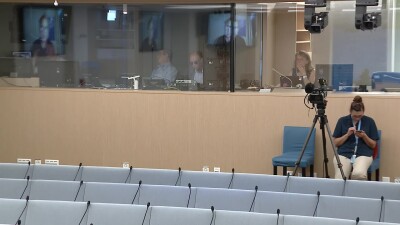
13. Plan large : Caméraman et cabines de techniciens dans la salle de presse.
Similar Stories

1
1
1
Edited News | OCHA , UNICEF , WFP
Aid agencies warned on Friday of the fast-developing humanitarian emergency inside Taiz City in Yemen, which has been encircled by de facto Houthi forces fighting government troops along the country’s west coast.

2
17
1
2
Edited News , Press Conferences , Images | OCHA , WMO
Two UN agencies teamed up on Wednesday to issue an appeal for immediate assistance to help communities already being impacted by the strongest El Niño on record.

3
16
2
2
Edited News , B-roll , Conferences , Images | UNITED NATIONS , UNOG
Sixth Consultative Meeting on Enhancing Coordination of Peace Initiatives and Efforts for Sudan

1
1
1
Edited News | UNICEF , WHO , UNHCR
Yemen war continues to force families from homes amid hunger and disease
More than 250,000 people have now fled renewed fighting in Yemen, the UN said on Tuesday, citing particular concern for those sheltering in the southwestern city of Taiz and the wider governorate, where access is “essentially blocked”.

1
1
1
Edited News | UNICEF
A little over one year since a ceasefire agreement was announced between Hamas fighters and Israel, more than 340 children have been reported killed and hundreds more injured, the UN Children’s Fund, UNICEF, said on Friday.

1
1
1
Edited News | UNICEF , IFRC
Six weeks after Nepal’s deadly flooding disaster, communities are still struggling to rebuild their lives, but they will need sustained help as global warming increases the risk of another Himalayan catastrophe, the UN Children’s Fund (UNICEF) said on Friday.

1
1
1
Edited News | WHO
In suspected Russia plague death, testing and monitoring underway – WHO
The death of a lab worker in Russia’s Siberia region has sparked concerns about plague being the cause, the UN World Health Organization (WHO) said on Tuesday, adding that it was following the situation closely.

1
1
Edited News | OHCHR , UNOG
UN Human Rights Chief Volker Türk on Friday provided and oral update to the 63rd session of the Human rights Council on Ukraine.

1
1
1
Edited News | OHCHR , UNOG
UN Human Rights Chief Volker Türk on Friday provided and oral update to the 63rd session of the Human rights Council on the human rights situation in Haiti.

1
1
1
Edited News | WHO
Repeated delays in bringing lifesaving medicines, prosthetics and more from Israel into Gaza risk having devastating consequences on Palestinians who urgently need them in the wartorn enclave, the UN World Health Organization (WHO) said on Friday. “A truck full of non-priority supplies or the right supplies arriving too late, doesn't save lives. That's the question that actually matters," said Dr Reinhilde Van De Weerdt, WHO Representative in the OPT.

1
1
1
Edited News | WHO
DRC: Early access to care and oxygen decisive for Ebola patients’ survival – WHO
In the Democratic Republic of the Congo (DRC), health workers fighting the country’s largest-ever Ebola outbreak are struggling to overcome critical challenges to patient care, the UN World Health Organization (WHO) warned on Tuesday.

1
1
1
Edited News | OCHA , UN
Civilians in Iran are continuing to feel the consequences of months of conflict and military escalation, the UN’s top official in the country has said, as loss of life, damage to civilian infrastructure and mounting economic pressures leave many facing continued uncertainty.