

The United Nations Office at Geneva
Multimedia Newsroom
Climate change fuels violence and mass displacement in Cameroon
A flare-up in intercommunal fighting in northern Cameroon has forced tens of thousands of people to flee their homes and brought a halt to aid operations there, the UN refugee agency, UNHCR, said on Friday.
The development is just the latest episode in the difficult relationship between the region’s herders, fishermen and farmers, who have seen the waters of Lake Chad shrink dramatically, because of climate change.
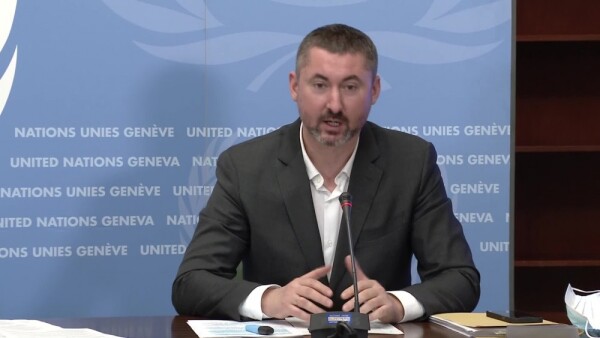
In Geneva, UNHCR spokesperson Boris Cheshirkov explained that clashes had broken out in recent days in the village of Ouloumsa, following a dispute over dwindling water resources.
The violence then spread to neighbouring villages, leaving 10 villages burned to the ground.
“UNHCR is deeply concerned by renewed intercommunal clashes that erupted this week in Cameroon’s Far North region, displacing thousands inside the country and forcing more than 30,000 people to flee to neighbouring Chad,” Mr. Cheshirkov said. “Since Sunday 5 December, at least 22 people have been killed and 30 others seriously injured during several days of ongoing fighting.”
Fighting then erupted three days later, on 8 December, in the Cameroonian city of Kousseri, a commercial hub with 200,000 inhabitants, according to UNHCR.
In addition to the destruction of the cattle market, Mr. Cheshirkov noted that “at least 10,000 people fled Kousseri to Chad’s capital, N’djamena…only a few kilometres across the Chari and Logone rivers, which mark the border with Cameroon”.
The UNHCR official noted that fully eight in 10 of the new arrivals were women – many of whom are pregnant – and children. “They have found refuge in N’Djamena and villages along Chad’s bank of the Logone river,” Mr. Cheshirkov told journalists during a scheduled briefing.
The UN agency also welcomed Chad’s hospitality towards the new arrivals, even though it is already home to close to a million refugees and internally displaced people.
In partnership with the authorities, Mr. Cheshirkov said that UN agencies and partners were “rushing to support the Cameroonian refugees with emergency shelter and assistance”.
In Cameroon’s Far North, although security forces have been dispatched to the affected areas, the UNHCR spokesperson noted that the situation remained “volatile”, forcing UNHCR to suspend its operations there.
In August, the agency reported an initial outbreak of intercommunal violence in Cameroon that left 45 people dead and 23,000 forcibly displaced, 8,500 of whom have remained in Chad.
In addition to providing immediate emergency aid, UNHCR and the authorities have been leading reconciliation efforts in Kousseri since last week.
This has resulted in representatives of communities committing to put an end to the violence. “But without urgent action to address the root causes of the crisis, the situation could escalate further,” Mr. Cheshirkov maintained.
“What we see is intercommunal tension between the farmers and the fishermen from one side, and these and Muslim fishermen and farmers, and then the Arabic traders. The main reason that this tension has been breaking and getting worse is climate change, because that they depend on the waters of the Logone river, which is one of main tributaries of Lake Chad; Lake Chad has been shrinking over six decades now, it has lost 95 per cent of its surface water.”
So far this year, UNHCR’s funding appeal to help the most vulnerable people in Chad and Cameroon are only around 50 per cent funded.
Over and above the $99.6 million required for operations in Cameroon and the $141 million for Chad, UNHCR appealed to the international community for much greater support to help developing countries adapt to the kind of climate shocks that is behind the crises that the agency is increasingly responding to.
Needs are particularly acute in the nearby Sahel region, where countries including Niger, Mali and Burkina Faso are experiencing climate change-induced temperature rises that are 1.5 times faster than the global average, Mr. Cheshirkov explained.
“The climate crisis is a human crisis; we’re seeing it in the Sahel, we’re seeing it in Far North Cameroon, we’re seeing it in East Africa, in the drought corridor of Latin America, we’re seeing it in South Asia, so many parts of the world where we have displaced communities. In fact, 90 per cent of refugees are coming from climate vulnerable hotspots.”
ends
STORY: UNHCR – Cameroon Displacement
TRT: 2’44”
SOURCE: UNTV CH
RESTRICTIONS: NONE
LANGUAGE: ENGLISH
ASPECT RATIO: 16:9
DATELINE: 10 December 2021, GENEVA, SWITZERLAND
SHOTLIST
- Exterior wide shot, United Nations flags flying.
- Medium-wide shot, speakers, participants in press briefing room.
- SOUNDBITE (English): Boris Cheshirkov, UNHCR spokesperson: “UNHCR, the UN Refugee Agency, is deeply concerned by renewed intercommunal clashes that erupted this week in Cameroon’s Far North region, displacing thousands inside the country and forcing more than 30,000 people to flee to neighbouring Chad. Since Sunday 5 December, at least 22 people have been killed and 30 others seriously injured during several days of ongoing fighting.”
- Wide shot, podium speakers, empty seating, TV screens displaying speakers.
- SOUNDBITE (English): Boris Cheshirkov, UNHCR spokesperson: “On 8 December, fighting broke out in the Cameroonian city of Kousseri – this is a commercial hub with some 200,000 inhabitants. Kousseri’s cattle market was destroyed in the fighting. At least 10,000 people have fled Kousseri to Chad’s capital, N’djamena, located a few kilometres across the Chari and Logone rivers, which mark the border with Cameroon.”
- Wide shot: podium speakers, empty seating, TV screens displaying speakers.
- SOUNDBITE (English): Boris Cheshirkov, UNHCR spokesperson: “Chad has reaffirmed its hospitality towards the new arrivals, and the authorities there, together with UNHCR, other UN agencies and humanitarian partners, are rushing to support the Cameroonian refugees with emergency shelter and assistance.”
- Medium shot, UNTV technician, masked, working on laptop.
- SOUNDBITE (English): Boris Cheshirkov, UNHCR spokesperson: “Security forces have been dispatched to Far North Cameroon, but the situation does remain volatile. UNHCR has been forced to suspend its operations in the affected areas.”
- Medium-wide shot: podium speakers.
- SOUNDBITE (English): Boris Cheshirkov, UNHCR spokesperson: “What we see is intercommunal tension between the farmers and the fishermen from one side, and these and Muslim fishermen and farmers, and then the Arabic traders. The main reason that this tension has been breaking and getting worse is climate change, because that they depend on the waters of the Logone river, which is one of main tributaries of Lake Chad; Lake Chad has been shrinking over six decades now, it has lost 95 per cent of its surface water.”
- Medium-wide shot: journalist, masked.
- SOUNDBITE (English): Boris Cheshirkov, UNHCR spokesperson: “The climate crisis is a human crisis; we’re seeing it in the Sahel, we’re seeing it in Far North Cameroon, we’re seeing it in East Africa, in the drought corridor of Latin America, we’re seeing it in South Asia, so many parts of the world where we have displaced communities. In fact, 90 per cent of refugees are coming from climate vulnerable hotspots.”
- Wide shot, podium participants, empty seating, TV screens displaying speakers.
- Medium-wide shot, podium participants, empty seating, TV screens displaying speakers.
- Medium shot, podium participants.
Similar Stories

1
1
1
Edited News | UNICEF
A little over one year since a ceasefire agreement was announced between Hamas fighters and Israel, more than 340 children have been reported killed and hundreds more injured, the UN Children’s Fund, UNICEF, said on Friday.

1
1
1
Edited News | UNICEF , IFRC
Six weeks after Nepal’s deadly flooding disaster, communities are still struggling to rebuild their lives, but they will need sustained help as global warming increases the risk of another Himalayan catastrophe, the UN Children’s Fund (UNICEF) said on Friday.

1
1
1
Edited News | WHO
In suspected Russia plague death, testing and monitoring underway – WHO
The death of a lab worker in Russia’s Siberia region has sparked concerns about plague being the cause, the UN World Health Organization (WHO) said on Tuesday, adding that it was following the situation closely.

1
1
Edited News | OHCHR , UNOG
UN Human Rights Chief Volker Türk on Friday provided and oral update to the 63rd session of the Human rights Council on Ukraine.

1
1
1
Edited News | OHCHR , UNOG
UN Human Rights Chief Volker Türk on Friday provided and oral update to the 63rd session of the Human rights Council on the human rights situation in Haiti.

1
1
1
Edited News | WHO
Repeated delays in bringing lifesaving medicines, prosthetics and more from Israel into Gaza risk having devastating consequences on Palestinians who urgently need them in the wartorn enclave, the UN World Health Organization (WHO) said on Friday. “A truck full of non-priority supplies or the right supplies arriving too late, doesn't save lives. That's the question that actually matters," said Dr Reinhilde Van De Weerdt, WHO Representative in the OPT.

1
1
1
Edited News | WHO
DRC: Early access to care and oxygen decisive for Ebola patients’ survival – WHO
In the Democratic Republic of the Congo (DRC), health workers fighting the country’s largest-ever Ebola outbreak are struggling to overcome critical challenges to patient care, the UN World Health Organization (WHO) warned on Tuesday.

1
1
1
Edited News | OCHA , UN
Civilians in Iran are continuing to feel the consequences of months of conflict and military escalation, the UN’s top official in the country has said, as loss of life, damage to civilian infrastructure and mounting economic pressures leave many facing continued uncertainty.
1
1
1
Edited News | WHO , UNICEF
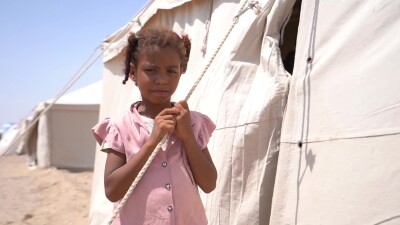
Aid agencies in Yemen highlighted the growing hunger emergency sparked by renewed fighting between Houthi opposition forces and Government troops, after mobile health clinics reported that hundreds of children displaced by the violence are suffering from the most deadly form of malnutrition.
1
1
1
Edited News | UNHCR
Displacement on the rise in Yemen as fighting continues - UNHCR
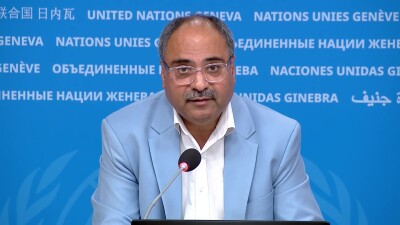
As hostilities worsen in Yemen, more people have been fleeing their homes, further intensifying the humanitarian crisis within the region, the UN Refugee Agency (UNHCR) warned on Tuesday.
1
1
1
Edited News | IOM , OHCHR , UNFPA , UNOG , UNHCR , WHO
Yemen’s humanitarian crisis growing by the hour amid spike in displacement
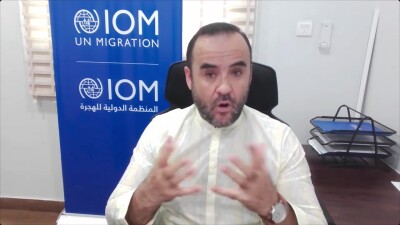
Yemenis displaced by renewed fighting have described fleeing for their lives amid shelling and gunfire, aid agencies reported on Friday, while highlighting the dramatic increase in humanitarian needs in the country and in Djibouti, where thousands have sought shelter.
1
1
1
Edited News | OHCHR , UNOG
The UN Human Rights Office issued on Friday a report documenting a shocking pattern of sexual violence amid Russia’s full-scale armed attack on Ukraine.