

The United Nations Office at Geneva
Multimedia Newsroom
Edited News | UNHCR , UNOG , UNITED NATIONS
UNOG Bi-weekly Press Briefing: US Refugee Resettlement - UNHCR
US plan to increase refugee resettlement welcomed by UNHCR
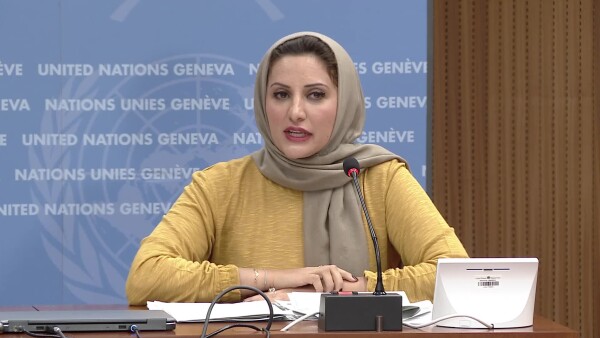
US President Biden’s proposal to raise the target for refugee resettlement in the United States in the coming fiscal year to 125,000 people has been welcomed by the UN Refugee Agency (UNHCR) on Tuesday. “This plan reflects the commitment of the US government and the American people to help ensure that the world’s most vulnerable refugees have a chance to rebuild their lives in safety,” said UNHCR spokesperson Shabia Mantoo. Monday’s move by the Biden Administration fulfils an earlier pledge to raise a cap that had been cut to 15,000 under his predecessor, Donald Trump; the lowest since the 1980 Refugee Act took effect. Ms. Mantoo said the plan emphasizes “the importance of all countries doing their part” in responding to the needs of refugees. The announcement comes after US officials said on Monday that more than 6,000 Haitians and other migrants had been removed from an encampment at Del Rio, Texas and immediately expelled to the Caribbean country, which has been rocked by a recent earthquake, flooding and a political crisis caused by the assassination of its premier. “We are disturbed by the images we've seen and by the fact that we've seen all these migrants and refugees and asylum seekers being transported to Port-au-Prince,” said Office of the United Nations High Commissioner for Human Rights (OHCHR) spokesperson, Marta Hurtado, who raised concerns that some refugees may not have been individually assessed and therefore may not have received that protection that they need. “No matter who you are, regardless of your migration status, everyone has the same rights and have the right to have the same protection,” Ms. Hurtado said. Reiterating these concerns, Ms. Mantoo noted that “the complex social, economic, humanitarian and political situation” in Haiti, “has led to different waves of mixed movements from the country in the past decade”. Some of these people “may have well-founded grounds to request international protection.” The UNHCR has been “following these movements,” which require “a coordinated regional response to ensure effective and legal stay arrangements, including for those who don’t require international protection.” In terms of the expulsions, she added, the UNHCR “is closely monitoring the issue on both sides of the US / Mexico border.” “The humanitarian situation remains challenging,” she said, noting that people are being expelled under the title 42 public health-related asylum restrictions. Ms. Mantoo stated that “the right to seek asylum is a fundamental human right” and called for this right “to be respected”. She emphasized that since the onset of the pandemic the UNHCR has told States that “there are ways to manage public health considerations, to manage national security, but to also ensure the right to seek asylum. This is not mutually exclusive. It can be done,” she said. Commenting on the US move to take in 125,000 refugees and their families next year, Ms. Mantoo noted that the past two decades have seen the lowest number of refugees resettlement on record. With “90 per cent of the world’s refugees hosted in some of the poorest countries in the world, this should be applauded,” she said, adding that a predicted 1.47 million refugees will be in need of resettlement next year. “Resettlement is a mechanism to ensure protection,” but it is only “available to only a small fraction of the world's refugees. It is dependent on the numbers of the States to put forward,” she said, adding that the UNHCR “looks forward to working with US government counterparts on how this will be rolled out.”
ends
STORY: US Refugee Resettlement
TRT: 02:47"
SOURCE: UNTV CH
RESTRICTIONS: NONE
LANGUAGE: ENGLISH ASPECT RATIO: 16:9
DATELINE: 21 Sept 2021, GENEVA, SWITZERLAND
SHOTLIST
- Exterior wide shot, United Nations flag flying.
- Medium shot, speakers and audience in briefing room.
- SOUNDBITE (English): Shabia Mantoo, spokesperson, United Nations High Commissioner for Refugees (UNHCR):“UNHCR, the UN Refugee Agency, welcomes the US President Biden's proposal to raise the target for refugee resettlement in the United States in the coming fiscal year to 125,000 people. This plan reflects the commitment of the US government and the American people to help ensure that the world's most vulnerable refugees have a chance to rebuild their lives in safety.”
- Medium shot, panellists attending Briefing.
- SOUNDBITE (English): Marta Hurtado, spokesperson, Office of the United Nations High Commissioner for Human Rights (OHCHR):"We are disturbed by the images we've seen and by the fact that we've seen all these migrants and refugees and asylum seekers being transported to Port-au-Prince. We are seriously concerned by the fact that it appears that there had not been any individual assessment on the case and that therefore maybe some of these people have not received that protection that they needed.
- Close shot, panellists taking notes.
- SOUNDBITE (English): Shabia Mantoo, spokesperson, United Nations High Commissioner for Refugees:“We have seen that the complex social, economic, humanitarian and political situation in the country has led to different waves of mixed movements from the country in the past decade. So some of these people in these movements may have well-founded grounds to request international protection and we have been following these movements. And what this does call for is a coordinated regional response to ensure effective and legal state arrangements.”
- Medium shot, panellists taking notes.
- SOUNDBITE (English): Shabia Mantoo, spokesperson, United Nations High Commissioner for Refugees:“We are monitoring the situation, we are advocating, we are observing what's happening, we are calling for this right to be respected for people who may be in need of international protection to access that. It's something we have actually said since the onset of the pandemic. I mean, as early as March last year, we have said and to all states we have said there are ways to manage public health considerations, to manage national security, but to also ensure the right to seek asylum.”
- Medium shot, panellists taking notes.
- SOUNDBITE (English): Shabia Mantoo, spokesperson, United Nations High Commissioner for Refugees: “We predict basically 1.47 million refugees will be in need of resettlement next year, which has sort of been the case out of the global refugee figure. So it’s, I mean, resettlement as a mechanism to ensure protection, it’s available to only a small fraction of the world's refugees. It is dependent on the numbers that the States put forward. We, UNHCR, have an integral role to play in that and we support refugee resettlement.”
- Medium shot of the speakers and of the briefing broadcast on Zoom.
- Close shot of the hand of one of the panellists.
- Medium shot of the briefing room.
Similar Stories

1
1
1
Edited News | OCHA , UNICEF , WFP
Aid agencies warned on Friday of the fast-developing humanitarian emergency inside Taiz City in Yemen, which has been encircled by de facto Houthi forces fighting government troops along the country’s west coast.

2
17
1
2
Edited News , Press Conferences , Images | OCHA , WMO
Two UN agencies teamed up on Wednesday to issue an appeal for immediate assistance to help communities already being impacted by the strongest El Niño on record.

3
16
2
2
Edited News , B-roll , Conferences , Images | UNITED NATIONS , UNOG
Sixth Consultative Meeting on Enhancing Coordination of Peace Initiatives and Efforts for Sudan

1
1
1
Edited News | UNICEF , WHO , UNHCR
Yemen war continues to force families from homes amid hunger and disease
More than 250,000 people have now fled renewed fighting in Yemen, the UN said on Tuesday, citing particular concern for those sheltering in the southwestern city of Taiz and the wider governorate, where access is “essentially blocked”.

1
1
1
Edited News | UNICEF
A little over one year since a ceasefire agreement was announced between Hamas fighters and Israel, more than 340 children have been reported killed and hundreds more injured, the UN Children’s Fund, UNICEF, said on Friday.

1
1
1
Edited News | UNICEF , IFRC
Six weeks after Nepal’s deadly flooding disaster, communities are still struggling to rebuild their lives, but they will need sustained help as global warming increases the risk of another Himalayan catastrophe, the UN Children’s Fund (UNICEF) said on Friday.

1
1
1
Edited News | WHO
In suspected Russia plague death, testing and monitoring underway – WHO
The death of a lab worker in Russia’s Siberia region has sparked concerns about plague being the cause, the UN World Health Organization (WHO) said on Tuesday, adding that it was following the situation closely.

1
1
Edited News | OHCHR , UNOG
UN Human Rights Chief Volker Türk on Friday provided and oral update to the 63rd session of the Human rights Council on Ukraine.

1
1
1
Edited News | OHCHR , UNOG
UN Human Rights Chief Volker Türk on Friday provided and oral update to the 63rd session of the Human rights Council on the human rights situation in Haiti.

1
1
1
Edited News | WHO
Repeated delays in bringing lifesaving medicines, prosthetics and more from Israel into Gaza risk having devastating consequences on Palestinians who urgently need them in the wartorn enclave, the UN World Health Organization (WHO) said on Friday. “A truck full of non-priority supplies or the right supplies arriving too late, doesn't save lives. That's the question that actually matters," said Dr Reinhilde Van De Weerdt, WHO Representative in the OPT.

1
1
1
Edited News | WHO
DRC: Early access to care and oxygen decisive for Ebola patients’ survival – WHO
In the Democratic Republic of the Congo (DRC), health workers fighting the country’s largest-ever Ebola outbreak are struggling to overcome critical challenges to patient care, the UN World Health Organization (WHO) warned on Tuesday.

1
1
1
Edited News | OCHA , UN
Civilians in Iran are continuing to feel the consequences of months of conflict and military escalation, the UN’s top official in the country has said, as loss of life, damage to civilian infrastructure and mounting economic pressures leave many facing continued uncertainty.