

The United Nations Office at Geneva
Multimedia Newsroom
Record-breaking ‘pressure-cooker’ heatwave hits Canada, US northwest
A "pressure-cooker" heatwave that's broken temperature records twice in two days in the US northwest and western Canada shows no signs of abating, the World Meteorological Organization (WMO) said on Tuesday.
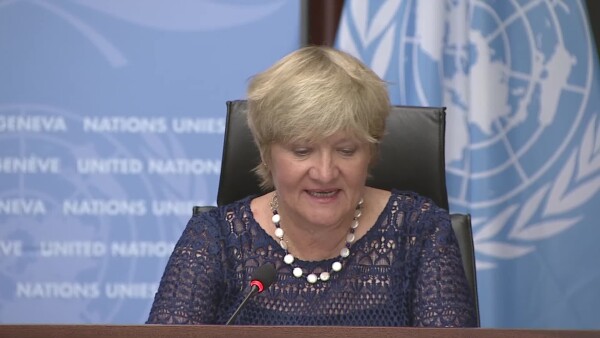
The scorching early summer conditions have been mirrored elsewhere in the northern hemisphere, from Eastern Europe to India, said Clare Nullis, spokesperson for the World Meteorological Organization (WMO).
“An exceptional and dangerous heatwave is breaking in northwestern United States of America and western Canada; this is obviously a part of the world which is more accustomed to cool weather. Temperature are likely to reach as high as 45 degrees Celsius by day for perhaps five or more days; so that’s …a very long spell, with extremely warm nights in between.”
The WMO official noted that the all-time Canadian temperature record was broken on Sunday in Lytton, British Columbia, which recorded a high of 46.6 degrees Celsius.
“This smashed the previous record – normally when you break a record, it’s by a small margin – this smashed the record by a full 1.6 degrees Celsius,” Ms. Nullis said.
Less than 24 hours later, on Monday, Lytton broke the record again, this time measuring 47.9 degree Celsius. “This to be underlined, it’s in the province of British Columbia, it’s to the Rocky Mountains, the Glacier National Park, and yet we’re seeing temperatures which are more typical of the Middle East or North Africa,” Ms. Nullis added.
Such extreme temperatures pose a major threat to people's health, agriculture and the environment “because the region is not used to such heat and many people do not have air conditioning”, WMO said in a statement which highlighted how important it was for national weather centres to issue early warnings to limit the death toll.
Citing Environment and Climate Change Canada meteorologist Armel Castellan, WMO noted that higher temperatures would likely peak early this week on the coast and by the middle of the week for the interior of British Columbia; afterwards, the baking heat is expected to move east towards Alberta.
“Yukon and North West Territories have recorded their all-time highest temperatures not just in June, but any point in the year. We are setting records that have no business in being set so early in the season,” said Mr. Castellan.
WMO’s Ms. Nullis explained that the extreme heat is caused by “an atmospheric blocking pattern” which has led to a “heat dome” trapped by low pressure either side.
“Normally you have the jet stream which is this vast high-moving belt of wind which …moves weather on, but it’s not happening this time...it’s almost like a pressure cooker effect and you’ve got very, very high heat.”
This heatwave follows another intensely hot period less than two weeks ago that baked the US desert Southwest and California, with hundreds of record highs.
Other parts of the northern hemisphere have also seen exceptional early hot summer conditions, including north Africa, the Arabian Peninsula, eastern Europe, Iran and the northwestern Indian continent.
Daily temperatures have exceeded 45 degrees Celsius in several locations and reached passed 50 degrees Celsius in the Sahara.
Western Russia and areas around the Caspian Sea have also seen unusually high temperatures, the result of a large area of high pressure.
Temperatures in the Moscow region are expected to reach mid-30 degrees Celsius by day and remain above 20 degrees Celsius at night, WMO said, while areas nearer the Caspian Sea are expected to experience temperatures reaching the mid-40s and remaining above 25 degrees Celsius.
“It is likely that some all-time temperature records will be set during this heatwave,” WMO said, underscoring the impact of human-induced climate change, which has resulted in global temperatures being 1.2 degrees Celsius higher than the pre-industrial levels.
ends
-
STORY: Heatwave Alert – WMO
TRT: 02 min 45s
SOURCE: UNTV CH
RESTRICTIONS: NONE
LANGUAGE: ENGLISH / NATS
ASPECT RATIO: 16:9
DATELINE: 29 June 2021 GENEVA, SWITZERLAND
SHOTLIST- Exterior wide shot, Palais des Nations flag alley, nations’ flags flying, a bright day.
- Wide shot, TV camera on tripod, podium with speakers in a near-empty Room XIV in line with COVID-19 distancing measures, Palais des Nations.
- SOUNDBITE (English) — Clare Nullis, spokesperson, World Meteorological Organization (WMO): “An exceptional and dangerous heatwave is breaking in northwestern United States of America and western Canada; this is obviously a part of the world which is more accustomed to cool weather. Temperature are likely to reach as high as 45 degrees Celsius by day for perhaps five or more days; so that’s you know, a very long spell, with extremely warm nights in between.”
- Medium-wide shot, TV camera on tripod, podium speakers, Room XIV, Palais des Nations.
- SOUNDBITE (English) — Clare Nullis, spokesperson, World Meteorological Organization (WMO): “The all-time Canadian record was broken on Sunday with Lytton in the province of British Columbia recording 46.6 degrees Celsius. This smashed the previous record – normally when you break a record, it’s by a small margin – this smashed the record by a full 1.6 degrees Celsius.”
- Medium shot, journalist, seated and masked, typing on laptop, Room XIV, Palais des Nations.
- SOUNDBITE (English) — Clare Nullis, spokesperson, World Meteorological Organization (WMO): “Less than 24 hours later, Lytton broke the record again. Yesterday, it reached 47.9 degree Celsius on Monday in Lytton. This to be underlined, it’s in the province of British Columbia, it’s to the Rocky Mountains, the Glacier National Park, and yet we’re seeing temperatures which are more typical of the Middle East or North Africa.”
- Close up, fingers typing on laptop, one of which has a plaster on, in the Swiss flag’s colours.
- SOUNDBITE (English) — Clare Nullis, spokesperson, World Meteorological Organization (WMO): “The heat is being caused by an atmospheric blocking pattern, so it means that, you know, these very high temperatures are concentrated over one particular area, and normally you have the jet stream which is this vast high-moving belt of wind which you know, which moves weather on, but it’s not happening this time. So we’ve got, it’s almost like a pressure cooker effect and you’ve got very, very high heat.”
- Medium shot, participant sitting cross-legged and masked, in front of laptop.
- SOUNDBITE (English) — Clare Nullis, spokesperson, World Meteorological Organization (WMO): “It’s not limited to north America; other parts of the northern hemisphere are also experiencing exceptional early hot summer conditions. Arabian peninsula, Eastern Europe, around the northwest Indian continent, just to name a few areas; western Russia has also been seeing very high temperatures.”
- Medium shot, large screen TV broadcasting image of participants with podium and speakers to rear.
- Close up, line of conference microphones in profile with participant to rear, checking mobile phone.
Similar Stories

2
17
1
2
Edited News , Press Conferences | OCHA , WMO
Two UN agencies teamed up on Wednesday to issue an appeal for immediate assistance to help communities already being impacted by the strongest El Niño on record.
3
16
2
2
B-roll , Conferences , Edited News | UNITED NATIONS , UNOG
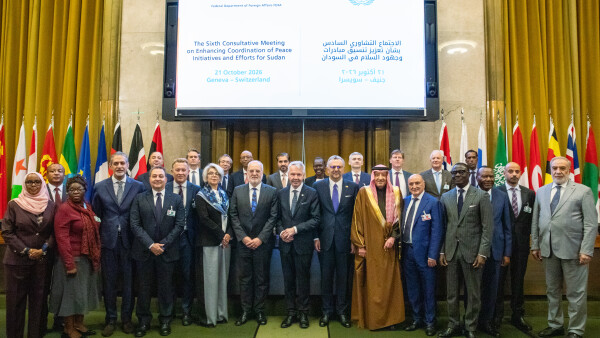
Sixth Consultative Meeting on Enhancing Coordination of Peace Initiatives and Efforts for Sudan
1
1
1
Edited News | UNICEF , WHO , UNHCR
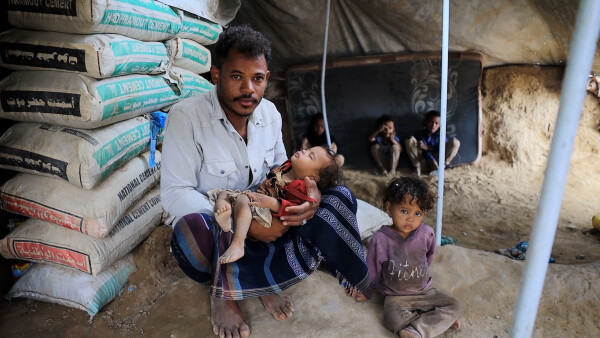
Yemen war continues to force families from homes amid hunger and disease
More than 250,000 people have now fled renewed fighting in Yemen, the UN said on Tuesday, citing particular concern for those sheltering in the southwestern city of Taiz and the wider governorate, where access is “essentially blocked”.

1
1
1
Edited News | UNICEF
A little over one year since a ceasefire agreement was announced between Hamas fighters and Israel, more than 340 children have been reported killed and hundreds more injured, the UN Children’s Fund, UNICEF, said on Friday.

1
1
1
Edited News | UNICEF , IFRC
Six weeks after Nepal’s deadly flooding disaster, communities are still struggling to rebuild their lives, but they will need sustained help as global warming increases the risk of another Himalayan catastrophe, the UN Children’s Fund (UNICEF) said on Friday.

1
1
1
Edited News | WHO
In suspected Russia plague death, testing and monitoring underway – WHO
The death of a lab worker in Russia’s Siberia region has sparked concerns about plague being the cause, the UN World Health Organization (WHO) said on Tuesday, adding that it was following the situation closely.

1
1
Edited News | OHCHR , UNOG
UN Human Rights Chief Volker Türk on Friday provided and oral update to the 63rd session of the Human rights Council on Ukraine.

1
1
1
Edited News | OHCHR , UNOG
UN Human Rights Chief Volker Türk on Friday provided and oral update to the 63rd session of the Human rights Council on the human rights situation in Haiti.

1
1
1
Edited News | WHO
Repeated delays in bringing lifesaving medicines, prosthetics and more from Israel into Gaza risk having devastating consequences on Palestinians who urgently need them in the wartorn enclave, the UN World Health Organization (WHO) said on Friday. “A truck full of non-priority supplies or the right supplies arriving too late, doesn't save lives. That's the question that actually matters," said Dr Reinhilde Van De Weerdt, WHO Representative in the OPT.

1
1
1
Edited News | WHO
DRC: Early access to care and oxygen decisive for Ebola patients’ survival – WHO
In the Democratic Republic of the Congo (DRC), health workers fighting the country’s largest-ever Ebola outbreak are struggling to overcome critical challenges to patient care, the UN World Health Organization (WHO) warned on Tuesday.

1
1
1
Edited News | OCHA , UN
Civilians in Iran are continuing to feel the consequences of months of conflict and military escalation, the UN’s top official in the country has said, as loss of life, damage to civilian infrastructure and mounting economic pressures leave many facing continued uncertainty.

1
1
1
Edited News | WHO , UNICEF
Aid agencies in Yemen highlighted the growing hunger emergency sparked by renewed fighting between Houthi opposition forces and Government troops, after mobile health clinics reported that hundreds of children displaced by the violence are suffering from the most deadly form of malnutrition.