

The United Nations Office at Geneva
Multimedia Newsroom
After five years of drought, southern Madagascar is at ‘periphery of famine’: WFP
A humanitarian catastrophe caused by unrelenting drought is unfolding in southern Madagascar where children and adults are on the “periphery of famine”, the UN World Food Programme (WFP) said on Friday, in an urgent appeal for international support.
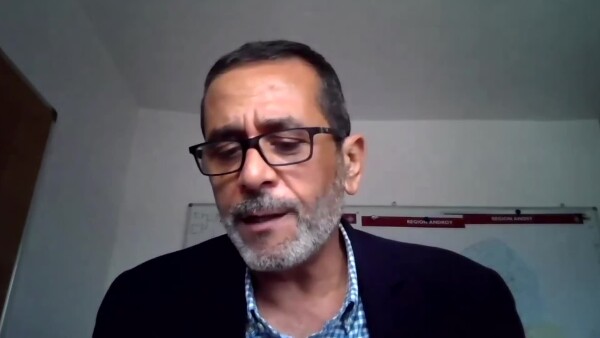
“The writing is on the wall, the images are horrific, and what I saw with my own eyes tell me we are heading towards a disaster and we need to stop that,” said veteran aid logistics expert and Senior Director of Operations in Madagascar, Amer Daoudi.
The development echoes previous alerts from the UN agency, which warned last September that families had already eaten their vital seed stocks over the lean season, leaving them nothing to grow for their next planting season.
“The situation is extremely, extremely, worrisome, scary. They are on the periphery of famine and these are images that I haven’t seen for quite some time across the globe,” Mr. Daoudi said, referring to the situation in “most districts” of southern Madagascar.
“What I witnessed yesterday - again with members of the diplomatic and international community as well as the Government - is horrific images of starving children, malnourished, and not only the children, mothers, parents and the population in the villages we visited.”
The situation has become so dire for many families that they have been forced to sell their cooking utensils – a final desperate coping measure – and eight in 10 people in some southern areas have resorted to eating locusts, raw red cactus fruits or wild leaves.
This had led to “whole villages shutting down and moving to the nearest urban centres”, Mr. Daoudi said, although some were likely too weak to make the relatively short journey.
“There is no place to flee (except) the nearest urban centre, if they can make it, but some of the condition of the people I saw yesterday, will not even make the 40 kilometres track.”
Detailed needs assessments are expected to be completed over the weekend, although data about how many people have already died from hunger in this latest humanitarian emergency in southern Madagascar is unclear.
The UN agency reported that malnutrition in children under five has almost doubled in the last four months and is now at “an alarming” 16.5 per cent, according to latest Government data.
The worst affected district is Ambovombe where child malnutrition is 27 per cent, according to WFP, noting that youngsters with acute malnutrition are four times more likely to die than healthy children.
“If a child dies, they bury (it), there is no reporting, there is no official type (of) reporting to take these numbers, same thing with grown-ups,” said Mr. Daoudi, highlighting the impact of “five years’ consecutive droughts, climatic changes and (a) deteriorating food security situation”.
WFP has appealed for $74 million for the next six months to respond to the emergency “and prevent a catastrophe”.
It currently helps up to 750,000 people a month via food and cash distributions, but
at least 1.35 million people require emergency assistance.
“We need the resources yesterday,” Mr. Daoudi said, speaking via Zoom from Antananarivo. “Because in order to turn resources into mouths…into food in the mouths of people, it will take some time. The infrastructure is extremely bad, it takes forever to get cargo into Madagascar and then from the ports into the affected areas, given how large the area is and how dispersed the population are.”
ends
STORY: Southern Madagascar Hunger Crisis - WFP
TRT: 02 min 38s
SOURCE: UNTV CH
RESTRICTIONS: NONE
LANGUAGE: ENGLISH / NATS
ASPECT RATIO: 16:9
DATELINE: 30 APRIL 2021 GENEVA, SWITZERLAND
SHOTLIST
- Exterior wide shot, Palais des Nations flag alley, nations’ flags flying, a cloudy day.
- Wide shot, podium with speakers in a near-empty Room XIV in line with COVID-19 distancing measures, Palais des Nations.
- SOUNDBITE (English) — Amer Daoudi, Senior Director of Operations in Madagascar, WFP (UN World Food Programme): “The situation is extremely, extremely, worrisome, scary. They are on the periphery of famine and these are images that I haven’t seen for quite some time across the globe.”
- Medium wide shot, attendee using listening device to rear, Room XIV, Palais des Nations.
- SOUNDBITE (English) — Amer Daoudi, Senior Director of Operations in Madagascar, WFP (UN World Food Programme): “What I witnessed yesterday again with members of the diplomatic and international community as well as the Government, is horrific images of starving children, malnourished, and not only the children, mothers, parents and the population in the villages we visited.”
- Medium shot, attendee sitting in front of laptop, Room XIV, Palais des Nations.
- SOUNDBITE (English) — Amer Daoudi, Senior Director of Operations in Madagascar, WFP (UN World Food Programme): “The writing is on the wall, the images are horrific, and what I saw with my own eyes tells me we are heading towards a disaster and we need to stop that.”
- Wide shot, attendee sitting to rear, Room XIV, Palais des Nations.
- SOUNDBITE (English) — Amer Daoudi, Senior Director of Operations in Madagascar, WFP (UN World Food Programme): “We’re already witnessing villages, whole villages, shutting down and moving to the nearest urban centres.”
- Medium shot, attendee using his phone in foreground and cameraman to rear, Room XIV, Palais des Nations
- SOUNDBITE (English) — Amer Daoudi, Senior Director of Operations in Madagascar, WFP (UN World Food Programme): “There is no place to flee, so with the nearest urban centre, if they can make it, but some of the condition of the people I saw yesterday, will not even make the 40 kilometres track.”
- Wide medium shot, seat alley and attendee sitting to rear, Room XIV, Palais des Nations.
- SOUNDBITE (English) — Amer Daoudi, Senior Director of Operations in Madagascar, WFP (UN World Food Programme): “If a child dies, they bury (it), there is no reporting, there is no official type (of) reporting to take these numbers, same thing with grown-ups.”
- Medium wide shot, attendees sitting in Room XIV, Palais des Nations.
- SOUNDBITE (English) — Amer Daoudi, Senior Director of Operations in Madagascar, WFP (UN World Food Programme): “We have reached to this point the due to five years’ consecutive droughts, climatic changes and deteriorating food security situation in southern Madagascar.”
- Wide medium shot, attendee sitting in Room XIV, Palais des Nations.
- SOUNDBITE (English) — Amer Daoudi, Senior Director of Operations in Madagascar, WFP (UN World Food Programme): “We need the resources yesterday. Because in order to turn resources into mouths…into food in the mouths of people, it will take some time. The infrastructure is extremely bad, it takes forever to get cargo into Madagascar and then from the ports into the affected areas, given how large the area is and how dispersed the population are.”
- Medium shot, TV broadcasting in foreground and podium with speakers to rear, Room XIV, Palais des Nations.
Similar Stories

1
1
1
Edited News | OCHA , UNICEF , WFP
Aid agencies warned on Friday of the fast-developing humanitarian emergency inside Taiz City in Yemen, which has been encircled by de facto Houthi forces fighting government troops along the country’s west coast.

2
17
1
2
Edited News , Press Conferences , Images | OCHA , WMO
Two UN agencies teamed up on Wednesday to issue an appeal for immediate assistance to help communities already being impacted by the strongest El Niño on record.

3
16
2
2
Edited News , B-roll , Conferences , Images | UNITED NATIONS , UNOG
Sixth Consultative Meeting on Enhancing Coordination of Peace Initiatives and Efforts for Sudan

1
1
1
Edited News | UNICEF , WHO , UNHCR
Yemen war continues to force families from homes amid hunger and disease
More than 250,000 people have now fled renewed fighting in Yemen, the UN said on Tuesday, citing particular concern for those sheltering in the southwestern city of Taiz and the wider governorate, where access is “essentially blocked”.

1
1
1
Edited News | UNICEF
A little over one year since a ceasefire agreement was announced between Hamas fighters and Israel, more than 340 children have been reported killed and hundreds more injured, the UN Children’s Fund, UNICEF, said on Friday.

1
1
1
Edited News | UNICEF , IFRC
Six weeks after Nepal’s deadly flooding disaster, communities are still struggling to rebuild their lives, but they will need sustained help as global warming increases the risk of another Himalayan catastrophe, the UN Children’s Fund (UNICEF) said on Friday.

1
1
1
Edited News | WHO
In suspected Russia plague death, testing and monitoring underway – WHO
The death of a lab worker in Russia’s Siberia region has sparked concerns about plague being the cause, the UN World Health Organization (WHO) said on Tuesday, adding that it was following the situation closely.

1
1
Edited News | OHCHR , UNOG
UN Human Rights Chief Volker Türk on Friday provided and oral update to the 63rd session of the Human rights Council on Ukraine.

1
1
1
Edited News | OHCHR , UNOG
UN Human Rights Chief Volker Türk on Friday provided and oral update to the 63rd session of the Human rights Council on the human rights situation in Haiti.

1
1
1
Edited News | WHO
Repeated delays in bringing lifesaving medicines, prosthetics and more from Israel into Gaza risk having devastating consequences on Palestinians who urgently need them in the wartorn enclave, the UN World Health Organization (WHO) said on Friday. “A truck full of non-priority supplies or the right supplies arriving too late, doesn't save lives. That's the question that actually matters," said Dr Reinhilde Van De Weerdt, WHO Representative in the OPT.

1
1
1
Edited News | WHO
DRC: Early access to care and oxygen decisive for Ebola patients’ survival – WHO
In the Democratic Republic of the Congo (DRC), health workers fighting the country’s largest-ever Ebola outbreak are struggling to overcome critical challenges to patient care, the UN World Health Organization (WHO) warned on Tuesday.

1
1
1
Edited News | OCHA , UN
Civilians in Iran are continuing to feel the consequences of months of conflict and military escalation, the UN’s top official in the country has said, as loss of life, damage to civilian infrastructure and mounting economic pressures leave many facing continued uncertainty.