

The United Nations Office at Geneva
Multimedia Newsroom
Background:
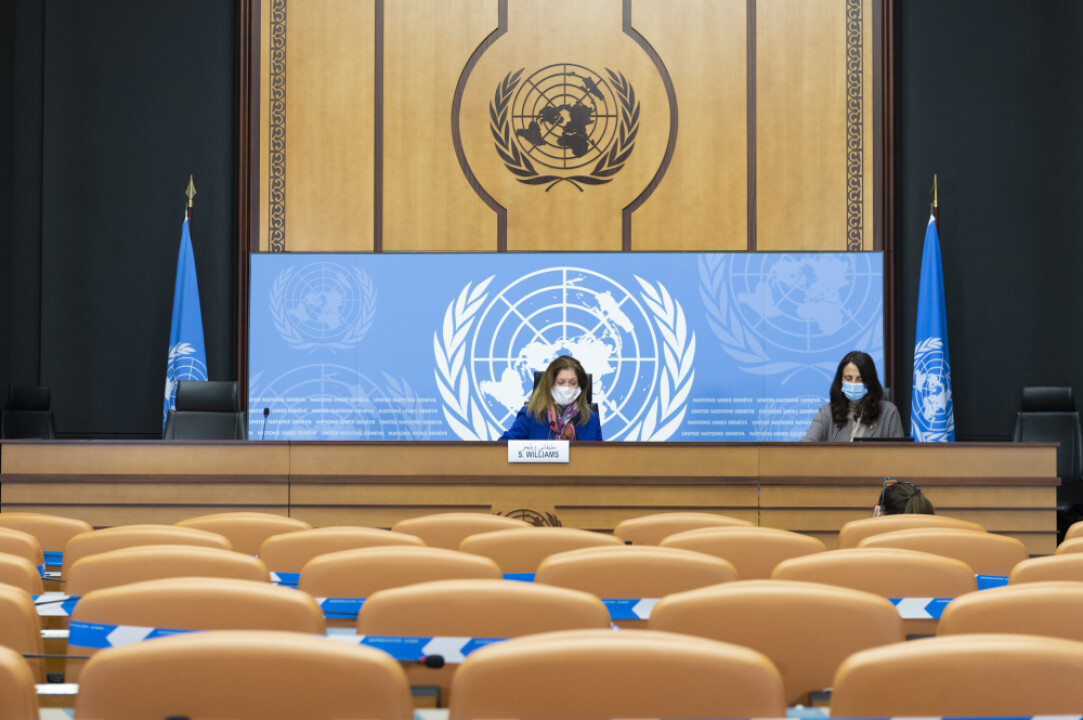
The Libyan Political Dialogue Forum (LPDF)’s Advisory Committee met from 13-16 January at the Palais des Nations in Geneva, Switzerland.
The Committee was recently established to discuss outstanding issues related to the selection mechanism of a unified executive and to put forward concrete and practical recommendations upon which the LDFP plenary shall decide.
The national elections date of December 24, 2021 remains a sine qua non for the United Nations Support Mission in Libya (UNSMIL), a guiding principle and unrenounceable goal. In this sense, the Committee’s mandate will be strictly time-bound.
The 18 members of the Committee represent a broad geographical and political diversity and includes the participation of women, youth and cultural components.
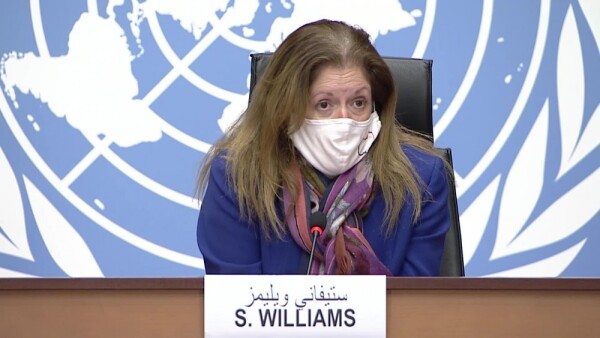
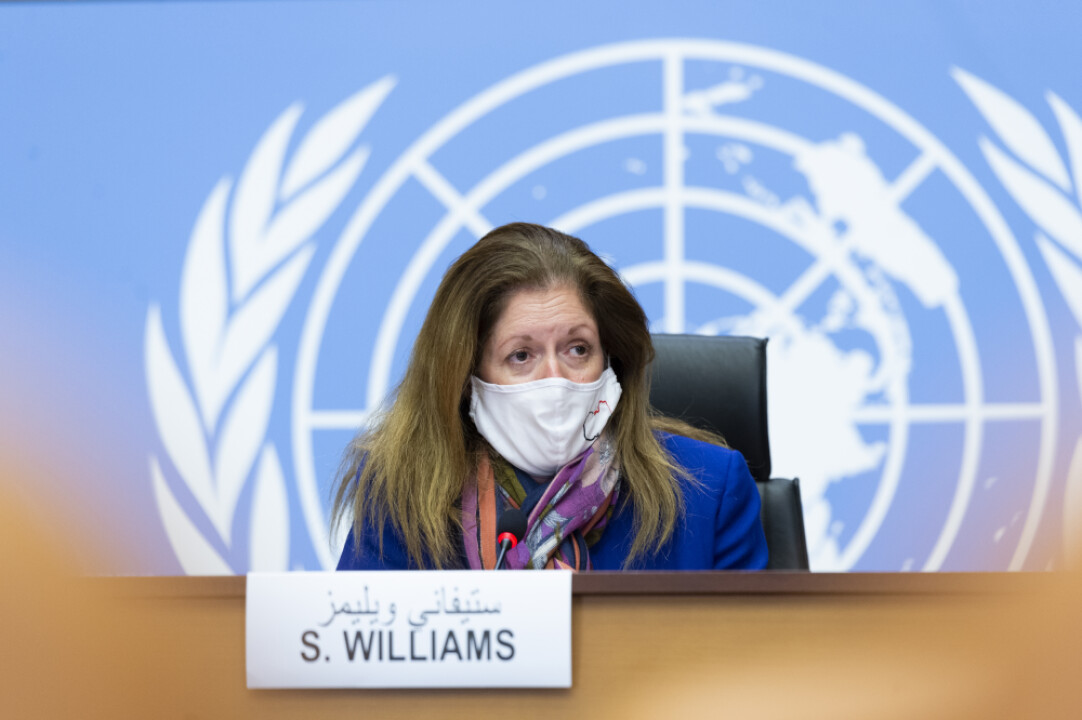
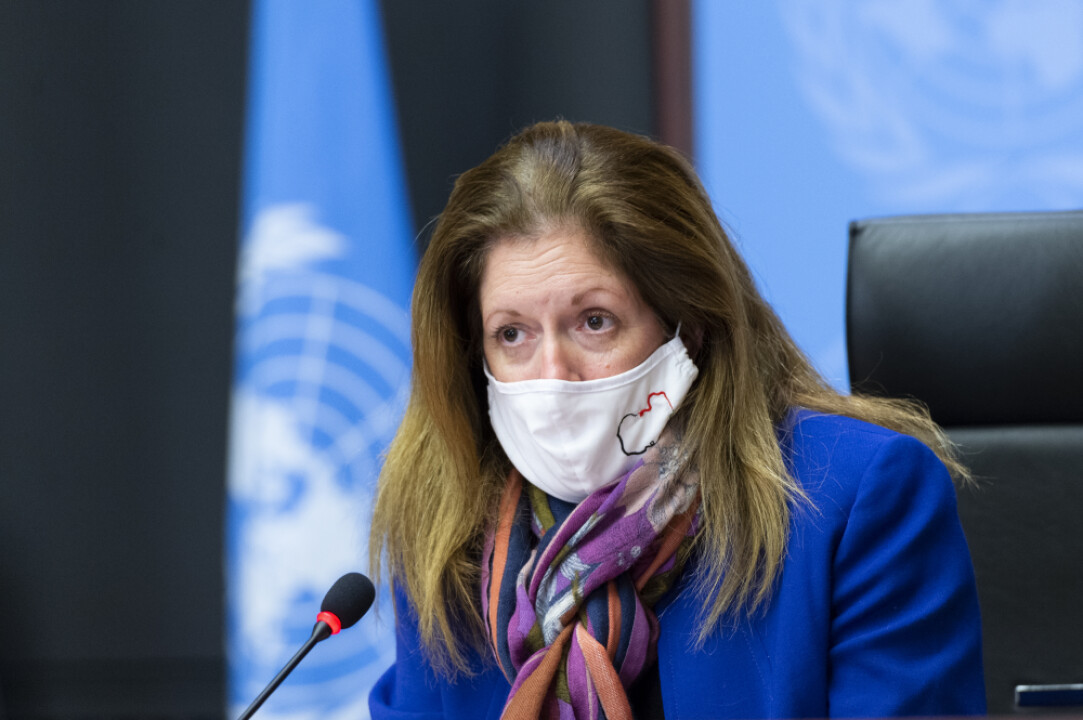
Transcript of Opening Remarks by Stephanie Turco Williams, Acting Special Representative of the Secretary-General and Head of the United Nations Support Mission in Libya, at a Press Conference
Palais des Nations, Geneva, 16 January 2021
Good evening, thank you for being here on a Saturday.
Over the past months, and under the umbrella of the United Nations, Libyans have come together to build bridges within and across the various tracks of the Berlin process in order to genuinely tackle the issues that have driven Libya’s long-standing conflict, including the armed conflict itself, its economic roots, the political crisis and division, and the need for accountability, transitional justice and reconciliation. This is a Libyan-Libyan process. It is not being brokered by foreign powers in smoke-filled rooms in faraway capitals.
The Roadmap that was charted in Tunis in November is the first critical step to renew the political legitimacy of Libyan institutions and to restore their sovereignty through the holding of national elections on December 24 of this year. Through the Roadmap the Libyan Political Dialogue Forum also agreed clear steps leading to these elections that shall be held on an agreed upon constitutional basis, and the Roadmap set out a very reasonable timeframe for the politicians and the relevant institutions to live up to their responsibility to complete these steps - with built in contingencies in the event the institutions fail or impede the process.
In Tunis, the Libyan Political Dialogue Forum also agreed on the need to restructure the executive authority to govern Libya in the run-up to these elections. This new, unified government would be tasked with putting in place the necessary conditions for the elections to take place. It will also launch national reconciliation that will seek to combat corruption and restore the delivery of public services across the country.
As you know, we have convened the advisory committee of the Libyan Political Dialogue Forum here in Geneva since Wednesday. With us here is a group of 18 members selected and nominated from within the broader group of the 75 composing the Libyan Political Dialogue Forum. This is an advisory committee formed to overcome the deadlock on the mechanism for the selection mechanism for this temporary executive authority, in line with the Tunis Roadmap agreed upon in mid-November.
I am very pleased to report that the Advisory Committee members truly rose to the occasion and they have met their responsibility with a constructive spirit, cooperative efforts, and a great deal of patriotism. During these deliberations, I have witnessed a spirit of fraternity, solidarity, and a commitment to put the interests of the country and the Libyan people first and foremost. I wish to extend my heartfelt thanks to the Advisory Committee members for their efforts, and to the rest of the Dialogue members for their continued support during these consultations.
I am happy to announce – and I congratulate them - on reaching an agreement on a recommended selection mechanism that has now been shared with the remaining members of the Libyan Political Dialogue Forum, earlier this afternoon. The Plenary will vote on this mechanism on Monday. They have taken indeed a decisive step towards meeting the goals that were set in Tunis.
On the basis of the proposal devised by the Advisory Committee, each electoral college shall separately nominate their respective representative to the Presidency Council based on the principle of agreement and selection 70 per cent. If this is not possible, lists shall be formed from all regions. Each list shall consist of 4 persons who will specify the position for which they are running: i.e. President of the Presidency Council, member of Presidency Council, or Prime Minister. In order for the list to be presented for voting by the Plenary, it must receive 17 endorsements (8 from the West, 6 from the East, and 3 from the South). The winning list shall be the one that receives 60% of the votes of the Plenary in the first round. If none of the lists receive this percentage, the two lists that received the highest percentage shall compete in the second round. The winning list in that round shall be the one that receives 50%+1 in the Plenary.
I believe this decision reached today is the best possible compromise, as this proposal respects the regional dimension, and it indeed encourages people to work across the divide and across regions, in order to strengthen understanding and to build unity in the country. And it embodies the principles of full inclusivity, transparency and fair representation across regions and within different population groups.
I want to emphasize that the UN will not in any way be involved in composing the lists. As I have repeatedly stated, this is a Libyan-Libyan solution. Our role is to support and facilitate.
On Monday, January 18, UNSMIL will call upon the Political Dialogue members to vote on the proposed mechanism. The vote on the mechanism will be conducted over a 24-hour period. We will announce the results on January 19, 2021, after voting has been completed. The threshold for agreement that was agreed by the Advisory Committee on the selection mechanism is 63% of those who participate in the vote. If this percentage, if the percentage of 63% is not attained, we will conduct a second round of voting that will be held two days later. The required threshold for agreement for the second round is 50%+1 of those who participate in the vote.
It is important to reflect and to remind everyone that what we are talking about here is a temporary, unified executive authority that will be replaced by a permanent, democratically elected government, chosen by the Libyan people on December 24th of this year.
Our principles are unambiguous: a temporary unified executive staffed by Libyan patriots who want to share responsibility rather than to divide the cake. This temporary executive has a clear and limited mandate, and as I said, that expires on the date of the elections are held on the 24th of December. We have set the table to decide a selection mechanism that does embody these principles, and my message to the Libyan people today is: with this breakthrough that we have seen, your patriotic and committed representatives here in the Advisory Committee have fulfilled, you know, their commitments, and have done so in a very admirable manner. Thank you very much.
CH1 (L): English / Ch2 (R): Arabic
Similar Stories
1
1
1
Press Conferences | IOM , UNDRR
UN stresses importance of household preparedness for disaster risk reduction.
1
1
1
Statements , Press Conferences | OHCHR
1
1
1
Press Conferences | UNHCR , UNICEF , IFRC , OHCHR , UN WOMEN , IOM , OCHA , WHO
UNHCR – ExCom Meeting, UNICEF – Nepal Recovery, IFRC – Flash Floods, WHO – Mental Health, IOM – South Sudan Floods, OCHA – DRC Humanitarian aid, UNHCR – Sahel Displacement, UNICEF – Yemen Update, IOM – Gaza Shelter, UN Women – Gaza Women, OHCHR – Arrests and detentions of Syrians by Israeli force
2
1
2
Press Conferences | UNCTAD
Presentation of the Trade and Developement Report 2026
Embargoed until 9 October 2026 at 11 a.m. (Geneva Time)
UNCTAD: UNCTAD’s flagship report finds that governments increasingly use industrial, trade, financial and technology policies to pursue economic and national security objectives. Market access and the ability to move into higher-value activities now depend more heavily on technology, finance and geopolitics.
1
1
1
Press Conferences | UPU
Release of the State of the Postal Sector Report 2026
1
1
1
Press Conferences | IOM , ITU , UNECE , UNICEF , WHO , WMO
UNICEF: Ebola, DRC - children orphans or separating them from parents and caregivers; IOM: Humanitarian needs in Djibouti amid arrivals from Yemen and increased migrant movements; WHO: Darfur, scale of health needs far exceeds available resources; WMO co-sponsored Global Heat Forum, Bangkok, monthly Global Seasonal Climate Update; UNECE: UN Forum of Mayors; ITU Plenipotentiary Conference 2026; WHO: child and adolescent obesity guidelines and new global roadmap to tackle pregnancy hypertension, a leading cause of maternal mortality
1
1
1
Press Conferences | OCHA , UN WOMEN , UNHCR , WFP , WHO , WTO , UNEP
OCHA – $160M CERF allocation to 12 underfunded crises; UNHCR – 5.8M refugee children remain out of school amid funding cuts; UN Women – Middle East escalation and food security among women/girls; WHO – Gaza supplies and overall situation; WFP – Yemen food insecurity and impact on global hunger ; UNEP - First International Conference of the Global Framework on Chemicals in Geneva | 16-20 November 2026
1
1
1
Press Conferences | UNHCR , WHO
Yemen's health system nears collapse amid conflict, causing rising casualties and medicine shortages.
1
1
1
Press Conferences | HRC
Update by the Expert Mechanism to Advance Racial Justice and Equality in Law Enforcement
1
1
1
Press Conferences | WIPO , WHO , UNICEF , UNHCR , IOM , WFP , FAO
WIPO Global Innovation Index 2026 launch and press conference, WHO Composition of influenza vaccines for the 2027 Southern Hemisphere flu season, UNICEF Yemen hunger and malnutrition; UNHCR Sudan displacement into Chad; IOM Ebola and population movements in DRC; WFP emergency food assistance in Nepal; and FAO food loss and waste.
2
1
2
Press Conferences | UNCTAD
Gaza reconstruction needs reach $71.5 billion as Palestinian economy and public finances face severe strain. Latest UNCTAD report documents the loss of decades of development gains, economic collapse in Gaza and tightening economic constraints in the West Bank.
The report identifies three immediate priorities: transferring withheld Palestinian revenues, safeguarding the banking system and aligning reconstruction support with the documented scale of damage and economic losses.
1
1
1
Press Conferences | HRC
Press conference on the situation of human rights in Nicaragua by the UN Group of Human Rights Experts