

The United Nations Office at Geneva
Multimedia Newsroom
First of four UN humanitarian airlifts for Ethiopia refugees lands in Khartoum
An airplane loaded with humanitarian supplies for people fleeing violence in Ethiopia’s Tigray region has arrived in the Sudanese capital Khartoum, the UN said on Friday, in an appeal for international assistance to cope with the growing number of refugees seeking shelter in neighbouring Sudan.
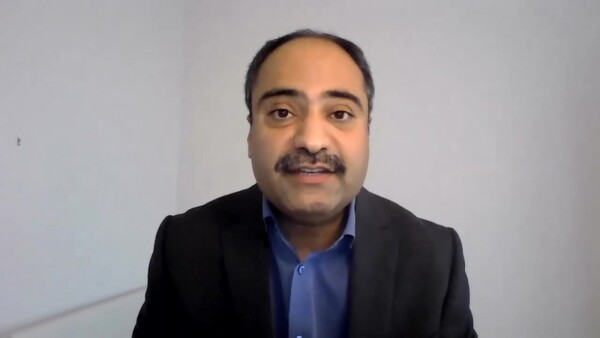
“This morning, a plane carrying 32 tons of UNHCR emergency aid from our global stockpiles in Dubai landed in Khartoum,” said UNHCR spokesperson Babar Baloch. “Another airlift is scheduled to leave Dubai on Monday with an additional 100 tonnes of additional relief items…In total, we plan to send four airlifts.”
Since the start of fighting in Ethiopia’s northern Tigray region in early November, more than 43,000 refugees have crossed into Sudan.
People have sought shelter amid reports of a heavy build-up of tanks and artillery around regional capital Mekelle, following the Ethiopian Government’s ultimatum to forces loyal to the Tigray People’s Liberation Front (TPLF) to surrender.
Earlier this week, UN Secretary-General António Guterres expressed deep concern over the unfolding situation, before urging “the leaders of Ethiopia to do everything possible to protect civilians, uphold human rights and ensure humanitarian access for the provision of much-needed assistance”.
In a statement, the UN chief also called for the “free and safe movement of people searching for safety and assistance, regardless of their ethnic identity, across both national and international borders".
Echoing the Secretary-General’s message, UN High Commissioner for Human Rights Michelle Bachelet, warned that both sides were using rhetoric that was “dangerously provocative and risks placing already vulnerable and frightened civilians in grave danger”.
Even before violence erupted in Ethiopia’s northern Tigray regions causing mass displacement, Sudan was already home to nearly one million refugees, mainly from South Sudan.
In eastern Sudan, UNHCR has continued to step up its relief effort, together with national and local partners. “Aid is being mobilized to help refugees almost half of whom are children,” Mr. Baloch said, citing “complex logistical challenges”.
To date the agency has helped to relocate nearly 10,000 refugees to Um Rakuba site, 70 kilometres inside Sudan, as work continues to put up shelters and improve services.
Family tracing services have been established and these have already reunited many separated refugees.
Mr. Baloch noted that although humanitarian agencies continue to provide shelter and other facilities to help refugees, “more resources are required and Sudan needs international support urgently”.
Inside Tigray region, concerns continue to grow for the safety of civilians in Mekelle, home to more than 500,000 people, and some 96,000 Eritrean refugees based in four camps.
“Without humanitarian access, it’s very hard to say what is actually going on, on the ground but there were worrying reports that fighting was getting closer to these refugee camps” Mr. Baloch told journalists via video link at a regular UN Geneva briefing.
Before the conflict erupted, UNHCR had “regular access to the refugees”, the UNHCR official continued, but “since the start of it, we have lost access”.
Highlighting the refugees’ reliance on humanitarian distributions, Mr. Baloch said that “according to what they have had…they will be running out of food as of Monday”.
- Exterior wide shot, Palais des Nations flag alley, nations’ flags flying, a cloudy day.
- Medium shot, TV broadcast in foreground and podium with speakers to rear, Room XIV, Palais des Nations.
- SOUNDBITE (English) — Babar Baloch, spokesperson for UNHCR (UN Office of the High Commissioner for Refugees): “This morning, a plane carrying 32 tonnes of UNHCR emergency aid from our global stockpiles in Dubai landed in Khartoum. Another airlift is scheduled to leave Dubai on Monday with an additional 100 tonnes of relief items.”
- Medium shot, journalists sitting and using listening devices, Room XIV, Palais des Nations.
- SOUNDBITE (English) — Babar Baloch, UNHCR spokesperson: “Aid is being mobilized to help refugees almost half of whom are children. Humanitarian agencies continue to provide shelter and other facilities to help refugees, but more resources are required and Sudan needs international support urgently.”
- Medium shot, journalist typing on laptop, Room XIV, Palais des Nations.
- SOUNDBITE (English) — Babar Baloch, UNHCR spokesperson: “This concerns also and worries remain for the refugees, Eritrean refugees who are in…who are in the four refugee camps inside the Tigray; without humanitarian access it’s very hard to say what is actually going on, on the ground but there were worrying reports that fighting was getting closer to these refugee camps.”
- Medium shot, journalist looking at phone and readjusting his glasses, Room XIV, Palais des Nations.
- SOUNDBITE (English) — Babar Baloch, UNHCR spokesperson: “And so, before the start of the conflict, I mean we have regular access to the refugees, they are 96,000; since the start of it, we have lost access. We had done… and these refugees rely on the humanitarian distributions. We had done the distribution, we had done before the start of the conflict, according to what they have had is they will be running out of food as of Monday.”
- Medium shot, UN staff member typing on laptop and using listening device, Room XIV, Palais des Nations.
- Close-up, hands typing on laptop, Room XIV, Palais des Nations.
- Medium shot, journalist sitting and typing on laptop, Room XIV, Palais des Nations.
Similar Stories
1
1
1
Edited News | OCHA , UNICEF , WFP
Aid agencies warned on Friday of the fast-developing humanitarian emergency inside Taiz City in Yemen, which has been encircled by de facto Houthi forces fighting government troops along the country’s west coast.

2
17
1
2
Edited News , Press Conferences , Images | OCHA , WMO
Two UN agencies teamed up on Wednesday to issue an appeal for immediate assistance to help communities already being impacted by the strongest El Niño on record.
3
16
2
2
Edited News , B-roll , Conferences , Images | UNITED NATIONS , UNOG
Sixth Consultative Meeting on Enhancing Coordination of Peace Initiatives and Efforts for Sudan

1
1
1
Edited News | UNICEF , WHO , UNHCR
Yemen war continues to force families from homes amid hunger and disease
More than 250,000 people have now fled renewed fighting in Yemen, the UN said on Tuesday, citing particular concern for those sheltering in the southwestern city of Taiz and the wider governorate, where access is “essentially blocked”.

1
1
1
Edited News | UNICEF
A little over one year since a ceasefire agreement was announced between Hamas fighters and Israel, more than 340 children have been reported killed and hundreds more injured, the UN Children’s Fund, UNICEF, said on Friday.

1
1
1
Edited News | UNICEF , IFRC
Six weeks after Nepal’s deadly flooding disaster, communities are still struggling to rebuild their lives, but they will need sustained help as global warming increases the risk of another Himalayan catastrophe, the UN Children’s Fund (UNICEF) said on Friday.

1
1
1
Edited News | WHO
In suspected Russia plague death, testing and monitoring underway – WHO
The death of a lab worker in Russia’s Siberia region has sparked concerns about plague being the cause, the UN World Health Organization (WHO) said on Tuesday, adding that it was following the situation closely.

1
1
Edited News | OHCHR , UNOG
UN Human Rights Chief Volker Türk on Friday provided and oral update to the 63rd session of the Human rights Council on Ukraine.

1
1
1
Edited News | OHCHR , UNOG
UN Human Rights Chief Volker Türk on Friday provided and oral update to the 63rd session of the Human rights Council on the human rights situation in Haiti.

1
1
1
Edited News | WHO
Repeated delays in bringing lifesaving medicines, prosthetics and more from Israel into Gaza risk having devastating consequences on Palestinians who urgently need them in the wartorn enclave, the UN World Health Organization (WHO) said on Friday. “A truck full of non-priority supplies or the right supplies arriving too late, doesn't save lives. That's the question that actually matters," said Dr Reinhilde Van De Weerdt, WHO Representative in the OPT.

1
1
1
Edited News | WHO
DRC: Early access to care and oxygen decisive for Ebola patients’ survival – WHO
In the Democratic Republic of the Congo (DRC), health workers fighting the country’s largest-ever Ebola outbreak are struggling to overcome critical challenges to patient care, the UN World Health Organization (WHO) warned on Tuesday.

1
1
1
Edited News | OCHA , UN
Civilians in Iran are continuing to feel the consequences of months of conflict and military escalation, the UN’s top official in the country has said, as loss of life, damage to civilian infrastructure and mounting economic pressures leave many facing continued uncertainty.