

The United Nations Office at Geneva
Multimedia Newsroom
Rohingya refugees require urgent support and solution, UNHCR says
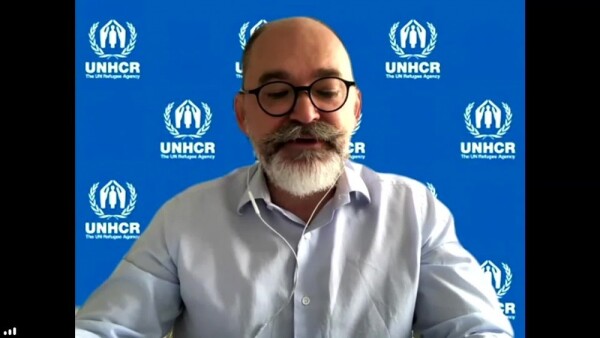
Ahead of a donor conference for Rohingya refugees, UNHCR, the UN Refugee Agency, stressed today the need for stronger international support and a redoubling of efforts to find solutions for this stateless and displaced population. Speaking to the media at the United Nations in Geneva, Andrej Mahecic, spokesperson for the UN Refugee Agency (UNHCR), said that “the ongoing humanitarian response is facing a dramatic shortfall this year as less than half of the requested funds have been received so far”. Mahecic added that “in 2020, the United Nations has appealed for more than US$ 1 billion to meet the humanitarian needs of Rohingya refugees in Bangladesh. The spread of the COVID-19 pandemic has added layers of new challenges and needs to an already complex and massive refugee emergency”, he said.
This Thursday (22 October) UNHCR is co-hosting together with the United States, United Kingdom and European Union a virtual donor conference to meet urgent humanitarian needs of forcibly displaced Rohingya both inside and outside Myanmar. About 860,000 Rohingya refugees are currently living in settlements across Bangladesh’s Cox’s Bazar district. The majority, around 740,000, fled from Myanmar during the most recent displacement crisis in August 2017. Other countries in the region host some 150,000 Rohingya refugees. It’s estimated that about 600,000 live in Myanmar’s Rakhine State in deplorable living conditions.
“Across the entire region, most Rohingya live on the margins of society and they need to be assured access to basic healthcare, clean drinking water, a reliable food supply, or meaningful work and educational opportunities”, UNHCR’s Mahecic said. “The COVID-19 pandemic has worsened their living conditions, made access to services even more challenging, increased the risk of sexual and gender-based violence, and exacerbated the impacts of infectious diseases for displaced Rohingya living in crowded camps, such as those in Cox’s Bazar and in Rakhine State”.
UNHCR urges the international community and countries to not only maintain the support for refugees and their hosts, but also to look for solutions. “The focus of search for solutions to this crisis must be the voluntary, safe, dignified and sustainable return of Rohingya refugees and other displaced people to their homes or to a place of their choosing in Myanmar”, UNHCR said. “The responsibility for creating conditions conducive to the safe and sustainable return of Rohingya rests with Myanmar authorities”.
According to UNHCR, some of the solutions to be discussed should be: lift restrictions on freedom of movement, enable displaced Rohingya to return to their own villages and provide a clear pathway to citizenship.
The Rohingya people have face decades of systematic discrimination, statelessness and targeted violence in Rakhine State, Myanmar. Entire villages were burned to the ground, families were separated and killed, and women and girls were gang raped. Most of the people who escaped were severely traumatized after witnessing unspeakable atrocities. They have found temporary shelter in refugee camps around Cox’s Bazar, Bangladesh, which is now home to the world’s largest refugee camp.
- Exterior wide shot, Palais des Nations flag alley, nations’ flags flying, a cloudy day.
- Security vehicle driving in front of UN Palais
- Wide shot, press briefing room
- SOUNDBITE (English) — Andrej Mahecic, Spokesperson for the UN Refugee Agency (UNHCR): “The ongoing humanitarian response is facing a dramatic shortfall this year as less than half of the requested funds have been received so far. In 2020, the United Nations has appealed for more than US$ 1 billion to meet the humanitarian needs of Rohingya refugees in Bangladesh. The spread of the COVID-19 pandemic has added layers of new challenges and needs to an already complex and massive refugee emergency”.
- Medium shot, journalists
- SOUNDBITE (English) - Andrej Mahecic, Spokesperson for the UN Refugee Agency (UNHCR): “Across the entire region, most Rohingya live on the margins of society and they need to be assured access to basic healthcare, clean drinking water, a reliable food supply, or meaningful work and educational opportunities. The COVID-19 pandemic has worsened their living conditions, made access to services even more challenging, increased the risk of sexual and gender-based violence, and exacerbated the impacts of infectious diseases for displaced Rohingya living in crowded camps, such as those in Cox’s Bazar and in Rakhine State”.
- Medium shot, journalist on the phone
- SOUNDBITE (English) - Andrej Mahecic, Spokesperson for the UN Refugee Agency (UNHCR): “The focus of search for solutions to this crisis must be the voluntary, safe, dignified and sustainable return of Rohingya refugees and other displaced people to their homes or to a place of their choosing in Myanmar. The responsibility for creating conditions conducive to the safe and sustainable return of Rohingya rests with Myanmar authorities”.
- Wide shot, room
- Medium shot, podium and screen on the side
- Close up, journalist
- Medium shot, two journalists
Similar Stories

1
1
1
Edited News | UNICEF
A little over one year since a ceasefire agreement was announced between Hamas fighters and Israel, more than 340 children have been reported killed and hundreds more injured, the UN Children’s Fund, UNICEF, said on Friday.

1
1
1
Edited News | UNICEF , IFRC
Six weeks after Nepal’s deadly flooding disaster, communities are still struggling to rebuild their lives, but they will need sustained help as global warming increases the risk of another Himalayan catastrophe, the UN Children’s Fund (UNICEF) said on Friday.

1
1
1
Edited News | WHO
In suspected Russia plague death, testing and monitoring underway – WHO
The death of a lab worker in Russia’s Siberia region has sparked concerns about plague being the cause, the UN World Health Organization (WHO) said on Tuesday, adding that it was following the situation closely.

1
1
Edited News | OHCHR , UNOG
UN Human Rights Chief Volker Türk on Friday provided and oral update to the 63rd session of the Human rights Council on Ukraine.

1
1
1
Edited News | OHCHR , UNOG
UN Human Rights Chief Volker Türk on Friday provided and oral update to the 63rd session of the Human rights Council on the human rights situation in Haiti.

1
1
1
Edited News | WHO
Repeated delays in bringing lifesaving medicines, prosthetics and more from Israel into Gaza risk having devastating consequences on Palestinians who urgently need them in the wartorn enclave, the UN World Health Organization (WHO) said on Friday. “A truck full of non-priority supplies or the right supplies arriving too late, doesn't save lives. That's the question that actually matters," said Dr Reinhilde Van De Weerdt, WHO Representative in the OPT.

1
1
1
Edited News | WHO
DRC: Early access to care and oxygen decisive for Ebola patients’ survival – WHO
In the Democratic Republic of the Congo (DRC), health workers fighting the country’s largest-ever Ebola outbreak are struggling to overcome critical challenges to patient care, the UN World Health Organization (WHO) warned on Tuesday.

1
1
1
Edited News | OCHA , UN
Civilians in Iran are continuing to feel the consequences of months of conflict and military escalation, the UN’s top official in the country has said, as loss of life, damage to civilian infrastructure and mounting economic pressures leave many facing continued uncertainty.

1
1
1
Edited News | WHO , UNICEF
Aid agencies in Yemen highlighted the growing hunger emergency sparked by renewed fighting between Houthi opposition forces and Government troops, after mobile health clinics reported that hundreds of children displaced by the violence are suffering from the most deadly form of malnutrition.
1
1
1
Edited News | UNHCR
Displacement on the rise in Yemen as fighting continues - UNHCR
As hostilities worsen in Yemen, more people have been fleeing their homes, further intensifying the humanitarian crisis within the region, the UN Refugee Agency (UNHCR) warned on Tuesday.
1
1
1
Edited News | IOM , OHCHR , UNFPA , UNOG , UNHCR , WHO
Yemen’s humanitarian crisis growing by the hour amid spike in displacement
Yemenis displaced by renewed fighting have described fleeing for their lives amid shelling and gunfire, aid agencies reported on Friday, while highlighting the dramatic increase in humanitarian needs in the country and in Djibouti, where thousands have sought shelter.
1
1
1
Edited News | OHCHR , UNOG
The UN Human Rights Office issued on Friday a report documenting a shocking pattern of sexual violence amid Russia’s full-scale armed attack on Ukraine.