

The United Nations Office at Geneva
Multimedia Newsroom
Ukraine: Russian attacks on energy terrorize population as winter starts; could trigger major ‘crisis within crisis’
The UN’s top aid official in Ukraine expressed concern on Friday about “continuous attacks” on energy production sites and distribution facilities.
The heavy humanitarian and psychological toll of these strikes is compounded by the expectation that this year’s winter will be much colder than last year’s, and that the destruction of energy infrastructure may outpace the rate of recovery.
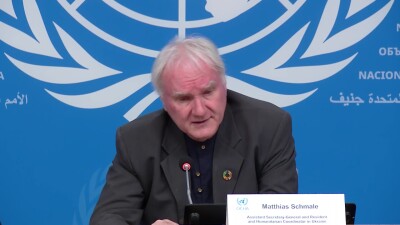
“We are very worried about people living in high-rise buildings in cities near the front line – that could turn into a major crisis,” Matthias Schmale, the UN Resident and Humanitarian Coordinator in Ukraine, told reporters in Geneva.
Mr. Schmale’s comments came a day after a massive Russian attack across Ukraine reportedly targeted critical energy infrastructure in civilian areas.
With 705 munitions reportedly deployed the barrage was among the largest since Russia’s full-scale invasion began in 2022.
If people in frontline cities like Zaporizhzhia, Kharkiv or Dnipro in high-rise apartment buildings are “stuck without electricity or safe water for days on end” during a harsh winter, Mr. Schmale explained, then “there is no way that with the available resources we would be able to respond to a major crisis within a crisis.”
“Destroying energy production and distribution capacity as winter starts clearly impacts the civilian population and is a form of terror,” Mr. Schmale insisted. “The continued strikes throughout the country also give a sense of nowhere is safe… in my almost one and a half years there, [I] feel and sense that the mental health impact of this war is increasing,” he added.
“This is increasingly a technological war, a drone war,” the UN official said, highlighting that drones were responsible for one third of all recorded civilian casualties in 2025. This year has seen a 30 per cent overall increase in civilian deaths compared with 2024.
Civilian casualties of Thursday’s attack included a seven-year-old girl who died in the hospital following a strike in the central region of Vinnytsia. Earlier this week an attack severely damaged a children’s hospital in Kherson City, injuring a child and health workers.
The World Health Organization (WHO) has recorded 364 attacks impacting healthcare facilities in Ukraine between January and October 2025.
Mr. Schmale recounted his own recent experience, which he described as a “poignant moment,” visiting a kindergarten in Kharkiv right after it had been struck by three missiles.
“I just imagined as a parent, you drop your children in the morning at a kindergarten, you then get called back two and a half hours later… to pick up your traumatized children who've just experienced three missiles hitting their kindergarten,” he said.
“This notion of safety for vulnerable people and children is really being violated all the time.”
Turning to the situation in the Ukrainian territories occupied by the Russian Federation, the UN humanitarian coordinator said that the longer the war goes on for, “the more we are at risk of forgetting the vulnerable people” in those areas.
According to estimates “about a million people are vulnerable in the so-called temporarily occupied territories,” he said.
Mr. Schmale also warned of the “attacks on fundamental rights” which are ongoing there, “including attacks on citizenship.”
“My understanding is that the occupying forces are insisting that Ukrainians are now registering for Russian documents in the occupied territories, and if they don't do so, they will be considered illegal and are subject to either deportation or arrest,” he said.
The UN official expressed further concern over dwindling funds for the Ukraine humanitarian response, describing a “downward trend.”
“In 2022, we had over $4 billion for humanitarian work in Ukraine. [In] 2023, it was still $2.6 [billion]. Last year, remarkably, 2024, with everything else going on in the world, still $2.2 [billion],” he said.
“This year we stand at $1.1 [billion], so far half of what we got last year and with two months to go” till the end of 2025, he added.
“The impact that we're beginning to see is in particular on our capacity to support the most vulnerable,” he warned, urging the international community not to forget Ukraine.
Humanitarians are all the more concerned as there seems to be no end in sight to the conflict.
“On the ground in Kyiv and in my extensive travels to frontline areas, this feels increasingly like a protracted war,” Mr. Schmale remarked. “We have been through phases this year where there was cautious optimism that it might end… right now on the ground, it doesn't feel at all like it's ending anytime soon,” he said.
-ENDS -
STORY Ukraine humanitarian update – UN OCHA
TRT: 3:29”
SOURCE: UNTV CH
RESTRICTIONS: NONE
LANGUAGE: ENGLISH/NATS
ASPECT RATIO: 16:9
DATELINE: 31 OCTOBER 2025 GENEVA, SWITZERLAND
1. Exterior wide shot: Palais des Nations, Flag Alley.
2. Medium-wide shot: Speakers at the podium of the press conference; journalist in the Press room.
3. SOUNDBITE (English) – Matthias Schmale, UN Assistant Secretary-General, Resident and Humanitarian Coordinator in Ukraine: “As winter has started, we are particularly worried about the continuous attacks on the energy production capacities and energy distribution facilities, including gas.”
4. Medium shot: Speakers at the podium of the press conference; speaker on screens.
5. SOUNDBITE (English) – Matthias Schmale, UN Assistant Secretary-General, Resident and Humanitarian Coordinator in Ukraine: “If the winter is much colder than last year, as is for the moment anticipated, if the energy destruction continues and the rate of recovery does not hold up with the rate of destruction, we are very worried about especially people living in high-rise buildings in cities near the front line - that could turn into a major crisis.”
6. Wide shot: Speakers at the podium of the press conference; speaker on screens.
7. SOUNDBITE (English) – Matthias Schmale, UN Assistant Secretary-General, Resident and Humanitarian Coordinator in Ukraine: “Destroying energy production and distribution capacity as winter starts clearly impacts the civilian population and is a form of terror. The continued strikes throughout the country also give a sense of nowhere is safe and I really, in my almost one and a half years there, feel and sense that the mental health impact of this war is increasing.”
8. Medium shot: Journalist in the press room; speaker on screens.
9. SOUNDBITE (English) – Matthias Schmale, UN Assistant Secretary-General, Resident and Humanitarian Coordinator in Ukraine: “This year has been deadlier than 2024 in terms of civilian casualties, a 30 per cent increase so far this year over last year. I think it's also important to take on board that this is increasingly a technological war, a drone war. Drone attacks are increasing.”
10. Medium shot: Speakers at the podium of the press conference; journalist in the Press room.
11. SOUNDBITE (English) – Matthias Schmale, UN Assistant Secretary-General, Resident and Humanitarian Coordinator in Ukraine: “I just imagined as a parent, you drop your children in the morning at a kindergarten, you then get called back two and a half hours later, you know, to pick up your traumatized children who've just experienced three missiles hitting their kindergarten. So this notion of safety for vulnerable people and children is really being violated all the time.”
12. Medium shot: Journalist in the Press room.
13. SOUNDBITE (English) – Matthias Schmale, UN Assistant Secretary-General, Resident and Humanitarian Coordinator in Ukraine: “The longer this takes, the more we are at risk of forgetting the vulnerable people in the so-called occupied territories, temporarily occupied territories. As we are preparing our plans and budgets for next year, we are making a reasonable assumption that about a million people are vulnerable in the so-called temporarily occupied territories.”
14. Medium shot: Journalist in the Press room.
15. SOUNDBITE (English) – Matthias Schmale, UN Assistant Secretary-General, Resident and Humanitarian Coordinator in Ukraine: “My understanding is that the occupying forces are insisting that Ukrainians are now registering for Russian documents in the occupied territories, and if they don't do so, they will be considered illegal and are subject to either deportation or arrest.”
16. Close shot: Speaker at the podium of the press conference.
17. SOUNDBITE (English) – Matthias Schmale, UN Assistant Secretary-General, Resident and Humanitarian Coordinator in Ukraine: “On the ground in Kyiv and in my extensive travels to frontline areas, this feels increasingly like a protracted war. We have been through phases this year where there was cautious optimism that it might end. Right now on the ground, it doesn't feel at all like it's ending anytime soon.”
18. Medium shot: Speakers at the podium of the press conference.
Similar Stories

1
1
1
Edited News | UNICEF , WHO , UNHCR
Yemen war continues to force families from homes amid hunger and disease
More than 250,000 people have now fled renewed fighting in Yemen, the UN said on Tuesday, citing particular concern for those sheltering in the southwestern city of Taiz and the wider governorate, where access is “essentially blocked”.

1
1
1
Edited News | UNICEF
A little over one year since a ceasefire agreement was announced between Hamas fighters and Israel, more than 340 children have been reported killed and hundreds more injured, the UN Children’s Fund, UNICEF, said on Friday.

1
1
1
Edited News | UNICEF , IFRC
Six weeks after Nepal’s deadly flooding disaster, communities are still struggling to rebuild their lives, but they will need sustained help as global warming increases the risk of another Himalayan catastrophe, the UN Children’s Fund (UNICEF) said on Friday.

1
1
1
Edited News | WHO
In suspected Russia plague death, testing and monitoring underway – WHO
The death of a lab worker in Russia’s Siberia region has sparked concerns about plague being the cause, the UN World Health Organization (WHO) said on Tuesday, adding that it was following the situation closely.

1
1
Edited News | OHCHR , UNOG
UN Human Rights Chief Volker Türk on Friday provided and oral update to the 63rd session of the Human rights Council on Ukraine.

1
1
1
Edited News | OHCHR , UNOG
UN Human Rights Chief Volker Türk on Friday provided and oral update to the 63rd session of the Human rights Council on the human rights situation in Haiti.

1
1
1
Edited News | WHO
Repeated delays in bringing lifesaving medicines, prosthetics and more from Israel into Gaza risk having devastating consequences on Palestinians who urgently need them in the wartorn enclave, the UN World Health Organization (WHO) said on Friday. “A truck full of non-priority supplies or the right supplies arriving too late, doesn't save lives. That's the question that actually matters," said Dr Reinhilde Van De Weerdt, WHO Representative in the OPT.

1
1
1
Edited News | WHO
DRC: Early access to care and oxygen decisive for Ebola patients’ survival – WHO
In the Democratic Republic of the Congo (DRC), health workers fighting the country’s largest-ever Ebola outbreak are struggling to overcome critical challenges to patient care, the UN World Health Organization (WHO) warned on Tuesday.

1
1
1
Edited News | OCHA , UN
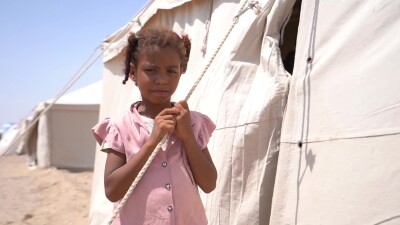
Civilians in Iran are continuing to feel the consequences of months of conflict and military escalation, the UN’s top official in the country has said, as loss of life, damage to civilian infrastructure and mounting economic pressures leave many facing continued uncertainty.
1
1
1
Edited News | WHO , UNICEF
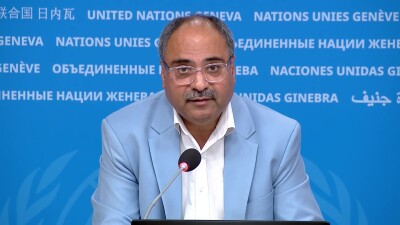
Aid agencies in Yemen highlighted the growing hunger emergency sparked by renewed fighting between Houthi opposition forces and Government troops, after mobile health clinics reported that hundreds of children displaced by the violence are suffering from the most deadly form of malnutrition.
1
1
1
Edited News | UNHCR
Displacement on the rise in Yemen as fighting continues - UNHCR
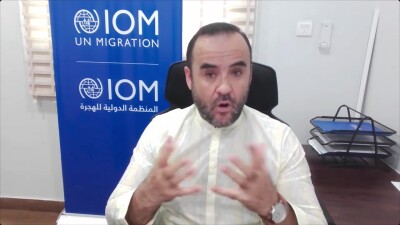
As hostilities worsen in Yemen, more people have been fleeing their homes, further intensifying the humanitarian crisis within the region, the UN Refugee Agency (UNHCR) warned on Tuesday.
1
1
1
Edited News | IOM , OHCHR , UNFPA , UNOG , UNHCR , WHO
Yemen’s humanitarian crisis growing by the hour amid spike in displacement
Yemenis displaced by renewed fighting have described fleeing for their lives amid shelling and gunfire, aid agencies reported on Friday, while highlighting the dramatic increase in humanitarian needs in the country and in Djibouti, where thousands have sought shelter.