

The United Nations Office at Geneva
Multimedia Newsroom
Gaza: Hospitals continue to overflow with people injured while seeking food - WHO
As besieged Palestinian civilians face widespread malnutrition and starvation, hospitals in the Strip are increasingly overwhelmed by the influx of victims of shootings and other injuries at food distribution areas, warns the World Health Organization.
The overall health situation remains catastrophic across the Gaza Strip”, said Dr. Rik Peeperkorn, WHO Representative in the occupied Palestinian territories (OPT). Speaking to journalists in Geneva, he explained that “less than 50 per cent of the hospitals and less than 38 per cent of the primary healthcare centers across the Gaza Strip are partially or minimally functional”.
The scale of the bloodshed has pushed an already struggling health care system to the breaking point, as medical workers scramble to treat the flow of casualties. “Hospitals are particularly overwhelmed by the injuries coming from the food distribution areas, which are also driving persistent shortage of blood and plasma,” warned Dr. Peeperkorn.
“The number of casualties among people trying to access food supplies has increased to 1,655 fatalities and more than 11,800 injuries since 27 of May 2025,” he emphasized.
Many of these victims have been shot at in areas near food distribution sites run by the Israeli and US-backed Gaza Humanitarian Foundation (GHF), or while simply waiting for aid drops, according to humanitarians. The United Nations have been calling for the restoration of a unified, UN-led coordination and distribution of aid based on international humanitarian law.
Hospital bed occupancy across all of Gaza`s hospitals has far surpassed capacity, reaching 240 per cent at Al-Shifa Hospital and 300 per cent at Ahli Hospital, according to the UN health agency. Meanwhile critical shortages persist, with 52 per cent of essential medicines and 68 per cent of medical consumables, such as syringes and bandages, completely out of stock.
Hunger and malnutrition continue to devastate Gaza. As of the 5th of August, 147 people have died from the effects of malnutrition in 2025. This includes 98 adults, 49 children, among them 39 were under five years old.
“Nearly 12,000 children under five years in Gaza were identified to be suffering from acute malnutrition in July, the highest monthly figure recorded to date, according to the Nutrition Cluster,” Dr. Peeperkorn emphasized. Amongst them are 2,562 children who suffer from severe acute malnutrition (SAM), forty of whom were hospitalized at stabilization centres. These numbers are likely underestimates, according to the UN health agency.
Malnutrition weakens the immune system, increasing susceptibility to infections and diseases. Since 7 August, WHO has registered 452 suspected meningitis cases, the highest number recorded since the beginning of the escalation in October 2023.
Seventy-six suspected cases of Guillain-Barré syndrome (GBS) -- a post-infection syndrome where the body's immune system mistakenly attacks the peripheral nervous system, causing muscle weakness and sometimes paralysis -- were also reported across the Strip.
“It comes following respiratory and gastro-intestinal bacterial viral infections,” explained Dr. Rik Peeperkorn. “This highlights the exacerbation of risk factors and the necessity to mitigate that,” he insisted, referring to the collapse of WASH infrastructure (water, sanitation, hygiene), the overcrowded shelter camps, the malnutrition and restricted access to healthcare.
The first line treatment for GBS are intravenous immunoglobulin (IVIG) or plasma exchange (PLEX), neither of which is at all available in Gaza. Anti-inflammatories medicines are also missing.
Since June, WHO has brought in 80 trucks of medical supplies. Entry processes remain slow and challenging, according to the UN health agency, with items such as assistive devices, ICU beds, freezers, cold chain medicines, and anesthesia machines often denied entry.
Israeli displacement orders are a further impediment, WHO says: the agency’s Gaza City warehouse now sits in a military evacuation zone, as do one primary health care centre and one medical point.
With the expected evacuation of Gaza City, four hospitals, including a field hospital, an ambulance center and medical points that lie within 1,000 meters of the displacement area are likely to be further flooded by evacuees in need of treatment.
Amid concerns over the incursion, the World Health Organization wants to ensure hospitals are “at least a little stocked-up. We currently cannot do that, and we also want to rebuild our own reserves,” Dr. Peeperkorn said.
Ends --
Story: “Gaza health update – WHO” – Tuesday 12 August 2025
Speakers:
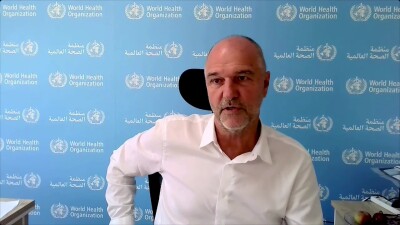
- Dr Rik Peeperkorn, World Health Organization (WHO) Representative in the occupied Palestinian territories (OPT) - (from Jerusalem)
TRT: 02’00”
SOURCE: UNTV CH
LANGUAGE: ENGLISH / NATS
ASPECT RATIO: 16:9
DATELINE: 12 August 2025 - GENEVA, SWITZERLAND
Geneva Press briefing
SHOTLIST
- Exterior medium shot: UN flag alley.
- Wide shot of the podium with speakers at the press conference room and on-screen.
- SOUNDBITE (English) Dr Rik Peeperkorn, WHO Representative in the occupied Palestinian territories (OPT): “The overall health situation remains catastrophic across the Gaza Strip. Currently, less than 50 per cent of the hospitals and less than 38 per cent of the primary healthcare centers across the Gaza Strip are partly or minimally functional. Also, we've seen a stark reduction in so-called medical points.”
- Medium lateral shot of the press conference room.
- SOUNDBITE (English) Dr Rik Peeperkorn, WHO Representative in the occupied Palestinian territories (OPT): “Hospitals are particularly overwhelmed by the injuries coming from the food distribution areas, which are also driving persistent shortage of blood and plasma. The number of casualties among people trying to access food supplies has increased to 1.655 fatalities and more than 11,800 injuries since 27 of May 2025.”
- Medium shot: journalists at the press conference room.
- SOUNDBITE (English) Dr Rik Peeperkorn, WHO Representative in the occupied Palestinian territories (OPT): “Nearly 12,000 children under five years old in Gaza were identified to be suffering from acute malnutrition in July, the highest monthly figure recorded to date.”
- Medium shot of the press conference room.
- SOUNDBITE (English) Dr Rik Peeperkorn, WHO Representative in the occupied Palestinian territories (OPT): “The Guillain-Barré syndrome is a post-infection syndrome and comes following respiratory and gastro-intestinal bacterial viral infections. And this highlights the exacerbation of risk factors and the necessity to mitigate that.”
- Medium shot of the press conference room and journalists.
- SOUNDBITE (English) Dr Rik Peeperkorn, WHO Representative in the occupied Palestinian territories (OPT): “The whole discussion is about an incursion in Gaza: we want to make sure that hospitals are at least a little stocked-up. We currently cannot do that, and we also want to rebuild our own reserves.”
- Various shots of the press conference room.
Similar Stories

1
1
1
Edited News | OCHA , UNICEF , WFP
Aid agencies warned on Friday of the fast-developing humanitarian emergency inside Taiz City in Yemen, which has been encircled by de facto Houthi forces fighting government troops along the country’s west coast.

2
17
1
2
Edited News , Press Conferences , Images | OCHA , WMO
Two UN agencies teamed up on Wednesday to issue an appeal for immediate assistance to help communities already being impacted by the strongest El Niño on record.

3
16
2
2
Edited News , B-roll , Conferences , Images | UNITED NATIONS , UNOG
Sixth Consultative Meeting on Enhancing Coordination of Peace Initiatives and Efforts for Sudan

1
1
1
Edited News | UNICEF , WHO , UNHCR
Yemen war continues to force families from homes amid hunger and disease
More than 250,000 people have now fled renewed fighting in Yemen, the UN said on Tuesday, citing particular concern for those sheltering in the southwestern city of Taiz and the wider governorate, where access is “essentially blocked”.

1
1
1
Edited News | UNICEF
A little over one year since a ceasefire agreement was announced between Hamas fighters and Israel, more than 340 children have been reported killed and hundreds more injured, the UN Children’s Fund, UNICEF, said on Friday.

1
1
1
Edited News | UNICEF , IFRC
Six weeks after Nepal’s deadly flooding disaster, communities are still struggling to rebuild their lives, but they will need sustained help as global warming increases the risk of another Himalayan catastrophe, the UN Children’s Fund (UNICEF) said on Friday.

1
1
1
Edited News | WHO
In suspected Russia plague death, testing and monitoring underway – WHO
The death of a lab worker in Russia’s Siberia region has sparked concerns about plague being the cause, the UN World Health Organization (WHO) said on Tuesday, adding that it was following the situation closely.

1
1
Edited News | OHCHR , UNOG
UN Human Rights Chief Volker Türk on Friday provided and oral update to the 63rd session of the Human rights Council on Ukraine.

1
1
1
Edited News | OHCHR , UNOG
UN Human Rights Chief Volker Türk on Friday provided and oral update to the 63rd session of the Human rights Council on the human rights situation in Haiti.

1
1
1
Edited News | WHO
Repeated delays in bringing lifesaving medicines, prosthetics and more from Israel into Gaza risk having devastating consequences on Palestinians who urgently need them in the wartorn enclave, the UN World Health Organization (WHO) said on Friday. “A truck full of non-priority supplies or the right supplies arriving too late, doesn't save lives. That's the question that actually matters," said Dr Reinhilde Van De Weerdt, WHO Representative in the OPT.

1
1
1
Edited News | WHO
DRC: Early access to care and oxygen decisive for Ebola patients’ survival – WHO
In the Democratic Republic of the Congo (DRC), health workers fighting the country’s largest-ever Ebola outbreak are struggling to overcome critical challenges to patient care, the UN World Health Organization (WHO) warned on Tuesday.

1
1
1
Edited News | OCHA , UN
Civilians in Iran are continuing to feel the consequences of months of conflict and military escalation, the UN’s top official in the country has said, as loss of life, damage to civilian infrastructure and mounting economic pressures leave many facing continued uncertainty.