

The United Nations Office at Geneva
Multimedia Newsroom
Children in Gaza are going to bed starving, says aid agency
The biggest UN aid agency in Gaza on Tuesday condemned the two-month Israeli blockade on Gaza that has left families sharing a single tin of food at mealtime and the sick and injured without lifesaving medical help, amid daily bombardment.
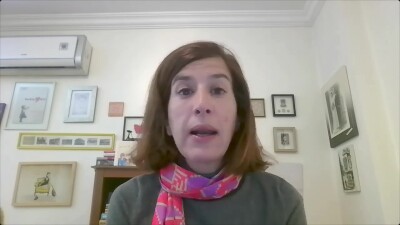
“The siege on Gaza is the silent killer of children of older people,” said Juliette Touma, spokesperson for the UN agency for Palestine refugees, UNRWA: “Families - whole families, seven or eight people - are resorting to sharing one can of beans or peas.”
In an update to journalists in Geneva, Ms. Touma stressed that thousands of trucks carrying relief supplies continue to be denied entry to Gaza. “We have just over 5,000 trucks in several parts of the region with lifesaving supplies that are ready to come in,” she explained.
“This decision is crippling the humanitarian efforts…and threatening the lives and survival of civilians in Gaza, who are also going through heavy bombardment day in, day out.”
Rafah ‘obliterated’
Destruction to the southern city of Rafah has left it “obliterated”, UNRWA said. Formerly the largest entry point for aid into the enclave via Egypt, aerial videos purportedly of Rafah show buildings levelled as far as the eye can see. “Rafah is nothing like the city it used to be…In every direction there is only destruction,” the UN agency said.
Today, 97 per cent of Rafah has been impacted by forced displacement orders, which have uprooted around 150,000 people. Almost 12 months ago, the Israeli military moved into Rafah, displacing 1.4 million people and leaving their homes, health facilities and shelters damaged or destroyed.
Starting from scratch
“More than 90 per cent of the population [of Gaza] have been displaced,” Ms. Touma continued. “Not once, not twice, some people have been displaced 12 times or 13 times, so on average, once a month - and so they have to start from scratch. The dependency on humanitarian aid is absolutely massive. We estimate that the entire population is reliant on humanitarian relief.”
Aid convoys ready and waiting
Before the war erupted in October 2023, Gazans relied on 500 trucks a day to deliver the food and other basic goods that they needed. But no humanitarian or commercial supplies have entered since 2 March this year, when Israel imposed a full blockade on the territory.
This is by far the longest ban on aid moving into the Strip since the start of the war in October 2023, following deadly Hamas-led terror attacks on Israel that killed some 1,250 people and left more than 250 taken hostage.
The blockade has emptied warehouses of food, medical supplies, shelter materials and safe water – fuelling a black market “where prices have increased from 10 to 20, sometimes 40 times, and you cannot give anything to your children and you’re seeing your children starving”, Ms. Touma said.
According to the UN World Food Programme (WFP) food prices rose 1,400 per cent in recent weeks compared to the ceasefire period from 19 January to 18 March 2025.
Last Friday, the UN agency delivered its last remaining stocks to community kitchens that provide hot – if basic – meals of lentil soup and rice. The kitchens are expected to fully run out of food within days while another 16 closed over the weekend. In addition, all 25 WFP-supported bakeries have now closed.
“We're likely to see more community kitchens closing down for the simple reason that they need supplies,” Ms. Touma explained.
Burning plastic
Daily challenges for Gazans include finding food and fuel to cook, because of a lack of cooking gas. “Families are resorting to burning plastic to cook their meals,” UNRWA’s Ms. Touma said. “Imagine not having anything to feed your children. Children in Gaza are going to bed starving. The elderly and sick are not able to take to get medical care because of shortages in supplies in hospitals and clinics.”
UNRWA staff’s ordeal
Nearly 300 UNRWA staff have been killed since the war began in October 2023 and more than 50 of the UN agency’s staff have been allegedly “detained and abused” by the Israeli authorities, Ms. Touma noted.
“We received this awful testimony from a colleague who was rounded up in Gaza, tortured while in Israeli detention and finally released,” she maintained. “He said to the Commissioner-General [Philippe Lazzarini], ‘I wished for death to end the nightmare I was living through.’”
Condemning the alleged ill-treatment of UNRWA staff in Israeli prisons, Mr. Lazzarini insisted that they had been “subjected to sleep deprivation, humiliation, threats of harm to them and their families and attacks by dogs. Many were subjected to forced confessions.”
Funding uncertainty
Meanwhile, UNRWA’s financial situation remains critical and “highly uncertain” based on current income forecasts and delays in forecasted contributions, Ms. Touma said. “Cashflow is managed monthly and we urgently require additional financial support if the agency is to survive.”
All partners that suspended funding to UNRWA in January 2024 amid allegations that some staff were involved in the 7 October attacks have now reinstated their support, except the United States.
However, in December last year, Sweden decided to stop all funding to UNRWA this year and the Netherlands will gradually decrease financial support to the agency over the next four years, starting in 2025 by reducing the amount from €19 million to €15 million, decreasing every year until 2029.
“The decision by Sweden and the Netherlands to stop/reduce funding to UNRWA in 2025 comes at the worst time for Palestine refugees,” the UN agency said.
ends
STORY: Gaza humanitarian update - UNRWA
TRT: 03’19”
SOURCE: UNTV CH
RESTRICTIONS: NONE
LANGUAGE: ENGLISH / NATS
ASPECT RATIO: 16:9
DATELINE: 29 April 2025 GENEVA, SWITZERLAND
Speaker:
- Juliette Touma, spokesperson, UNRWA (from Amman).
SHOTLIST
- Exterior medium shot: Palais des Nations, Flag Alley
- Wide shot of Press room showing Juliette Touma on TV screens.
- SOUNDBITE (English) – Juliette Touma, UNRWA: “It's almost been two months of a very tight siege. The State of Israel, as I'm sure you're all aware, banned the entry of humanitarian supplies into Gaza medical and commercial supplies alike, food vaccines for children and fuel included. This has been ongoing since 2 March 2025.”
- Medium-wide, TV screens showing speaker, journalists, podium.
- SOUNDBITE (English) – Juliette Touma, UNRWA: “This decision is crippling the humanitarian efforts, our own efforts and UNRWA and threatening the lives and survival of civilians in Gaza who are also going through heavy bombardment day in, day out.”
- Medium, Press room, podium speakers, control booths.
- SOUNDBITE (English) – Juliette Touma, UNRWA: “The siege on Gaza is the silent killer, is a silent killer of children of older people, of the most vulnerable in the community. What the siege means is that families - whole families, seven or eight people - are resorting to sharing one can of beans or peas.”
- Medium-wide, Press room, journalists, TV journalist.
- SOUNDBITE (English) – Juliette Touma, UNRWA: “Because of a lack of cooking gas, as one example, families are resorting to burning plastic to cook their meals.”
- Medium-wide, Press room, journalists.
- SOUNDBITE (English) – Juliette Touma, UNRWA: “Imagine not having anything to feed your children. Children in Gaza are going to bed starving. The elderly and sick are not able to take to get medical care because of shortages in supplies in hospitals and clinics.”
- Medium, TV screen showing speaker, journalists, TV journalist.
- SOUNDBITE (English) – Juliette Touma, UNRWA: “Our supplies are stuck outside of Gaza. We have just over 5,000 trucks in several parts of the region with lifesaving supplies that are ready to wait, to come to come in.”
- Medium, podium moderator, TV screen showing Ms. Touma.
- SOUNDBITE (English) – Juliette Touma, UNRWA: “We received this awful testimony from a colleague who was rounded up in Gaza, tortured while in Israeli detention and finally released. He said to the Commissioner-General, ‘I wished for death to end the nightmare I was living through.’”
- Medium-wide, Press room, journalists, podium moderator.
- SOUNDBITE (English) – Juliette Touma, UNRWA: “They've been detained and abused, they have been treated in the most shocking and inhumane way; they reported being beaten up and used as human shields. They were subjected to sleep deprivation, humiliation, threats of harm to them and to their families and attacks by dogs. Many were subjected to forced confessions.”
- Medium, journalist listening and writing.
- Medium, TV journalist filming.
- Medium, journalist.
Similar Stories

1
1
1
Edited News | OCHA , UNICEF , WFP
Aid agencies warned on Friday of the fast-developing humanitarian emergency inside Taiz City in Yemen, which has been encircled by de facto Houthi forces fighting government troops along the country’s west coast.

2
17
1
2
Edited News , Press Conferences , Images | OCHA , WMO
Two UN agencies teamed up on Wednesday to issue an appeal for immediate assistance to help communities already being impacted by the strongest El Niño on record.

3
16
2
2
Edited News , B-roll , Conferences , Images | UNITED NATIONS , UNOG
Sixth Consultative Meeting on Enhancing Coordination of Peace Initiatives and Efforts for Sudan

1
1
1
Edited News | UNICEF , WHO , UNHCR
Yemen war continues to force families from homes amid hunger and disease
More than 250,000 people have now fled renewed fighting in Yemen, the UN said on Tuesday, citing particular concern for those sheltering in the southwestern city of Taiz and the wider governorate, where access is “essentially blocked”.

1
1
1
Edited News | UNICEF
A little over one year since a ceasefire agreement was announced between Hamas fighters and Israel, more than 340 children have been reported killed and hundreds more injured, the UN Children’s Fund, UNICEF, said on Friday.

1
1
1
Edited News | UNICEF , IFRC
Six weeks after Nepal’s deadly flooding disaster, communities are still struggling to rebuild their lives, but they will need sustained help as global warming increases the risk of another Himalayan catastrophe, the UN Children’s Fund (UNICEF) said on Friday.

1
1
1
Edited News | WHO
In suspected Russia plague death, testing and monitoring underway – WHO
The death of a lab worker in Russia’s Siberia region has sparked concerns about plague being the cause, the UN World Health Organization (WHO) said on Tuesday, adding that it was following the situation closely.

1
1
Edited News | OHCHR , UNOG
UN Human Rights Chief Volker Türk on Friday provided and oral update to the 63rd session of the Human rights Council on Ukraine.

1
1
1
Edited News | OHCHR , UNOG
UN Human Rights Chief Volker Türk on Friday provided and oral update to the 63rd session of the Human rights Council on the human rights situation in Haiti.

1
1
1
Edited News | WHO
Repeated delays in bringing lifesaving medicines, prosthetics and more from Israel into Gaza risk having devastating consequences on Palestinians who urgently need them in the wartorn enclave, the UN World Health Organization (WHO) said on Friday. “A truck full of non-priority supplies or the right supplies arriving too late, doesn't save lives. That's the question that actually matters," said Dr Reinhilde Van De Weerdt, WHO Representative in the OPT.

1
1
1
Edited News | WHO
DRC: Early access to care and oxygen decisive for Ebola patients’ survival – WHO
In the Democratic Republic of the Congo (DRC), health workers fighting the country’s largest-ever Ebola outbreak are struggling to overcome critical challenges to patient care, the UN World Health Organization (WHO) warned on Tuesday.

1
1
1
Edited News | OCHA , UN
Civilians in Iran are continuing to feel the consequences of months of conflict and military escalation, the UN’s top official in the country has said, as loss of life, damage to civilian infrastructure and mounting economic pressures leave many facing continued uncertainty.