

The United Nations Office at Geneva
Multimedia Newsroom
Exhausted Gazans wake from another night of Israeli bombing: UN aid teams
Israel’s renewed bombing campaign and intensifying ground operation in Gaza are reversing gains achieved during the brief ceasefire, UN humanitarians said on Friday from inside the devastated enclave.
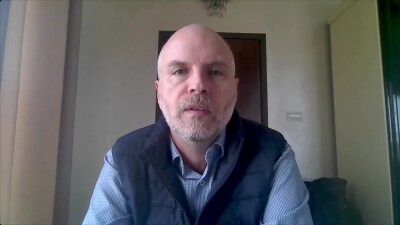
“We’re waking up from another intense night of bombardments, the fourth night of bombardment since the ceasefire abruptly broke down on Monday night…the situation is gravely, gravely concerning,” said Sam Rose, Senior Deputy Director of Affairs in Gaza for UNRWA, the UN agency for Palestine refugees (UNRWA).
Speaking from close to the Netzarim Corridor bisecting the Gaza Strip which Israeli security forces have begun to reoccupy, Mr. Rose said that bombardments “across the Gaza Strip” caused large-scale loss of life in the past four days.
His comments came as the Israeli Defense Minister reportedly issued instructions for further occupation of parts of Gaza and warned of partial annexation unless further hostages are released.
“Most of those deaths have occurred at night, the Ministry of Health here is reporting around 600 people killed; among those, around 200 women and children,” Mr. Rose told journalists via video link in Geneva. “Absolutely desperate tragedies.”
The International Federation of Red Cross and Red Crescent Societies (IFRC) also relayed familiar scenes of panic and desperation from medical and ambulance teams in Gaza: “Colleagues have had hundreds of call-outs across the Gaza Strip and responded to dozens of fatalities and injuries as bombing continues,” he said.
“Doctors are exhausted, essential medical supplies are running low and corridors are crowded with people either in need of treatment or waiting to find out whether their loved ones will survive.”
Evacuation order misery
UNRWA’s Mr. Rose also described the damaging impact of new Israeli evacuation orders on an estimated 100,000 Gazans, in addition to the Israeli decision on 2 March to stop all humanitarian deliveries into the enclave. Aid convoys had been allowed back into Gaza on 19 January, when the fragile six-week ceasefire between Hamas and Israel began.
“This is the longest period [without aid being trucked in] since the start of the conflict back in October 2023,” Mr. Rose insisted.
He added that if the ceasefire is not restored, it will result in “large-scale loss of life, damage to infrastructure property, increased risk of infectious disease and massive trauma for the one million children and for the two million civilians who live in Gaza. And it's worse this time because people are already exhausted.”
Bakery closure anxiety
The UNRWA senior officer warned that an estimated one million people in March will likely go without rations, “so we'll only reach one million people rather than than two million” he said, adding that six of the 25 bakeries that the UN World Food Programme supports have already closed.
Gazans worried about food shortages are already congregating around bakeries in greater numbers than before the aid blockade resumed.
“As this continues, we will see a gradual slide back into what we saw in the worst days of the conflicts in terms of looting, in terms of crowd problems, in terms of agitation and frustration, all translating into desperate conditions amongst the population,” Mr. Rose said.
He explained the risk of aid supply cuts to malnourished children in Gaza who need steady supplies for five to six weeks “just to stabilize their condition - there's no improvement in their weights (and) in their nutritional situation over those weeks”.
From the UN Children’s Fund, UNICEF, spokesperson James Elder condemned the impact of the war on the enclave’s youngsters, since it erupted on 7 October 2023 in response to Hamas-led terror attacks in Israel that killed around 1,250 people and left more than 250 taken hostage.
“Child psychologists would say our absolute nightmare is that they return home and then [the war] starts again. So, that’s the terrain that we've now entered. We don't have an example in modern history in terms of an entire child population needing mental health support. And there's no exaggeration that's the case.”
UNRWA’s Mr. Rose noted that before the resumption of Israeli bombing, the UN agency had restored primary healthcare to 200,000 people by reopening its health centres. In addition, children once again had access to education, with some 50,000 boys and girls back at school across central and southern Gaza.
“The images, the videos, the life and the happiness in the eyes of the children, the pupils was really something to behold,” Mr. Rose said. “One of the few positive stories that we'd have been able to communicate from from Gaza, but alas, all that is, is back to naught.”
ends
STORY: Gaza update – UNRWA, UNICEF, IFRC
TRT: 02’44”
SOURCE: UNTV CH
RESTRICTIONS: NONE
LANGUAGE: ENGLISH / NATS
ASPECT RATIO: 16:9
DATELINE: 21 March 2025 GENEVA, SWITZERLAND
Speakers:
- Sam Rose, UNRWA (from Gaza)
- Tommaso Della Longa, IFRC
- James Elder, UNICEF
SHOTLIST
- Exterior medium shot: Palais des Nations, Flag Alley
- Wide shot of podium with speakers.
- SOUNDBITE (English) – Sam Rose, UNRWA (from Gaza): “We're waking up from another intense night of bombardments, the fourth night of bombardment since the ceasefire abruptly broke down on Monday night and the situation is gravely, gravely concerning.”
- Medium shot podium speakers.
- SOUNDBITE (English) - Sam Rose, UNRWA (from Gaza): “Most of those deaths have occurred at night, the Ministry of Health here is reporting around 600 people killed. Amongst those, around 200 women and children. So, absolutely desperate tragedies that are occurring.”
- Wide shot of journalists, participants in Press room.
- SOUNDBITE (English) – Tommaso Della Longa, IFRC: “Colleagues have had hundreds of callouts across the Gaza Strip and responded to dozens of fatalities and injuries as bombing continues.”
- Medium-wide, Press room, journalists, participants.
- SOUNDBITE (English) – Tommaso Della Longa, IFRC: “Doctors are exhausted, essential medical supplies are running low and corridors are crowded with people either in need of treatment or waiting to find out whether their loved ones will survive.”
- Medium-wide shot of journalists, participants in Press room.
- SOUNDBITE (English) - Sam Rose, UNRWA (from Gaza): “No supplies having entered Gaza since the beginning of March, so for about 19 days. So, this is the longest period since the start of the conflict back in October 2023.”
- Medium-wide shot of journalists, participants in Press room.
- SOUNDBITE (English) - Sam Rose, UNRWA (from Gaza): “We know how this goes if the ceasefire is not restored, this means large-scale loss of life, damage to infrastructure, property, increased risk of infectious disease and massive, massive trauma for the one million children and for the two million civilians who live in Gaza. And it's worse this time because people are already exhausted.”
- Wide shot: Press room, control booths, TV screens showing remote speaker.
- SOUNDBITE (English) - Sam Rose, UNRWA (from Gaza): “We estimate that one million people in March will go without their rations, so we'll only reach one million people rather than two million people. Six of the 25 bakeries that WFP was supporting have already had to close down.”
- Medium, Press room participants.
- SOUNDBITE (English) – James Elder, UNICEF: “Child psychologists would say our absolute nightmare is that they return home and then it starts again. So, that’s the terrain that we've now entered. We don't have an example in modern history in terms of an entire child population needing mental health support. And there's no exaggeration that's the case.”
- Wide, Press room.
- Medium, podium speakers.
- Medium, Press room.
Similar Stories

1
1
1
Edited News | UNICEF , WHO , UNHCR
Yemen war continues to force families from homes amid hunger and disease
More than 250,000 people have now fled renewed fighting in Yemen, the UN said on Tuesday, citing particular concern for those sheltering in the southwestern city of Taiz and the wider governorate, where access is “essentially blocked”.

1
1
1
Edited News | UNICEF
A little over one year since a ceasefire agreement was announced between Hamas fighters and Israel, more than 340 children have been reported killed and hundreds more injured, the UN Children’s Fund, UNICEF, said on Friday.

1
1
1
Edited News | UNICEF , IFRC
Six weeks after Nepal’s deadly flooding disaster, communities are still struggling to rebuild their lives, but they will need sustained help as global warming increases the risk of another Himalayan catastrophe, the UN Children’s Fund (UNICEF) said on Friday.

1
1
1
Edited News | WHO
In suspected Russia plague death, testing and monitoring underway – WHO
The death of a lab worker in Russia’s Siberia region has sparked concerns about plague being the cause, the UN World Health Organization (WHO) said on Tuesday, adding that it was following the situation closely.

1
1
Edited News | OHCHR , UNOG
UN Human Rights Chief Volker Türk on Friday provided and oral update to the 63rd session of the Human rights Council on Ukraine.

1
1
1
Edited News | OHCHR , UNOG
UN Human Rights Chief Volker Türk on Friday provided and oral update to the 63rd session of the Human rights Council on the human rights situation in Haiti.

1
1
1
Edited News | WHO
Repeated delays in bringing lifesaving medicines, prosthetics and more from Israel into Gaza risk having devastating consequences on Palestinians who urgently need them in the wartorn enclave, the UN World Health Organization (WHO) said on Friday. “A truck full of non-priority supplies or the right supplies arriving too late, doesn't save lives. That's the question that actually matters," said Dr Reinhilde Van De Weerdt, WHO Representative in the OPT.

1
1
1
Edited News | WHO
DRC: Early access to care and oxygen decisive for Ebola patients’ survival – WHO
In the Democratic Republic of the Congo (DRC), health workers fighting the country’s largest-ever Ebola outbreak are struggling to overcome critical challenges to patient care, the UN World Health Organization (WHO) warned on Tuesday.

1
1
1
Edited News | OCHA , UN
Civilians in Iran are continuing to feel the consequences of months of conflict and military escalation, the UN’s top official in the country has said, as loss of life, damage to civilian infrastructure and mounting economic pressures leave many facing continued uncertainty.
1
1
1
Edited News | WHO , UNICEF
Aid agencies in Yemen highlighted the growing hunger emergency sparked by renewed fighting between Houthi opposition forces and Government troops, after mobile health clinics reported that hundreds of children displaced by the violence are suffering from the most deadly form of malnutrition.
1
1
1
Edited News | UNHCR
Displacement on the rise in Yemen as fighting continues - UNHCR
As hostilities worsen in Yemen, more people have been fleeing their homes, further intensifying the humanitarian crisis within the region, the UN Refugee Agency (UNHCR) warned on Tuesday.
1
1
1
Edited News | IOM , OHCHR , UNFPA , UNOG , UNHCR , WHO
Yemen’s humanitarian crisis growing by the hour amid spike in displacement
Yemenis displaced by renewed fighting have described fleeing for their lives amid shelling and gunfire, aid agencies reported on Friday, while highlighting the dramatic increase in humanitarian needs in the country and in Djibouti, where thousands have sought shelter.