

The United Nations Office at Geneva
Multimedia Newsroom
Edited News | OHCHR , UNOG
UN Deputy High Commissioner for Human Rights on the situation of human rights in Ukraine
“As we approach three years since the Russian Federation’s full-scale invasion of Ukraine, progress towards a peaceful resolution remains elusive, as we witness a dangerous escalation of hostilities. September marked the highest number of civilian casualties since July 2022,” the Deputy High Commissioner said.
“This is confirmed in the latest report by the Office 1 September to 30 November of last year, which documents continued and increasing gross violations of international human rights law and serious violations of humanitarian law, including possible war crimes,” she said.
“During the period covered by the report, Russian armed forces intensified their operations to capture further territory in eastern Ukraine, with a severe impact on civilians in frontline areas, particularly in the Donetsk, Kherson, and Zaporizhzhia regions,” Nada Al-Nashif said.
“Relentless attacks with aerial glide bombs, long-range missiles, and drones contributed to the killing of some 574 civilians – an increase of 30 per cent over the previous year,” she stated.
“Russian bombardment damaged civilian infrastructure and water, heating and transportation services, including four major attacks on Ukraine’s energy infrastructure since mid-November,” Al-Nashif said.
“Since February 2022, this conflict has killed more than 12,300 civilians, including over 650 children, and injured more than 27,800. Over 700 medical facilities and 1,500 schools and colleges have also been damaged or destroyed,” the Deputy High Commissioner said.
“I am deeply concerned by a significant increase in credible allegations of executions of Ukrainian military personnel captured by Russian armed forces. Summary executions constitute a war crime. The Office recorded 62 such executions in 19 separate incidents during the reporting period and verified 5 of these incidents,” she highlighted. The Office also verified the killing by First-Person-View drones of one Ukrainian and three Russian military personnel who were severely wounded on the battlefield.
Since 24 February 2022, 170 civilians have been summarily executed in areas controlled by Russian armed forces, including in places of detention.
“Accountability for these killings is essential. Instead, there is almost total impunity,” she stated.
The UN Human Rights Office also continues to document torture of prisoners of war at the hands of both Russian and Ukrainian armed forces – a violation of international law.
“Ukrainian prisoners of war, both men and women, described widespread and systematic torture and ill-treatment, including severe beatings, electric shocks, strangulation, and prolonged solitary confinement. Most reported being subjected to sexual violence, including rape and forced nudity,” Al-Nashif said.
“Russian prisoners of war held by Ukraine told our staff they had been subjected to torture and ill-treatment, from severe beatings to sexual violence and dog attacks, mostly in places of transit before reaching official places of internment,” she said, adding that the Office had documented the death of one Russian prisoner of war and raised these allegations with the Prosecutor General of Ukraine.
“I call on the Russian authorities to halt the summary executions of Ukrainian Prisoners of War, to condemn such acts, and to prosecute those responsible. I urge those in authority on both sides to take immediate steps to end the use of torture against prisoners of war, and to prosecute those responsible,” she said.
Information gathered by the Office also indicates that Russia continues to implement its own legal and governance measures in the areas of Ukraine it occupies – in violation of international humanitarian law.
Since February 2022, the Office has documented the deaths of 29 civilian detainees who were held in Russian-occupied territory of Ukraine or transferred to the Russian Federation.
The Ukrainian journalist Viktoriia Roschchyna reportedly died in Russian custody during the reporting period, and the Office also verified reports of two more deaths in Russian detention.
The Russian authorities prosecuted people for expressing their opinions, particularly those critical of the Russian armed forces. One Ukrainian woman was convicted for posting a photo of blue and yellow sweets on social media.
The prosecution of members of certain religious communities in relation to their exercise of religion has also continued. At least four Jehovah’s Witnesses were indicted on criminal charges, while a Muslim organization was de-registered and fined.
Russian property laws in the occupied territory of Ukraine create procedures for expropriating the homes of people who have fled, in violation of international humanitarian law. These laws effectively compel homeowners to obtain Russian passports in order to maintain their property rights.
The Russian authorities also intensified efforts to compel children to demonstrate loyalty to the Russian State and continued to incorporate military training and nationalistic Russian perspectives into education and recreational activities.
In Ukraine, legal amendments prohibit activities of the Russian Orthodox Church, and of Ukrainian religious organizations affiliated with counterparts in the Russian Federation, raising concerns as to freedom of religion and belief.
“I urge the Russian Federation to meet its obligations under international humanitarian and human rights law in the territory of Ukraine it occupies,” she stated.
“And I urge the entire international community to act to ensure respect for all their obligations under international human rights and humanitarian law,” the Deputy High Commissioner said.
ENDS
In Geneva:
Liz Throssell + 41 22 917 9296 / elizabeth.throssell@un.org
Thameen Al-Kheetan - + 41 76 223 77 62 / thameen.alkheetan@un.org
Tag and share - Twitter: @UNHumanRights and Facebook: unitednationshumanrights
STORY: UN Deputy High Commissioner for Human Rights on the situation of human rights in Ukraine
TRT: 04:26
SOURCE: OHCHR/UNTV CH
RESTRICTIONS: NONE
LANGUAGE: English/NATS
ASPECT RATIO: 16:9
DATELINE: 8 January 2025 GENEVA, SWITZERLAND
SHOTLIST
- Exterior shot : Palais des Nations
- Wide shot: Room 20
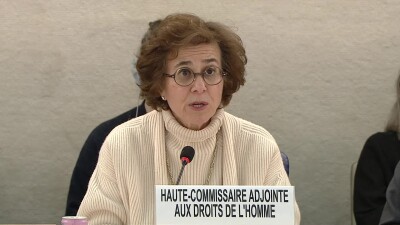
- Medium shot: Nada Al-Nashif Deputy High Commissioner.
- SOUNDBITE (English): Nada Al-Nashif Deputy High Commissioner for Human Rights: “As we approach three years since the Russian Federation’s full-scale invasion of Ukraine, progress towards a peaceful resolution remains elusive, as we witness a dangerous escalation of hostilities. September marked the highest number of civilian casualties since July 2022”
- Cut away: Room 20
- SOUNDBITE (English): Nada Al-Nashif Deputy High Commissioner for Human Rights: “This is confirmed in the latest report by the Office 1 September to 30 November of last year, which documents continued and increasing gross violations of international human rights law and serious violations of humanitarian law, including possible war crimes”
- Cut away: Room 20
- SOUNDBITE (English): Nada Al-Nashif Deputy High Commissioner for Human Rights: “During the period covered by the report, Russian armed forces intensified their operations to capture further territory in eastern Ukraine, with a severe impact on civilians in frontline areas, particularly in the Donetsk, Kherson, and Zaporizhzhia regions”
- Cut away: Room 20
- SOUNDBITE (English): Nada Al-Nashif Deputy High Commissioner for Human Rights: “During the period covered by the report, Russian armed forces intensified their operations to capture further territory in eastern Ukraine, with a severe impact on civilians in frontline areas, particularly in the Donetsk, Kherson, and Zaporizhzhia regions”
- Cut away: Room 20
- SOUNDBITE (English): Nada Al-Nashif Deputy High Commissioner for Human Rights:“Relentless attacks with aerial glide bombs, long-range missiles, and drones contributed to the killing of some 574 civilians – an increase of 30 per cent over the previous year”
- Cut away: Room 20
- SOUNDBITE (English): Nada Al-Nashif Deputy High Commissioner for Human Rights: “Russian bombardment damaged civilian infrastructure and water, heating and transportation services, including four major attacks on Ukraine’s energy infrastructure since mid-November”
- Cut away: Room 20
- SOUNDBITE (English): Nada Al-Nashif Deputy High Commissioner for Human Rights: “Since February 2022, this conflict has killed more than 12,300 civilians, including over 650 children, and injured more than 27,800. Over 700 medical facilities and 1,500 schools and colleges have also been damaged or destroyed.”
- Cut away: Room 20
- SOUNDBITE (English): Nada Al-Nashif Deputy High Commissioner for Human Rights: “I am deeply concerned by a significant increase in credible allegations of executions of Ukrainian military personnel captured by Russian armed forces. Summary executions constitute a war crime. The Office recorded 62 such executions in 19 separate incidents during the reporting period and verified 5 of these incidents.”
- Cut away: Room 20
- SOUNDBITE (English): Nada Al-Nashif Deputy High Commissioner for Human Rights:“Accountability for these killings is essential. Instead, there is almost total impunity.”
- Cut away: Room 20
- SOUNDBITE (English): Nada Al-Nashif Deputy High Commissioner for Human Rights:“Ukrainian prisoners of war, both men and women, described widespread and systematic torture and ill-treatment, including severe beatings, electric shocks, strangulation, and prolonged solitary confinement. Most reported being subjected to sexual violence, including rape and forced nudity.”
- Cut away: Room 20
- SOUNDBITE (English): Nada Al-Nashif Deputy High Commissioner for Human Rights: “Russian prisoners of war held by Ukraine told our staff they had been subjected to torture and ill-treatment, from severe beatings to sexual violence and dog attacks, mostly in places of transit before reaching official places of internment.”
- Cut away: Room 20
- SOUNDBITE (English): Nada Al-Nashif Deputy High Commissioner for Human Rights: “I call on the Russian authorities to halt the summary executions of Ukrainian Prisoners of War, to condemn such acts, and to prosecute those responsible. I urge those in authority on both sides to take immediate steps to end the use of torture against prisoners of war, and to prosecute those responsible.”
- Cut away: Room 20
- SOUNDBITE (English): Nada Al-Nashif Deputy High Commissioner for Human Rights: “I urge the Russian Federation to meet its obligations under international humanitarian and human rights law in the territory of Ukraine it occupies.”
- Cut away: Room 20
- SOUNDBITE (English): Nada Al-Nashif Deputy High Commissioner for Human Rights: “And I urge the entire international community to act to ensure respect for all their obligations under international human rights and humanitarian law.”
Similar Stories
1
1
1
Edited News | OCHA , UNICEF , WFP
Aid agencies warned on Friday of the fast-developing humanitarian emergency inside Taiz City in Yemen, which has been encircled by de facto Houthi forces fighting government troops along the country’s west coast.

2
17
1
2
Edited News , Press Conferences , Images | OCHA , WMO
Two UN agencies teamed up on Wednesday to issue an appeal for immediate assistance to help communities already being impacted by the strongest El Niño on record.
3
16
2
2
Edited News , B-roll , Conferences , Images | UNITED NATIONS , UNOG
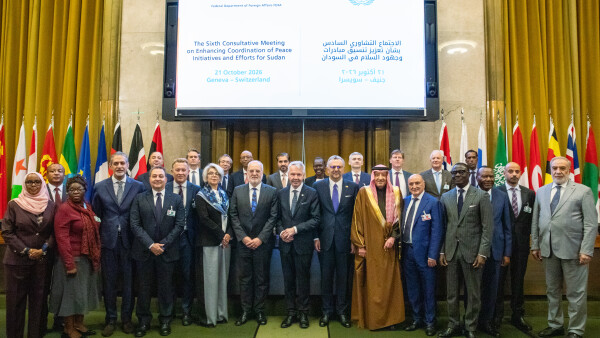
Sixth Consultative Meeting on Enhancing Coordination of Peace Initiatives and Efforts for Sudan

1
1
1
Edited News | UNICEF , WHO , UNHCR
Yemen war continues to force families from homes amid hunger and disease
More than 250,000 people have now fled renewed fighting in Yemen, the UN said on Tuesday, citing particular concern for those sheltering in the southwestern city of Taiz and the wider governorate, where access is “essentially blocked”.

1
1
1
Edited News | UNICEF
A little over one year since a ceasefire agreement was announced between Hamas fighters and Israel, more than 340 children have been reported killed and hundreds more injured, the UN Children’s Fund, UNICEF, said on Friday.

1
1
1
Edited News | UNICEF , IFRC
Six weeks after Nepal’s deadly flooding disaster, communities are still struggling to rebuild their lives, but they will need sustained help as global warming increases the risk of another Himalayan catastrophe, the UN Children’s Fund (UNICEF) said on Friday.

1
1
1
Edited News | WHO
In suspected Russia plague death, testing and monitoring underway – WHO
The death of a lab worker in Russia’s Siberia region has sparked concerns about plague being the cause, the UN World Health Organization (WHO) said on Tuesday, adding that it was following the situation closely.

1
1
Edited News | OHCHR , UNOG
UN Human Rights Chief Volker Türk on Friday provided and oral update to the 63rd session of the Human rights Council on Ukraine.

1
1
1
Edited News | OHCHR , UNOG
UN Human Rights Chief Volker Türk on Friday provided and oral update to the 63rd session of the Human rights Council on the human rights situation in Haiti.

1
1
1
Edited News | WHO
Repeated delays in bringing lifesaving medicines, prosthetics and more from Israel into Gaza risk having devastating consequences on Palestinians who urgently need them in the wartorn enclave, the UN World Health Organization (WHO) said on Friday. “A truck full of non-priority supplies or the right supplies arriving too late, doesn't save lives. That's the question that actually matters," said Dr Reinhilde Van De Weerdt, WHO Representative in the OPT.

1
1
1
Edited News | WHO
DRC: Early access to care and oxygen decisive for Ebola patients’ survival – WHO
In the Democratic Republic of the Congo (DRC), health workers fighting the country’s largest-ever Ebola outbreak are struggling to overcome critical challenges to patient care, the UN World Health Organization (WHO) warned on Tuesday.

1
1
1
Edited News | OCHA , UN
Civilians in Iran are continuing to feel the consequences of months of conflict and military escalation, the UN’s top official in the country has said, as loss of life, damage to civilian infrastructure and mounting economic pressures leave many facing continued uncertainty.